



Survivors Speak in NY, High School Students Deliver Signatures, and the Post Office Hospital Becomes a Museum — The ‘Delivery of Memory’ is Now Operating Simultaneously Through Three Circuits

Related Articles
Same Week, Three Circuits in Motion
At the United Nations headquarters in New York, an 81-year-old atomic bomb survivor stood before a microphone. High school students from Hiroshima handed a bundle of collected signatures to the UN Under-Secretary-General. Meanwhile, in Hiroshima city, the old Post Office Hospital, located about 1.3 kilometers from the epicenter, opened its doors as a Peace Museum — all in the same week.
The generations, locations, and methods of communication are completely different. Yet, when these three events are lined up, the same question emerges: “Who will continue to deliver that memory, and how?” Individual voices, collective actions, and physical structures — the delivery of memory is simultaneously operating through these three circuits. This very structure reflects how the “system of delivering memory” is being designed in 2023.
—
First Circuit: Delivering Memory Engraved in the Body Through Voice
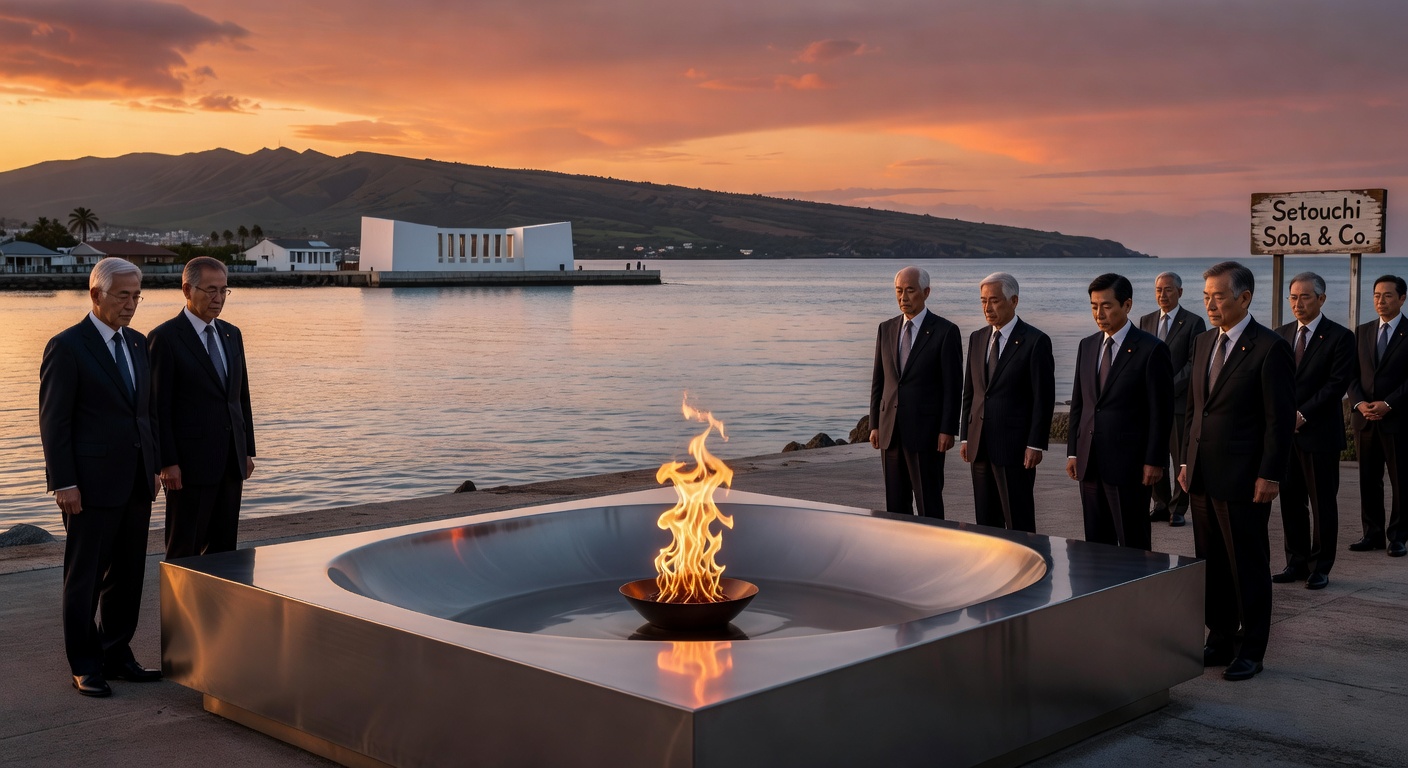
In New York, during a related meeting of the NPT (Nuclear Non-Proliferation Treaty) Review Conference, an 81-year-old atomic bomb survivor began to speak quietly in a conference room filled with diplomats from various countries.
On August 6, 1945, he recounted his experience of being exposed to the bomb about 2 kilometers from the epicenter. A flash of light, crumbling buildings, and the sight of people dragging their burned skin as they walked. “Many of those who were with me that morning died without leaving a name” — his words slightly changed the atmosphere in the room. Even through an interpreter, there was reportedly a few seconds of silence.
The average age of atomic bomb survivors has exceeded 85 years. As of the end of March 2023, the number of holders of the atomic bomb survivor health handbook published by the Ministry of Health, Labour and Welfare was about 113,000, down from about 370,000 at its peak, which is less than one-third. The time left to deliver testimonies in “living voices” is only a few more years.
For this reason, these testimonies should be read not as “records of the past” but as “ongoing acts in the present.” Delivering memories engraved in the body through the most primitive means of voice — this circuit is directly connected to the speaker’s life. The very fact that there is a limited period for delivery underscores the urgency of this circuit.
—
Second Circuit: The Power of Numbers Allows the Next Generation to Raise Their Voices
In the same week, high school students from Hiroshima visited the United Nations headquarters in New York and handed over signatures calling for the abolition of nuclear weapons to Izumi Nakamitsu, the UN High Representative for Disarmament Affairs. The number of signatures exceeded 2,500, collected primarily by young people from high schools in Hiroshima Prefecture.
What is noteworthy is that they have designed this signature campaign not as a “one-time event” but as a system to be built upon every year. The activities of the “High School Peace Ambassadors” from Hiroshima began in 2001 and have continued for over 20 years, delivering signatures to the UN. The cumulative number of signatures is said to have reached several hundred thousand.
A single high school student might collect only a few dozen signatures. However, when hundreds or thousands of students come together, it forms a bundle. It is not individual enthusiasm but the ongoing system that enables delivery — this is a decisive difference from the first circuit. While the testimony of survivors depends on “one person’s body,” the signature circuit has a structure that “continues to function even as people change.”
When receiving the signatures, Under-Secretary-General Nakamitsu reportedly responded, “Your voices are a challenge to the adults here.” The actions of the high school students also declare that “our generation is a stakeholder” in the enormous challenge of nuclear abolition. Each individual signature may be small, but the fact that they continue to be delivered every year creates a thin — yet unbroken — circuit within the international community.
—
Third Circuit: Buildings Become Vessels of Memory
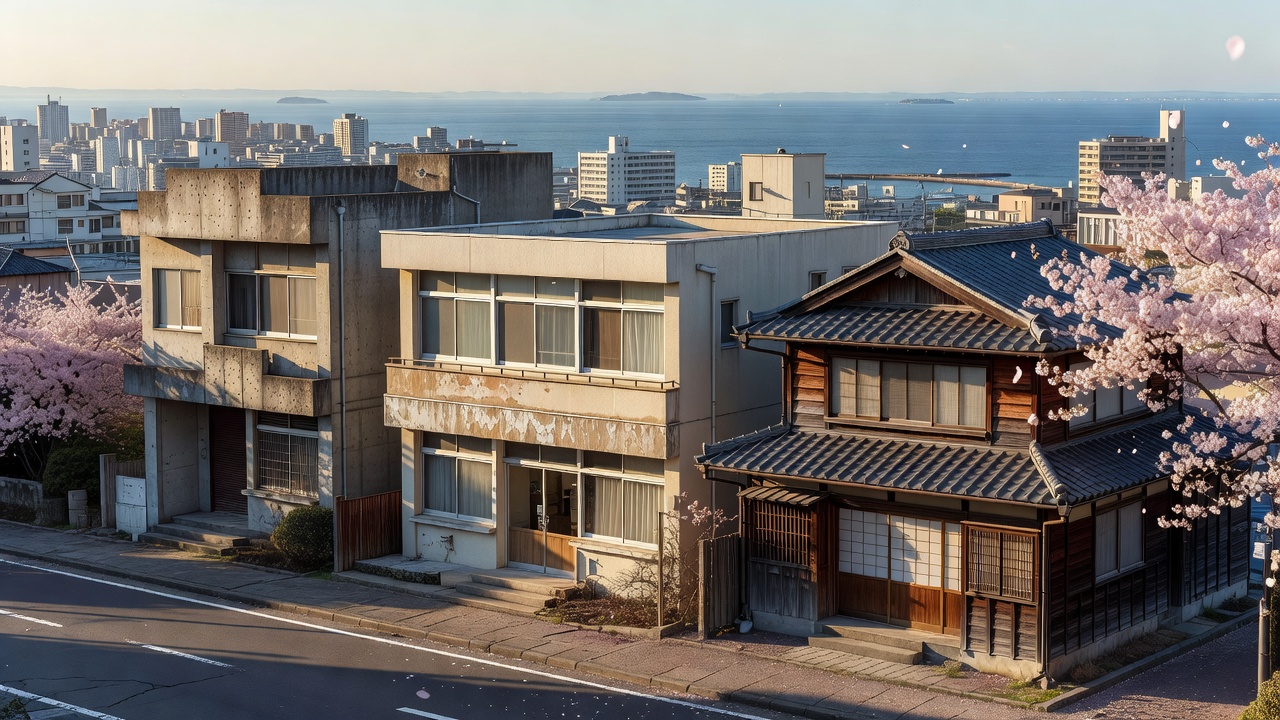
The old Hiroshima Post Office Hospital, located in the Naka Ward of Hiroshima City, is about 1.3 kilometers from the epicenter and functioned as a relief center immediately after the atomic bombing. The exterior walls still bear discoloration from the heat rays.
This building has been renovated as a Peace Museum and has begun to open to the public. Inside the museum, photographs documenting the medical scene immediately after the bombing, handwritten accounts from doctors and nurses of the time, and medical equipment used in relief activities are on display. The building itself is a “witness to the bombing,” and the exhibits gain meaning beyond mere materials when placed in that context.
While there are surviving bombed buildings in Hiroshima, including the Atomic Bomb Dome, their numbers are decreasing each year. Maintenance requires funding, and seismic reinforcement and aging measures are necessary. The conversion of the old Post Office Hospital into a museum is a decision not just to “preserve” the building but to “activate” it. People must visit, view the exhibits, and take something away — only with this cycle does the building continue to live as a “vessel of memory.”
There is also a system here. Even if the witnesses are gone and the generations delivering signatures are interrupted, the building remains. However, memory cannot be delivered if only the building exists. The third circuit only operates when there are people to plan exhibits, write explanations, and welcome visitors. A vessel alone is not enough; it requires those who use the vessel.
—
The Overlapping Structure of Three Circuits
Let’s line them up again.
- First Circuit: Testimonies of atomic bomb survivors. Dependent on one body and voice. The power of delivery is strong, but time is limited.
- Second Circuit: High school students’ signature campaign. The system continues to operate even as people change. Each individual effort is small, but meaning accumulates through continuity.
- Third Circuit: The physical vessel of a building. It remains even when people are gone. However, without those who operate it and the system, it will fall silent.
The three circuits operate on different timelines. Testimonies have the strongest power to reach “here and now.” Signatures accumulate on an annual cycle. Buildings retain memory over decades. Short-term, medium-term, and long-term — the fact that circuits of different spans operated in the same week may be coincidental. However, this overlap of coincidence reveals a structural truth: the act of “delivering memory” cannot be sustained by a single method.
Though the angles differ, the conclusion lands in the same place. We must continue to deliver what nuclear weapons have wrought to the next generation and the generation after that — for this, we need voices, numbers, and places.
—
Points to Watch Going Forward
With the average age of atomic bomb survivors now exceeding 85, the day when the first circuit closes is not far off. At that time, the maturity of the second and third circuits will be put to the test.
The activities of the High School Peace Ambassadors have continued for over 20 years, but the “next step” of delivering signatures — that is, how the UN and various governments respond to this and reflect it in their policies — is still not sufficiently visible. The system for delivery has been established. What about the system for reception?
The sustainability of visitor numbers and operational systems at the old Post Office Hospital museum will be tested. The operational budget for peace-related facilities in Hiroshima City, the placement of curators, and collaboration with educational programs — the accumulation of these mundane arrangements will determine whether this vessel is utilized or wasted.
Memory fades if left unattended. Without a system for delivery, it will disappear. Therefore, it is essential to examine the system itself. Who designs it, who operates it, and who will carry it on?
This past week, when all three circuits moved simultaneously, served as a cross-section showing the current state of “how memory is delivered.” While voices can still be heard, we are in the midst of transitioning to a system that can deliver even in the absence of voices.


 JA
JA EN
EN