



While Numbers Are Up, People Are Leaving the City — The Reopening of the Yamato Museum, Nikkei Average Hits 60,000, and the Contradictions Highlighted by ‘Stay@Hiroshima’

Related Articles
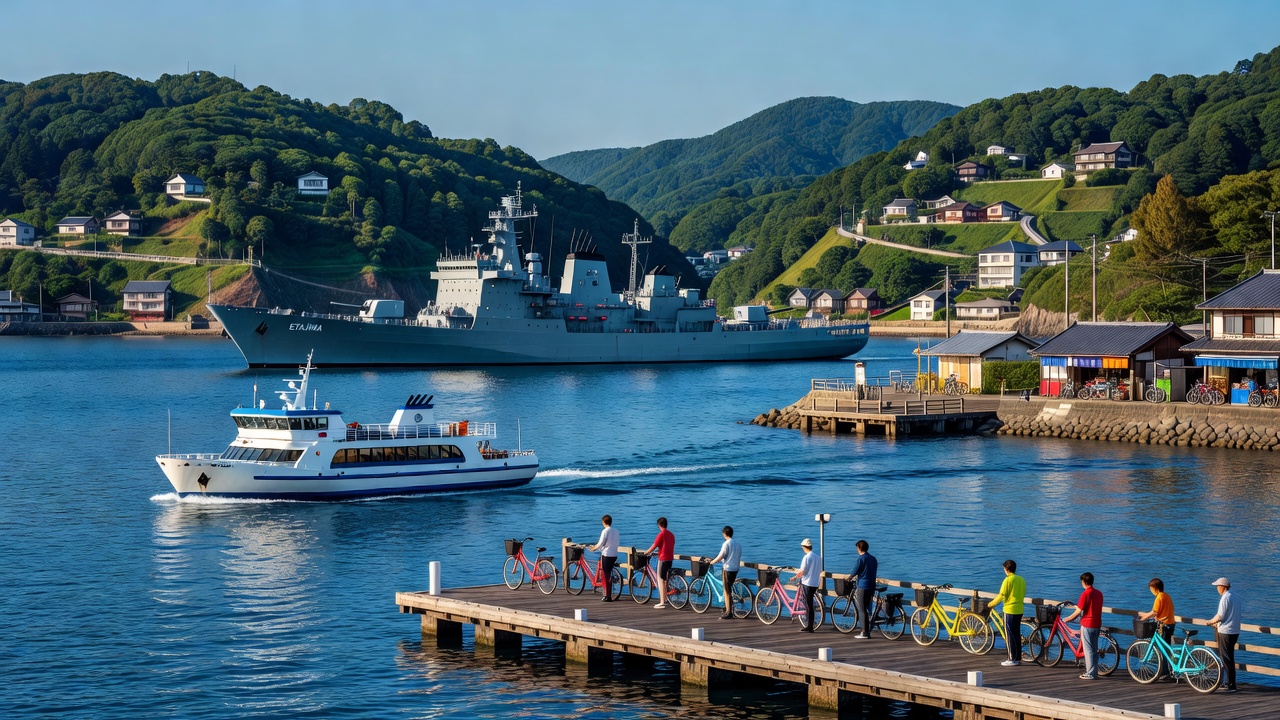

The Day People Returned to Kure, While People Left Hiroshima
In the spring of 2025, the Yamato Museum (Kure Maritime History and Science Museum) in Kure City reopened after renovations. The exhibition space has been expanded to about 1.5 times its previous size, with approximately 300 new exhibits added. On the opening day, the number of visitors exceeded 10,000, and there were days on weekends when entry restrictions were implemented. Reports indicate that the turnover rate at restaurants around the “Yamato Pier” near Kure Station surged to 1.5 to 2 times the usual rate.
At the same time, the Nikkei average stock price surpassed 60,000 for the first time in history. Mazda (7261), headquartered in Hiroshima, saw its stock rise by about 14% since the beginning of the year, while Hiroshima Gas (9535) recorded an increase of about 11%, leading to a significant rise in the market capitalization of local companies. The Hiroshima Chamber of Commerce and Industry has launched a new slogan, “Stay@Hiroshima,” with Chairman Kensuke Matsufuji stating, “We need measures to help young people rediscover the appeal of staying in Hiroshima.”
Looking solely at the numbers, the economic outlook for Hiroshima appears bright. Tourist numbers are increasing, stock prices are rising, and the Chamber of Commerce is optimistic. — However, beneath the surface, a troubling reality is quietly unfolding. The outflow of residents from Hiroshima Prefecture exceeds 10,000 annually, particularly among those in their early twenties.
The mechanisms to attract people are in place. However, the systems to retain them have yet to catch up. This article aims to unravel the structures underlying these three “bright news” stories.
—
Yamato Museum — The Mechanism for Attracting Visitors is Complete
The highlight of the renovation is not just the revamped exhibition space for the 1/10 scale model of the battleship Yamato. It also marks the first public display of primary materials that had been stored away, including technical documents from the former Imperial Japanese Navy and crew members’ memoirs. A historian involved in the curation expressed, “It’s not that the number of exhibits has increased, but rather that previously unheard voices have come to light.” This statement indicates that the renovation is not merely a facelift for a tourist facility but a redesign as an archive of memory.
The ripple effects on the tourism economy are also reflected in the numbers. According to estimates from Kure City, the annual visitor count post-renovation is targeted to rise from approximately 900,000 to 1.2 million, and the occupancy rate of nearby accommodations has already improved by over 15 percentage points compared to the same month last year. Increased temporary services on the JR Kure Line and additional ferry services from Kure Port are also being implemented to enhance transportation infrastructure.
The mechanisms to welcome “arriving visitors” have been steadily established. The question now is whether this system is connected to the mechanisms that support “existing residents.” Many staff working in the tourism sector are employed on non-regular contracts, and Kure City’s effective job openings-to-applicants ratio is below the average for Hiroshima Prefecture. A structure has been created for tourists to spend money, but whether that money strengthens the living foundation for those who live locally remains the first question.
—
Nikkei Average Hits 60,000 — “Rising Numbers” and “Unmet Realities”
The Nikkei average’s rise to 60,000 is largely driven by semiconductor-related stocks and companies benefiting from a weaker yen. It is true that local companies in Hiroshima have benefited from this, but it is essential to pause and reflect.
Mazda’s stock price increase is primarily due to strong SUV sales in the North American market and foreign exchange gains, which do not directly translate into increased employment at factories within Hiroshima Prefecture. In fact, the company is consolidating production at its Hofu plant (Yamaguchi Prefecture) in fiscal 2024, while restructuring production lines at its headquarters factory in Hiroshima continues. The rise in stock prices and the increase in employment in the city do not necessarily align.
Similarly, the rise in Hiroshima Gas’s stock is rooted in structural changes in energy prices and expectations of deregulation, but it has not resulted in lower household gas prices for local residents. There exists a gap that remains unaddressed between the “good numbers” for investors and the “good feelings” for consumers.
A representative in their 30s working at a local securities firm remarked, “Our clients’ portfolios have indeed expanded. However, the average age of these clients is over 65. The younger generation either flows to online brokerages or simply lacks the financial means to invest.” The circuit through which rising stock prices contribute to local asset formation is also severed by generational divides.
—
“Stay@Hiroshima” — What the Slogan Asks
The Hiroshima Chamber of Commerce and Industry’s promotion of “Stay@Hiroshima” is backed by urgent statistics. According to the Ministry of Internal Affairs and Communications’ population movement report, Hiroshima Prefecture ranked among the bottom five in the nation for net outflow of residents in 2023. Projections from the National Institute of Population and Social Security Research estimate that the working-age population (ages 15 to 64) in Hiroshima Prefecture will shrink to about 70% of its current size by 2050.
Chairman Matsufuji’s statement about “rediscovering appeal” carries an underlying assumption — that the appeal already exists here, but is simply not visible. However, when we listen to the voices of young people who have left Hiroshima, a slightly different picture emerges.
A 26-year-old woman who graduated from a university in Hiroshima City in 2024 and secured a job at an IT company in Tokyo stated, “I don’t dislike Hiroshima. It’s just that the work I want to do isn’t available there. That’s all.” The UX design positions she sought are almost nonexistent in job listings at the Hiroshima City Hello Work office. According to a survey by Recruit Works Institute, the number of IT and creative job openings in the Chugoku region is less than one-twentieth of that in the Tokyo metropolitan area.
If we are calling for “Stay,” we must specify what we are asking people to stay for — whether it’s a place to live, a place to work, or relationships. The extent to which the Hiroshima Chamber of Commerce can delve into this will depend on the institutional design beyond the slogan — such as the establishment of remote work hubs, support for collaboration between local companies and IT firms from outside the prefecture, and the expansion of scholarship repayment assistance programs.
—
Structural Contradictions — The Fault Line Between the Mechanisms for “Arriving” and “Existing”
When we line up these three news items, a single structure emerges.
The Yamato Museum is a mechanism for “arriving visitors.” The Nikkei average of 60,000 is a number for “those who possess.” “Stay@Hiroshima” is a call to “existing residents.” — These three are not yet connected as a single circuit.
Tourists come from outside through tourism. Wealth expands through stock prices. However, unless a structure is established where young people living in the city feel they can “make a life here” with adequate jobs and compensation, the favorable numbers will become a house of cards. This is not just an issue for Hiroshima; it is a common challenge faced by regional cities, a structural problem of “discrepancy between indicators and reality” in an era where macro indicators like GDP and stock prices cannot adequately represent the texture of local life.
In the “Hiroshima Vitality Creation Plan” formulated by Hiroshima City for fiscal 2024, approximately 300 million yen is allocated for startup support. However, considering that Tokyo’s startup support budget is around 20 billion yen annually, the scale difference is stark. If we cannot compete on quantity, we must compete on the quality and manner of connections. How can we link the technological foundation of local manufacturing with digital talent brought in from outside the prefecture? How can we reinvest the cash flow generated by tourism into creating jobs for young people? The design of the “pipes” that connect these mechanisms is being called into question.
—
Points of Future Attention — The Question of “Who Do We Make Comfortable?”
The reopening of the Yamato Museum serves as a device to pass the memory of the city of Kure into the future. The Nikkei average of 60,000 will be recorded as a milestone for the Japanese economy. “Stay@Hiroshima” is an honest expression of urgency.
However, whether these truly support “the future of Hiroshima” depends on whether each initiative continues to question “who do we make comfortable?” Is there a mechanism that not only makes tourists comfortable but also supports those working on the ground? Is there a circuit that not only benefits shareholders but also makes life easier for local residents? Beyond merely raising a slogan, are there concrete options for young people who have left to return?
The rotation of numbers and the retention of people are separate issues. Precisely because they are separate issues, different mechanisms are needed.
A family disembarks from a sightseeing boat docked at Kure Port and heads toward the Yamato Museum. On the same day, at the Shinkansen platform at Hiroshima Station, a young person pulling a suitcase boards the “Nozomi” bound for Tokyo. — How can we reconcile these two flows of people within a single city? The answer has yet to be found. However, the fact that we can see the shape of the question suggests that we have made a small step forward.


 JA
JA EN
EN