



The Revival of Tide Pooling in Onomichi, Release of Young Ayu in the Nishiki River, and the Invasive Aigo Disrupting Seagrass Beds—A Quiet Yet Reliable Mechanism Supporting the “Aquatic Creature Economy” of the Seto Inland Sea

Related Articles
The Seto Inland Sea’s Waterways: Three Active Sites
Tide pooling has returned to Onomichi after a six-year hiatus. In the Nishiki River in Iwakuni, kindergarteners released 30,000 young ayu. A research team from Fukuyama University recorded the destructive behavior of the invasive aigo on seagrass beds using underwater cameras.
At first glance, these three seemingly unrelated news items reveal a common structure. They all assume the fact that “aquatic creatures support human life and the economy,” and behind each of them, someone who remains out of the spotlight is working to maintain that structure.
The revival of tide pooling was supported by each individual who donated to the crowdfunding campaign, while the release of young ayu is backed by the fishing cooperative’s long-standing seed management. The issue of aigo was made visible by researchers who diligently deployed cameras underwater.
This article will explore the quietly functioning mechanisms of the Seto Inland Sea’s waterways through the lens of the question, “Who benefits from this?”
—
Tide Pooling in Onomichi—The “Mechanism” That Filled a Six-Year Gap
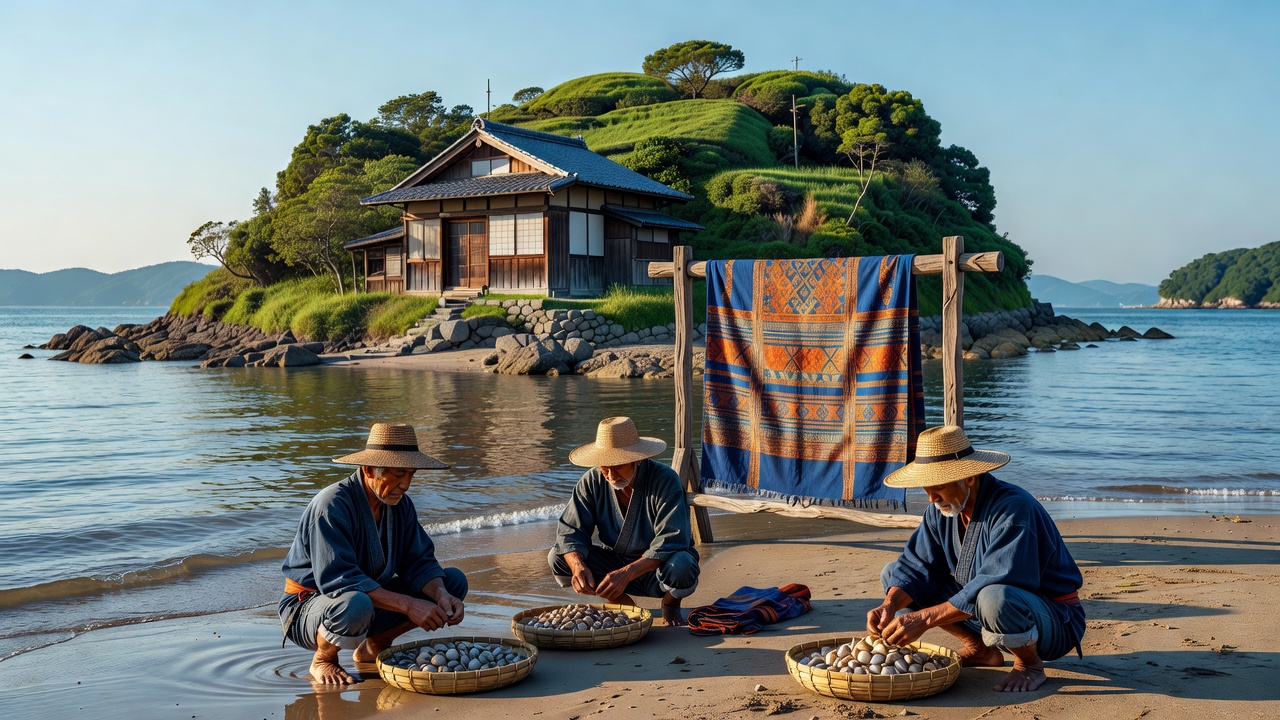
Tide pooling at the tidal flats of Mukojima in Onomichi has been a springtime tradition for the community. Families kneel in the tidal flats, collecting clams in buckets. This cherished scene came to a halt in 2017 due to a massive outbreak of red tide, which drastically reduced clam resources, leading to the cancellation of the event.
Six years is a long time. When an event stops, fewer people know the procedures, tools get lost, and a sense of “it’s impossible to restart” begins to permeate. In fact, stakeholders reflect that the highest hurdle to resuming the event was not funding or technology, but rather “regaining the confidence that it could be done.”
The turning point came with the launch of a crowdfunding campaign in 2023. The funds raised totaled approximately 3 million yen. A breakdown of the costs reveals expenses for tidying up the tidal flats, purchasing young clams, staffing for safety management, and administrative costs for promotion and operation—essentially, it was not just about “holding an event once,” but about “rebuilding the mechanism from scratch.”
Notably, many of the contributors were local residents or those connected to Onomichi. Small donations of several thousand yen accumulated to reach 3 million yen. It was not flashy large donations, but rather the collective of small engagements that set the mechanism in motion.
Around 500 participants are expected for the revived tide pooling event. Considering the participation fees and the ripple effects on local dining and lodging, the initial investment of 3 million yen is designed to effectively stimulate the local economy. However, the real question will be in the years to come—will it end as a one-time event, or will it establish itself as an annual mechanism? Resource management for clams, environmental monitoring of the tidal flats, and the transfer of operational know-how are all already in preparation for next year.
—
The Release of Young Ayu in the Nishiki River—Decades of Management Behind the “Grow Big” Call
The Nishiki River flowing through Iwakuni City is the scene where kindergarteners, holding buckets, release young ayu into the river while calling out, “Grow big!” This heartwarming sight is a staple of spring news footage.
However, if we focus on the preparations leading up to this moment, the perspective shifts slightly.
The number of young ayu released is 30,000. The price of young ayu varies by region and year, but is estimated to be around 10 to 30 yen each. If we calculate using a mid-point of 20 yen, that amounts to about 600,000 yen for 30,000 fish. Adding transportation costs, site selection, checking water temperature and flow rate, and staffing for the day, the cost of a single release is not insignificant.
This expense is primarily borne by the local fishing cooperative, with part of the funding coming from sales of recreational fishing licenses and government subsidies. In other words, the fishing licenses purchased by anglers enjoying ayu fishing in the Nishiki River during the summer—priced around 2,000 to 3,000 yen for a day—are funneled into the funding for the release of young ayu the following year. As anglers stand in the river, the next generation of ayu returns to it. This cycle has been quietly ongoing for decades.
Ayu are not just a target fish for anglers. By feeding on algae attached to riverbed stones, they help keep the surfaces clean, creating a habitat for other aquatic insects and fish. Their role as “cleaners” in the ecosystem is directly linked to the overall health of the river. The release of young ayu is not only an act of increasing fish populations but also serves to repair the foundation of the river’s ecosystem.
The 30,000 fish that the kindergarteners called out to will grow to about 20 centimeters in length by summer and migrate downstream in autumn to spawn. If some of them contribute to the natural upstream migration the following year, the reliance on releases can gradually decrease—this is the long-term vision of the fishing cooperative. The experiential learning for children and the resource management strategy of the cooperative overlap in the same river at the same moment. Although the angles differ, the destination is the same.
—
The “Nuisance” of Aigo—The Diligence to Visualize Invisible Damage
While there are bright topics, there is a quietly advancing crisis in the waterways of the Seto Inland Sea: the reduction of seagrass beds—commonly referred to as “rock burning.”
Seagrass beds are the foundation of marine ecosystems. Areas rich in seaweeds like eelgrass and Sargassum serve as hiding places for juvenile fish, spawning grounds, and food sources for diverse organisms. However, these seagrass beds are visibly declining across various locations in the Seto Inland Sea.
One of the causes drawing attention in recent years is the aigo. This fish, which grows to about 30 centimeters in length and has venomous spines on its dorsal fin, has a low market value, making it less likely to be targeted for capture. It is believed that its distribution has expanded and its population has increased due to rising water temperatures.
A research team from Fukuyama University installed underwater cameras in the seagrass beds of the Seto Inland Sea to directly record the feeding behavior of aigo. The footage shows schools of aigo voraciously consuming seaweed. One researcher remarked, “Numbers alone do not convey the message. It was only when we showed it on video that both fishermen and the government realized, ‘This cannot be left unattended.'”
This statement reflects the dilemma faced by researchers in the field. While collecting data is part of their job, unless that data is transformed into a “communicable form,” budgets and manpower for countermeasures will not mobilize. Submerging cameras, retrieving them, reviewing hours of footage, and quantifying the frequency and amount of damage—this work is tedious and takes time to result in a paper. However, without this unglamorous accumulation, the claim that “aigo are eating seagrass beds” remains merely an impression.
Currently, countermeasures being considered include capture using gill nets and promoting the use of aigo as food. Aigo can be eaten if freshness is properly managed, but the handling of its venomous spines complicates distribution. The idea of “turning a nuisance into a resource” is appealing, but it also requires designing a mechanism for processing, distribution, and consumption.
—
Common Structure Across the Three Sites—The People Creating the “Circulating Mechanism”
Now, let’s re-examine the three sites we’ve looked at so far:
- Tide Pooling in Onomichi: Crowdfunding → Tidying up tidal flats → Tourists → Local economy → Resource management costs for the following year
- Release of Young Ayu in the Nishiki River: Fishing cooperative’s seed management → Release → Growth of ayu → Income from recreational fishing licenses → Funding for the next year’s release
- Countermeasures for Aigo Damage: Researcher’s investigation → Visualization of data → Understanding by government and fishermen → Securing budget for countermeasures → Recovery of seagrass beds
None of these are one-way streets; they are designed as circulating mechanisms—or are in the process of being designed as such. And the ones keeping these mechanisms running are the people who do not appear in the headlines. The person who designed the crowdfunding page, the fishing cooperative staff who check the water temperature for young ayu every morning, and the graduate student who dove to change the batteries in the underwater cameras.
The “aquatic creature economy” of the Seto Inland Sea is built upon these behind-the-scenes arrangements. Individual enthusiasm alone cannot sustain it. It requires someone who can transform that enthusiasm into a mechanism and who will not let go until the mechanism can run on its own; only then does the cycle begin to turn.
—
Future Points of Interest
In the short term, whether the tide pooling in Onomichi can be held again next year will serve as a litmus test. The attendance and financial results from the first year will provide the initial data to measure the sustainability of the mechanism.
For the young ayu in the Nishiki River, the ratio of released fish to naturally returning fish will be an important indicator. The question is whether it can transition from a structure that continues to rely on releases to one where natural reproduction occupies a certain percentage—this is a theme that should be tracked over several years.
The issue of aigo hinges on whether a “solution” can be seen. It cannot end with mere extermination. The establishment of food utilization, setting purchase prices for fishermen, and the development of processing facilities—whether a mechanism can be designed to incorporate the “nuisance” into the economic cycle will be the next turning point.
Additionally, a common question across all three sites is the generation change of the stakeholders. A mechanism will not operate merely by being designed. It requires successors to ensure that the cycle does not stop. The kindergarteners who called out “Grow big!” in the Nishiki River may become anglers purchasing fishing licenses 20 years from now—let’s not dismiss this possibility as overly optimistic, but rather weave it into the mechanism.
The economy of aquatic creatures is supported not just by the creatures themselves. It is the diligent and reliable handiwork of bridging the gap between creatures and humans and continuously inspecting that bridge.


 JA
JA EN
EN