



Self-Defense Forces Arrive in a Town Without Doctors, and the Museum Disappears—A Memorandum on How the ‘National Hand’ Reaches Iwakuni

Related Articles

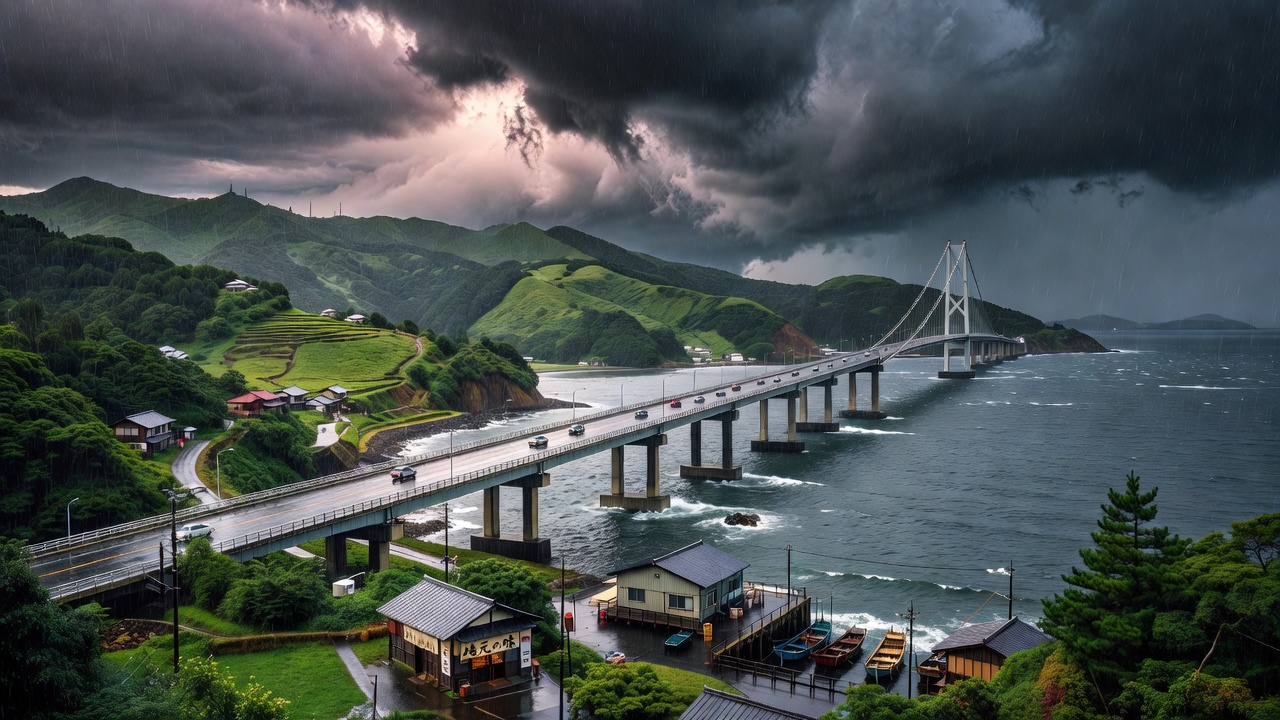
Self-Defense Forces Arrive in a Town Without Doctors, and the Museum Disappears
Two pieces of news arrived from the same ministry to the same town. One was a notification that “people will be sent.” The other was a notification that “no facilities will be built.” When we juxtapose these two events that occurred in Iwakuni City, the shape of how the national hand reaches the local community becomes starkly clear.
The Ministry of Defense announced that it would dispatch a resident officer who graduated from the Defense Medical University to Miwa Hospital in Iwakuni City. At the same time, the plan for the seaplane museum that Iwakuni City had envisioned was abandoned following a notice from the Ministry of Defense. The ministry sends people for medical care while withdrawing support for culture. This asymmetry cannot be explained solely by budgetary differences. “What does this town mean to the nation?”—that question lies between the two decisions.
—
The Mechanism Behind the Dispatch of ‘Defense Medical Officers’ to Miwa Hospital
Miwa Hospital, a public hospital in Iwakuni City, is located in the former Miwa Town—now in the northern mountainous region of Iwakuni City. This area has long faced challenges in securing full-time doctors due to a declining and aging population. The number of doctors per 100,000 people in Yamaguchi Prefecture is around 260, slightly below the national average of about 270. However, there is a significant disparity between urban and mountainous areas within the prefecture, and in remote regions like Miwa, residents often feel that there are “no doctors available” beyond the numbers.
The officers being dispatched are resident medical officers who graduated from the Defense Medical University. Graduates of this institution are obligated to serve for nine years after graduation. During this period, they may work at the Self-Defense Forces Central Hospital or units, as well as be dispatched to local medical institutions. In other words, the dispatch of resident medical officers is not an act of goodwill or volunteerism, but rather part of a personnel allocation system embedded within the framework.
The specific number of resident medical officers being dispatched and their medical specialties have not been disclosed at this time. This is an important point to note. There is a distance between the fact that “doctors are coming” and the assessment that “the doctor shortage will be resolved.” Whether a full-time doctor is added or if they rotate on a short-term basis will have completely different impacts on local healthcare. What can be confirmed is that the Ministry of Defense has made the decision to allocate human resources to the remote medical care in Iwakuni City—this is the current outline.
Nevertheless, the significance of this dispatch is not small. For a public hospital in a remote area like Miwa Hospital, securing doctors is fundamental to its operations and is also a critical juncture for local residents in terms of whether they can “continue to live here.” If clinics close, the nearest medical facility would be a city center several tens of minutes away by car. For the elderly, this is akin to the collapse of their living sphere.
The backdrop to the Ministry of Defense extending its hand to local healthcare is the presence of the Iwakuni base. The U.S. Marine Corps Iwakuni Air Station became one of the largest air bases in the Far East after the relocation of carrier-based aircraft in 2018. The stable operation of the base requires the sentiments of the surrounding residents—specifically, the feeling that “life is not being compromised by the presence of the base.” The dispatch of medical personnel is positioned within the context of improving the living environment around defense facilities. Supporting the community and supporting the base—these two are connected within the same circuit in the system.
—
The Circumstances Behind the Disappearance of the Seaplane Museum
On the other hand, the plan for the seaplane museum. Iwakuni City is the manufacturing base for the US-2 rescue seaplane operated by the Japan Maritime Self-Defense Force and has a history of seaplanes dating back to the pre-war era with the Type 2 Seaplane. To utilize this historical and technological accumulation as a tourism resource, the establishment of a museum had been under consideration.
At the planning stage, the estimated cost for the establishment was projected to be around 1 billion yen. However, caution is needed regarding the source and accuracy of this figure. There can be significant differences between the preliminary estimates at the municipal planning stage and the estimates after facility design. What can be confirmed is that there was a notification from the Ministry of Defense to postpone the establishment, and Iwakuni City abandoned the plan in response.
No detailed public explanation has been provided by the Ministry of Defense regarding the reasons for the abandonment. While it remains speculative, several backgrounds can be inferred. The defense budget has been decided to increase to a scale of 43 trillion yen over the next five years starting in fiscal 2023, with a focus on procurement of equipment and facility improvements. In this context, expenditures on cultural facilities that do not directly contribute to defense capabilities may have been deprioritized. Additionally, the land for the seaplane museum was expected to be located near the base, and it is possible that coordination with land use for security reasons was difficult.
In any case, one fact remains. There will not be a place to preserve the history of Iwakuni as a “town of seaplanes”—a lineage of technology spanning over 80 years since the era of the Type 2 Seaplane.
—
The Structure of the Choice: ‘People Will Be Sent, but No Facilities Will Be Built’
When we place the two decisions side by side, a certain structure emerges. The Ministry of Defense has made the choice to say to Iwakuni, “People will be sent. However, no facilities will be built.”
The dispatch of medical personnel can be realized within the existing framework—the obligation system of the Defense Medical University. New budgetary measures are limited and fall within the operational scope of the system. On the other hand, the establishment of the museum is a new construction project that requires long-term commitments involving land acquisition, design, construction, and operation.
In other words, between “investments that are easy to recoup” and “investments that are difficult to recoup,” the former was chosen. This is likely a rational judgment. However, being rational does not necessarily mean that it is sufficient for the community.
Healthcare helps “those who are in trouble right now, here.” The urgency of this is undeniable. However, cultural facilities like museums serve as devices to convey “what this town is” to the next generation. The history of seaplanes is also a testament to how the town of Iwakuni has walked alongside national defense policies. The absence of a place to shape this means that the town’s memory will only remain within individuals. Individual memories will fade away when that person is no longer around.
—
The Question of ‘Who Benefits’
When observing national policies, I believe it is essential to ask not only “what has been budgeted” but also “who benefits from it.”
The dispatch of resident medical officers will benefit the residents of the Miwa area—particularly the elderly, who have limited means of transportation. At the same time, it also alleviates the Ministry of Defense itself, which seeks stability in base operations. It is precisely because this is a rational mechanism for both parties that it has been realized.
Who benefited from the abandonment of the museum? In the short term, it likely eased the burden on the department within the Ministry of Defense that was faced with budget allocation decisions. However, for the local people who wished to pass down the history of seaplanes—former engineers, local historians, and parents who wanted to show seaplanes to their children—the lingering feeling is one of having been “erased.”
The national hand is determined by the same ministry’s judgments, whether it reaches or does not reach. Those who receive it express gratitude, while those who do not remain silent. At the very least, recording this asymmetry is the role of this article.
—
Points to Confirm Moving Forward
There are still areas where the outline of the facts remains blurry. Here are the points that should be confirmed in future reporting.
Regarding the Dispatch of Medical Personnel:
- The number of resident medical officers being dispatched and their specialties
- The duration of the dispatch (whether they will be stationed or rotating)
- The current number of full-time doctors at Miwa Hospital and the impact on the medical system
- Whether it is positioned as part of the improvement of the living environment around defense facilities
Regarding the Museum Plan:
- The official reasons for the abandonment (explanation from the Ministry of Defense)
- Details of the planned exhibits and scale
- Whether there are plans for alternative cultural resource preservation
- The current storage status of seaplane-related materials and aircraft
In a Broader Context:
- The trend of defense-related grants to Iwakuni City (including reorganization grants)
- Whether there are similar cases in other municipalities with bases
- How expenditures related to regional promotion have changed within the increased defense budget
When this information is gathered, the overall picture of how the ‘national hand’ reaches will become clearer.
—
A day will come when a defense medical officer places a stethoscope in the mountainous region of Iwakuni. Meanwhile, along the coast of the same town, the memory of seaplanes remains in a place without a roof. —Both have emerged from the same stratum of time that this town has lived alongside the base. I want to take a closer look at what lies between the reaching hand and the hand that does not.


 JA
JA EN
EN