


400 Rooms of Semiconductor Hotels and the Dismantling of a Flying Boat: The Bright and Dark Sides of ‘National Policy Legacies’ in Higashihiroshima and Iwakuni

Related Articles
400 Rooms of Semiconductor Hotels and the Dismantling of a Flying Boat: The Bright and Dark Sides of ‘National Policy Legacies’ in Higashihiroshima and Iwakuni
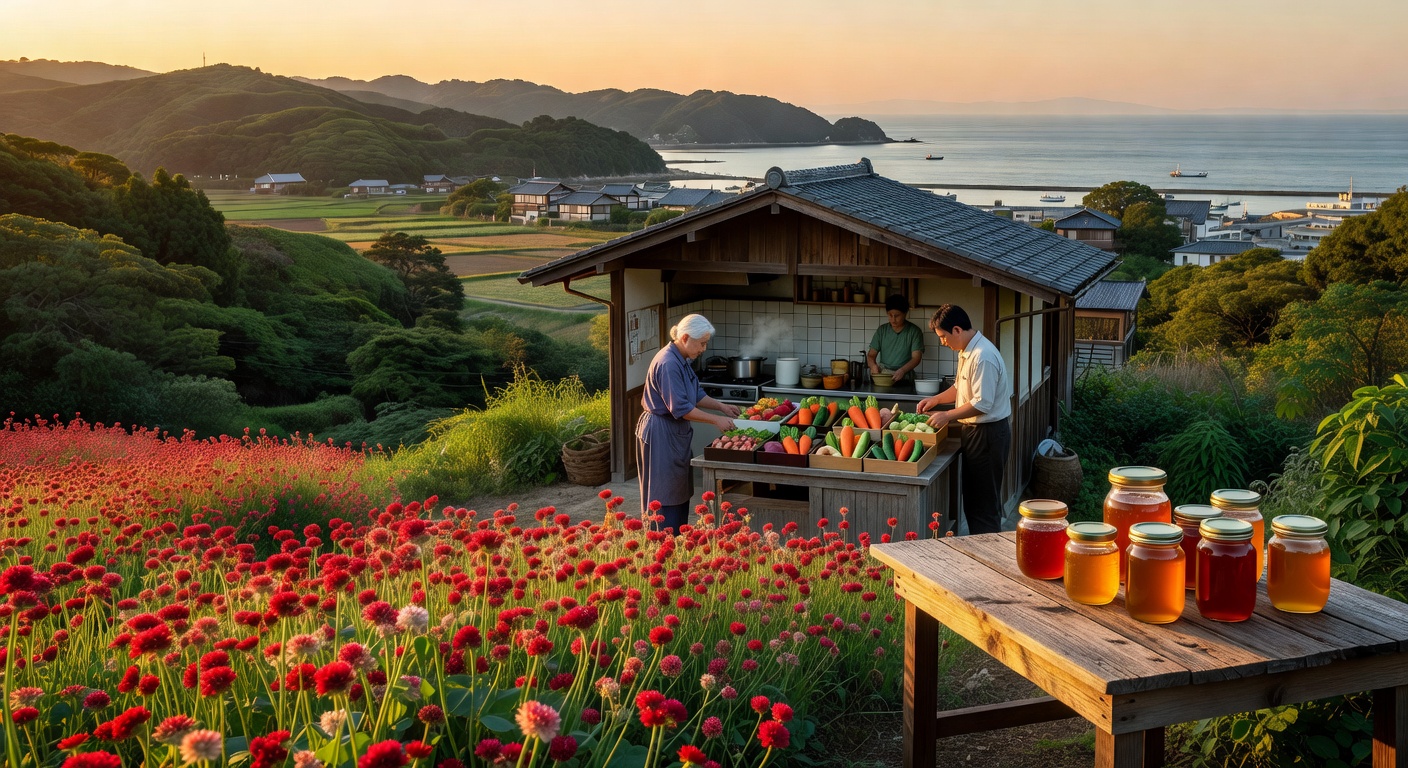
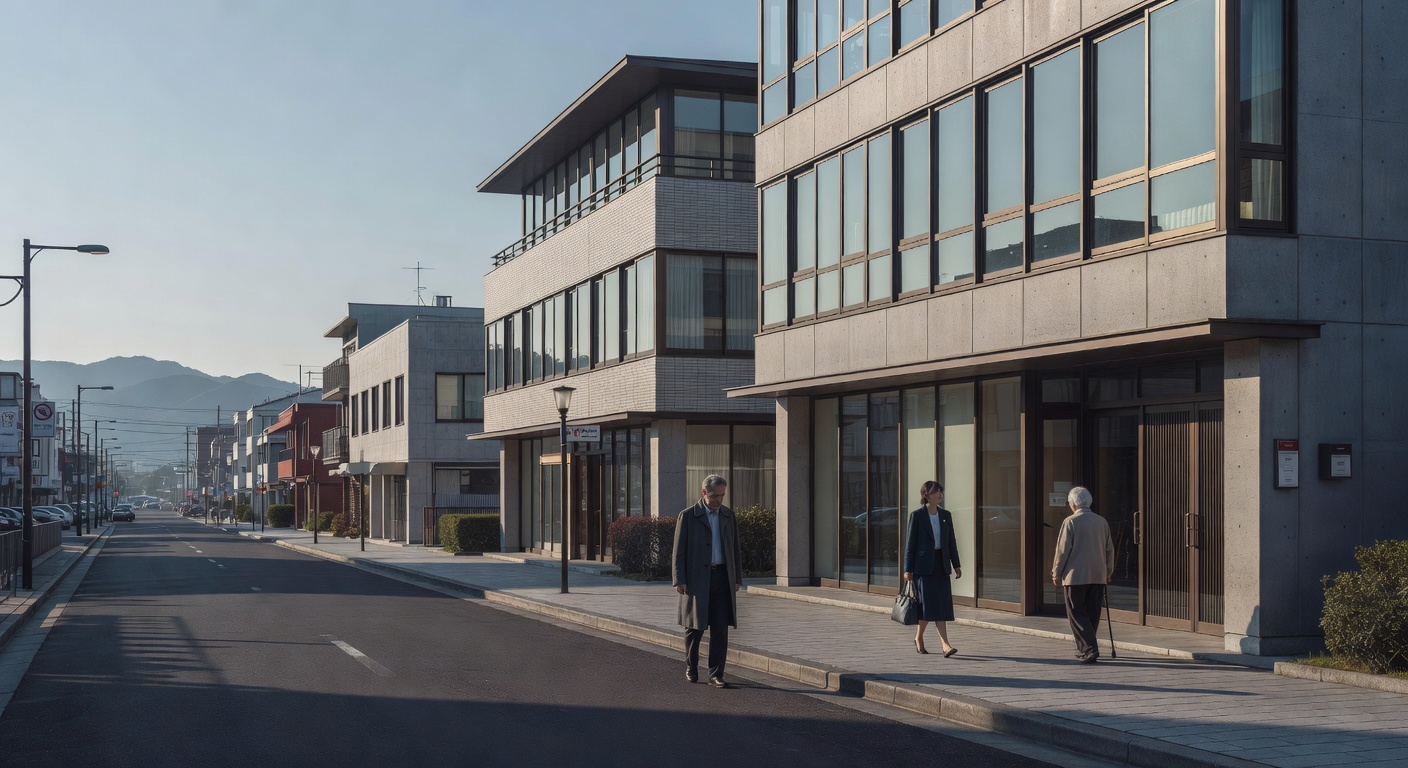
Under the same sky of the Seto Inland Sea, one city sees the rise of a 400-room hotel while the other witnesses the dismantling of a flying boat. Higashihiroshima City and Iwakuni City—two towns located about an hour and a half apart by car—are living in starkly different times, almost like reflections in a mirror. Both have been shaped by ‘national policy.’ The difference lies in what these policies are currently leaving behind and what they are attempting to strip away.
—
Higashihiroshima: The Semiconductor Boom Reshapes the City
The Hiroshima plant of American semiconductor giant Micron Technology, based in Higashihiroshima, has been gaining prominence as a mass production base for cutting-edge DRAM. Reports indicate a planned capital investment of up to 500 billion yen by 2024, with the Ministry of Economy, Trade and Industry also deciding to grant subsidies of up to 192 billion yen. The introduction of EUV (Extreme Ultraviolet) lithography equipment for the mass production of 1 gamma (γ) nodes—technical details aside—essentially reflects the national intent to produce the world’s most advanced semiconductors in this city, backed by substantial public funding.
This investment has not only transformed the factory itself but has also sparked a rush of new business hotels due to the influx of engineers and business travelers associated with Micron. Between 2024 and 2025, at least three companies have announced new openings, resulting in the creation of over 400 guest rooms. The expected price range per night is between 8,000 and 12,000 yen. Traditionally, business hotels around Higashihiroshima Station were limited, and it was not uncommon for people to stay in Hiroshima City and commute. The addition of 400 rooms will significantly alter the city’s accommodation capacity.
The construction of hotels itself stimulates the local economy. Contractors, cleaning and linen services, and restaurants—all benefit from the increase in lodging facilities, creating a chain of small jobs in the vicinity. A local restaurant owner in Higashihiroshima remarked, “Business travelers have started dining out at night. Previously, many stayed in Hiroshima City and returned home.” The establishment of hotels encourages people to ‘stay’ in the city. This stay generates consumption, which in turn creates employment. From the massive trunk of the semiconductor industry, thin roots are beginning to extend into the city’s soil.
However, this boom also harbors structural risks. Micron’s investment decisions are influenced by the global semiconductor market and various countries’ subsidy policies. If the mass production of next-generation nodes shifts to another location, the 400 rooms could suddenly face vacancies. The benefits of national policy are always intertwined with its withdrawal. How much the people of Higashihiroshima have internalized this reality may become clearer when we look at the story of another city.
—
Iwakuni: A City Where the Flying Boat Disappears
The PS-1 anti-submarine patrol flying boat, which has been on display at the Japan Maritime Self-Defense Force’s Iwakuni Air Base, is a rare large flying boat developed by ShinMaywa Industries that made its first flight in 1967. The Japan Maritime Self-Defense Force has continued the lineage with successor models US-1 and US-2, but the only remaining PS-1 is the one on display in Iwakuni. This sole aircraft has been decided to be dismantled due to aging, maintenance costs, and safety concerns.
One might think, “It’s just a single display aircraft.” However, this flying boat was deeply rooted in the self-identity of the city of Iwakuni. The Iwakuni base is a unique facility jointly used by the U.S. Marine Corps and the Japan Maritime Self-Defense Force, and the city has sought coexistence with the base for many years. The PS-1 served as one of the few symbols demonstrating to citizens that the base is not only a ‘military facility’ but also a ‘heritage of technology and history.’ On Friendship Day (Base Open Day), many visitors would stop in front of the PS-1 and touch its massive body. Its dismantling signifies not only the loss of a tourist attraction but also the erasure of part of the narrative that has supported the relationship between the city and the base.
Moreover, it is more serious that the decision to dismantle is not an isolated event. Local governments around the Iwakuni base have received reorganization grants from the national government as compensation for the burdens of hosting the base. However, with the end of the grant period, adjustments for gradual reductions and terminations are underway. The town council of neighboring Waki Town is considering submitting a request for maintaining ‘trust with the national government’ in 2024. The choice of a request format itself suggests that the room for negotiation is narrowing. These grants have been a source of funding for infrastructure development and resident services around the base. If they diminish, the very financial foundation of the city will be shaken.
The dismantling of the flying boat and the reduction of grants—while appearing to be separate administrative decisions, both stem from the same root: a structural change indicating that ‘the national interest regarding the Iwakuni base is shifting.’ Although the strategic positioning of the Iwakuni base has not changed within the broader framework of U.S. military realignment, the phase of ‘consideration for the local community’ accompanying the realignment is coming to an end. The traces left by national policy in the city are quietly, yet surely, being peeled away.
—
The Structure of ‘National Policy Legacies’
When looking at Higashihiroshima and Iwakuni side by side, a single structure emerges. Major national decisions leave ‘legacies’ in the regions. Semiconductor factories, bases, grants, and display aircraft—these have taken root in the cities as byproducts of national policy and eventually become part of the towns. The issue is that the beneficiaries of these legacies—’who benefits’—changes over time.
The 400 hotel rooms in Higashihiroshima currently benefit Micron’s engineers and local lodging operators. However, these rooms are supported by national subsidy policies and the geopolitics of global semiconductor competition. The foundation of this beneficial structure lies outside the city. The PS-1 in Iwakuni has provided a ‘story of coexistence’ between the base and the citizens for many years, easing their relationship. However, the entity responsible for bearing the maintenance costs of that narrative—the government—is now attempting to withdraw from that role.
Both cities have been shaped by external forces in the form of national policy. When that force is applied, it is called ‘development,’ and when it is withdrawn, it is termed ‘decline.’ However, what truly needs to be questioned is how much the cities have been able to cultivate their own mechanisms while that force is being applied.
Higashihiroshima has an academic foundation centered around Hiroshima University and a streetscape lined with sake breweries in Saijo. There is a layer that has supported the city even before Micron arrived. Iwakuni has the unique tourist resource of Kintai Bridge, leaving room for the city to operate through a circuit independent of the base economy. Whether they can prepare mechanisms for after the loss of these benefits while still receiving the advantages of national policy will be a quiet battleground for the recipients of these ‘legacies.’
—
What to Watch Going Forward
For Higashihiroshima, the occupancy rate of the 400 hotel rooms will be a key indicator. After the initial ‘celebratory demand’ subsides, can it maintain a stable occupancy rate of over 70%? This will reflect whether Micron’s investment is a one-time occurrence or leads to sustained accumulation. Additionally, how far the increase in lodging facilities will ripple through the local food and service industries—whether it becomes a ‘city just for staying’ or a ‘city for staying and experiencing’—is something to keep an eye on.
For Iwakuni, the focus will be on the post-dismantling land use of the PS-1 and the financial strategies of local governments in response to the reduction of grants. The response to Waki Town’s request will be a litmus test for gauging the temperature of the relationship between the surrounding municipalities and the national government. In the longer term, the expansion of civilian routes at Iwakuni Kintaikyo Airport and progress in attracting industries that do not rely on the base economy will influence the city’s autonomy.
The stories of these two cities are not just about Hiroshima Prefecture. Regions shaped by national policy exist all over Japan. Nuclear power plant host municipalities, areas around Shinkansen stations, and sites of former World Expos—what remains after the national will has departed is always determined by ‘what has been prepared in the meantime.’
The landscape visible from the windows of the hotels in Higashihiroshima and the shadow of the flying boat disappearing from the hangar in Iwakuni. Under the same light of the Seto Inland Sea, the two cities are now living in their respective times. The question is whether they can establish mechanisms to stand on their own feet after the winds of national policy have ceased—this question resonates, albeit slightly, with our own cities.


 JA
 EN