



A Defense Base on the Site of Nippon Steel in Kure, Fireworks in Iwakuni on Hold, and Residential Guidance in Etajima — The Quiet Reconfiguration of ‘Human Placement’ in the Setouchi Region

Related Articles
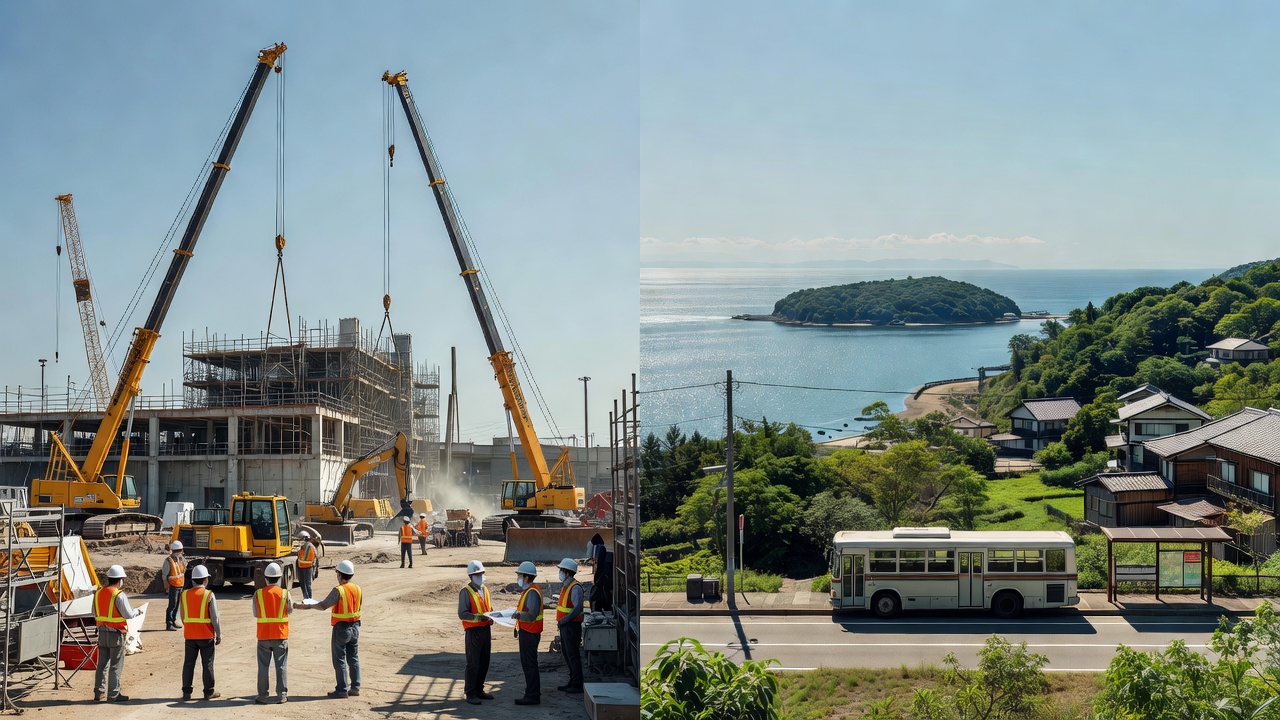
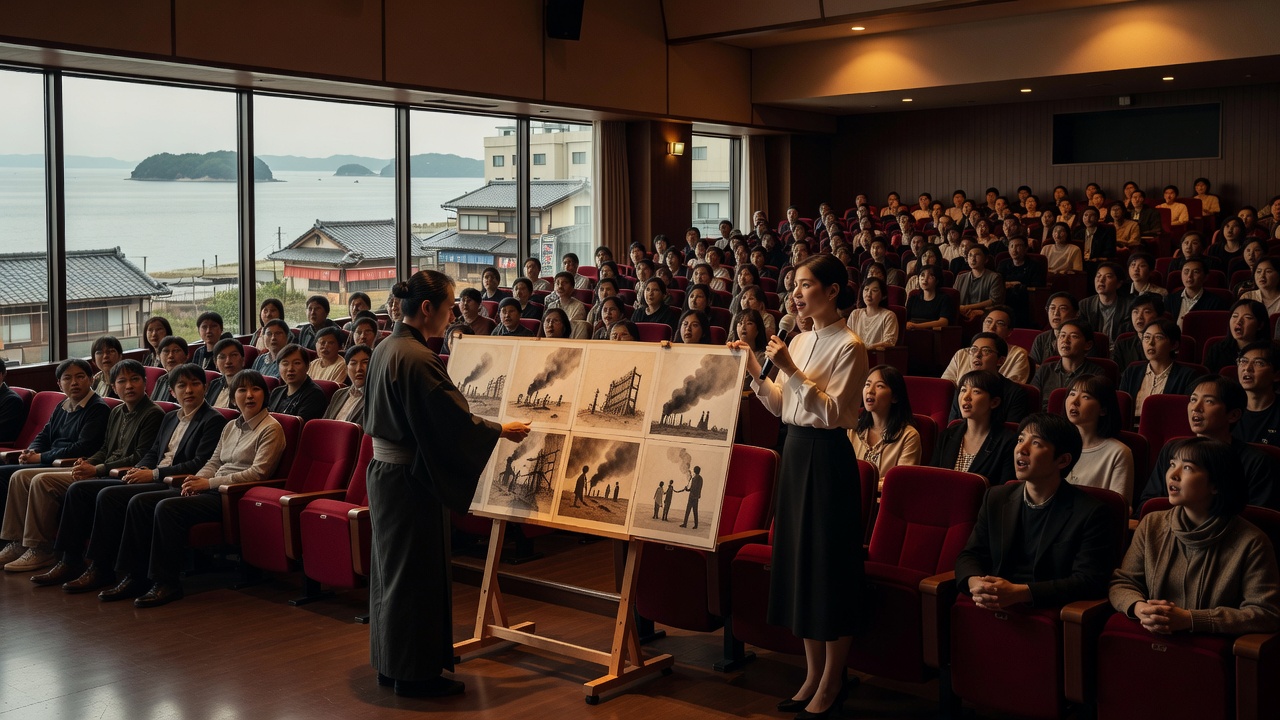
The Changing “Placement” of People in Three Towns Surrounding the Same Sea
In Kure, a defense base is to be established on land that once produced steel. In Iwakuni, a fireworks festival that attracted 50,000 attendees every summer has been put on hold due to the inability to sustain it. In Etajima, the local government has begun delineating areas for residents amid a declining population.
These three events are unfolding in different contexts. However, when we spread out a map, we notice that they all occur within a radius of about 30 kilometers surrounding the same bay in Setouchi — defense, festivals, and living. Despite the differing angles, the core question remains the same: “Who will be placed here, and for what purpose?”
I would like to explore that question through the lens of these three situations.
—
Kure — A Defense Framework Built on the Memory of Steel
In May 2025, Defense Minister Koizumi revealed in a post-cabinet meeting press conference that a contract had been signed for the acquisition of the site of the former Nippon Steel Setouchi Steelworks in Kure, Hiroshima Prefecture. The area in question is approximately 50 hectares, equivalent to about ten Tokyo Domes, which will come under the management of the Ministry of Defense.
The plan is for a “multifunctional composite defense base.” This concept aims to consolidate multiple functions, including logistics, information gathering, and training facilities, into one site, with investments expected to reach hundreds of billions of yen for facility development.
It is essential to recall the context of Kure. The former Navy base was established here, and it has functioned as a base for the Japan Maritime Self-Defense Force since the war. Meanwhile, the steelworks served as a pillar of local employment. When the steelworks closed in 2023, Kure lost one of its two pillars — steel and defense. The fate of the site was intrinsically linked to the future of the town.
Now, the Ministry of Defense is stepping in. From the perspective of the local economy, there is significant hope for the creation of defense-related jobs. Not only will there be demand during the construction phase, but once the base is operational, ongoing employment related to maintenance and surrounding services is also anticipated. The population of Kure has decreased from about 250,000 in 2000 to around 200,000 today, making the securing of a new employment base a pressing issue.
However, it is crucial to pause and consider the question, “For whom is this base intended?” Defense bases are established in response to national security demands. The living areas of residents may not necessarily overlap with the operational zones of the base. The relationship between bases and local communities has been a long-standing theme in Iwakuni. What Kure is about to create is not just a facility but rather the very way of connecting “defense bases and civilian life.”
—
Iwakuni — The Limitations of “Too Many People Gathering”
About 60 kilometers west of Kure, it has been announced that the “Kusunoki Fireworks” festival held every summer in Iwakuni, Yamaguchi Prefecture, will be put on hold for the 2025 fiscal year. The reason is clear — the increase in attendees has outpaced the operational capacity.
This fireworks festival, which once attracted about 50,000 people at its peak, has been cherished as a summer tradition in the region. However, in recent years, the rapid increase in audience numbers has led to soaring costs for security, traffic management, and medical services. The operation of the fireworks festival is said to cost several tens of millions of yen, and it has become a norm that sponsorships and local government subsidies alone cannot cover.
What emerges here is the structural contradiction faced by regional promotion events. When “gathering people” becomes the primary goal, the costs of safely accommodating those people increase exponentially. If the audience doubles, the number of required security personnel does not simply double. The design of flow, emergency evacuation plans, and consideration for surrounding residents — all become more complex.
The local executive committee has been responsible for organizing the fireworks festival. It is a system built on the cooperation of local government employees, volunteers, and local businesses, essentially a “community-run” initiative. However, this system has become unable to withstand the expansion in scale. This is not just a story about Iwakuni. Across the country, there has been a series of cancellations and reductions of fireworks festivals and other events, all stemming from the same structural issues.
I would like to draw attention to the very decision to “pause.” The ability to say “we cannot continue” is a mark of operational integrity. The question is whether this pause will serve as a temporary recharge period or whether it will become a mere shell without a clear path to resuming. How to redesign a sustainable operational model is crucial. Options such as entry restrictions, charging fees, and reviewing the frequency of events all lead back to the question of “for whom are the fireworks?”
—
Etajima — The Era of Administrative Design in “Where to Live”
To the south of Kure, about a 30-minute ferry ride away, in Etajima City, another form of “human placement” is underway. This involves the establishment of residential guidance areas based on a location optimization plan.
Etajima City has a population of about 20,000, which is less than a third of its peak. Settlements are scattered across the island, and the cost of maintaining infrastructure is becoming excessive relative to the population size. Updating water pipes, repairing roads, and maintaining public facilities — all are laid over a residential pattern that is “thin and wide”.
In response, the city is working on a gradual consolidation of residences into designated guidance areas. This involves gathering housing and living services in specific areas and supporting relocation and moving to those areas. For newcomers, measures such as subsidies for housing acquisition, the establishment of a vacant house bank, and enhanced childcare support are being prepared.
Notably, this initiative has begun to show certain results. In recent years, the number of newcomers to Etajima City has been on the rise, particularly among child-rearing households in their 30s and 40s. The relatively good access to central Hiroshima and the appeal of the island’s natural environment and community have enhanced its reputation as a desirable relocation destination.
However, residential guidance comes with delicate issues. Drawing a line that says, “we want you to live here” also implies drawing a line that says, “we do not want you to live here.” For long-time residents of the area, being placed outside the guidance area can evoke a sense that their way of life is being labeled as “inefficient.”
From a structural standpoint, it is rational. To maintain infrastructure with limited financial resources, residential consolidation is unavoidable. However, the challenge lies in how to incorporate respect for the “time spent living here” into that rationality — that will determine the warmth of the system’s design.
—
A Single Question Reflected in Three Situations
In Kure, the national government has decided to “place defense functions here.” In Iwakuni, the community has acknowledged that it “cannot maintain the system to gather people here.” In Etajima, the local government is drawing lines with the intent to “gather people here.”
All of these are discussions about “human placement.” Yet, the subjects determining the placements differ: the national government, local operators, and municipalities — each with their own logic, determining where people will move.
What I want to ask here is, “Who does this make easier?”
The defense base in Kure will strengthen the national security system. But how will the daily lives of residents living around the site change? The pause of the fireworks in Iwakuni alleviates the burden on the operators. But where does that leave those who looked forward to that night every year? The residential guidance in Etajima streamlines the local government’s infrastructure maintenance. But who will support the elderly continuing to live outside the guidance area?
When systems change, there will always be an “outside of the system” that emerges. It is impossible to beautifully arrange a system without recognizing the people on the outside.
—
Looking Ahead to the Future of Setouchi
I would like to highlight several points to watch moving forward.
First, regarding Kure, the specifics of the facility plans for the defense base and the consultation process with the local community are crucial. The acquisition of land is just the beginning. What kind of facilities will be built and by when? What will be the ripple effects on the local economy during both the construction and operational phases? Additionally, how will resident briefings and collaboration with local governments progress? It will be necessary to follow discussions in the Kure City Council as well.
For Iwakuni, whether a redesign of the operational model occurs during the pause will be key. Nationwide, there are examples of fireworks festivals that have transitioned to sustainable operations through the expansion of paid viewing areas and crowdfunding. How will the “Kusunoki Fireworks” attempt to restart, or will it not? The very process of that decision will serve as a mirror reflecting the community’s autonomy.
For Etajima, I want to track how the establishment of residential guidance areas impacts actual demographic trends over several years. The retention rate of newcomers, how they integrate into the community, and how settlements outside the guidance areas evolve will be important. The degree of discrepancy between the “blueprint” of the system and its “reality” — therein lies the hints for future policies.
The gentle sea of Setouchi remains unchanged. However, on the land surrounding that sea, the placement of people is undoubtedly shifting. Defense, festivals, and living — these three different contexts pose the same question: Who is here, who is leaving, and who is coming? I want to carefully witness the process of rewriting that narrative.


 JA
JA EN
EN