



2,900 People in Onomichi, Tai Net Fishing in Tomonoura, Jazz in Iwakuni—Where is the Mechanism that ‘Turns’ the Festivals of Setouchi?

Related Articles
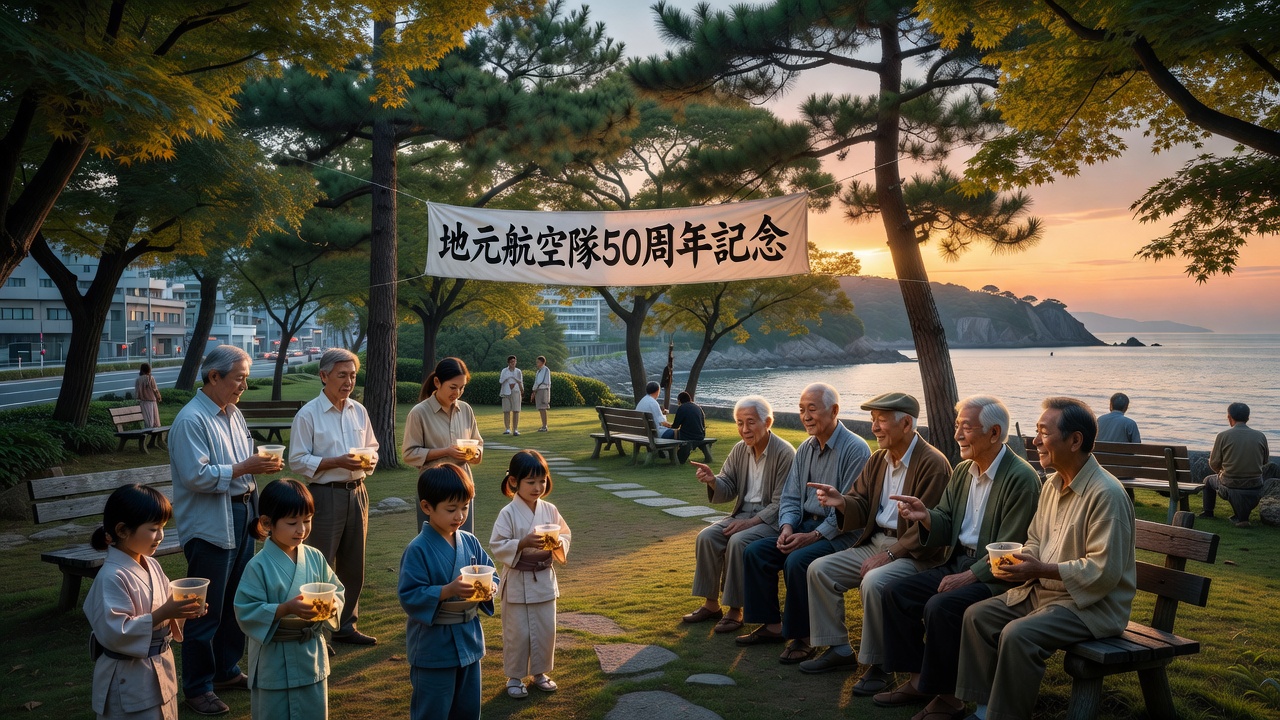

2,900 People in Onomichi, Tai Net Fishing in Tomonoura, Jazz in Iwakuni—Where is the Mechanism that ‘Turns’ the Festivals of Setouchi?
May in Setouchi is also the season of festivals.
At the Onomichi Port Festival, 2,900 participants take part in a dance contest, while in Tomonoura, a fleet of tourist tai net fishing boats sets sail into the Seto Inland Sea, flying large catch flags. In Iwakuni, 27 bands gather for Jazz Street, transforming the storefronts of the shopping district into makeshift stages. Each event is vibrant and photogenic. However, what has long intrigued me is the time that exists “before” this brilliance.
There are people who have been working for months before the festival begins. They do not dance, nor do they perform. They do not pull in nets. Instead, they organize schedules, submit notifications, draw tent layouts, check sound wiring, and count the number of garbage bags. Once the festival is over, they head out to clean up before dawn the next morning. These are the “turning people”—the ones whose existence shapes the contours of the festivals in Setouchi.
—
The Blueprint Needed to ‘Make’ 2,900 People Dance
The dance contest at the Onomichi Port Festival is considerable in scale, with 2,900 participants. However, not all 2,900 dance at the same time. The timing for each team’s turn, movement lines, waiting areas, sound transitions, and judging timings are all meticulously planned down to the minute. If even one element goes awry, it delays the next team’s turn, disrupts audience concentration, and throws off the overall tempo of the festival.
Additionally, the venue features a family-oriented area called the “Super Game Park” and booths showcasing local specialties. How to design the movement lines where dance spectators and booth visitors intersect is a subtle yet crucial task that balances “liveliness” and “safety.”
A staff member who has been involved in the operation of the Onomichi Port Festival for many years stated, “What happens on the day of the festival is mostly determined during the preparation phase. On the day itself, we just go with the flow.” This statement reflects the pride of those behind the scenes. The festival’s “main event” is not the time when the audience is watching, but the moments before and after.
—
Tomonoura’s Tai Net Fishing—A Dual Structure Supporting ‘Visible Fishing’
The tourist tai net fishing in Tomonoura is known as a seasonal highlight that heralds early summer in Setouchi. A fleet of boats, adorned with colorful catch flags, heads to the fishing grounds off Sensuijima Island, showcasing the entire process of traditional net fishing to tourists. Onboard, the “Tai Fishing Song” resonates, and cheers erupt each time a tai is pulled up.
However, this event has a dual structure. One axis is the “inheritance of fishing culture,” while the other is the “profitability as a tourism business.” The tourist tai net fishing is a paid event that collects participation fees, and the risks borne by the organizers are significant, including arranging boats, ensuring safety, adjusting the number of passengers, and making decisions on whether to proceed or cancel based on weather conditions. While the sight of fishermen pulling in nets is picturesque, there are individuals who complete insurance procedures, check the number of life jackets, and assess wave heights at 5 a.m.
“Visible fishing” is sustained by unseen preparations. Behind a single photo posted by tourists on social media lies a multitude of layers of arrangements.
—
Iwakuni Jazz Street—27 Bands and ‘Negotiating Spaces’
Iwakuni’s Jazz Street is an event where stages are set up throughout the town, allowing 27 bands to perform simultaneously. The shopping arcade, temple grounds, and the square in front of the station—places typically used for other purposes become vessels of music for just this day.
What often goes unnoticed here is the work of “negotiating spaces.” Ensuring that sound reaches the shops in the shopping district, providing prior explanations to temple parishioners, notifying nearby residents, securing power sources, and arranging alternative venues in case of rain—all of these tasks involve negotiating and coordinating for 27 different “spaces.” While the music may be vibrant once it starts, there is a careful process of navigating community relationships that precedes it.
A member of the organizing team remarked, “The bands often say, ‘Anywhere is fine.’ But every place has an owner with their own circumstances. That’s what takes the most time to sort out.” This statement reveals the essence of what it means to ‘turn’ a festival. A festival is an act of temporarily rearranging the relationships between places and people. What makes this rearrangement possible is nothing other than the accumulation of trust built in everyday life.
—
The Common ‘Form of Mechanism’ in the Three Festivals
Onomichi’s dance, Tomonoura’s tai net fishing, and Iwakuni’s jazz—these genres are entirely different. However, when we examine their structures, a common outline emerges.
First, each festival pairs “front-end content” with “back-end logistics.” Where there are dancers, there are movement designers. Where there are fishermen, there are safety managers. Where there are bands, there are negotiators for spaces. The ratio of front to back is likely 1 to 3—or even more.
Next, each festival utilizes “everyday relationships” as a resource. The relationships between fishermen and boat owners in Tomonoura, the trust between the shopping district and the organizers in Iwakuni, and the connections between neighborhood associations and executive committees in Onomichi. Events of this scale cannot operate with relationships that suddenly appear only on festival day. Year-round community interactions converge at the point of the festival.
Finally, each festival grapples with the question of “who will carry on the next generation?” As many municipalities along the Setouchi coast face declining populations and aging demographics, securing personnel for behind-the-scenes roles becomes increasingly challenging. The population of Onomichi has decreased from approximately 155,000 in 2000 to about 127,000 in 2024. The Tomo-cho area in Fukuyama City, where Tomonoura is located, also has a high aging rate. The question of how to sustain the back-end mechanisms to maintain the front stage of the festival is not only a cultural issue but also a matter of regional management.
—
The Question of ‘Who Do We Make Comfortable?’
When writing about festivals, it’s tempting to rely on words like “exciting” and “moving.” However, what I truly want to understand is the mechanism that made that excitement possible.
The reason 2,900 people could dance is that someone designed the movement lines. The reason the tai net fishing boats could set sail safely is that someone went to check the waves at 5 a.m. The reason 27 bands could perform comfortably is that someone bowed their heads and said “please” 27 times.
The work of those who “turn” the festival becomes invisible once it is over. However, without that work, there will be no festival next year. The term sustainability is often discussed in the context of the environment, but in the context of festivals, it is all about whether the back-end mechanisms will function again the following year.
In the face of declining birth rates and an aging population, relying solely on individual efforts will reach its limits. It is essential to break down, share, and pass on the behind-the-scenes work in a way that is manageable. Transforming individual dedication into a system is the most understated yet certain way to hand down the festivals of Setouchi to the next generation.
The winds of May in Setouchi blow equally for dancers, fishermen, and the sounds of jazz. Yet the same winds also sway the ropes used to pitch tents, flutter the catch flags, and turn the pages of music stands—indeed, they reach the hands of those who turn the festivals.


 JA
JA EN
EN