



15 Performances of Kamishibai, 82 Trainees Aged 11 to 83, High School Students’ English Speeches—How Many Layers Are There in the Mechanism of ‘Passing on Memory’?

Related Articles
Same City, Three Mechanisms Operating Simultaneously
In the city of Hiroshima, three mechanisms for ‘passing on memory’ are currently operating simultaneously.
People who create and perform kamishibai (paper theater) about the memories of the Western Japan Heavy Rainfall disaster. A total of 82 individuals, aged from 11 to 83, who attend training sessions to retell their experiences of the atomic bombing in their own words. And high school students who produce speech videos in English, sending messages of peace beyond borders.
The three initiatives differ in the types of memories they handle, their intended audiences, and the languages they use. However, when placed side by side, a common question arises—’How can those who have not experienced these events become stakeholders in the memories?’ By deciphering the differences and overlaps in their design philosophies, we can gain insight into the structure of the endeavor to ‘pass on memory.’
—
15 Performances of Kamishibai—Establishing Memory in the ‘Local Language’
In the Yano district of Aki-ku, Hiroshima City, a region that suffered significant damage from landslides during the Western Japan Heavy Rainfall in July 2018. Eight years have passed since then, and the kamishibai produced by local residents has been performed a total of 15 times.
What is noteworthy is that this kamishibai is not ‘materials created by external experts.’ It depicts what happened that night, the conversations that took place in evacuation centers, and who took on what roles during the recovery process—using the memories and words of the residents themselves as the raw material. The narrators are also local residents. There are moments when dialects mix and voices tremble. This ‘lack of polish’ stirs the emotions of the audience.
The performance venues vary widely, including local disaster prevention events, elementary school classes, and community center gatherings. The number 15 indicates that performances have continued at a pace of about twice a year. There is no flashiness. However, by being repeatedly performed within the same land, the kamishibai is becoming established not as an ‘event’ but as a ‘memory device of the land.’
Who benefits from this mechanism? First, it is the children who do not know about that time. They can hear from adults who know what happened in the land where they live, information that is not included in textbooks. And secondly, it is the residents who narrate. The act of shaping and passing on memories liberates the narrators from solitude. The format of kamishibai is not about one person narrating but is based on the division of ‘pictures’ and ‘voices.’ This structure itself prevents the weight of memory from being borne by a single individual.
—
82 Trainees in Memory Transmission—How to Create Qualifications for ‘Those Who Have Not Experienced’ to Speak
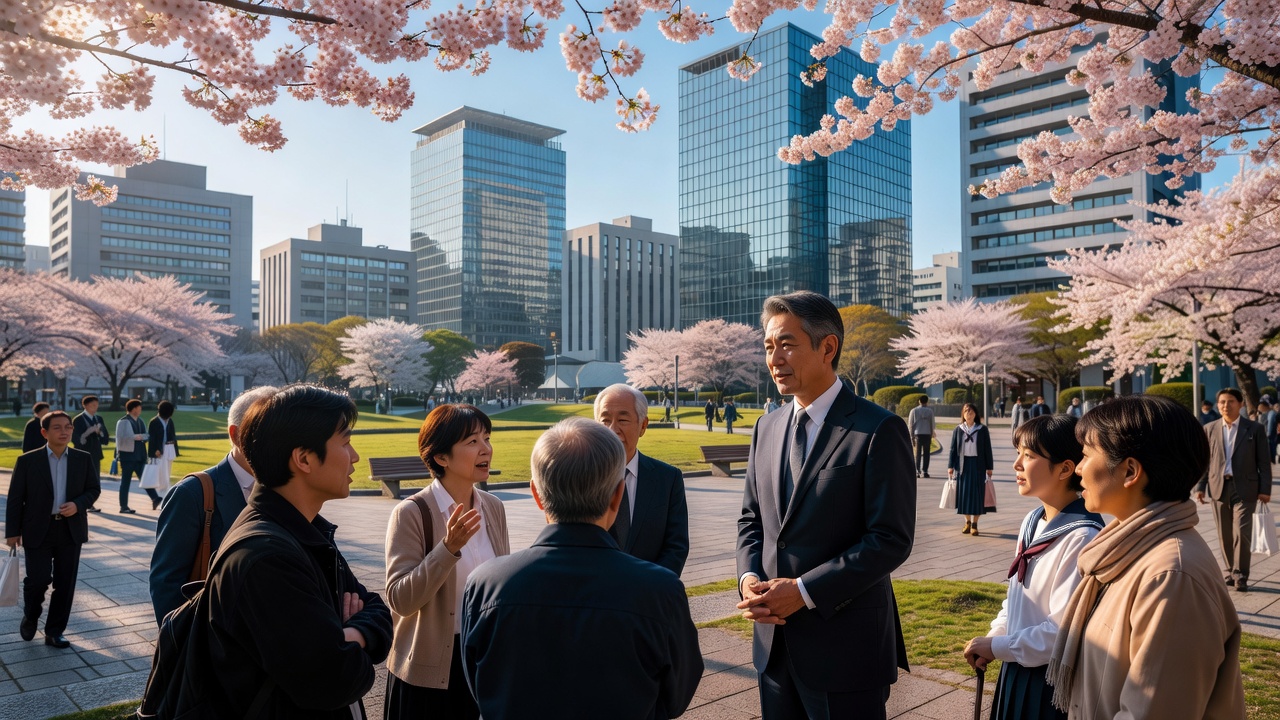
This term, 82 individuals applied for the training program for ‘Atomic Bomb Experience Transmitters’ conducted by Hiroshima City, the second-highest number ever. The age range is from 11 to 83 years old. As the average age of atomic bomb survivors exceeds 85, and the number of those who can provide direct testimonies decreases each year, this training program was initiated in 2012 as a system design for ‘those who have not experienced’ to speak about the memories of the bombing.
The training period lasts about three years. Participants listen directly to testimonies from survivors, read materials, and learn the techniques of conveying these experiences. After completing the program, they provide testimonies to visitors at places like the Hiroshima Peace Memorial Museum. By the end of fiscal 2024, the total number of certified transmitters is expected to reach approximately 230.
The core of the design here is the balance between ‘accuracy’ and ‘one’s own words.’ Simply reciting the testimonies of survivors makes the memories into mere ‘information.’ On the other hand, if too much personal interpretation is added, the facts become distorted. The training carefully trains participants on how much to quote the survivors’ words and when to switch to their own words—the boundary line is meticulously practiced. The same principle of distinguishing fact from speculation, which is fundamental in reporting, is also upheld here.
We should pause for a moment at the fact that there is an 83-year-old applicant. This person may be a survivor or a second-generation survivor. In either case, they have made the choice to ‘relearn as a transmitter’ in their 80s. Someone who possesses their own memories consciously chooses to systematically learn ‘the techniques of transmission.’ This reflects the recognition that possessing memory and being able to pass it on are separate abilities.
Conversely, there is also an 11-year-old applicant. By the time this child completes the training, they will be 14 years old, potentially becoming one of the last generations to hear directly from survivors. Whether the system ‘catches up’ will be measured within this timeline.
—
High School Students’ English Speeches—What Happens When Memories Are ‘Translated’?
High school students in Hiroshima have produced speech videos conveying messages of peace in English. ‘Each small action can create a big change’—the words they chose are a universal structure that does not rely on specific names from Hiroshima.
What is intriguing about the design of this activity is that ‘what language to speak’ is not merely a language choice but a redefinition of the intended audience. If they speak in Japanese, the listeners are limited to those within Japan. The moment they switch to English, the potential audience expands to the entire world. Simultaneously, changes occur on the speaking side as well. In Japanese, the context of ‘the atomic bombed city of Hiroshima’ functions as a shared premise, but when speaking in English, they must explain that premise from scratch. Translation is not merely a task of replacing words; it is a task of reconfiguring ‘what is taken for granted and what needs to be explained.’
Through this reconfiguration, the high school students are reconstructing the memory of Hiroshima in their own words. It is not ‘transmission’ but ‘dissemination.’ They are replacing the received memory with another language through their own filter. That very process promotes the internalization of memory.
—
Three Layers—Distance of Delivery and Cost of Memory Transformation
Now, let’s compare the three initiatives.
| Kamishibai | Transmission Training | English Speech | |
|---|---|---|---|
| Distance of Delivery | Within the same land | Visitors (domestic and international) | Worldwide |
| Language Used | Japanese including dialects | Standard Japanese | English |
| Narrator’s Position | Residents who experienced it | Those who learned from the experiencers | The generation translating memories |
| Memory Transformation Stage | Experience → Storytelling | Other’s experience → One’s own words | Local memory → Universal message |
| Sustainability of the Mechanism | Dependent on the local community | Designed as a system | Project-based |
As the distance increases, the ‘cost of memory transformation’ rises. The kamishibai spoken in dialect has minimal transformation, which is why it feels so vivid. The transmission training takes three years to train participants to internalize others’ memories. The English speech requires a complete re-translation of the local context.
This is not a discussion of which is superior. Each mechanism for passing on memory has designs suited for short, medium, and long distances. And the fact that these three are operating simultaneously in the same city speaks to the depth of memory inheritance in Hiroshima.
—
Mechanisms Are Evaluated by ‘Who They Ease’
What is common among the three initiatives is their attempt to design the inheritance of memory not solely relying on ‘individual sense of mission.’
Kamishibai does not concentrate the burden on one person through the division of pictures and voices. The transmission training socially guarantees ‘the qualification to speak’ through a three-year curriculum. The English speech creates a mechanism where the message can reach even if the narrator is not present through the format of video.
All of these designs are predicated on the understanding that goodwill and enthusiasm alone cannot sustain them. Because they operate through mechanisms, memories remain even when people change. It is not individual effort but structure that supports memory.
However, there are challenges. The number of 15 performances of kamishibai also means that there are only opportunities twice a year. The three-year time cost of the transmission training can become a hurdle to participation. For the high school students’ speech videos, verifying how many viewers they reached after production will be key moving forward.
Mechanisms do not become complete at the moment they are created. They only become ‘devices’ through continuous operation and ongoing adjustments.
—
Future Points of Interest
How these three mechanisms intersect in the future—this holds the next developments.
For example, there is the possibility that those who have completed the transmission training will become narrators for kamishibai. There could be pathways for high school students to apply for the transmission training. The content of kamishibai could be translated into English and used for disaster prevention education abroad. As each operates independently at this stage, when they progress to a phase of connection between the mechanisms, the inheritance of memory will deepen further.
Three mechanisms quietly continue to operate in Hiroshima. There are no flashy numbers. However, the fact that an 11-year-old and an 83-year-old are sitting in the same training, and that kamishibai in dialect and English speeches are being disseminated from the same city—this fact itself is the most tangible touchpoint of the endeavor to pass on memory.


 JA
JA EN
EN