



95-Year-Old Classmate Attends Memorial Service for the First Time, 80-Year-Old Essay Collection by a Poet—A Third Party Emerges in the ‘Delivery of Memory’

Related Articles
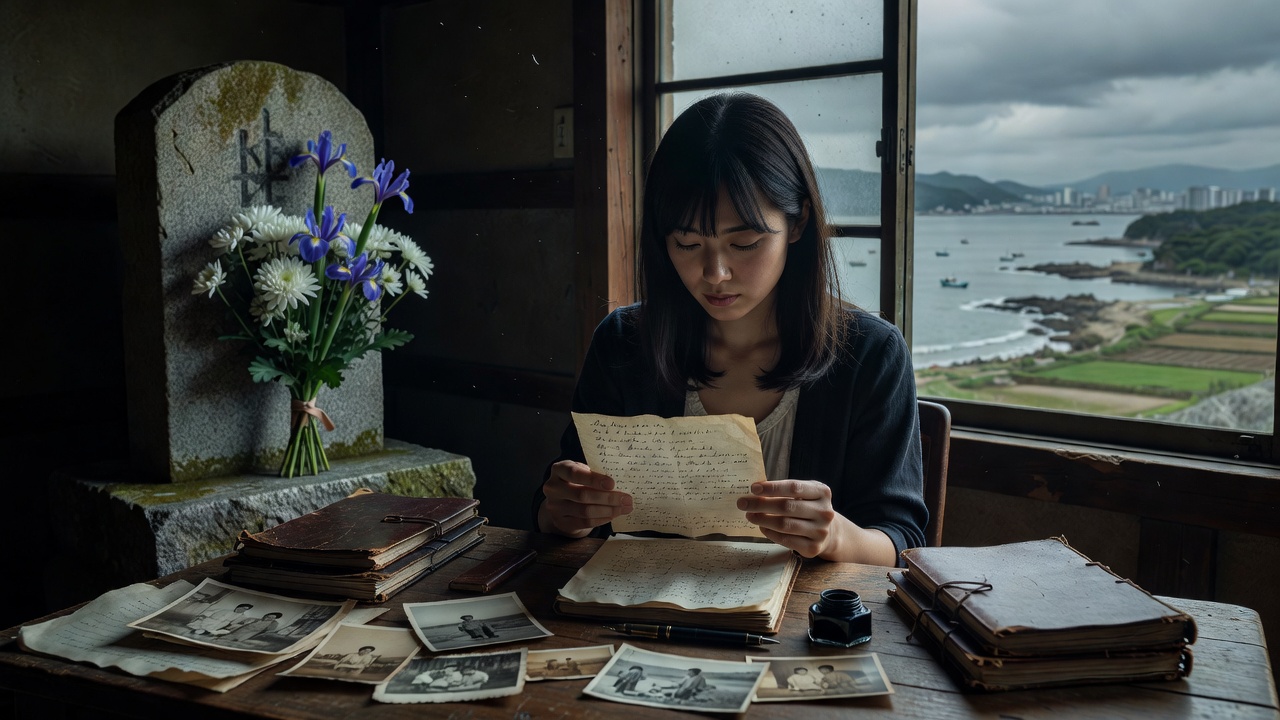

The number of witnesses is decreasing. This fact cannot be changed. However, ‘deliverers’ can emerge from unexpected places.
In September 2023, a memorial service for students mobilized during World War II was held at Iwakuni Technical High School in Yamaguchi Prefecture. In Onomichi, Hiroshima Prefecture, a secondhand bookstore owner quietly published a collection of essays by the poet Yuji Kinoshita. At first glance, these two events seem unrelated. Yet when placed side by side, a common question arises: ‘Who will deliver the memories after the parties involved are gone?’
—
95-Year-Old Classmate Attends Memorial Service for the First Time
Iwakuni Technical High School has a memorial monument dedicated to students who lost their lives during the mobilization in World War II. The memorial service, held every September, has been organized primarily by current students and faculty. In 2023, a 95-year-old alumnus attended the service for the first time.
The phrase ‘for the first time’ feels a bit jarring. Why now, nearly 80 years later?
In post-war Japan, discussing war experiences has long been accompanied by complex emotions. There is the guilt of the survivors, the resignation that their stories may not reach others, and the struggle to rebuild daily life. It is not that this alumnus was unaware of the memorial service; it took 80 years for them to step forward.
According to reports, this alumnus expressed, ‘I want you to remember our experiences.’ Though brief, this statement carries two layers. ‘Our experiences’—the intention to convey not only the memories of deceased classmates but also their own memories as a survivor. And ‘I want you to remember’—indicating that the recipient is someone outside of themselves. Standing there at 95 years old became a testimony that transcended words.
The memorial service has been supported by current students, faculty, and local stakeholders. The participation of the generation of those directly involved has been decreasing year by year. According to statistics from the Ministry of Health, Labour and Welfare, as of 2023, 78 years after the war, those who experienced mobilization are limited to those in their mid-90s and older. The number of active witnesses to war experiences across the country has rapidly declined over the past decade. The appearance of a 95-year-old alumnus at the Iwakuni Technical High School memorial service simultaneously confronts us with the fact that the ‘last witnesses’ are still here, while also acknowledging the reality that this time is soon coming to an end.
—
A Poet’s Essay Collection Compiled by a Secondhand Bookstore Owner
Now, let’s move to Onomichi City in Hiroshima Prefecture.
Fujii, the owner of a secondhand bookstore in Onomichi, has edited and published a collection of essays by the poet Yuji Kinoshita (1914–1965). Kinoshita, originally from Fukuyama City, is known for works such as ‘Late Summer’ and ‘The Definitive Collection of Yuji Kinoshita’s Poems,’ but opportunities to read his essays and correspondence have been scarce until now. Fujii has gathered scattered essays and writings documenting Kinoshita’s interactions with fellow writers and compiled them into a single volume.
Fujii is not a researcher. They are neither a literary scholar affiliated with a university nor a relative of Kinoshita. They are someone who stands daily at the intersection of book distribution and preservation as a secondhand bookstore owner. ‘A secondhand bookstore is not just a place to sell books; it is also a place to convey memories’—this statement by Fujii serves as a redefinition of their work and demonstrates that the deliverers of memory are not limited to ‘the parties involved’ and ‘researchers.’
Kinoshita’s essays gently depict the landscapes of the Bingo region from before to after the war, exchanges with literary friends, and observations of daily life. While they do not primarily focus on direct depictions of war, the rhythm of life captured in the writings of someone who lived through that era serves as a conduit for understanding ‘how people lived during that time.’ This is different from testimony; however, it carries the texture of memory.
Fujii’s editorial work is a series of understated processes. They confirm the whereabouts of scattered manuscripts, obtain publication permissions, investigate the original publications, and add annotations. Before a single book takes shape, the hands and time of many individuals come together. This very mechanism becomes a device for delivering memory.
—
The Circuit of the ‘Third Party’
The 95-year-old alumnus is a party involved. However, the individuals who have maintained the memorial service for 80 years are the current students and faculty who are not directly involved. Fujii has recompiled memories into a book from a position that is neither that of the poet, their family, nor a researcher.
There is a common structure here. The transmission of memory requires at least three layers.
First Layer: The Parties Involved—Those who have the experience. The source of testimony. However, this number inevitably decreases over time.
Second Layer: Researchers and Institutions—Universities, museums, and administrative archives. They systematize and preserve records. However, access routes may be limited. Academic papers and reports do not always reach the intended audience.
Third Layer: Local Editors—Secondhand bookstore owners, current students supporting memorial services, local volunteer storytellers, and those involved in small publishing activities. They are neither parties involved nor experts, but they stand between memory and recipients, shaping the ‘form of delivery.’
Here, I would like to refer to this third layer as the ‘third party.’ Their characteristic is that they are ‘editors’ rather than ‘owners’ of memory. They do not speak of their own experiences but transform someone else’s memory into a form that can reach others. Organizing the memorial service, annotating the essay collection, writing exhibition captions—each of these tasks involves designing the method of delivering memory rather than the memory itself.
—
2026 NPT Review Conference—A Venue Where ‘Delivery’ is Questioned
The Nuclear Non-Proliferation Treaty (NPT) Review Conference scheduled for 2026 will be held amid international tensions following the inability to adopt a final document at the previous conference in 2022 due to Russia’s opposition. Lecturer Ohsita from Hiroshima City University points out, ‘The issue of nuclear weapons is not merely an international problem; it is deeply intertwined with individual memories.’
As of 2024, the average age of atomic bomb survivors will exceed 85. The number of certified atomic bomb experience transmitters recognized by Hiroshima City is about 180 (as of 2023), but many of them are not survivors themselves; they are ‘third parties’ who have learned the testimonies and speak on behalf of the survivors. How the voices of the parties involved will be delivered at international conferences raises the editorial question of how much of the ‘original text’ of testimony will be preserved and in what context it will be conveyed.
It is important to note the danger of easily connecting the NPT Review Conference with the memorial service at Iwakuni Technical High School and the essay collection from Onomichi in a straight line. The negotiations of international treaties and small local endeavors differ in scale and context. However, the question of ‘how to deliver after the parties involved are gone’ lies at the core of both. Rather, it is more faithful to the facts to consider that the ‘third party’ mechanisms being attempted in local settings may provide insights for the international transmission of memory.
—
Mechanisms that Carry Memory
If the inheritance of memory relies on ‘individual efforts,’ it will be interrupted the moment that person is gone. The words spoken by the 95-year-old alumnus are invaluable. However, for those words to reach others, a mechanism for preparing the memorial service each year was necessary. Fujii was able to compile the essay collection because of the network of secondhand book distribution and the format of publishing.
Personal memory only becomes something that ‘can be delivered’ when placed within a mechanism. Conversely, without a mechanism, even the most urgent memories will fade away, remaining trapped within the individual.
What we should focus on moving forward is how these ‘third parties’ will increase and how they will collaborate. Are the operational know-how of memorial services shared across regions? How are the editorial activities of secondhand bookstores and small publishers connected to libraries and archives? Can the training programs for atomic bomb experience transmitters be applied to the inheritance of other war memories?
The question is not ‘What will happen when there are no longer people with memories?’ but ‘How can we design the mechanisms for delivering memory now?’
The fact that a 95-year-old alumnus attended the memorial service for the first time. The fact that a secondhand bookstore owner compiled scattered essays into a single volume. Neither of these events is particularly flashy. However, behind every moment when memory reaches others, there is always someone’s understated preparation. Those who take on that preparation are the ‘third parties,’ and their existence is what prepares us for an era without witnesses.
Memory is not something to possess; it is something to deliver—As long as there are deliverers, memory remains alive.


 JA
JA EN
EN