



Renovation of the Yamato Museum, Restoration of the Statue of Ashikaga Takauji, and Urban Sports Development at the Cycling Stadium—Whose Comfort Does the Design Philosophy of “Rebuilding” Serve?

Related Articles
Title
Renovation of the Yamato Museum, Restoration of the Statue of Ashikaga Takauji, and Urban Sports Development at the Cycling Stadium—Whose Comfort Does the Design Philosophy of “Rebuilding” Serve?
Main Text
Repairing buildings, restoring statues, changing uses—three “rebuildings” are taking place almost simultaneously in Hiroshima Prefecture. The Yamato Museum in Kure, the statue of Ashikaga Takauji at Jodoji Temple in Onomichi, and the urban sports facility at the site of the former Hiroshima Cycling Stadium. Despite their vastly different scales and contexts, each grapples with the same question: “Who benefits from this renovation?” We will decode the design philosophies behind these physical constructions one by one.
—
Yamato Museum—Designing a Circuit to “Deliver to Children”
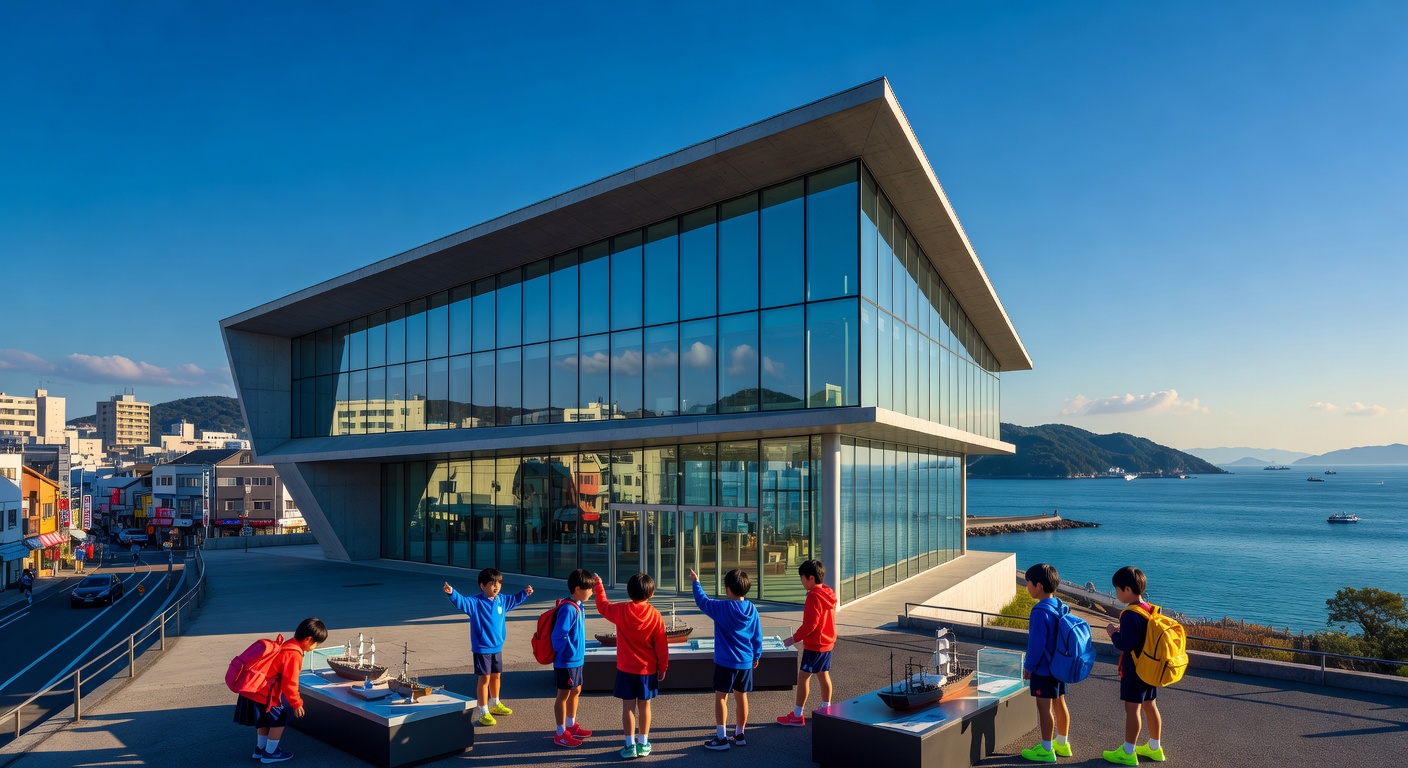
The Yamato Museum (Kure Maritime History and Science Museum) in Kure City is set to reopen on April 23 after approximately one year of renovation work, with a total project cost of about 1.2 billion yen. The flow of the permanent exhibition centered around a 1/10 scale model of the battleship Yamato has been revised, and the audiovisual equipment has been updated.
Notably, a pre-opening event was organized for local elementary and middle school students prior to the public opening. The museum director stated, “I want to provide hands-on experiences to the generation that does not carry the memories of war.” Adjustments to the height of display panels and font sizes, as well as the addition of interactive corners—these detailed design changes likely resulted from a reverse calculation of “who will walk this place first.”
On the other hand, issues have arisen that cast a shadow over the renovation process itself. There have been allegations that the museum director intervened in the decision-making of the city’s review committee regarding the selection of exhibition content. A third-party committee from the city expressed the view that “there may have been an influence beyond the scope of advice on the review results.” In response, Kure City maintains that it was strictly within the bounds of professional advice.
What is being questioned here is not just the black-and-white of factual matters. It is a structural issue regarding the authority to decide the design philosophy of the renovation—specifically, “what to preserve and what to change”—and through which circuits that authority is exercised. If the transparency of decision-making is compromised in a facility funded by 1.2 billion yen of public money, the very principle of “for the children” loses its footing. The system supports trust, and trust supports principles. That order cannot be reversed.
—
Restoration of the Statue of Ashikaga Takauji—Unveiling Half a Century of Silence Through Behind-the-Scenes Craftsmanship
The restoration of the seated statue of Ashikaga Takauji, housed at Jodoji Temple in Onomichi City, has been completed for the first time in about 50 years. It is said that during the Nanboku-chō period, Takauji prayed for victory at this temple while ascending from Kyushu, and the statue represents a historical asset that narrates the region’s history.
The restoration was undertaken by a specialized workshop based in Kyoto that focuses on cultural property restoration. Layers of soot and dust accumulated on the surface of the wooden colored statue were carefully removed, and the peeling colored sections were meticulously retouched. X-ray examinations identified damaged areas within the internal structure, and reinforcements were applied to the invisible parts. The work period lasted about one year. “The focus was on measures to prevent further deterioration rather than flashy restoration,” explained the person in charge of the restoration.
This statement reveals the essence of the act of restoration. “Rebuilding” does not necessarily mean making something new. It is the minimal intervention needed to pass on what has been lost over time to the next 50 years—this is the design philosophy of restoration.
Jodoji Temple houses the national treasures of the main hall and pagoda, attracting about 50,000 visitors annually. The completion of the statue’s restoration adds a new layer of narrative to the temple’s historical context. However, it is somewhat misleading to speak solely of “economic effects as a tourist resource.” The more significant aspect, in the long run, is that the restoration allows local people to once again articulate “what existed in their land”—opening that circuit is far more impactful. History falls silent unless someone retells it. Restoration is also a process to break that silence.
—
Former Hiroshima Cycling Stadium—The Largest Renovation of “Changing the Use”
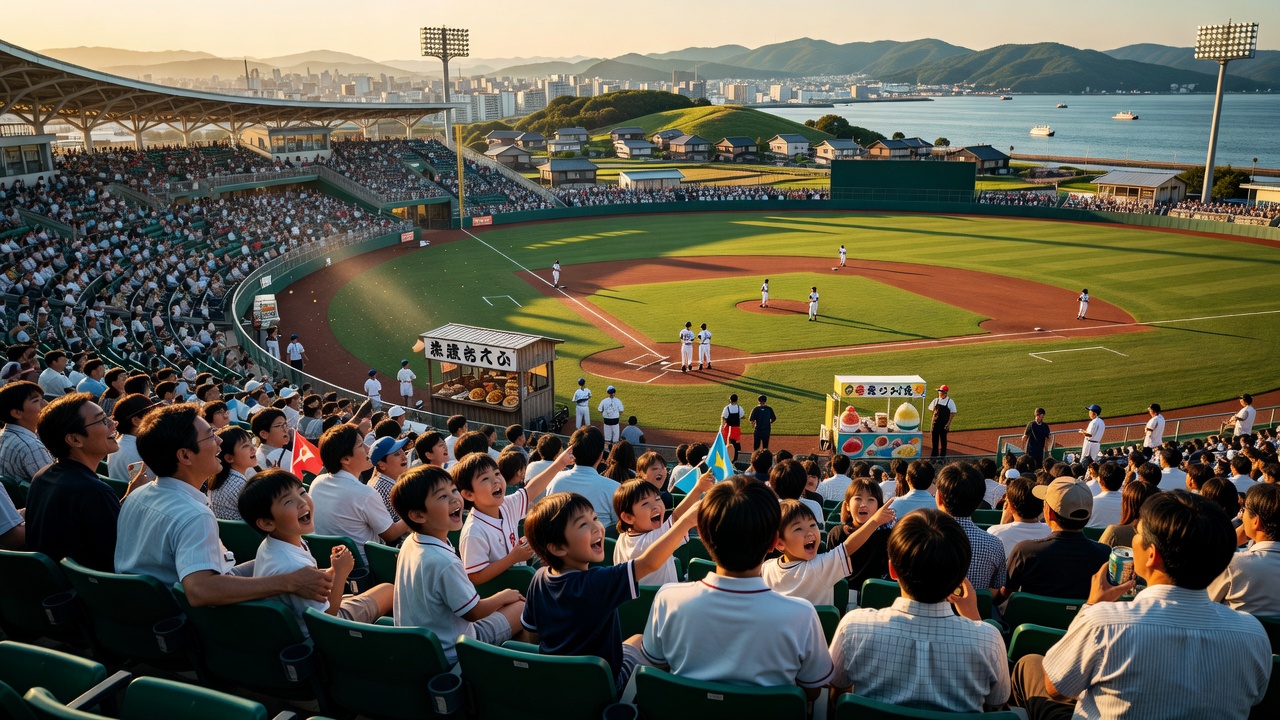
Plans are underway to transform the site of the former Hiroshima Cycling Stadium in Naka Ward, Hiroshima City, into an urban sports facility. The facility is expected to be developed as a multi-purpose sports park centered around sports that became official events at the Tokyo 2020 Olympics, such as skateboarding, BMX, and bouldering. Hiroshima City estimates the development costs to be in the tens of billions of yen and aims for a launch in the late 2020s.
The cycling stadium has existed in the region for over 70 years since its opening in 1952. At its peak, it attracted hundreds of thousands of visitors annually, but in recent years, both revenue and attendance have been declining. Instead of demolishing the building and leaving the land vacant, the decision to repurpose it while utilizing existing infrastructure characteristics, such as the bank’s slope and large site area, reflects both cost-effectiveness and a desire not to sever the memory of the place.
The user demographic for urban sports is primarily teenagers to those in their 30s. Considering that the main demographic for cycling was individuals aged 50 and above, this transition signifies a fundamental replacement of the facility’s “intended body.” Reports indicate that local skaters and BMX riders were consulted during the design phase, highlighting the importance of incorporating the voices of users into the design process.
However, challenges remain. Urban sports facilities are on the rise nationwide, making differentiation difficult. Issues such as noise problems with surrounding residents and how to cover the maintenance costs of the facility raise questions about sustainability in design. “Maintaining” the facility is far more challenging than “creating” it. Whether the system can sustain itself—this is where the true design philosophy will be tested.
—
What the Three “Rebuildings” Reflect
The Yamato Museum centers on the “circuit to deliver to the next generation,” the statue of Ashikaga Takauji focuses on “minimal intervention to pass on time,” and the former cycling stadium emphasizes “transforming the body that uses it.” Despite the vastly different methods, all begin their design from the question, “Who will use this place next?”
What is common among the three is that behind the physical construction lies an invisible blueprint of decision-making structure—who decides, whose voices are reflected, and who bears responsibility. The issue of the museum director’s intervention at the Yamato Museum illustrates what happens when that blueprint is shaken. The restoration of the statue of Ashikaga Takauji is an example of a system that quietly functions by entrusting decisions to experts. The transformation of the cycling stadium is at a stage where it will soon test the circuit of incorporating user voices into the design.
“Rebuilding” does not mean renewing walls and roofs. It is about re-establishing the relationship between the place and the people. The quality of the renovation will not be determined on the day of completion, but rather by who will be present at that place five or ten years later.
The three sites are currently moving along their respective timelines. Which design philosophy will quietly blend into the daily life of the community—the answer will take a little longer to emerge.


 JA
JA EN
EN