



The Return of Onomichi’s Clams After 12 Years, Cat Neutering, and the Full Opening of Shimanami—’Maintenance Time’ Shapes the Setouchi Landscape

Related Articles
The Return of Onomichi’s Clams After 12 Years, Cat Neutering, and the Full Opening of Shimanami—’Maintenance Time’ Shapes the Setouchi Landscape
Three events have coincided along the Setouchi coast. Onomichi’s clams have resumed general sales for the first time in 12 years, a dedicated vehicle for cat neutering is circulating through the hilly town, and the bicycle path of the Shimanami Kaido has been fully opened—none of which are likely to make flashy headlines. Yet, when put together, a common texture of time emerges. “The years of someone’s continued effort” are now returning as a landscape.
What connects these three cases is not short-term results but a perspective of “maintenance time.” We traced the mechanisms behind each and the hands that have kept them going.
—
12 Years of Tending the Seabed—The Structure of Clam Revival
The Onomichi Fishing Cooperative has announced the resumption of clam sales. The last time they were available in the market was 12 years ago. What has happened during that time?
The decline of clams is a nationwide issue, but in Onomichi, it was multifaceted. Changes in seabed quality due to sand extraction, a decrease in nutrient salts, and an increase in predatory species—there are multiple causes. The fishing cooperative voluntarily halted sales and began by investigating the condition of the seabed. They replaced sand to improve the seabed quality and continued to eliminate predatory species such as the thorny skate and the Japanese clam. They regularly conducted water quality monitoring and gradually set catch limits while confirming the settling conditions of juvenile clams.
Notably, these 12 years were not a “fishing ban” but a “management period.” Cooperative members did not just refrain from harvesting; they continued to tend to the seabed. To sustain work that does not directly translate into income for over a decade, a system is needed. The cooperative utilized subsidies from the prefecture and city, recorded the workdays of its members, and made their activities visible to foster consensus. They also held explanatory meetings for local residents, continuously communicating why clams were not available for purchase at that time.
The span of 12 years corresponds to several cycles of clam generations. The decision to resume sales came when it was judged that the population had stabilized and reproduction began to occur autonomously. What is present here is not the fleeting glamour of “revival” but the accumulation of a modest repetition of preparing the seabed environment, waiting, and confirming.
Once sales resume, Onomichi clams will return to local dining tables. For tourists, it will also become a new culinary attraction. However, beneath that bowl of miso soup lies 12 years of maintenance time.
—
The Behind-the-Scenes Mechanism for Maintaining the ‘Cat Town’—Current Status of Neutering Operations
Onomichi is known as the cat town. Walking up the hills, one encounters cats, and these scenes are shared on social media, becoming a tourist resource. However, the “scenery with cats” is not something that can be maintained by leaving it alone.
Stray cats have a high reproductive capacity. A female cat can give birth 2 to 3 times a year, with 4 to 6 kittens each time. Without management, the population can explode in just a few years, increasing the risks of waste issues and infectious diseases, thus deteriorating the living environment for residents. The coexistence of “cats are cute” and “there are too many cats” can occur simultaneously in the same town.
Onomichi City is advancing the expansion of TNR (Trap-Neuter-Return) activities using dedicated surgical vehicles. By introducing surgical vehicles, they can reduce transportation costs and time to animal hospitals, increasing the number of surgeries performed each day. While the number of organizations conducting TNR activities nationwide is increasing, there are still few cases where local governments actively operate vehicles and engage the community in these efforts.
For this system to function, several gears must mesh together. First, local residents must know where the stray cats are and cooperate in their capture. Next, a system must be established for veterinarians to efficiently perform surgeries. Finally, there must be a framework for accepting the cats as “community cats” that will be monitored after surgery. If any one of these components is lacking, the system will not operate.
In Onomichi City, through explanatory meetings and awareness activities for local residents, they have conveyed the meaning of “coexisting with cats” in concrete terms. Coexistence does not mean eliminating cats or allowing them to multiply without limit; it is about maintaining an appropriate number while continuing to share the same space with both humans and cats. Here, too, the key is not a one-time initiative but ongoing maintenance.
Behind the photos of cats taken by tourists are people who set traps, attend surgeries, and monitor the cats’ recovery. The scenery of the “cat town” is maintained by these behind-the-scenes efforts.
—
A 30-Year-Long ‘Connection’—The Full Opening of the Shimanami Kaido Bicycle Path
The Shimanami Kaido bicycle path has been fully opened. While it was already known that one could cycle approximately 70 km from Onomichi to Imabari, there was a need to use ferries for certain sections. The significance of this recent development, which has fully connected the bicycle path, is substantial.
The concept of the Shimanami Kaido as a bridge connecting Honshu and Shikoku dates back to the 1970s. The construction of bridges, road improvements, and the addition of bicycle paths—each stage has accumulated time for planning, coordination, and construction. Throughout this approximately 30-year project, the development of the bicycle path has often been postponed. Compared to roadways, its economic benefits are less visible, making it harder to prioritize in budgeting. Nevertheless, thanks to the persistent requests from local municipalities, tourism associations, and cycling enthusiasts, the development has progressed gradually.
Now, the Shimanami Kaido is recognized as a world-class cycling route. While it is well-known for being selected as one of CNN’s “Seven Most Amazing Cycling Roads in the World,” the evaluation is not solely based on the views from the bridges. The experience of the route is established through the connection of various “points”—the rental bicycle terminals, rest areas, signposts on each island, and small eateries and accommodations run by local people.
The full opening is both a milestone and the beginning of new maintenance. The deterioration of the road begins the moment it is completed. Surface repairs, sign updates, and safety management—maintenance time is far longer than the time spent on construction. Whether the Shimanami Kaido continues to be a “route to be proud of globally” depends on the maintenance efforts that follow its full opening.
—
The Overlapping of Three Time Frames
The 12 years for clams, the daily surgeries for cats, and the 30 years for Shimanami—the scales of time are different for each. However, what they have in common is the structure that “the landscape is maintained through continuous effort.”
Clams have returned through the hands of the fishing cooperative that has tended to the seabed environment. The cat town is maintained by the hands of those who capture, neuter, and monitor the cats. The Shimanami Kaido has been connected through the hands of those who have persistently made requests and the administration that has accumulated development. None of these appeared suddenly one day.
The term “maintenance” has a somewhat old-fashioned ring to it. However, it seems to accurately describe what is happening on the ground in Setouchi more than grand terms like sustainability or SDGs. Maintenance is not an act aimed at completion but an act of continuing to preserve a state. There is no end. That is why a system is needed. Individual passion alone cannot sustain efforts for ten years. The management of cooperative workdays, administrative support systems, and the formation of consensus among local residents—these arrangements that convert emotions into systems existed in each of these fields.
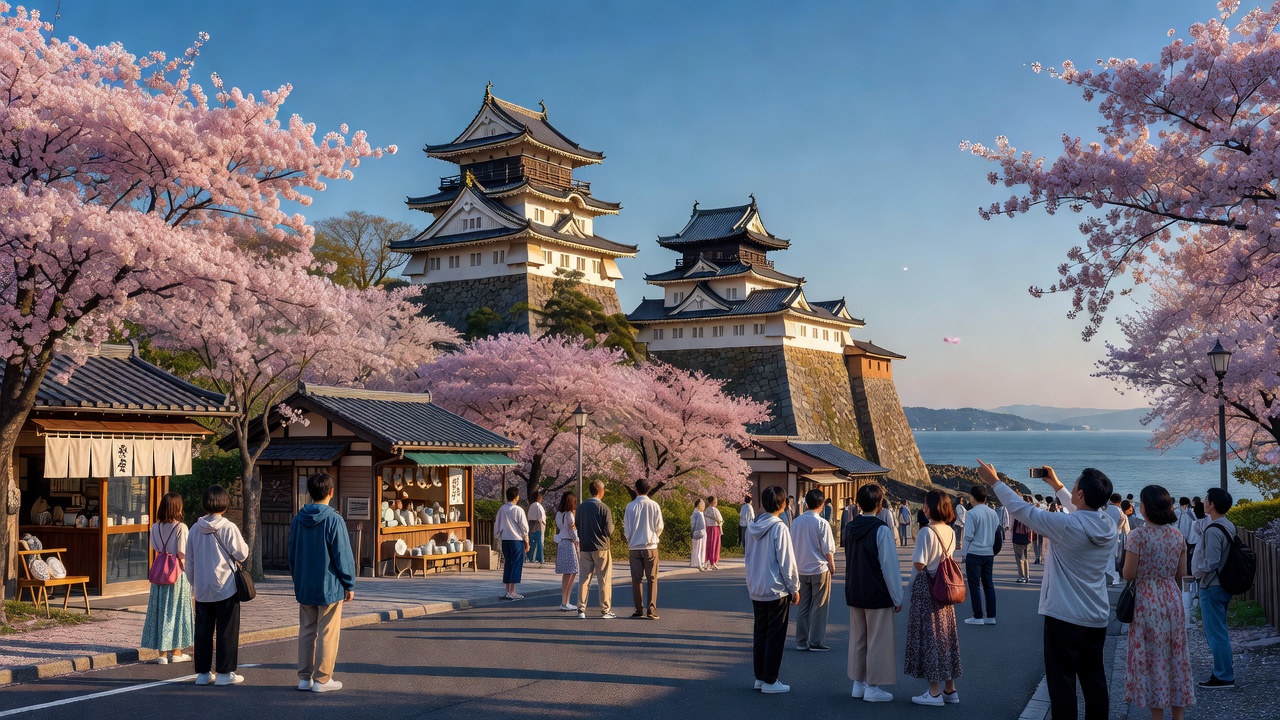
The landscapes of Setouchi are often described as tranquil seas and islands. However, that tranquility is not natural. The hands that till the seabed, the hands that catch cats and take them to the hospital, the hands that repair the bicycle path—all these countless hours of maintenance have created the landscape we see today.
—
Future Points of Attention
After the resumption of clam sales, the first litmus test will be whether sustainable catch management can be maintained. If demand returns, the pressure for overfishing will also increase. Can the management system built over 12 years withstand the forces of the market?
The ongoing budget for cat neutering surgeries is a challenge. The maintenance costs for the surgical vehicle, securing veterinarians, and the generational transition of local volunteers—the costs to keep the system running are not easily visible.
With the full opening of the Shimanami Kaido, it is expected that the number of users beyond cyclists will increase. New challenges such as coexistence with pedestrians and safety management during busy times will arise.
In all cases, the essence lies in the dull and lengthy “maintenance” time that follows the glamorous “completion.” Whether the landscapes of Setouchi remain as beautiful tomorrow as they are today depends on whether someone is actively tending to them today.


 JA
JA EN
EN