



One Million Yen to Decorate the Station, Goats Grazing, High School Students on Stage — Iwakuni Prepares Its Entrance While Remaining “Less Than a Tourist Destination”

Related Articles
Who Will Prepare the Entrance?
Tourist destinations have a “face.” The atmosphere upon stepping off the train, the colors that catch the eye, the first words spoken — these elements accumulate to shape the impression of visitors.
Iwakuni City in Yamaguchi Prefecture, while home to the famous Kintai Bridge, cannot be said to be a well-developed “tourist city.” The new Iwakuni Station, where the Shinkansen stops, and the conventional Iwakuni Station both lack sufficient elements that make one feel, “This is Iwakuni” upon arrival.
Simultaneously, there is a movement among residents to prepare this entrance without relying on large government budgets. Crowdfunding for station decorations, the introduction of goats to maintain sunflower fields, and the “Kagura Koshien,” where high school students compete in traditional performing arts — these initiatives, born from different contexts, are coming together to shape a single landscape in the timeline of the 2026 “Yamaguchi Destination Campaign (Yamaguchi DC).”
The question is simple: Who benefits from this? And who will keep this system running?
Creating the Station’s “Expression” with One Million Yen
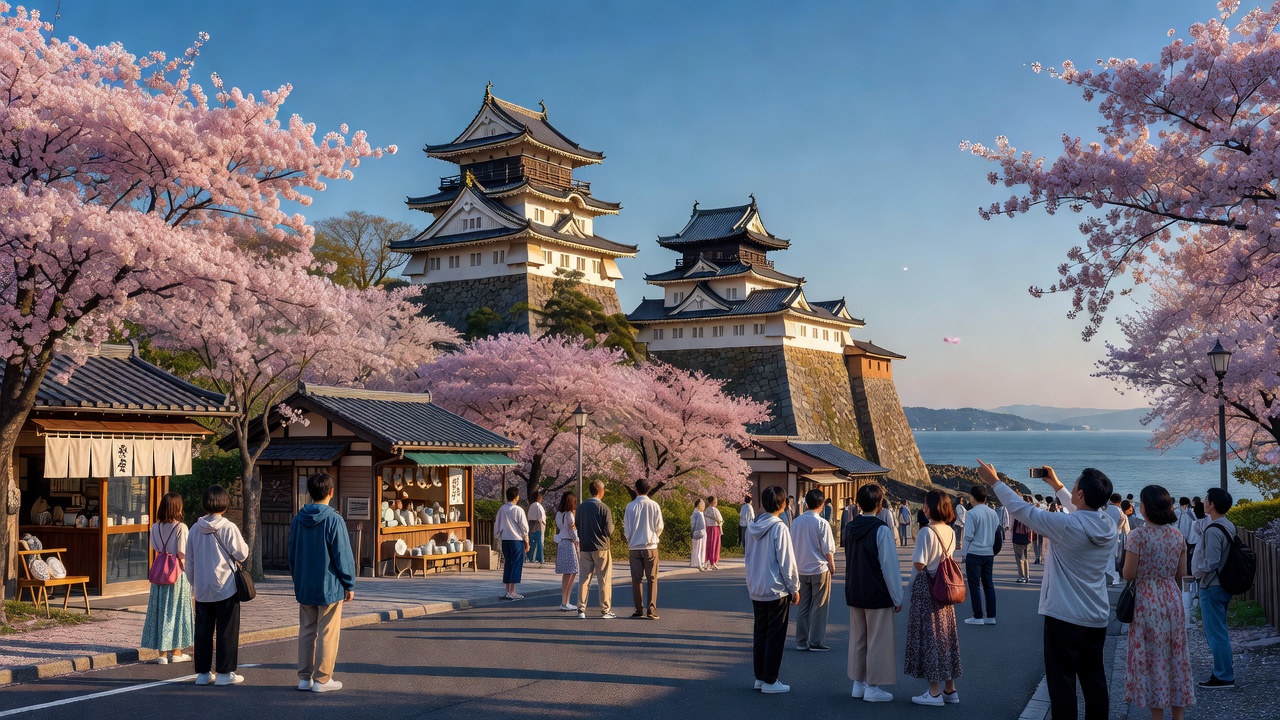
A crowdfunding initiative launched by volunteers in Iwakuni City aims to decorate JR Shin-Iwakuni Station and Iwakuni Station. The target amount is one million yen. This is not a large-scale renovation of the station building. The plan is to allocate funds for decorative panels, welcome signs, and displays utilizing local crafts — all aimed at creating a mechanism that allows visitors to “feel Iwakuni the moment they arrive.”
One million yen may seem like a trivial amount for a municipal tourism budget. However, this figure reflects a certain design philosophy. While relying on government support could lead to larger-scale projects, it also takes time for consensus-building and reduces design freedom. In contrast, a crowdfunding initiative of this scale allows volunteers to act based on their judgment. With contributions of a few thousand yen from each supporter, it creates a system where “people who love this town can contribute little by little.”
The backdrop is the 2026 Yamaguchi DC. This large tourism campaign, developed in collaboration with the JR Group and local communities, is expected to attract tourists from across the country to Yamaguchi Prefecture. For Iwakuni, it raises the question of how to convey attractions beyond Kintai Bridge. Preparing the “first point of contact” at the station is one possible answer.
However, there are points to be cautious about. Crowdfunding serves as a means of fundraising but also acts as a “visualization device for those involved.” The number of supporters directly indicates the extent of empathy for this initiative. Achieving the target amount is important, but the number of people who have stepped forward for this project — that figure will become the foundation for the next steps.
Sunflowers Blooming Beyond the Grass Eaten by Goats
In Iwakuni City, there is a somewhat unusual “cooperator” involved in the maintenance of sunflower fields. Goats have been introduced for grass cutting.
Managing weeds in abandoned farmland and idle agricultural land is a challenge faced by many rural areas. As the population ages, manual grass cutting becomes a significant physical and economic burden. The method of grazing goats to eat weeds has been tried in various locations across the country, but what makes Iwakuni’s case interesting is that the sunflower fields are established as a “result” of the goats’ grass cutting. Planting sunflowers in the land where goats have cleared weeds — in other words, the system incorporates both a mechanism to reduce maintenance costs and a mechanism to create a landscape.
During the blooming season of the sunflowers, local agricultural product sales booths are set up around the fields, allowing visitors to enjoy the scenery while engaging with regional products. While there is an expectation for social media dissemination as a photo spot, what should be noted here is the behind-the-scenes arrangements that create the “photogenic landscape.” There are individuals responsible for caring for the goats, sowing and managing the sunflowers, and operating the sales booths — each aspect is designed to ensure that no single person’s burden becomes excessive.
This structure is not a “field for tourism,” but rather a situation where “tourism exists as an extension of maintenance and management.” As long as this order does not reverse, there is potential for this system to continue.
Kagura Koshien — What is Passed Down Through Standing on Stage
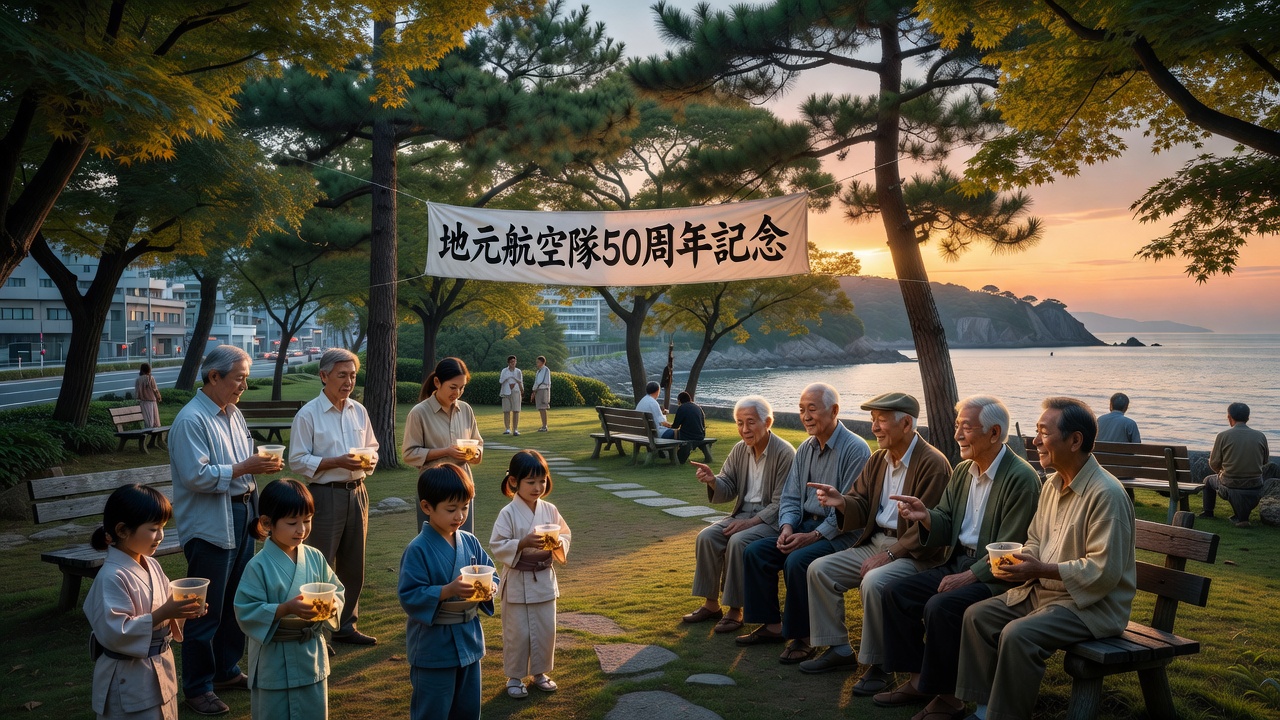
In the vicinity of Iwakuni City, there remains a tradition of Kagura that traces its lineage to Iwami Kagura. The “Kagura Koshien” is an event where high school students showcase and compete in their skills. Students from schools such as Iwakuni High School Sakagami Branch perform dances and music they have learned from local preservation societies on stage.
The transmission of traditional performing arts is often discussed alongside the term “lack of successors” in many regions. However, what is intriguing about the Kagura Koshien system is that it transforms “inheritance” from an obligation into a “stage.” For high school students, learning Kagura is, before being a contribution to the community, an expressive experience of finishing a performance with peers and presenting it in front of an audience. As the name Koshien suggests, having a competitive venue adds enthusiasm to their practice.
From the audience’s perspective, the high school students’ Kagura carries a different energy than professional performances. The tension of trying to synchronize, the strength of the arms striking the large drum, the change in posture upon donning the mask — such “seriousness in progress” leaves a lasting impression on viewers. This type of charm is difficult to convey in tourism brochures, but for those who are actually present, it can serve as a reminder of Iwakuni, as much as or even more than Kintai Bridge.
What is crucial is whether this system is designed to “continue even after high school students graduate.” Each year, new students join, learn skills from the preservation society, and take the stage. As long as there is a structure where the school, preservation society, and local event management are interconnected, Kagura can naturally pass on to the next generation without bearing the heavy phrase “to preserve tradition.”
Common Structure Among the Three Initiatives
Station decoration, sunflower fields, and Kagura Koshien. These three initiatives differ in their subjects, scales, and natures. However, when lined up, a common structure emerges.
First, they all operate not on “large budgets” but on “small systems.” The one million yen crowdfunding, the goats grazing, and the Kagura as a school event — none of these are predicated on massive investments.
Second, things that “did not start for tourism” have become tourism resources as a result. The station decoration stems from local welcoming sentiments, the goats from the need for farmland management, and the Kagura from cultural preservation efforts. There is no unreasonable leap between purpose and outcome.
Third, they are designed to be “sustainable.” The crowdfunding leaves behind a community of supporters, the goats eat grass every year, and new students arrive at the high school each year. There is a structure that builds gradually through repetition rather than being a one-off event.
These three characteristics, in reverse, highlight the strengths of being “less than a tourist destination.” Because they are not fully developed tourist spots, there is room for residents to engage personally. In completed tourist destinations, residents often become consumers on the receiving end, but in Iwakuni’s initiatives, residents themselves are the designers, operators, and initial audience.
The 2026 Yamaguchi DC and What Lies Beyond
The 2026 Yamaguchi DC will mark a turning point for Iwakuni. If the station decorations are completed, sunflowers bloom, and the Kagura stage is opened at this time when national attention is focused, it will indeed function as “Iwakuni’s face.”
However, the real question lies beyond that. Will the station decorations be maintained after the campaign ends? Are the goats happily grazing? Are high school students continuing to take the stage?
Whether it is sustainable depends on the design of the system. And as we have seen, Iwakuni’s initiatives have structures for sustainability — albeit not perfect — gradually embedded within them.
Becoming a tourist destination is not the goal. It is about being a place where visitors think, “I want to come back,” and residents feel, “This is a good place to be” — Iwakuni is quietly attempting to build a town where both can coexist with their own hands.


 JA
JA EN
EN