



The Price of Sardines Soars, and Cherry Trees Bend with Fruit—The Differences in the Mechanisms of the Sea and Mountains Reflected in the Same Early Summer ‘Season’

Related Articles
The Same June: The Sea is Bitter, and the Mountains are Smiling
In June in Hiroshima, there are two “openings.” The small sardine fishing in the Seto Inland Sea and cherry picking in Miyoshi. Both are seasonal events that herald the arrival of early summer, but this year, their expressions were completely different.
At the first auction for small sardines, the beach price significantly exceeded last year’s, sending a wave of tension among the wholesalers. Meanwhile, at the tourism farms in Miyoshi, farmers beamed as they reported, “One tree has over a hundred fruits.”
Despite being in the same season, one saw a price spike while the other experienced an abundant harvest that bent the branches—this stark contrast cannot be explained solely by the whims of weather. Behind the numbers of prices lies a glimpse of each “mechanism for reaching consumers.”
Small Sardines—Three Pressures Behind the Price Surge
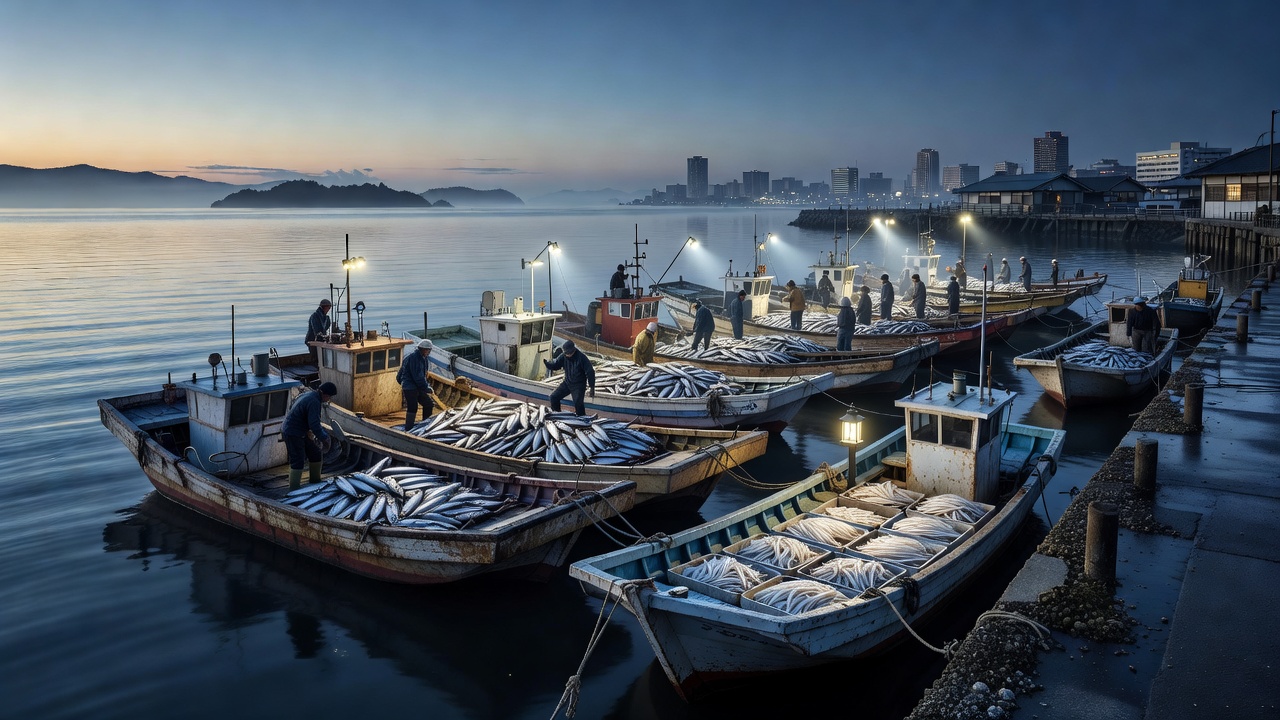
At the first auction for small sardines at the Hiroshima City Central Wholesale Market, reports indicate that this year’s beach price exceeded 1,000 yen per kilogram. Considering that last year’s prices hovered around 700 to 800 yen, this represents an increase of about 30%.
The first factor behind this surge is the decrease in catch volume. Small sardine fishing in Hiroshima Bay has been unstable in recent years. It is said that as sea temperatures rise, the migration routes and density of sardine schools are changing. As fishermen put it, “Even if we cast our nets, they aren’t in the same places as last year.” Changes in the sea are invisible from land. That’s why the beach price is the first to reflect these changes.
The second factor is the accumulation of costs. Fuel prices have remained high in recent years, making the expenses incurred each time fishermen go out heavier. If the catch decreases, the relative cost per outing increases. Fishermen are not seeing an increase in their take-home pay—though the beach price rises, expenses eat into those gains.
Thirdly, there is the multilayered nature of distribution. Small sardines are all about freshness; they must reach consumers within hours of being caught to be suitable for sashimi. Each stage of the journey from the fishing port to the market, wholesalers, fresh fish shops, and supermarkets adds costs. Expenses for ice to maintain freshness, transportation, and labor. Ultimately, when a pack exceeds 500 to 600 yen at the supermarket, some consumers might decide, “Maybe I’ll skip it today.” The soaring beach price directly translates to a greater distance from the dining table.
In other words, the rise in small sardine prices cannot be simply explained as “high prices due to poor catches.” It is the result of three overlapping pressures: changes in the sea, the structure of expenses, and multilayered distribution. Even if one of these issues is resolved, the whole system remains unchanged. This state of “rigidity in the entire mechanism” is condensed in the beach price numbers.
Cherries—The Unassuming Steps to Bending Branches
At cherry farms in Miyoshi, multiple farmers have reported that this year, one tree has produced over a hundred fruits. The market price for Miyoshi cherries is around 500 yen per pack (approximately 200 grams). There has been little fluctuation compared to last year, maintaining a price that is accessible for consumers.
The direct factor for this abundant harvest is the weather in early spring. There were no frost damages during the flowering period, and moderate sunny weather continued during the pollination period. Additionally, there were no extreme long rains during the fruit swelling period, resulting in fewer fruit splits. Cherries are sensitive fruit trees, and farmers say, “If the weather breaks at any point from flowering to harvest, the numbers change.” This year was one where “nothing broke.”
However, it was not just the weather that led to the abundant harvest. Many cherry farmers in Miyoshi completed pruning during winter, set up beehives in early spring, and took steps to increase pollination probabilities. Each of these tasks is not highlighted in the news of the abundant harvest. Yet, it is this unassuming preparation that transforms the “luck” of weather into a bountiful harvest.
Another reason for the stable price of cherries is the short distribution chain. Miyoshi cherries are primarily sold directly at tourism farms, local direct sales outlets, and shipped to nearby markets through JA (Japan Agricultural Cooperatives). Unlike small sardines, which must navigate multilayered distribution due to freshness constraints, the distance from farmers to consumers is short. With reduced intermediate costs, the farmers’ take-home rate is relatively high.
Furthermore, the very form of tourism farms creates a mechanism that bypasses distribution. Consumers visit the farms themselves and harvest the cherries by hand. The entrance fee typically ranges from 1,500 to 2,000 yen for adults, allowing farmers to save on shipping and distribution costs while adding value through the experience. For Miyoshi City, cherry picking also functions as a tourist attraction during the season, with ripple effects on the local economy that extend beyond just agricultural sales.
The ‘Mechanism for Reaching Consumers’ Determines Prices
Small sardines and cherries. The sea and the mountains, fishing and agriculture, freshness competition and tourism experiences. When contrasting these two seasonal products, it becomes clear that the differences in prices are not solely dictated by weather or yield.
Small sardines exist within a chain of: changes in the sea → decrease in catch volume → increase in expense ratio → cost accumulation in multilayered distribution. At every stage, there lies a “structure that is difficult to change through individual effort.” Even if fishermen work hard, sea temperatures won’t drop, and even if wholesalers keep prices down, fuel costs won’t decrease. The mechanism itself is rigid.
Cherries, on the other hand, benefit from a cycle of: favorable weather → winter preparations bear fruit → short distribution leads to delivery → tourism experiences create added value. Because of the short distribution, the benefits of favorable weather reach both farmers and consumers directly. The mechanism is flexible.
This contrast illustrates the fact that the design of the “mechanism for delivering seasonal products” influences both the lives of producers and the dining tables of consumers. Prices are merely the result. The rigidity or flexibility of the mechanisms behind them creates the differences in the same early summer season.
What to Look for Moving Forward
Regarding small sardines, simply waiting for a recovery in catch volume will not change the structure. In recent years, there have been gradual movements in Hiroshima City towards shortening distribution, such as direct sales from fishermen to consumers or morning markets at fishing ports. If even one of the “gaps” in multilayered distribution can be reduced, it may be possible to prevent the soaring beach prices from becoming a burden on dining tables. The question now is where to intervene in the mechanism.
As for cherries, there is no guarantee that this year’s abundant harvest will continue into next year. Because they are fruit trees that are easily affected by weather, it is crucial to establish mechanisms that support farmers’ income even in years of poor harvest—such as the development of processed products and a multifaceted revenue structure with tourism—while times are good. Preparations for the next poor harvest should begin in years of abundance.
In the context of climate change, the conditions of both the sea and mountains continue to evolve. The question is whether individuals will endure or whether the mechanisms will adapt. The beach price of small sardines and the bending branches of cherry trees quietly reflect this inquiry.
In June in Hiroshima, we observe the prices of the sea and the bounty of the mountains side by side. In both cases, there are arrangements and lives behind the paths to delivery.


 JA
JA EN
EN