



The Shimanami Kaido Stopped for 40 Hours, the Hyoshima Maru Retired, and the Kure Line Came to a Halt—On the Fragility of the Connections Between the Islands and the Mainland in the Setouchi Region

Related Articles
The Bridges Stopped, the Ferries Disappeared, and the Railways Fell Silent This Summer
At the end of June, during one weekend, three vital transportation “threads” across the Seto Inland Sea were severed almost simultaneously.
The Shimanami Kaido—closed for about 40 hours. The Kure Line—suspended operations all day between Mihara and Hiro stations. And the retirement of the wooden ferry “Hyoshima Maru,” which had connected Onomichi and Hyoshima for 74 years. The causes varied: a natural phenomenon of heavy rain and the accumulation of time leading to aging infrastructure. However, when these three disruptions coincided, it became clear that the mechanisms connecting the islands of Setouchi to the mainland were built on threads much thinner than we had imagined.
This is not a story of negligence. Rather, it is a tale of those who have maintained these thin threads for decades, and how that maintenance is now nearing its limits.
—
A 40-Hour Void—What It Means for the Shimanami Kaido to Stop
At the end of June, record-breaking heavy rains struck the Hiroshima and Ehime prefectures, leading to a complete closure of the Shimanami Kaido (Nishi Seto Expressway). It took approximately 40 hours for recovery. While the number may seem like “just under two days,” the weight of what transpired during that time cannot be measured in hours.
The Shimanami Kaido stretches about 60 kilometers, connecting six islands with seven bridges. Daily traffic volume is approximately 12,000 vehicles (according to data from Honshu-Shikoku Bridge Expressway in 2023). The estimated number of annual users, including cars, bicycles, and pedestrians, exceeds 2 million, and the tourism consumption along the route is said to be in the hundreds of billions of yen annually on the Hiroshima side alone. When the bridge stops, the entire economy comes to a halt.
However, the more serious issue is not the loss of tourism revenue. Among the vehicles crossing the bridge are medical professionals heading to island clinics, students commuting from the islands to high schools on the mainland, and elderly residents making trips to supermarkets on the mainland several times a week. A 40-hour closure means that such everyday “norms” can vanish in an instant.
Alternative options do exist. Ferries operate from Innoshima and Ikuchijima. However, the number of sailings is limited, and it is not uncommon for ferry services to be suspended during heavy rain. In other words, when the bridge stops, the “next thread” is likely to snap under the same weather conditions. This is the reality of a transportation network without redundancy in the Setouchi island region.
—
When the Hyoshima Maru’s 74-Year Voyage Comes to an End
If the closure of the Shimanami Kaido is a “temporary disruption,” the retirement of the Hyoshima Maru is akin to a “permanent severance.”
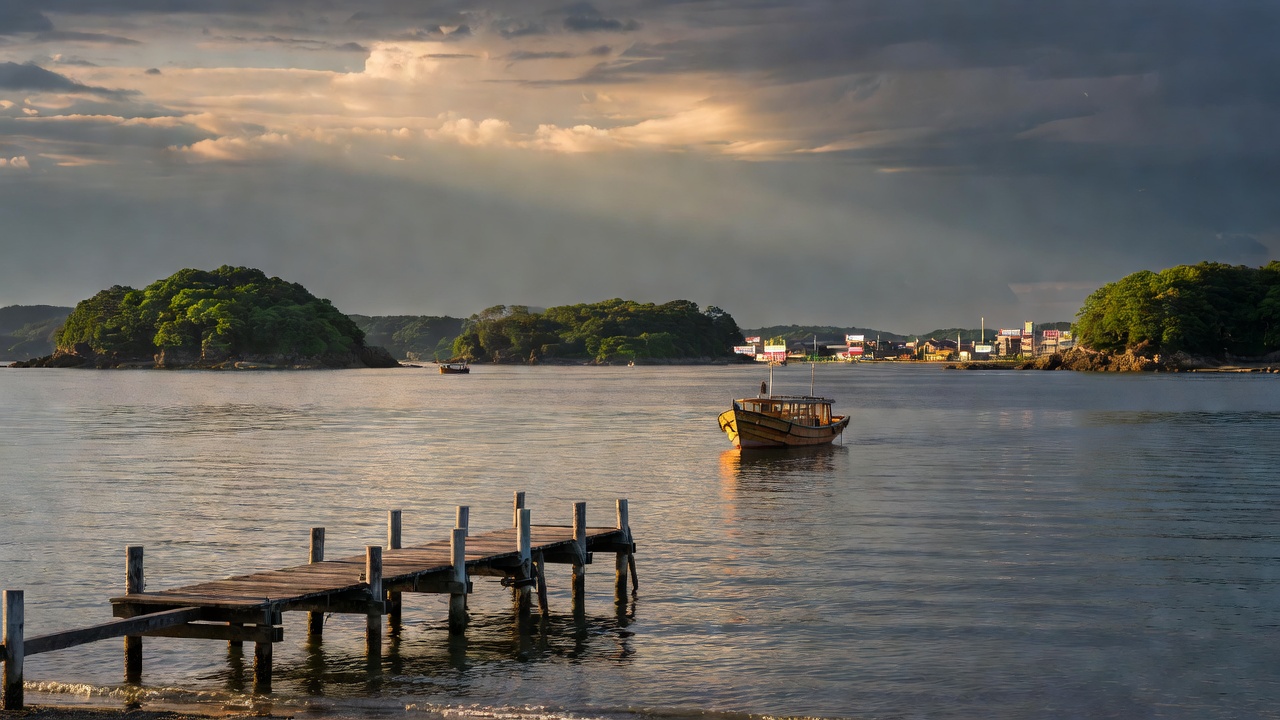
The Hyoshima Maru, a wooden passenger ferry that began service in 1950, has connected Hyoshima (with a population of about 350) floating about 5 kilometers offshore from Onomichi City to the mainland. For 74 years, it has been the lifeline for island residents, transporting goods and embodying the very essence of island time.
The maneuverability unique to wooden boats allowed the Hyoshima Maru to dock directly at the small pier on Hyoshima. It could navigate shallow waters where ferries could not, flexibly transporting small loads—such as agricultural products and daily necessities. The captain of the Hyoshima Maru knew the faces and names of the islanders, often saying, “Today, grandma isn’t on board,” showing a level of care that characterized this mode of transport.
The reason for its retirement is aging. Maintaining a wooden vessel requires specialized skills and costs. The aging of shipbuilders, difficulties in sourcing timber, and stricter safety standards all contributed. It was not just one factor but a combination that led to the conclusion that “we can no longer continue.”
The ferry will be succeeded by a larger ferry service. While the transport capacity will increase, larger vessels cannot dock at the small pier. The operating schedule will also lack the flexibility that the Hyoshima Maru had. For island residents—especially the elderly—this means longer distances to travel before boarding and longer wait times, diminishing the ease of a quick trip to the mainland.
Changing transportation means changing the “quality” of movement. The nuances of daily life cannot be captured merely by numbers of travel time or fares.
—
The Silence of the Kure Line—The Repeated “Halting of the Railway”
At the same time, the JR Kure Line was also suspended due to heavy rain, halting operations all day between Mihara and Hiro stations. The Kure Line is an 87-kilometer route that connects Hiroshima City and Mihara City along the Seto Inland Sea, with several ferry terminals to the islands along its path. When the railway stops, access to the ferry terminals is cut off. Thus, the suspension of the railway can be the “first step” toward a transportation severance to the islands.
This is not the first time the Kure Line has stopped due to heavy rain. During the 2018 Western Japan floods, the Kure Line experienced partial disruptions for about four months. Landslides and washouts occurred at multiple locations, leading to recovery costs in the tens of billions of yen. JR West has since been reinforcing slopes and improving drainage systems, but the increasing frequency and intensity of heavy rains due to climate change are outpacing the speed of infrastructure upgrades.
The daily ridership of the Kure Line is about 20,000 (2022 data). This is not insignificant for a local line. However, according to the “line segment revenue and expenditure” report published by JR West in 2022, some sections of the Kure Line had an operating ratio (the cost incurred to earn 100 yen in revenue) exceeding 200. In other words, the more it operates, the more it loses. Nonetheless, it continues to run because of its public role in supporting the lives of local residents and providing access to the islands.
However, this “public role” does not justify losses indefinitely. At some point—this is not a distant future—the debate over “maintenance or discontinuation” may intensify. At that time, the “threads” to the islands will become even thinner.
—
The Structure Reflected in Three Disruptions—The Limits of a “Non-Redundant Transportation Network”
Bridges, ferries, and railways. These three modes of transportation may seem independent. They are managed by different entities: the Shimanami Kaido by Honshu-Shikoku Bridge Expressway, the Hyoshima Maru by a private ferry operator, and the Kure Line by JR West. However, from the perspective of users, these constitute a single “chain of movement.”
When an island resident goes to a hospital on the mainland, they first take a ferry, then transfer to a train from the port, and possibly board a bus that crosses a bridge. If any link in this chain breaks, movement becomes impossible. And in the Setouchi transportation network, there is almost no “backup” when this chain is broken.
In urban areas, if a train stops, there are buses. If buses stop, there are taxis. Multiple routes run in parallel, allowing one to reach their destination via alternative paths even if one route is halted. This “redundancy” is what strengthens urban transportation.
In the island regions, this redundancy is absent. There is one bridge. One ferry route. One railway line. Everything is a “single thread,” and if it snaps, it’s over. And that thread can snap due to heavy rain, aging, or deficits. Though the causes differ, the result is the same—isolation.
—
Whose Comfort Is This Question For?
It is easy to say, “The development of alternative means of transportation is urgent.” However, the question should be asked a bit earlier.
—Who does this transportation network support?
It is said that there are about 700 inhabited islands in the Seto Inland Sea (according to the Ministry of Land, Infrastructure, Transport and Tourism), many of which have an aging rate exceeding 50%. The lives of those who remain on the islands barely hold together through a few ferry services each week and connections to railways and buses on the mainland. Just as the captain of the Hyoshima Maru cared for the islanders, transportation is not merely a means of movement; it is also a system of oversight.
When this system disappears, it is not just the means of transportation that vanish. The sense of security that “someone is looking out for me” quietly fades away.
What can be done concretely? Some initiatives are already underway. The Ministry of Land, Infrastructure, Transport and Tourism has expanded subsidies for maintaining island routes following the revision of the “Island Promotion Law” in the 2023 fiscal year. Hiroshima Prefecture has established a council to consider utilizing marine taxis and small vessels as alternative transport during disasters. The introduction of technologies such as demand-responsive transport and online medical consultations is also gradually progressing in the island regions.
However, all of these are responses to “after the thread has snapped.” What is truly needed is a system that recognizes when the thread is about to snap—before it actually does. The aging of the Hyoshima Maru has been known for years. The deficits of the Kure Line have been publicly disclosed. The risks of closure for the Shimanami Kaido could also be predicted from weather data. Information was available. What was lacking was the perspective to view these as “one problem.”
As long as bridges, ferries, and railways are treated as separate issues managed by different entities, the structure will not change. The movement patterns of users—from the islands to the mainland and vice versa—must be perceived as a single line, and the areas where that line is thinning must always be visualized. Such a system is needed in Setouchi.
—
The Faces of Those at the End of the Thread
On the day the Hyoshima Maru completed its final voyage, island residents gathered at the pier. The ferry that had been a daily part of their lives for 74 years would no longer come. Imagining that scene imbues the discussion of transportation policy with a different temperature.
The 40 hours of the Shimanami Kaido have been restored as a number. The Kure Line has also resumed operations. However, the Hyoshima Maru will not return. And when the next heavy rain comes, the bridge will stop again, and the railway will fall silent once more.
The threads of Setouchi are thin. Yet, at the end of those threads, people are indeed living. Whether to thicken the threads, increase the number of them, or create a system that allows life to continue without them—the answers are likely not singular. However, we must be careful about the order in which we ask these questions.
What we should first see is the faces of those at the end of the threads.


 JA
JA EN
EN