



The Hibakusha Kamishibai Travels to Taiwan: 13,000 People Flock to Onomichi, a Blind Ukrainian Musician—What Mechanisms Allow ‘Communication’ to Cross Borders?

Related Articles
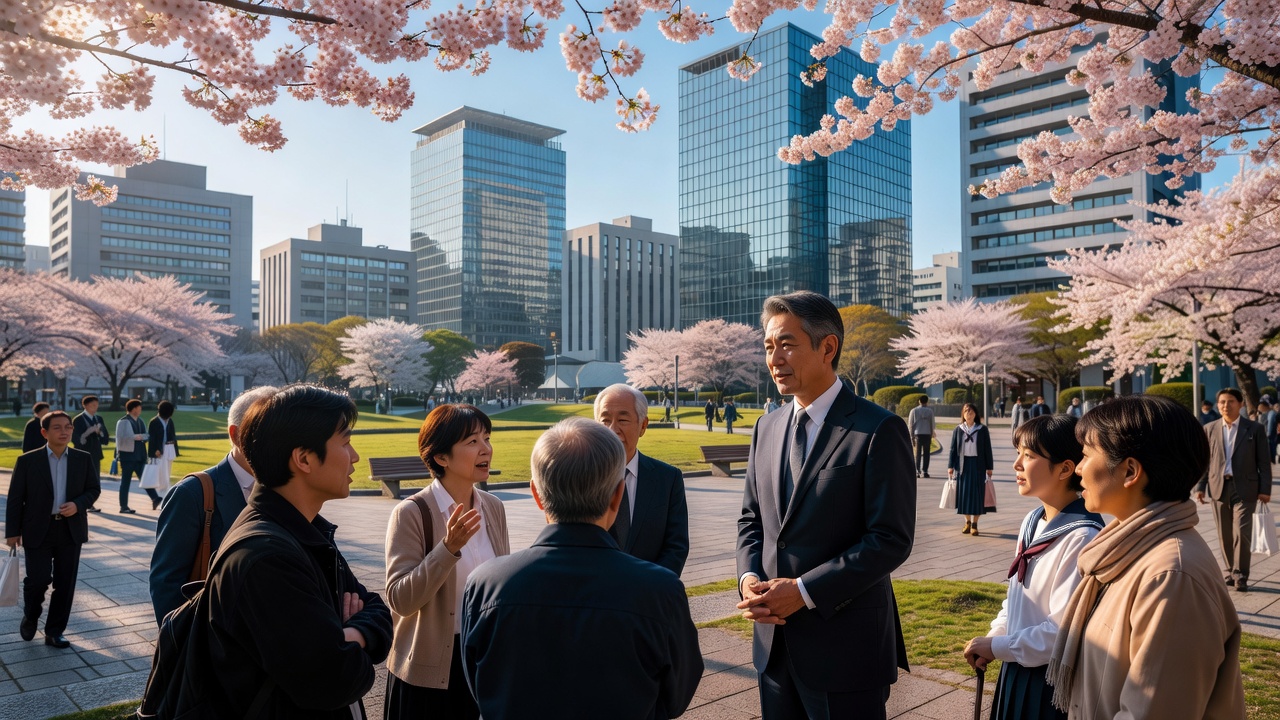
The hands pulling out the kamishibai, the fingers pressing the strings, the numbers left in the minutes—three lines extending from Hiroshima are attempting to cross different borders. There are memories that need to be conveyed. Without a mechanism for delivery, memories lose their voice. What becomes clear when we line up these three scenes is the preparation behind ‘communication’ and the warmth of the people supporting that preparation.
—
1. When Kamishibai Crosses the Sea—The Structure of Hibakusha Experience × Performance in Taiwan
A kamishibai depicting the hibakusha experience from Hiroshima was performed in Taiwan. About 300 people gathered at the venue. Each time the performer pulled out a picture, the interpreter added the narration in Chinese. Many in the audience were young people from Taiwan born after the war.
Here, I want to pause and consider the question: “Why kamishibai?” Not video or documentary, but kamishibai. Because it consists of a single picture and a single voice, it creates space for translation. While video can simply use subtitles, the ‘ma’ (pause) of the storyteller carries meaning in kamishibai. The interpreter takes on the ‘ma’ and retells it in their own words—this structure becomes a ‘re-performance’ that transcends translation.
The inheritance of the hibakusha experience faces the barrier of time as the witnesses age. As of 2024, the Hiroshima City government identifies about 150 hibakusha narrators. The form of kamishibai, which transforms testimony from ‘listening’ to ‘performing,’ allows for the interchangeability of narrators. It translates personal memories into reproducible ‘forms.’ This is structurally similar to how traditional performing arts pass down forms from master to disciple.
There is also a mechanism on the Taiwanese side for receiving this performance. The local peace education NGO that organized this performance handled venue arrangements, publicity, and the selection of interpreters. There is preparation not only on the delivering side but also on the receiving side—without the alignment of both, kamishibai cannot cross the sea.
—
2. 13,000 People Flock to Onomichi—Records Unearth “Another Hibakusha”
Onomichi City in Hiroshima Prefecture. Records indicate that approximately 13,000 evacuees flowed into this port town after the atomic bombing, emerging from city council minutes and administrative documents from that time. Located about 80 kilometers east of the epicenter, Onomichi, a transportation hub connecting rail and sea, became a refuge for those who fled.
The issue of “secondary exposure” is noteworthy. It has been repeatedly pointed out in city council meetings that radioactive materials clinging to the clothing and bodies of evacuees may have affected the residents of Onomichi—especially children. However, Onomichi is not officially recognized as a “hibakusha area.” The distance from the epicenter determines administrative boundaries.
The figure of 13,000 exceeds 20% of Onomichi’s population at the time (approximately 60,000). When a community suddenly swells by 20%, all systems—food, housing, sanitation, education—begin to strain. The records of these strains remain in the form of minutes. Minutes do not express emotions. Yet, in each line stating “we need more blankets” or “let’s test the well water,” the urgency of that time seeps through.
Local researchers and civic groups continue the work of unearthing, organizing, and presenting these records in a readable form. Records do not reach people simply by existing. Someone must decide, “This should be preserved,” provide context, and determine the destination for delivery—only then do records become memory.
If kamishibai carries memory through its ‘form,’ minutes support memory through the ‘layering of facts.’ The methods differ. However, both share the same question of “how to convey personal experiences across time.”
—
3. The Blind Ukrainian Musician—What It Means for Sound to Reach Before Words
A blind musician who fled from Ukraine is holding a concert in Hiroshima. Approximately 200 people gathered at the venue, where she played the bandura (a Ukrainian folk string instrument).
When discussing her performance, I hesitate to use the phrase “melody of peace” lightly. When she strums the strings, what exists is not an abstract “wish for peace,” but the memory of a night spent clutching her instrument while descending into the underground during air raid alarms, and the tension of stepping onto a foreign train platform with unseen eyes. The sound carries the gravity of such concrete experiences.
Structurally interesting here is the fact that there is no ‘language barrier’ from the outset. Kamishibai required interpretation. Minutes can only reach those who read Japanese. But music reaches the body without translation. Being blind means she has the experience of “receiving the world without visual information.” An expressionist who does not rely on sight conveys through means that do not rely on language—this dual detour opens a direct circuit that touches the audience within.
Supporting her concert are citizen volunteers from Hiroshima. They assist with venue scouting, accompany her during travel, distribute flyers, and manage reception on the day of the event. Many hands prepare the pathway for the musician to take the stage. When we say music “crosses borders,” it is not the sound itself that crosses, but the preparations behind it.
—
4. The Intersection of Three Lines—What is the “Mechanism of Delivery”?
Kamishibai, minutes, music. When we line up these three means, a common structure becomes visible.
None of them can exist solely with the “people who want to convey.” Kamishibai requires interpreters and local NGOs, minutes require researchers to unearth them, and music needs volunteers to prepare the venue. “Communication” is not an act of one person; it is a mechanism where multiple roles align—this is a shared fact across the three scenes.
Another point: each of the three means crosses different “walls.” Kamishibai crossed the language barrier through interpretation. Minutes crossed the barrier of time through records. Music bypassed the language barrier to reach the body. The types of walls differ, and so do the ways to overcome them. There is no universal means. That is why multiple circuits are necessary.
Moreover, all three scenes contain “Hiroshima.” Starting from the experience of being hibakusha, kamishibai extends to Taiwan, minutes reach back to Onomichi’s past, and music travels from Ukraine—each line stretches in different directions. Hiroshima serves as a hub for “communication.” This is not something intentionally designed; it is a junction naturally created by the gravity of history.
—
5. The Questions Behind the Mechanism
We have examined the mechanism of “communication.” However, the three scenes also teach us that mechanisms alone are not enough.
The interpreter of the kamishibai did not merely replace words. They retold it in their own voice and their own ‘ma.’ The researcher unearthing the minutes provided context to the string of numbers, saying, “This is a story about children.” The volunteers took the musician’s hand and helped her down the stairs. At the junctions of the mechanism, there is always someone’s judgment and warmth.
The average age of hibakusha narrators continues to rise each year. When there are no longer any witnesses, the ‘form’ of kamishibai will remain. The numbers in the minutes will remain. The melodies of music will remain. However, whether the next person will take that and retell it in their own voice—there lies a step that cannot be filled by the mechanism alone.
What the three scenes indicate is that “communication” is not merely a matter of the sender’s enthusiasm, but a question of designing the pathways for delivery and the structure for receiving. And the final piece of that design cannot be written in the blueprint. It is when someone thinks, “I want to deliver this,” and takes action—that first step exists outside the mechanism.
The three lines extending from Hiroshima are still in progress. The next performance of kamishibai has not yet been decided. The records from Onomichi are still in the process of being organized. The schedule for the musician’s next concert depends on whether the volunteers can come together. The mechanisms of delivery are always in motion, remaining incomplete. That is why they are waiting for someone to offer the next step.


 JA
JA EN
EN