



Remote Operation of Heavy Machinery, School Dogs, and Police Recruiters: Hiroshima Quietly Invents Alternative Systems Amidst a ‘Labor Shortage’

Related Articles
Changing the “Use of People” Instead of Increasing Their Numbers
People are not coming to construction sites. School counseling offices have long wait times. Police recruitment exams are under-subscribed. These are all familiar stories. However, in Hiroshima, these three fields are each attempting to answer the same question from slightly different angles.
Remote operation of heavy machinery. Dogs stationed in schools. A recruitment system where police officers personally reach out. What connects these seemingly unrelated initiatives is the design philosophy of redefining the roles of the people who are already present, rather than simply increasing their numbers. While voices lamenting labor shortages can be heard nationwide, Hiroshima is quietly assembling a system that addresses the challenges beyond mere complaints.
—
Operating Two Sites Alone: The New Meaning of “Distance” Through Remote Control of Heavy Machinery
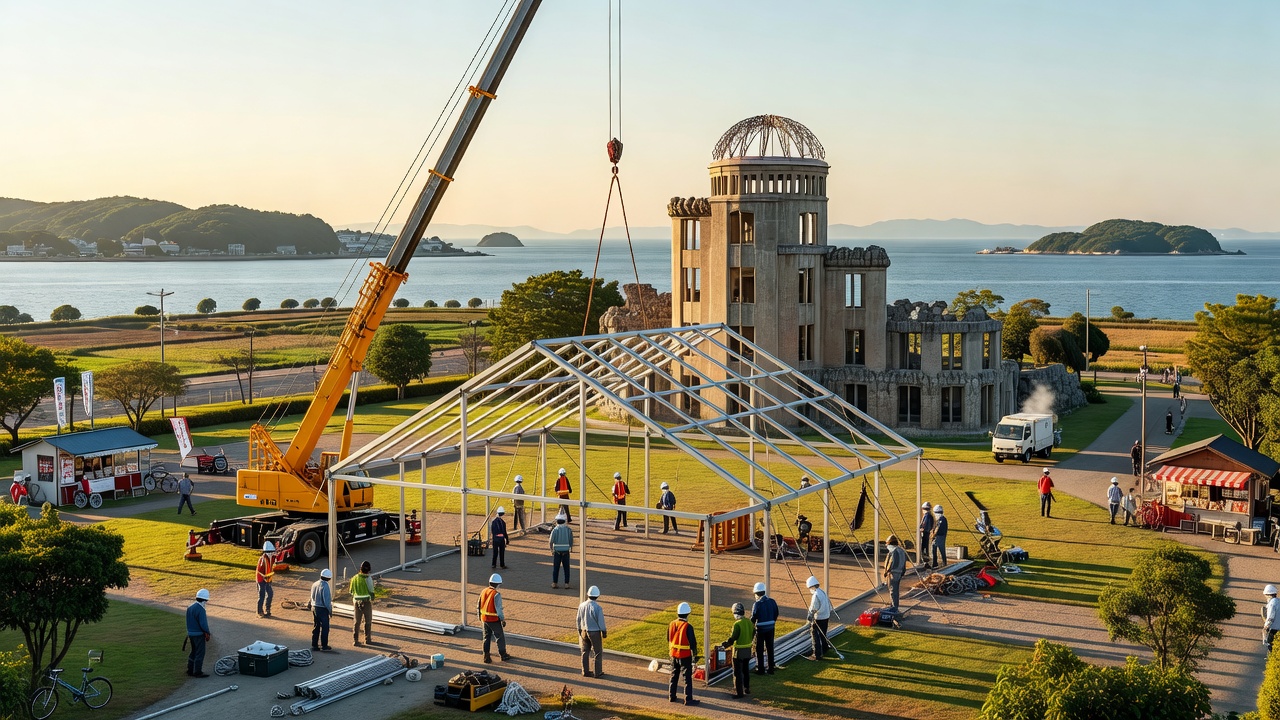
In construction sites across Hiroshima Prefecture, a demonstration is underway where a single operator remotely controls heavy machinery at two sites approximately 10 kilometers apart. The resulting reduction in manpower is around 35-40%. At first glance, this may sound like a story of efficiency, but the essence of what is happening on-site is somewhat different.
Traditionally, heavy machinery operators were required to be “on-site” as a prerequisite for their work. They would sit in the operator’s seat, feeling the smell of the earth and the vibrations while pulling levers. This physical presence was a testament to their skill. Remote operation quietly rewrites that premise. High-precision cameras and vibration sensors relay real-time information from the site, allowing the operator to switch between the two locations while continuing their work through a monitor.
What cannot be overlooked is that this system does not increase the number of “jobs that anyone can do”; rather, it expands the “reach of skilled workers.” The expertise of veteran operators is liberated from the constraints of physical distance. If increasing the number of people is not an option, then broadening the scope of one individual’s responsibilities becomes a potential solution to the construction industry’s chronic labor shortage.
Moreover, in dangerous slope work or construction in tight spaces, the safety benefit of keeping people away from the site is significant. Reducing manpower does not merely mean decreasing numbers; it also means distancing people from danger.
—
School Dogs: Filling the Gap with a “Presence That Is Neither Teacher Nor Parent”
In a school in Hiroshima City, a dog walks down the hallway. This initiative, known as “School Dogs,” involves having trained dogs stationed in schools to provide emotional support for children.
As the nationwide challenge of expanding the presence of school counselors continues, Hiroshima has chosen a different path that does not involve simply “increasing people.” Dogs do not need to knock on the door of the counseling room. Just passing in the hallway prompts children to naturally reach out. One teacher remarked, “Children who cannot enter the classroom come to the room with the dog.”
This statement captures the core of the system. School Dogs are not a substitute for counselors. They serve as a “third presence” that is neither a teacher nor a parent, acting as a receptacle for emotions that children cannot articulate. In the field of psychology, the effects of Animal-Assisted Education have been reported, including reductions in the stress hormone cortisol and increased secretion of oxytocin. The time spent interacting with dogs is scientifically supported as a mechanism that fosters a sense of “safety.”
Another important aspect is the ripple effect on teachers. Conversations initiated through the dogs help teachers notice changes in children—such as a furrowed brow or shifts in friendships—that they might otherwise overlook. School Dogs create a “space for observation” between children and adults.
It is not simply a matter of bringing in dogs because there aren’t enough people. By placing a non-human presence before human care, the work of people can reach deeper layers. This is the design behind it.
—
64 Police Officers Become Recruiters: A System that Combines “Recruiting” and “Communicating”
In the recruitment system that the Hiroshima Prefectural Police fully implemented in the 2024 fiscal year, 64 active police officers have been designated as “recruiters,” visiting universities and local events to directly engage with applicants.
The difficulty in police recruitment is a nationwide trend. In the 2023 police recruitment exams, many prefectures saw the competition ratio hit record lows. Traditional measures focused on broadening the “entry points” by increasing the budget for recruitment advertising or making exam schedules more flexible. What the Hiroshima Prefectural Police has ventured into is the aspect of “who conveys the message.”
It is not human resources personnel but the police officers themselves who share their experiences. They talk about the realities of working at a police box, the fulfillment of investigations, and what mornings are like after night shifts. The heartfelt words that do not appear in recruitment brochures transform applicants’ motivations into something concrete. One young recruiter mentioned, “It has become an opportunity to articulate why I continue to be a police officer.”
Here, we can see another function of this system. The act of speaking outward as a recruiter prompts introspection among the police officers themselves. Why did they choose this job? What do they value? The process of verbalizing these thoughts brings about a “reconfirmation of meaning” within the organization. Recruitment activities simultaneously function as organizational development. The system designed for hiring people also nurtures those who are already present. This nested structure is a remarkable aspect of the system’s design.
—
The Common Direction Indicated by Three Fields
Remote operation of heavy machinery has physically expanded the reach of skilled workers. School Dogs have changed the quality of human work by placing a “non-human presence” before human care. The recruiter system has merged “recruiting” and “nurturing” into a single act.
These three initiatives are vastly different in industry and methodology. Yet the underlying question in their design remains the same: “How can we expand the reach with the people and resources we currently have?”
As municipalities across the country face declining populations and labor shortages, the ability to consider options beyond simply “increasing people” is beginning to influence the sustainability of regions. These initiatives in Hiroshima, some of which are still in the demonstration phase, face challenges such as communication delays in remote operation, allergy considerations for School Dogs, and balancing recruiter duties with primary responsibilities.
Nevertheless, there is a glimmer of hope in the shared attitude across these three fields. Rather than counting what is lacking, they are attempting to rearrange what is already available. This quiet invention is certainly making someone’s work easier.


 JA
JA EN
EN