



Nakahara from Development, Publicly Selected Registrars, High School Peace Ambassadors—What Happens on the Ground When the ‘Entry Changes’?

Related Articles

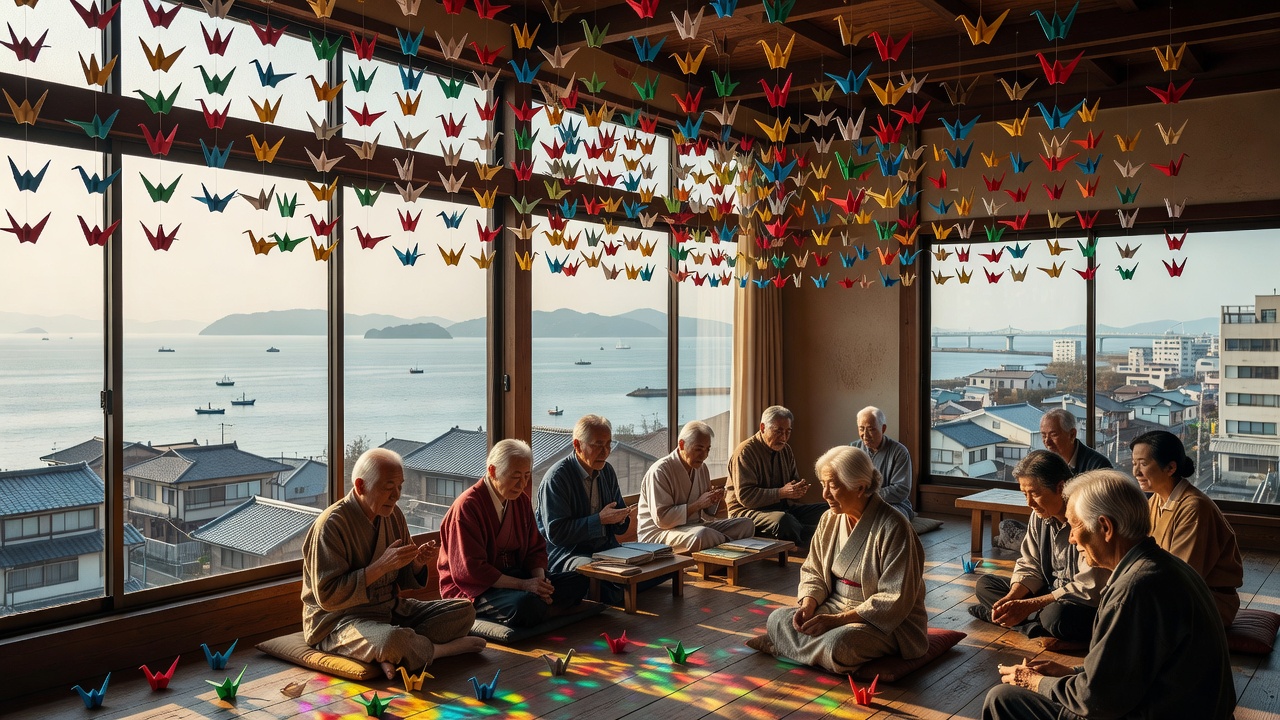
Entry is Different, but the Standing Place is the Same
Three intriguing developments have emerged from the city of Hiroshima.
Nakahara Norihiko, who received a notice of being cut from the team, has won a spot on the active roster from a developmental contract and has recorded timely hits in three consecutive games in the first team. This year, for the first time, 14 individuals selected through public recruitment have begun the task of recording names on the atomic bomb victim memorial list. Additionally, a ceremony was held for high school peace ambassadors, announcing the next runners who will convey the voices of atomic bomb survivors to the world.
The genres are varied: professional baseball, memorial documentation, peace diplomacy. However, when these three events are lined up, a common structure emerges. They all tell the stories of individuals who have stood on the ground through entrances that are not the ‘traditional official routes’.
What I want to ask is not ‘Aren’t they great?’ but rather, What happens on the ground when the design of the entrance changes?—this is a discussion about the mechanism.
—
Nakahara Norihiko—”Another Door” of Developmental Contracts
Nakahara Norihiko’s career is far from glamorous. He once received a notice of being cut and was pushed to the brink of having to take off his uniform. From there, he chose the path of a developmental contract—remaining with the team as a sort of ‘temporary registration’ outside the active roster.
Players on developmental contracts cannot participate in first-team games. Their training environment often differs from that of registered players. The rate of registration for developmental players in NPB varies from year to year, and not all developmental players can rise to the occasion each year. Nakahara has passed through that narrow gate and won his registration.
What’s noteworthy is his recent performance in the first team. He has recorded timely hits in three consecutive games, and manager Takahiro Arai praised him, saying, “Another good performance today.” Nakahara himself reportedly said it was due to “spirit and guts.” While the words are simple, for those who know the weight of those four characters from his days in development, they carry a different significance.
I want to pause here for a moment. It is easy to consume Nakahara’s story as a ‘tale of overcoming adversity.’ However, the essence lies elsewhere. Without the existence of the developmental contract system, he would not have been able to stand at the plate in the first place. There is no doubt about the individual’s effort. However, the fact that there was an ‘entrance’ designed to accommodate that effort—this is a discussion about the design of the system.
The NPB introduced the developmental system in 2005. Initially, it faced criticism as a ‘loophole in the active roster.’ However, nearly 20 years later, there are numerous examples of players from developmental backgrounds, including Kodai Senga (currently with the New York Mets), growing into mainstays of the first team. By adding one more entrance, the talent pool of professional baseball itself has changed. Nakahara’s timely hits are a small but certain proof that this mechanism is still functioning.
—
14 Registrars Selected Through Public Recruitment—The Significance of Opening ‘Who Writes’
Every year in Hiroshima City, the task of recording names on the atomic bomb victim memorial list is carried out. Each name of the deceased is written by hand, not by machine. The act itself is a form of mourning.
This year, the method of selecting registrars changed. Traditionally, individuals were requested from a limited range, such as city employees and calligraphy professionals, but for the first time, public recruitment was conducted, and 14 individuals were selected.
“I want to write with heartfelt intention for future generations”—one of the selected registrars reportedly expressed. It would be a waste to read this statement merely as enthusiasm. The act of responding to a public call includes a declaration of intent: “I want to take on this role.” There is a difference in the warmth of the hand holding the brush between being requested and raising one’s own hand.
From a structural perspective, the shift to public recruitment has a clear intention. It aims to broaden the pool of individuals capable of undertaking the task of recording beyond a specific network. As we approach the 80th anniversary of the bombing, if we do not expand the base of individuals involved in memory preservation, the bearers will eventually dwindle. Public recruitment is a systemic response to that sense of crisis.
I also want to draw attention to the number 14. It is not just one or two individuals. There was a collective will to ‘write’ from 14 people within the city of Hiroshima. This fact indicates that the act of recording is not just for a select few experts but has taken root among the citizens. By opening the entrance, previously invisible layers have become visible—this too is a result of changing the design of the system.
—
High School Peace Ambassadors—Diplomacy Undertaken by Those Who Are Not ‘Official Diplomats’
The ceremony for high school peace ambassadors was held in Hiroshima. This initiative, which began in 1998, involves high school students visiting places like the United Nations European headquarters to advocate for nuclear disarmament, carrying the voices of atomic bomb survivors.
In the context of diplomacy, high school students are not ‘official bearers.’ They are neither representatives of the state nor specialized negotiators. However, that is precisely why there are words that resonate. They convey experiences heard directly from survivors in their own words. The process of ‘translation’ carries the power to move the hearts of listeners.
There is also a design in this mechanism. The high school peace ambassadors do not exist solely on individual goodwill. The selection framework, the preparatory setting of the ceremony, opportunities for dialogue with survivors, travel costs and arrangements—all of these supporting organizations and systems are what enable high school students to stand on the ground as ‘ambassadors.’
As the survivors age, the time to hear their experiences directly is limited. The system of high school peace ambassadors is also a device to make the most of that time. It transforms the memories of survivors into the words of the next generation and delivers them further. There is a nested structure of inheritance here.
—
A Common Structure Among the Three Scenes—’Redesigning the Entrance’
Nakahara’s developmental contract, the public recruitment of registrars, and the high school peace ambassadors. What connects these three phenomena is the fact that the design of the entrance that determines ‘who can stand there’ has changed.
The traditional entrances had their own rationality in each domain. Only players selected in the draft aimed for the first team. Registrars were requested from trusted calligraphers. Diplomacy was conducted by diplomats. There was nothing inherently wrong with that.
However, as time passes, the environment changes. The routes for discovering players diversify, the pool of individuals involved in memory preservation dwindles, and the number of people who can convey the realities of the bombing decreases. At that point, if we do not reconsider the design of the entrance, the ground will quietly wither away.
What the three examples illustrate is the effect of increasing entrances. The developmental system has made ‘another chance’ possible for players like Nakahara. Public recruitment has made visible the will of 14 individuals. The high school peace ambassadors have institutionalized the circuit of intergenerational inheritance.
However, simply increasing entrances does not guarantee success. Developmental contracts come with challenges related to players’ treatment and instability of status. The registrars selected through public recruitment require assurance of skill and consideration for psychological burdens. The high school peace ambassadors need ongoing support to ensure their activities do not end as one-off events. The design of opening the entrance and the design of supporting what comes after must function together as a set.
—
Who Benefits from This?
Finally, I want to pose a slightly different question: “Who benefits from increasing the entrances?”
Nakahara’s presence shows players who have received notices of being cut that “there is still a path.” The public registrars open a circuit for citizens who wanted to participate. The high school peace ambassadors provide reassurance to survivors that “there are those they want to convey to.”
The redesign of the entrance changes the scenery not only for those who pass through but also for the people surrounding them. When the system accommodates one person’s efforts, that effort is no longer solitary.
In the city of Hiroshima, three ‘non-official routes’ are moving simultaneously. It may be coincidence. However, the design philosophy of increasing entrances seems to be truly alive within this city, and that does not seem coincidental.
The arc drawn by Nakahara’s bat, the stroke of the registrar’s brush, the words spoken by high school students at the United Nations—today, those who have passed through the entrance are quietly doing their work in each of these scenes.


 JA
JA EN
EN