



Persimmons Turned into Beer, Delaware Grapes Shipped, and a 440-Year-Old Vinegar Brewery: The ‘No Waste, Full Use’ Economic Zone of Onomichi

Related Articles
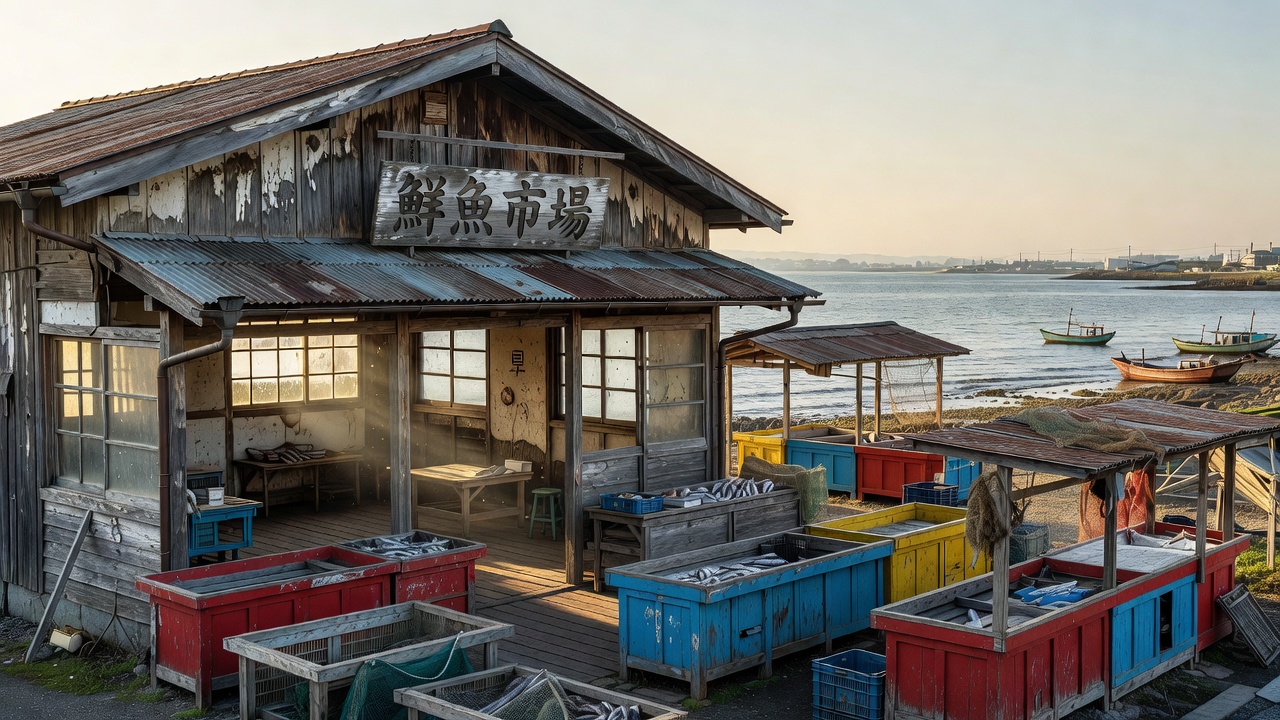

Onomichi’s ‘No Waste, Full Use’ Economic Zone
In this hilly town, there is a system where things that were on the verge of being discarded are brought back to life.
Persimmons that have been left unharvested on the mountainsides find their way into the tanks of a brewery. Small and unassuming Delaware grapes are sent to market in early summer. A vinegar brewery that has been in operation for over 440 years is still cultivating bacteria in wooden barrels. When we line up these occurrences in Onomichi, a picture emerges: an old and quiet way of running an economy that emphasizes “no waste, full use.”
This is not a flashy story of regeneration. However, a closer look at each of these scenes reveals the depth of the structures that remain between people and the land.
—
From Abandoned Persimmons to Sour Beer
Walking through the mountainous villages in the northern part of Onomichi City, persimmon trees catch the eye. Once planted in front of farmers’ houses and at the edges of fields, these trees have gone unharvested due to an aging population and a lack of labor, causing ripe fruits to fall to the ground. The fallen fruits attract wildlife, leading to an increase in boar and monkey sightings—abandoned persimmons have become a “nuisance.”
It was a craft brewery in Onomichi City that took notice of these persimmons. They began sourcing unused persimmons, including astringent varieties, to use as a secondary ingredient in sour beer. This style of beer leverages the acidity from lactic acid bacteria, creating a unique depth with the tannins and fruitiness of the persimmons. Priced at around 600 to 700 yen per bottle, it is served in local restaurants and tourist facilities, gradually gaining recognition as a “souvenir from Onomichi.”
What is noteworthy here is the structure of raw material procurement. The “harvesting” of abandoned persimmons is sometimes handled by local volunteers or welfare work facilities. In other words, by purchasing the persimmons, the brewery simultaneously supports mountain management, reduces wildlife damage, and creates employment opportunities in welfare. One product addresses multiple issues—this interconnectedness is why this is more than just a story about craft beer.
However, it is essential to acknowledge a fact: the amount of persimmons that can be consumed through beer brewing is still only a small fraction of the total. The fundamental resolution of wildlife damage has not yet been achieved; it is merely a “gateway.” The initiation of this system does not equate to the resolution of the problem. It is crucial not to misinterpret this distance.
—
Delaware Grapes: Supporting the Summer Economy
In June, shipments of Delaware grapes begin from JA Onomichi in Kinosho Town, Onomichi City. Onomichi’s Delaware grapes thrive in the warm climate of the Seto Inland Sea and on well-drained slopes, resulting in high sugar content and easy-to-separate berries. The 2023 shipments received praise from the market for being “sweet enough and easy to eat due to their small size.” The shipping price per kilogram is around 1,200 yen. Although it is a modest variety compared to Kyoho and Shine Muscat, it remains an important source of income for farmers in Onomichi during early summer.
However, the situation on the ground is not optimistic. Rising fuel costs have hit the operation costs of heated greenhouses hard, and the prices of cardboard and packaging materials have also increased. Farmers’ take-home pay has been compressed year by year. Additionally, Delaware grapes are a variety that has been decreasing in production nationwide. Despite the labor-intensive cultivation, prices have not risen significantly, leading many successors to switch to other varieties.
Still, Delaware grapes persist in Onomichi because farmers feel that “this land is suitable for this variety.” In small fields on slopes, large-scale farming is challenging, and the small, hand-picked Delaware grapes fit the terrain well. The land’s constraints ultimately support the continuation of the variety—this is an economy that operates on a different logic than efficiency.
—
What a 440-Year-Old Vinegar Brewery Conveys
In Onomichi, there is a vinegar brewery that has been in operation for over 440 years. They continue to adhere to traditional methods of cultivating acetic acid bacteria in wooden barrels and fermenting over time. If one were to consider efficiency alone, it would be more rational to finish the process quickly using stainless steel tanks and temperature control. However, the wooden barrels harbor a long-established microbiome, producing flavors that can only be achieved in that brewery.
The existence of this vinegar brewery illustrates the time frame of Onomichi’s “full use” philosophy. While the persimmon beer initiative is a matter of a few years, the vinegar brewery represents sustainability over centuries. By maintaining the bacteria and repairing the barrels, they continue to produce the same product in the same place. This itself is an economic activity and a form of regional infrastructure.
The coexistence of short-term cycles that yield visible results and sustainability that spans generations creates the depth of Onomichi’s economic zone.
—
The Closure of Yume Mart: When Shopping Patterns Change
On May 31, 2026, the Izumi “Yume Mart” in Onomichi City will close. The closure of this store, a daily shopping hub for local residents, will inevitably change shopping patterns.
How this change will affect the “no waste, full use” economic zone is still uncertain. One possibility is an increase in visitors to local small businesses and direct sales outlets for agricultural products. Direct sales outlets feature irregular vegetables and a variety of small-quantity agricultural products. Items that would not make it to the shelves of large supermarkets may gain visibility due to the change in shopping patterns—new circuits may emerge.
However, this is an expectation, not a prediction. There is also a risk that the closure could lead to an increase in shopping vulnerabilities. In areas with a high elderly population, unless transportation options and delivery systems are in place, even a “nearby direct sales outlet” can feel distant. Will the system make life easier for people, or merely shift the burden elsewhere? The answer to that question lies ahead.
—
“Full Use” is Not a Romantic Tale, but a Structural Discussion
Abandoned persimmons, Delaware grapes, a 440-year-old vinegar brewery, and changing shopping patterns. When these elements are lined up, what becomes visible is not a sentiment like the “spirit of mottainai” but rather a structural discussion about circulating resources within the constraints of the land.
With many hills and little flat land, large-scale agriculture is not feasible. The population is declining, and major capital is withdrawing. Within these conditions, the economy of small units is functioning together to keep the town running. There are people who pick persimmons, brewers who make beer, and consumers who drink it. Farmers who grow Delaware grapes exist, and the terrain of slopes helps preserve that variety. The bacteria in the vinegar brewery have survived for 440 years because people have not let them die out.
None of this is the result of a single heroic effort. It is the intertwining of systems, land, and time that makes it possible. And that system is always fragile. If even one person drops out, it can come to a halt, and if costs rise slightly, it may no longer be profitable.
Onomichi’s “no waste, full use” economic zone is not just a beautiful model case; it is also a precarious reality. That is why it is worth observing.
In the hands of those who continue to circulate fragile resources, hints for the future of regional economies can be seen—if only just a little, but certainly.


 JA
JA EN
EN