



39.3°C in Fuchu, Fireworks Moved to September, Pools Closed—Extreme Heat is Redefining Hiroshima’s ‘Summer Calendar’

Related Articles
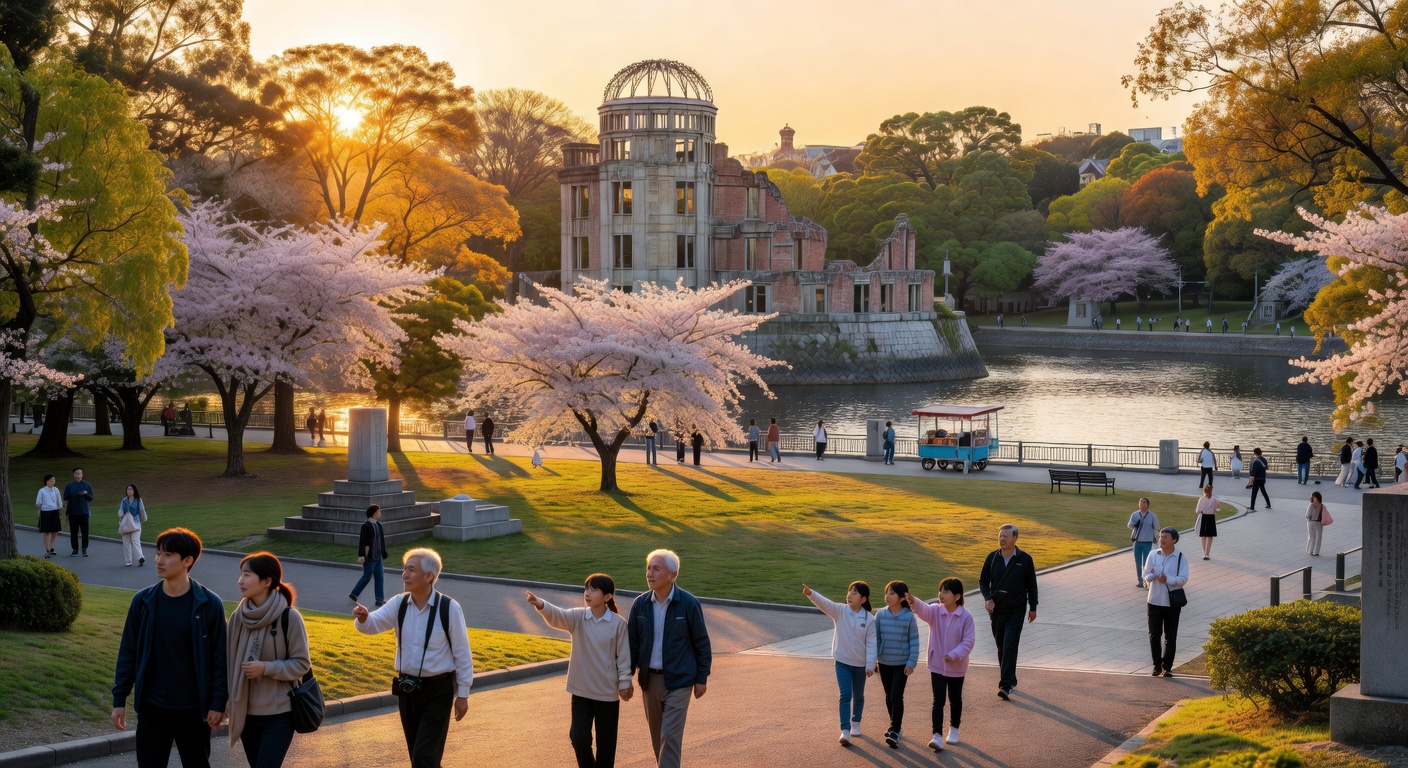
39.3°C in Fuchu, Fireworks Moved to September, Pools Closed—Extreme Heat is Redefining Hiroshima’s ‘Summer Calendar’
A single number dominated Hiroshima in July: 39.3°C, recorded in Fuchu City, marking the highest temperature ever recorded in Hiroshima Prefecture. On that day, local pools were closed. It was too hot to use places meant for swimming. This situation warrants a moment of reflection. Facilities intended for relief from heat are rendered nonfunctional due to the very heat itself. This reversal captures the essence of what is currently happening to summer in Hiroshima.
In the same July, the Hiroshima Minato Dream Fireworks Festival was launched as the “last event of July.” Starting next year, it will be moved to September. Local summer festivals, pools, and fireworks—events that have shaped the summer calendar—are being pushed aside by the physical force of temperature. The question is, who will bear the cost of this rewriting?
—
The ‘Initial Shock’ Faced by Medical Facilities
According to Hiroshima Prefecture, on July 24 alone, 19 people were transported to emergency services due to heatstroke symptoms. The number of transports after the end of the rainy season has reached about seven times that of the same period last year. While it may seem like a simple increase when looking at the numbers, there is a concrete burden behind it.
The cost for each emergency transport, including personnel and fuel for the responding ambulance, is estimated at around 45,000 yen for local governments (based on average values calculated by the Ministry of Internal Affairs and Communications Fire and Disaster Management Agency). At medical institutions receiving patients, initial treatment for heatstroke, including IV drips, tests, and monitoring, can cost several tens of thousands of yen, and if the condition worsens, ICU management can exceed 100,000 yen per day. These costs are covered by health insurance and public funds—ultimately spreading thinly across the entire citizenry as insurance premiums and taxes.
It is crucial to note that this burden is becoming a “recurrent structure” rather than a “sudden disaster.” The number of heatstroke transports in Hiroshima Prefecture has been on the rise over the past decade, and medical facilities are facing chronic overload during the summer months. Emergency medical systems are primarily designed to prepare for unpredictable situations like traffic accidents or acute illnesses, but transports due to extreme heat can be anticipated to some extent. The disconnect between what can be predicted and the unchanged structure deepens the exhaustion of those on the front lines.
—
The ‘Operator’s Dilemma’ Reflected in Pool Closures
The closure of pools in Fuchu City may seem, at first glance, like a decision made for “safety reasons.” In fact, this is true. In environments where temperatures exceed 39°C, the concrete by the poolside can reach nearly 60°C, posing a burn risk for those walking barefoot. The water temperature also rises, impairing its original function of cooling the body. The risk of heatstroke for lifeguards themselves also increases. The closure was a rational decision.
However, from the operator’s perspective, this decision carries a different weight. Many public pools generate a significant portion of their annual revenue during the few dozen days of summer. If they close on a hot day, they lose income on the day when attendance is most expected. On the other hand, if they remain open, they bear the risk of accidents and liability. Either choice results in a loss—this is the dilemma posed to operators by rising temperatures.
Additionally, it is often overlooked who loses out when pools are closed. Children from households with air conditioning can stay home. However, for families that refrain from using air conditioning due to financial reasons or for those where guardians are absent during the day, pools functioned as a “cool place.” When that option disappears, the risk concentrates on the most vulnerable groups.
—
The ‘September Transition’ of Fireworks Festivals—What Does the Calendar Change Affect?
The move of the Hiroshima Minato Dream Fireworks Festival to September is a result of organizers prioritizing safety. The risk of tens of thousands of spectators staying outdoors for extended periods during the July heat has been increasing year by year. The costs for increasing first aid tents, arranging water stations, and implementing heatstroke countermeasures for security personnel have been ballooning with each event.
The organizers’ decision is understandable. However, the implications of this transition are significant.
The fireworks festival typically attracts around 100,000 spectators. For surrounding restaurants, convenience stores, transportation services, and accommodations, this one night is one of the peaks of summer sales. Even if we estimate the spending per visitor to be between 3,000 and 5,000 yen (including food, transportation, and souvenirs), this translates to an economic impact of 300 million to 500 million yen in just one night. If this moves from July to September, the very structure of summer sales will change.
(Note: During the drafting stage, a figure of “5 billion yen in economic impact” was mentioned, but 100,000 x 5,000 yen equals 500 million yen, which is a different scale. I have not confirmed any official estimates indicating that the fireworks festival alone reaches 5 billion yen in broader economic impact, including ripple effects. It is important to separate facts from speculation.)
Moreover, it is crucial to note that this issue is not limited to the fireworks festival. Across Hiroshima Prefecture, there is a growing trend of outdoor events such as summer festivals, Bon Odori dances, and local sports days being canceled, postponed, or rescheduled due to the heat. Each individual decision may be small, but collectively they create a new premise that “outdoor events in July and August cannot take place.” The local calendar is quietly being rewritten by temperature.
—
Observing the ‘Bias’ in Adaptation Costs
The changes observed in medical, facility management, and events share a common structure. Adapting to extreme heat incurs costs, and these costs are not evenly distributed.
Local governments are being asked to bear new expenditures, including increased emergency transports, reevaluation of public facility operations, heatstroke prevention awareness activities, and the establishment of “cooling shelters” as emergency refuge. However, local government finances are not abundant. Many municipalities in Hiroshima Prefecture are experiencing a decline in tax revenue due to population decrease, while the costs of adapting to climate change are piling on. The prioritization of decisions is becoming more stringent than ever.
Businesses—particularly small and medium-sized enterprises involved in tourism, dining, and outdoor leisure—are facing the risk of changing seasonal revenue structures. If the timing of the fireworks festival changes, procurement plans will also change, and if pools close, nearby shops will also cease operations. Such cascading effects cannot be absorbed solely by the efforts of individual businesses.
For individuals, the adaptation costs are the least visible. Electricity costs for air conditioning, purchases of parasols or cooling goods, and opportunity losses from refraining from going out. In households with elderly individuals living alone, cases of being transported after spending time without air conditioning are not uncommon. While the call to “turn on the air conditioning” is correct, there are still insufficient answers to the question of who will bear the burden of electricity costs.
Adaptation costs tend to be biased towards those who cannot raise their voices, rather than those who can. Whether we can visualize this bias and create a system to support it will determine the sustainability of the community.
—
What to Watch for Moving Forward
There are several specific focal points.
First, whether the fireworks festival in September next year will be a “success.” Attendance numbers, economic ripple effects on surrounding businesses, and changes in operational costs—these data will influence decisions regarding other summer events. Will the September transition become a model case, or will it conclude that “it is difficult even if we move it”? This verification will serve as a reference point for municipalities not only in Hiroshima but across the country.
Second, whether the medical system’s “summer shift” will be established as a system. In response to the annual increase in heat-related transports, will there be progress in the deployment of temporary medical staff and the establishment of facilities to accommodate mild cases? We should be entering a phase where we prepare systems for predictable risks.
Third, whether the question of “who gets left behind in the heat” will be incorporated into policy. Locations for cooling shelters, subsidies for electricity costs for elderly households, and creating spaces for children—while there are individual measures, are they systematically designed within a single framework of “adaptation to extreme heat”? It is crucial to question whether these responses are not just disparate actions but are structured as a cohesive system.
—
The figure of 39.3°C is not merely a record for a single day. Under that temperature, pools close, fireworks dates shift, ambulances race, and someone calculates electricity costs in front of the air conditioning switch. When the calendar changes, those who are first affected are the people who have built their lives around that calendar. Whether there is a system in place to reach those individuals—this is at the core of the question this summer.


 JA
JA EN
EN