



Who Will Restore the ‘Eternal Flame’? — The Complete Destruction of the Reikado Hall, the Government-Driven Bid Rigging in Onomichi, and the Disappearance of the Buddha Statue Model Reflect the Absence of ‘Cultural Heritage Support’

Related Articles
Who Noticed the Fire Was Out First on the Morning It Went Out?
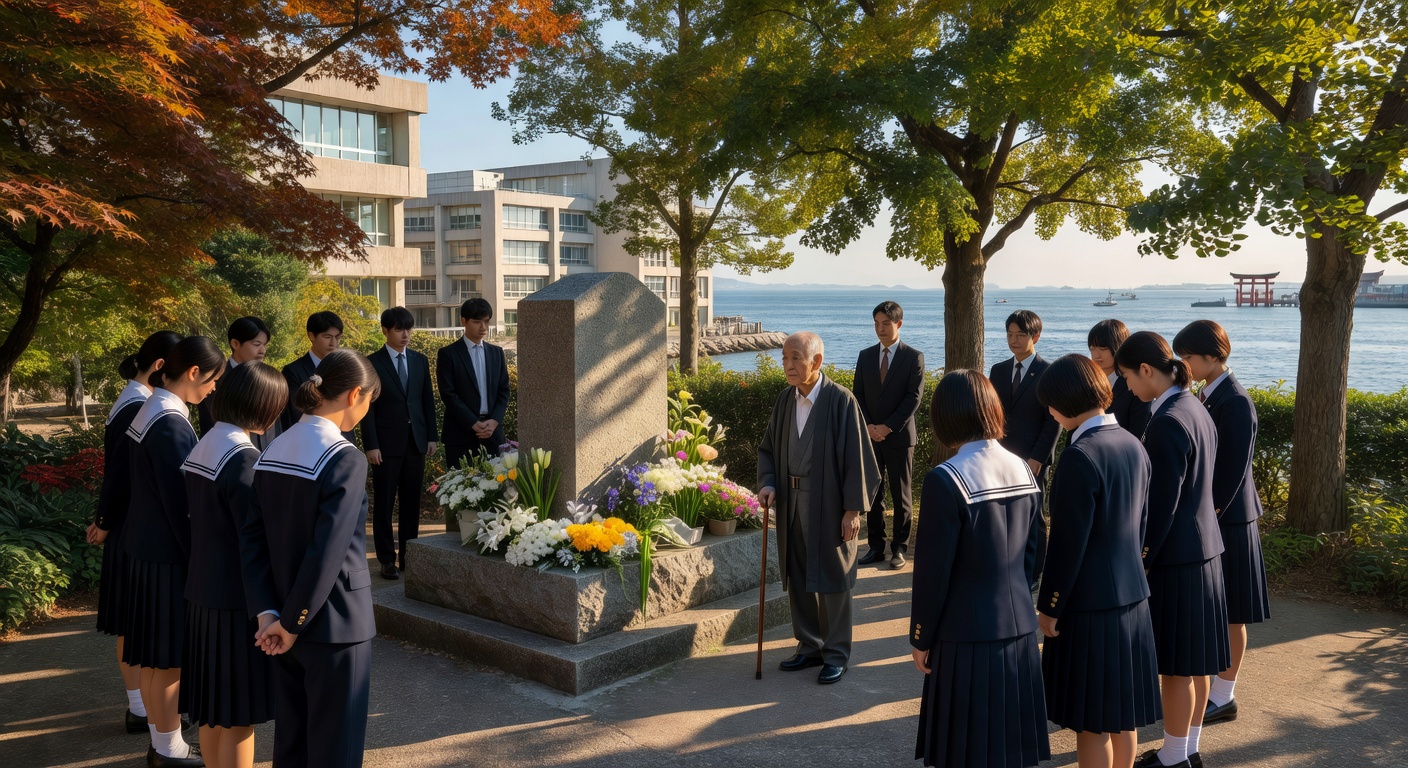
There is a flame that has supposedly burned for over 1,200 years. The Reikado Hall at Daisho-in Temple on Miyajima in Hatsukaichi City, Hiroshima Prefecture — the ‘Eternal Flame’ believed to have been lit by Kobo Daishi during his training — has also become one of the embers of the ‘Flame of Peace’ at Hiroshima’s Peace Memorial Park. For tourists, it is a ‘sacred place for lovers,’ while for the local community, it serves as a nexus of faith and history. That Reikado Hall has been completely destroyed by fire.
The fact that the building has burned down can be summarized in a single line as a news headline. However, what I want to question is not the fire itself. — Who has been working to ‘protect and maintain’ that flame, through what mechanisms, and how much effort has been put into it? And where is that system currently breaking down?
Two incidents emerged almost simultaneously within Hiroshima Prefecture. The government-driven bid rigging case that was uncovered in Onomichi City and the issue of the whereabouts of a Buddha statue model produced by Hiroshima Prefecture. When these three seemingly unrelated events are lined up, what emerges is the reality that the ‘support for cultural heritage’ — the people who protect it, the funding that supports it, and the systems that uphold it — is structurally becoming absent.
The Complete Destruction of the Reikado Hall — What Is Lost When a ‘Place’ Disappears?
The Reikado Hall is located near the summit of Mt. Misen on Miyajima. It is situated in a place that can only be reached by walking further along a mountain path after getting off the ropeway, making it inaccessible to fire trucks. This means that the initial firefighting response was inherently limited. The challenge of fire prevention in mountain temples is not unique to the Reikado Hall; it is a common structural weakness shared by cultural heritage buildings scattered across mountainous regions nationwide.
According to statistics from the Agency for Cultural Affairs, the number of fire incidents involving nationally designated cultural properties has fluctuated between several and a dozen per year, and since the fire at Shuri Castle in 2019, calls for enhanced inspections of fire prevention equipment have been made. However, cultural assets like the Reikado Hall, which are not nationally designated — legally not fitting into the category of ‘cultural properties’ but serving as spiritual pillars for the community — tend to slip through the cracks of the system.
Referring to past similar cases for reconstruction costs, rebuilding a wooden hall can require funding in the range of tens of millions to hundreds of millions of yen. The restoration of the temple complex on Mt. Misen, which was damaged by a typhoon in 2004, also took considerable time and money. The issue is not just the magnitude of the amount. Securing the carpenters and traditional craftsmen responsible for the reconstruction, procuring materials, and, above all, the spiritual and religious procedures for how to relight the ‘Eternal Flame’ — who designs and executes these ‘behind-the-scenes arrangements’ is not clear.
The extinguishing of the flame is a physical fact. However, the significance of the daily acts that have maintained that flame for 1,200 years — leveling the ashes, adding firewood, reading the wind — is not something that can be measured by the monetary damage to the building.
The Government-Driven Bid Rigging in Onomichi — When the Flow of ‘Protective Funds’ Becomes Murky
In Onomichi City, a bid-rigging incident related to public works was uncovered, leading the mayor to publicly apologize. City employees were arrested on suspicion of violating the Anti-Competitive Bidding Act, and the city has announced measures to prevent recurrence.
There is a reason to re-examine this incident in the context of ‘cultural heritage.’ Onomichi is known as a ‘city of slopes,’ where temples, shrines, and historical buildings form the very framework of the town. Repairs to cobblestones, maintenance of retaining walls, and seismic reinforcement of old wooden buildings — many of these tasks are commissioned as public works. If the bidding process for these projects has been improperly distorted, the impact extends beyond roads and bridges. The reliability of the infrastructure that physically supports cultural heritage itself is shaken.
As measures to prevent recurrence, revisions to the bidding system and the establishment of a third-party committee have been announced. However, changing the system and restoring trust in it are two separate tasks. In municipalities like Onomichi, where cultural assets are directly linked to the local economy — tourism revenue, promotion of migration, hometown tax donations — ‘transparency in public works’ is not an abstract administrative issue but a concrete question of whether cultural heritage can stand tomorrow.
When residents can no longer believe that ‘this work is being carried out appropriately,’ all costs increase — donations, volunteer efforts, and community consensus-building. Government-driven bid rigging undermines not only the fairness of the bidding process but also the very premise of ‘everyone working together to protect.’
The Disappearance of the Buddha Statue Model — The Absence of ‘Protective Records’
The third incident appears to be rather mundane. One of the Buddha statue models produced by Hiroshima Prefecture for the purpose of promoting and educating about cultural heritage has gone missing. Two models were produced at a cost of about 5 million yen — a finely crafted model costing 2.5 million yen each is now unaccounted for.
What this issue reflects is not only the management of cultural properties themselves but also the nested structural inadequacy of being unable to manage even the tools used to ‘communicate’ cultural heritage. Models only gain meaning when they are used in exhibitions and educational settings. The absence of lending records, the lack of confirmation of returns, and the interruption of handovers due to personnel changes — the accumulation of these ‘mundane breakdowns in arrangements’ has likely resulted in the situation of being unaccounted for.
The digitization of cultural property management is progressing nationwide. It is technically feasible to database information on locations, repair histories, and lending records, ensuring that information is passed on even when personnel change. However, implementing such a system requires a budget. To secure a budget, there must be someone who can explain ‘why it is necessary.’ It takes time to cultivate that person. — Ultimately, the problem lies not in technology but in the structure that has neglected the support staff.
A Single Structure Indicated by Three Events
The complete destruction of the Reikado Hall, the government-driven bid rigging in Onomichi, and the disappearance of the Buddha statue model. Each of these events occurs in different contexts. However, when viewed from a different angle, they all lead to the same question.
‘Who is operating the support for protecting cultural heritage, with what budget, and under what rules?’
The issue of ‘protectors.’ The people who have maintained the flame of the Reikado Hall daily are the temple’s stakeholders, but the personnel supporting the fire prevention system in mountain temples are limited. There is a chronic shortage of professionals responsible for managing cultural heritage nationwide — curators, conservation and restoration technicians, disaster prevention personnel. According to a survey by the Ministry of Internal Affairs and Communications, the proportion of specialized staff among municipal employees responsible for cultural property protection is low, and it is not uncommon for municipalities to have overlapping duties.
The issue of ‘protective funds.’ The maintenance and management costs of cultural heritage are covered by subsidies from the national, prefectural, and municipal governments, along with the owners’ own contributions. However, the subsidy rates vary depending on the target and classification, and assets like the Reikado Hall, which are not legally designated as cultural properties, tend to be left outside the system. Moreover, if the public works process that supports the execution of those subsidies has been distorted by government-driven bid rigging, the trust in the flow of funds itself is compromised.
The issue of ‘protective systems.’ The disappearance of the Buddha statue model symbolizes the inadequacies of management ledgers, the absence of handover rules, and the hollowing out of the check system — while systems exist, their operation has not kept pace. The result of neglecting the gap between rules and reality is the ‘disappearance’ of a 2.5 million yen model.
These three pillars may seem independent, but in reality, they support each other. Without people, the system does not operate. If the system does not function, funds are not used correctly. If the funds become murky, people will leave. If one pillar breaks, the remaining two will bear the load.
Who Benefits from This? — A Question
Discussions on cultural heritage protection are often framed in terms of a sense of duty to ‘protect.’ However, a system cannot function solely on a sense of obligation. For a sustainable system, there must be people who benefit from it.
If fire prevention equipment is in place, the temple stakeholders will be somewhat relieved from their nightly anxieties. If the bidding process is transparent, legitimate contractors can receive fair compensation for their work. If management ledgers are digitized, the burden on staff to verify everything from scratch with each personnel change will be reduced. — Behind the grand phrase ‘protecting cultural heritage’ lies a concrete circuit of ‘making someone’s daily life a little easier.’
Designing, maintaining, and repairing that circuit — that is the job of the ‘support staff.’ And the three events that occurred simultaneously in Hiroshima Prefecture quietly signal that this support staff is becoming increasingly absent.
Future Points of Interest
How will the reconstruction of the Reikado Hall proceed — will it be left to the self-help efforts of the religious corporation, or will the municipality or prefecture prepare a support system? Will the recurrence prevention measures in Onomichi stop at revising the bidding system, or will they extend to auditing systems for cultural heritage-related construction? Will the investigation into the whereabouts of the Buddha statue model lead to an overall inventory of cultural property management?
By following each ‘after,’ we should be able to see where the restoration of the three pillars begins.
The 1,200-year-old flame has gone out. However, precisely because it has gone out, the warmth of the hands of those who have been protecting that flame every day — now, becomes a little clearer.


 JA
JA EN
EN