



Handwoven Textiles from Laos, Clams from Onomichi, and Ambassadors from Etajima—Who Does the “Small Economic Sphere” Serve?

Related Articles
Mechanisms Reveal Faces Due to Their Small Scale
Handwoven fabrics from a mountain village in Laos are displayed on the eaves of a house on an island in the Seto Inland Sea. Fishermen in their 70s kneel in the tidal flats, counting young clams. Talents and writers post about the island, home to just over 20,000 people, on social media with the title of “Special Mission”—.
These three activities share a common question: “Who does this serve?” It is not a distribution system designed by large capital or policies imposed from above by the government. People rooted in the land create, operate, and adjust mechanisms within their reach. It is precisely this “smallness” that holds the core of sustainability.
This article follows a couple importing and selling handwoven products from Laos in Etajima, fishermen in Onomichi who have more than doubled clam catches, and 15 special tourism ambassadors appointed by the city of Etajima, exploring who these three economic spheres serve.
—
From Laos to Etajima—The Distance of Fabric and the Time Embedded in Its Price
A couple in their 30s living in Etajima specializes in importing and selling handwoven fabric products from a village in northern Laos. Items such as stoles, pouches, and table runners are priced between approximately 5,000 and 10,000 yen each. Compared to mass-produced linen products, this is expensive. However, within that price lies the entire process—from cotton cultivation to spinning, dyeing with natural dyes, and hand weaving—each crafted by a single artisan over several days to weeks.
What is noteworthy is the structure of the transactions this couple has established. They communicate directly with local weaving groups without going through large trading companies, purchasing finished products. By cutting out the middleman, the weavers receive a higher share of the profits. The couple also takes on the inventory risk themselves, limiting their purchases to a few dozen items at a time. Their sales channels include local markets, events both on and off the island, and an online shop. Rather than a flashy scale-up, their design is to “produce only what can be delivered and deliver only to those who can receive it.”
The mechanism primarily benefits the weavers in Laos. They are not subjected to bulk orders and price-cutting pressures, allowing them to continue weaving at their own pace. Next, the consumers benefit. The uneven texture that industrial products lack, along with the story of “who wove this fabric,” transforms the purchasing experience. The couple themselves can also sustain their livelihood within the island community, aligning it with their values.
This small economic sphere operates by gradually reducing the “burdens” on everyone involved. Conversely, the moment a burden is imposed on any one part, this scale of mechanism can break. Thus, keeping it small becomes the very design philosophy.
—
Clams from Onomichi—Why Fishermen in Their 70s Kneel in the Tidal Flats
In the coastal area of Onomichi City, clam catches, once abundant, have drastically declined over many years. The causes are complex: changes in seawater temperature, reduced sediment supply from rivers, and an increase in predatory species—none of which can be solved by removing just one factor.
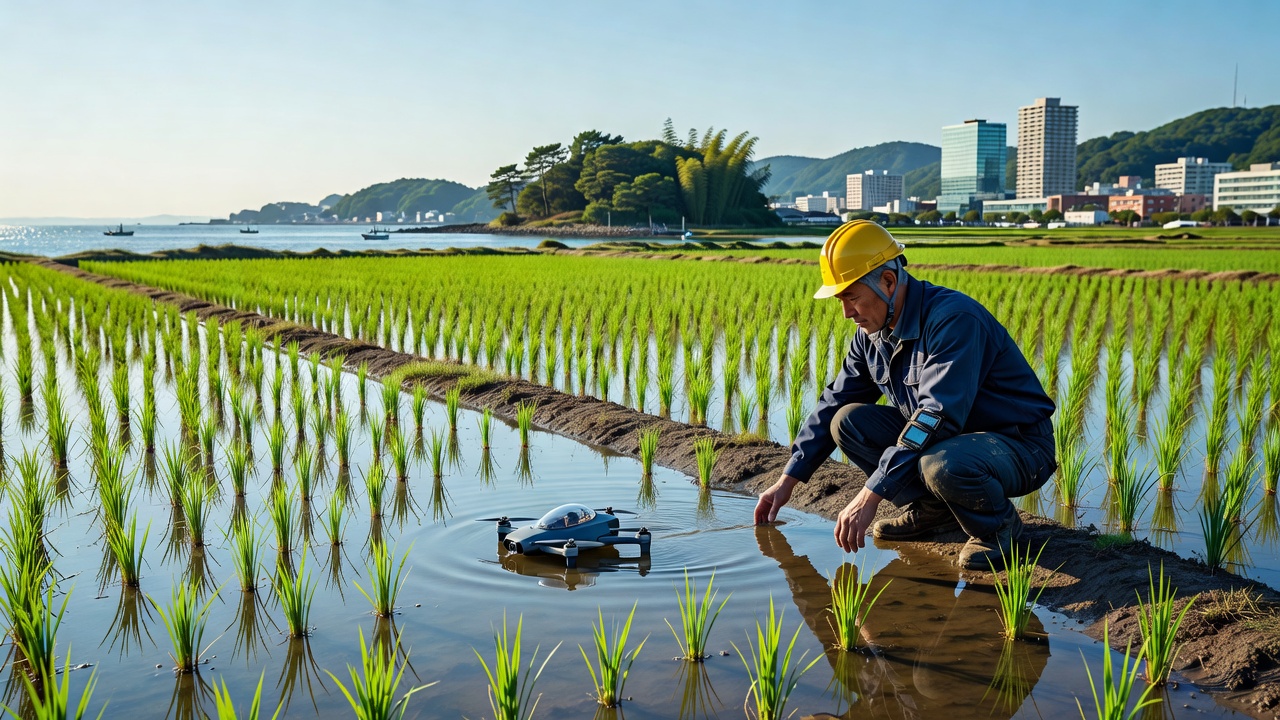
Nevertheless, local fishermen took action. With an average age in their 70s, they engaged in diligent environmental conservation activities such as tilling the tidal flats, eradicating their natural enemy, the stingray, and releasing juvenile clams. There is nothing glamorous about it. They go out to the tidal flats, dig in the sand, and check the growth conditions of the clams. This repetition has led to last year’s catch being more than double that of the previous year.
What should not be overlooked is the depth of time behind the number “twofold.” It takes 1.5 to 2 years for clams to grow from juvenile to market size. Thus, last year’s results are the outcome of conservation efforts that have been ongoing for at least two years, and the seeds sown this year will bear fruit even further in the future. Fishermen in their 70s are tilling today’s tidal flats for a future where they may not know if they will be able to harvest.
Who does this mechanism serve? First, the fishermen themselves—the recovery of clam catches directly leads to increased income. Next, local restaurants and fish shops benefit. With a stable supply of Onomichi clams, they can expand their menus and attract tourists and regular customers seeking local products. Additionally, the tidal flat environment itself is also benefitting. Tilling improves the permeability of the sandy soil, restoring habitats not only for clams but also for other benthic organisms. The small economic sphere overlaps with the recovery of the ecosystem.
One fisherman reportedly said in an interview, “Anyone can just catch. It’s about nurturing, protecting, and then finally being able to catch.” This statement quietly encapsulates the essence of resource management.
—
Special Tourism Ambassadors from Etajima—The Mechanism of “Borrowing and Lending Recognition”
In 2024, the city of Etajima appointed 15 special tourism ambassadors. The lineup is diverse, including talents, writers, athletes, and notable locals. What is required of them is to mention Etajima’s name in their social media and media appearances. While the details of the compensation structure and activity frequency are not disclosed, the structure can be described as a mechanism to “convert individual recognition into regional awareness.”
For an island with a population of about 22,000, the budget for advertising is limited. Commissioning a campaign from a major advertising agency would cost tens of millions of yen, but the ambassador system fundamentally changes that cost structure. By having 15 individuals communicate to their respective followers, the reach naturally disperses, creating connections that are “narrow and deep” rather than “broad and shallow.”
However, there are points that require careful observation. Whether the ambassadors’ communications are consumed as “advertising” or received as “personal experiences” greatly depends on the context of the communication. For the mechanism to function, it is essential that the ambassadors have a genuine connection with Etajima. If appointed merely by title, their communications will lack warmth. Words devoid of warmth will not catch anyone’s attention in the fast flow of social media.
This mechanism primarily benefits the tourism department of Etajima City. With limited personnel and budget, they can reach demographics that would otherwise be inaccessible. Next, the ambassadors themselves benefit. By having connections to the region, their activities gain a “social context.” For tourists, information from trusted individuals holds more persuasive power than official brochures.
—
Common Structure Across the Three Economic Spheres—The Proximity of “Operators” and “Mechanisms”
Laos’s handwoven textiles, Onomichi’s clams, and Etajima’s ambassadors. When these three activities are lined up, a commonality emerges: “the distance between those who operate the mechanism and the mechanism itself is close.”
The couple dealing in handwoven products handles both procurement and sales themselves. The fishermen are responsible for both conservation activities and catches. The ambassadors are both communicators and experiencers. In every economic sphere, the “designers” and those “on-site” are not separated. This allows for rapid adjustments. Feedback comes directly. When burdens arise, the mechanism can be altered.
In larger economic spheres, this distance tends to widen. Policies determined by headquarters are executed by the field, and it takes multiple layers of middle management for the field’s voice to reach headquarters. In the process, information gets diluted, and warmth diminishes. The strength of a small economic sphere lies not in efficiency but in the “speed at which pain is communicated.”
Another commonality among the three is the attitude of “not rushing to completion.” Handwoven fabrics are finished at the weaver’s pace. Clams can only wait until the tidal flat ecosystem is ready. The effects of the ambassadors cannot be measured by a single post; they gradually emerge through the accumulation of relationships. All of these mechanisms can only exist by making time their ally.
—
Future Points of Interest—Will the Mechanism Produce “Next Generations of Stewards”?
A common challenge faced by the three economic spheres is the next stage of sustainability—”inheritance.”
The average age of the fishermen in Onomichi is in their 70s. Without a mechanism to pass on current achievements to the next generation, the restored tidal flats will once again be neglected. The couple selling handwoven products in Etajima currently operates at a scale manageable by just the two of them, but a turning point will come when demand increases: whether to “scale up” or “keep it small while increasing the number of partners.” The sustainability of the ambassador system also depends on whether the enthusiasm of the 15 appointed individuals can be maintained, which cannot be guaranteed by the system design alone.
Small economic spheres are fragile precisely because they are small. However, their smallness allows for a clearer view of what is lost when they break. In a large economic sphere, the closure of a single factory may only register as a minor fluctuation in the numbers. However, if one weaver in Laos leaves the loom, that pattern will no longer be created. If one fisherman in Onomichi stops going to the beach, a section of the tidal flat will remain untouched.
Thus, the question arises: “Can this mechanism ease the burden for the next person standing there?” A mechanism that operates solely because the current individuals are working hard has not yet become a true mechanism. When it is designed to continue operating even in the absence of current individuals, only then can a small economic sphere truly be called a “sphere.”
What is common across the three sites is not individual devotion but the will to ease burdens through the power of the mechanism. Whether that will reaches the next generation remains unanswered. However, when the fishermen in their 70s kneel in the tidal flats and say, “It’s about nurturing, protecting, and then finally being able to catch,” those words are already directed toward successors yet unseen.


 JA
JA EN
EN