



A Swiss Blacksmith Establishes a Dojo in Mihara, Shinto Priests, Sake Brewers, and Farmers Brew Sake, and Five Trainees Arrive from the Dominican Republic — A Quiet Reversal as ‘Outsiders’ Inherit Hiroshima’s Craft

Related Articles
A Swiss Blacksmith Establishes a Dojo in Mihara
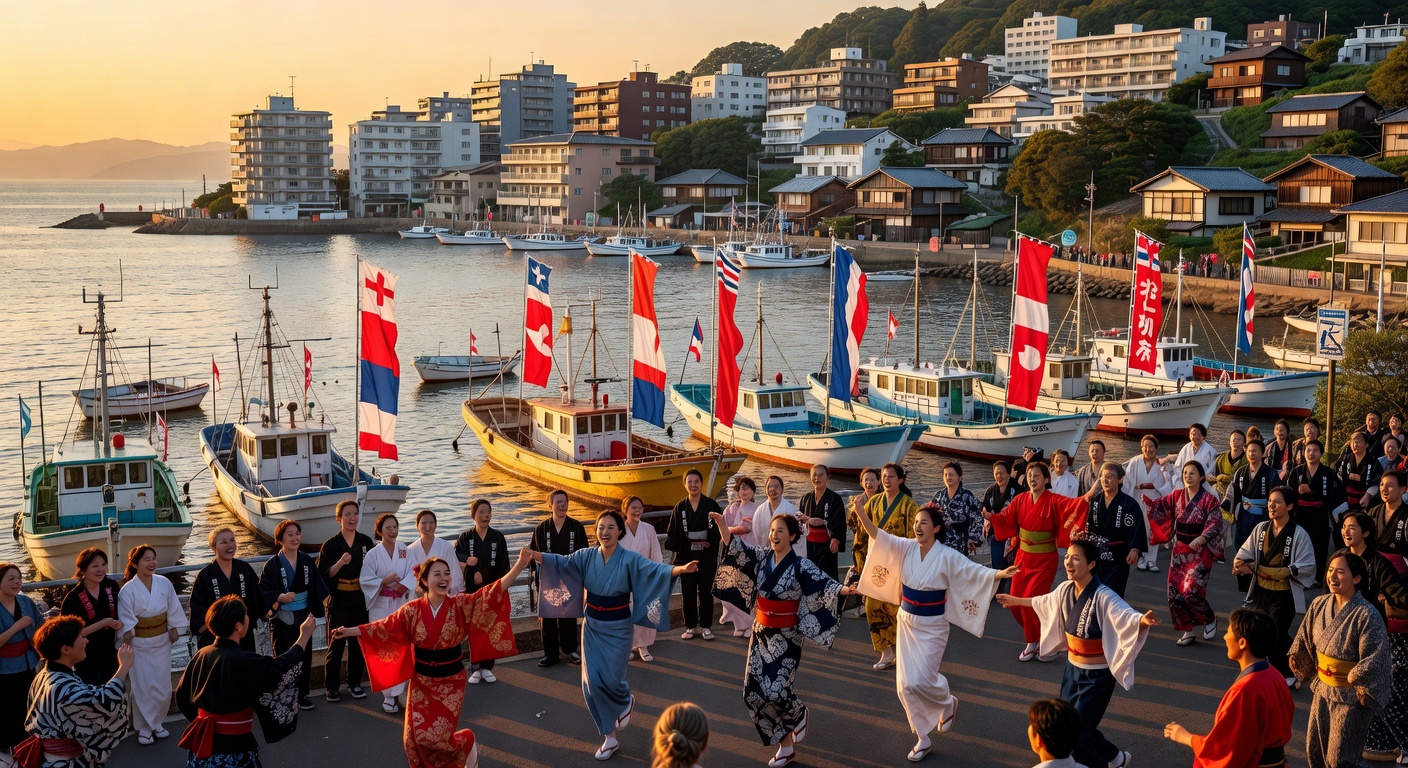
In Mihara City, Hiroshima Prefecture, a blacksmith from Switzerland has opened a dojo. In Hiroshima City, a Shinto priest, a sake brewer, and a farmer are collaborating to brew sake from rice. Meanwhile, around Mazda Stadium, large trainees from the Dominican Republic are swinging their bats. Although there is no direct connection among these three stories, when viewed together, a single structure emerges. ‘Outsiders’ are receiving the local craft and attempting to take root in the land — this very mechanism is evolving into a new form of inheritance.
—
The Flame of the Fire Ceremony Reflects — Swiss Blacksmith Establishes a Dojo in Mihara
A fire ceremony was held at the newly completed sword forging dojo in Mihara City, Hiroshima Prefecture. The first fire was lit by Johann Reutwiler, a blacksmith from Switzerland.
Reutwiler came to Japan to learn the art of Japanese sword forging in earnest and has been training under a master. The creation of a Japanese sword involves numerous processes, from selecting tamahagane to folding and forging, and quenching. It takes several weeks to months to complete a single sword, and this technical system is built on centuries of accumulation. The number of swordsmiths in Japan has been decreasing year by year, with approximately 180 registered swordsmiths according to the Agency for Cultural Affairs. The shortage of successors is serious, and the discontinuity of this craft has long been a real issue.
In this context, the fact that someone has crossed the ocean to establish a dojo is worth pausing to consider.
Reutwiler stated, “I want to create something special in the sword.” The term “special” refers to the beauty that appears in the sword’s hamon and jihada, reflecting the blacksmith’s skill and sensibility. The very choice of this word indicates how deeply he has immersed himself in the aesthetics of the Japanese sword.
The cost of establishing the dojo was about 5 million yen, made possible with support from the local community. For Mihara City, this means a base has been created for aspiring swordsmiths from both Japan and abroad to visit. The structure where technology attracts people, and people take root in the land — this is clearly different from the traditional model of inheritance where local masters take on disciples.
—
A Shinto Priest, a Sake Brewer, and a Farmer — Three Individuals from Different Angles Arrive at the Same Cup
In Hiroshima City, another form of ‘inheritance from the outside’ is underway. However, this time it is not geographical but rather from different industries.
A Shinto priest, a sake brewer, and a farmer have joined forces to brew sake called “Ichimi Shinsui.” This initiative, which began in 2019, is now in its third brewing season.
What is noteworthy is that each of the three has a different specialty, approaching sake from various angles. The Shinto priest carries the spiritual culture of the region, the sake brewer possesses fermentation and brewing techniques, and the farmer cultivates the rice from the soil. At the point of sake production, these three specialties intersect. Rice variety selection, cultivation methods, washing and soaking conditions, koji management, and temperature control of the moromi — each process benefits from their respective expertise.
The name “Ichimi Shinsui” itself means the water of oath in Shinto rituals. It declares that sake is not merely a luxury item but a liquid encapsulation of the culture and beliefs of the land.
The price per bottle is around 5,000 yen. While not cheap, considering the cost structure of consistently managing everything from rice cultivation to brewing, it is rather a fair price. Unlike mass-produced items from major manufacturers, the annual production volume is limited. Therefore, each bottle retains the touch of the three individuals.
What this initiative demonstrates is that the ‘inheritance’ of sake brewing does not necessarily occur solely within the lineage of a sake brewery. By bringing together techniques and culture from different industries, a new circuit of inheritance is opened. The craft, which had been closed off from within, begins to move again through external perspectives.
—
What a 203-Centimeter Body Teaches Us — The Presence of Dominican Trainees
Five trainees from the Dominican Academy of the Hiroshima Toyo Carp have come to Japan. They have joined the autumn training camp to hone their skills in the Japanese training environment. Among them is a large player standing 203 centimeters tall and weighing 103 kilograms.
Viewing this story solely through the lens of ‘acquiring foreign players’ misses the underlying structure.
The Dominican Academy is a training base established by the Carp in Central America. It identifies talented young individuals locally, trains them from the basics, and assesses whether they can adapt to Japanese baseball. The trainees are trying to absorb the culture of Japanese baseball — intricate pitching, base running judgment, and defensive positioning. Meanwhile, the physical abilities and playing styles they bring introduce stimuli that Japanese players cannot typically experience.
The flow of techniques is not one-way. The ‘form’ of Japanese baseball is conveyed to Dominican players, while the ‘power’ of Dominican players shakes the Japanese scene. This bidirectionality is likely the essential value of the trainee system. Young local players stand on the same field as individuals with entirely different physiques and senses — this experience, while difficult to quantify, undoubtedly changes something.
—
A Common Structure Across Three Scenes
Swordsmithing, sake brewing, and baseball. These three scenes are entirely different in genre and scale. However, the dynamics flowing through them are the same.
‘An outsider receives the techniques that were once internal and establishes them in a new form in the land’ — this structure is occurring simultaneously in all three scenes.
Traditional ‘inheritance’ has functioned as a closed circuit within the community, from master to disciple, parent to child. While this is a beautiful mechanism, the circuit stops when the bearers decrease. What is happening now in Hiroshima is that this circuit’s entrance has been opened to the outside. A blacksmith from Switzerland lights a fire in the forge, a trio from different industries enters the brewery, and young people from the Dominican Republic take their positions with bats.
Importantly, this is not a story of ‘outsiders stealing internal techniques.’ Reutwiler has established a dojo in Mihara and taken root in the community. The trio from different industries uses local rice and brews in a local brewery. The trainees wear Carp uniforms and sweat on the fields of Hiroshima. Outsiders are becoming part of the inside. This very process is a new form of inheritance.
—
Who Benefits from This?
Finally, I would like to pose one question.
Who benefits from this mechanism of ‘inheritance from the outside’?
The answer is likely ‘the next generation.’ If techniques become extinct, the next generation must start from scratch. However, if outsiders receive the craft and leave it in the land, the next generation will already have a place to learn. There will be a dojo, a brewery, and a field.
Inheritance is not about preserving the past. It is about leaving a foundation for someone in the future to say, ‘I can start from here.’
On the day the fire was lit in the forge at the Mihara dojo, the one watching that flame was a Swiss blacksmith. However, the flame illuminates the face of someone yet unnamed, someone who will want to forge a sword in the future.


 JA
JA EN
EN