



Small Sardine Catch Hits Five-Year High, While Whitebait Faces Deficit with Just 200 Kilograms Landed—A Structural Divide Between ‘Rotating Fishing’ and ‘Non-Rotating Fishing’ in the Same Seto Inland Sea

Related Articles
Same Sea, Same Morning—Yet the Atmosphere at the Port is Completely Different
In June, Hiroshima Bay. Before dawn, a fleet of boats returns from small sardine fishing. The silver bodies of fish piled on the deck shine under the auction house lights. The results of the first auction show the highest price per kilogram in the past five years. The voices of buyers fill the air, and the fishermen wear expressions of slight relief.
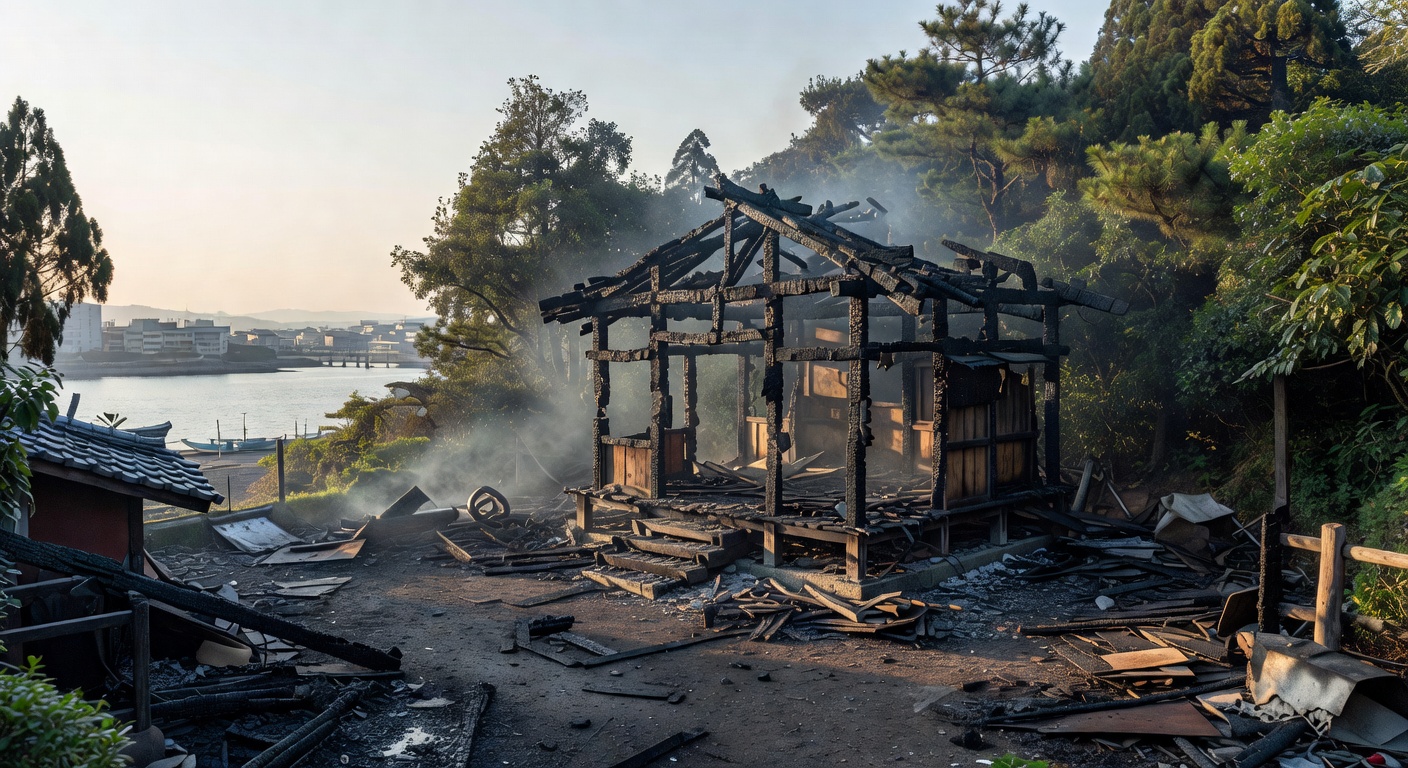
Meanwhile, in the same Seto Inland Sea, whitebait fishing boats quietly return to port. On the first day of the season, the catch is about 200 kilograms. One fisherman remarks, “With just 200 kilograms, we can’t even cover the fuel costs.” There are no smiles.
Boats departing from the same waters, in the same season, on the same morning, bring back completely different realities. This disparity arises not from individual skill or luck, but from differences in the surrounding “structure” of the fishing industry. Resource availability, cost structures, distribution channels, and the ability to pass on prices—whether these conditions align or not decisively determines the sustainability of the fishing industry.
Small Sardine Fishing—A “Short-Distance Circuit of Local Production and Consumption” is in Motion
In Hiroshima, small sardines (juvenile to young anchovies) are not just seafood. Sashimi, tempura, and nanban-zuke—these are essential local flavors on summer dining tables, signaling the arrival of summer for the citizens of Hiroshima.
This year’s success is primarily supported by stable resource availability. In recent years, efforts such as nutrient management and the restoration of seagrass beds have improved the fishing environment for small sardines in the Seto Inland Sea. Favorable conditions of water temperature and currents have likely facilitated the migration of schools into fishing grounds.
However, having resources alone does not guarantee prices. The strength of small sardine fishing lies in its extremely short “short-distance circuit” from catch to consumption.
Small sardines caught early in the morning are displayed in markets and supermarkets in Hiroshima City on the same day. Because freshness is crucial for this fish, the geographical conditions allow it to be caught locally and consumed locally—this circuit is established. Without going through freezing or processing, the fish reaches consumers, reducing intermediary costs and shortening the “invisible distance” between what fishermen earn and what consumers pay.
Moreover, there is a culture of eating small sardines raw among consumers in Hiroshima. This is relatively rare nationwide. Only a few regions serve anchovies as sashimi. In other words, the demand itself is supported by a unique local food culture. The scarcity of substitutes and high seasonality contribute to the high prices at the first auction.
When we organize this structure, it looks like this:
- Resources: Stable migration and fishing ground environment
- Distribution: Short-distance circuit delivering on the same day as catch
- Demand: Strong consumption supported by local food culture
- Cost: Low intermediary costs due to no processing or freezing
These four gears mesh together, creating a “rotating fishery.”
Whitebait Fishing—Gears Spin in the Gap Between Costs and Prices
The structure of whitebait fishing contrasts sharply with that of small sardine fishing.
Whitebait (mainly juvenile anchovies) is caught along the Seto Inland Sea coast and processed into boiled or dried whitebait for distribution. Regions like Ondo and Kurahashi in Hiroshima Prefecture have been known as production areas for dried whitebait. Demand has spread nationwide, and it was supposed to be consumed steadily through mass retailers and commercial routes.
The problem lies in the inability of prices to keep up with changes in cost structures.
Whitebait fishing is often conducted using a method called “towed nets,” which involves two boats dragging a net, resulting in relatively high fuel consumption. The price of A heavy oil, used for fuel, has surged in recent years. In the fiscal year 2020, the price was around 60 yen per liter, but due to instability in the Middle East and the depreciation of the yen, it is projected to rise to the late 90s or over 100 yen by 2024. For fishing boats that consume several hundred liters in a single operation, this difference translates to tens of thousands of yen in increased costs per voyage.
The significance of landing just 200 kilograms becomes apparent here. The market price for whitebait (the price received by fishermen) varies depending on the season and quality, but typically ranges from a few hundred yen to around 1,000 yen per kilogram. Assuming an average of 700 yen, 200 kilograms would yield 140,000 yen. After deducting fuel costs, labor, net repair costs, and shared expenses, there is hardly anything left. The fishermen’s statement that they are “operating at a loss” is not just a feeling; it is a calculation.
So why can’t they pass on these costs to prices?
Dried whitebait and boiled whitebait are distributed in a processed goods market where production areas compete against each other. Whitebait from Ehime, Hyogo, Shizuoka, and Ibaraki all sit on the same shelf. For consumers, the differences in production areas are not easily recognized as differences in taste. As a result, they are easily drawn into price competition, making it difficult for individual fishermen or small-scale processors to negotiate higher selling prices even when costs rise.
Furthermore, since whitebait undergoes processing, there are multiple stages—processors, wholesalers, and retailers—between the fishermen and consumers. The distribution distance is long. In contrast to the “short-distance circuit” of small sardines, whitebait operates within a “long-distance circuit,” where increased costs are either absorbed along the way or pushed back onto the fishermen at the end.
Let’s also organize this structure:
- Resources: Unstable due to significant annual fluctuations as they are juvenile fish
- Distribution: Long-distance circuit involving processing → wholesale → retail. Intense competition among production areas
- Demand: Nationwide, but difficult to differentiate by production area
- Cost: Directly impacted by soaring fuel prices, making price transfer difficult
If one gear is misaligned, the entire system spins aimlessly. Whitebait fishing is currently in that state.
The Irony of Different Stages of the Same Fish
It is worth pausing to consider the fact that small sardines and whitebait are “different growth stages of the same fish.” Juvenile anchovies are whitebait, and as they grow, they become small sardines. The same species, in the same sea, operates under completely different economic structures in terms of fishing.
This irony is suggestive when considering the sustainability of the fishing industry. The issue lies not with the fish itself, but with the mechanisms surrounding it—the length of distribution, cost structures, the quality of demand, and the dynamics of price determination.
Who Benefits from This?—A Question on the System
In response to the plight of whitebait fishing, there are certainly calls for “government support” and “consumer awareness.” There is a program to establish a safety net for fishing operations to counter rising fuel prices (a system that provides compensation when fuel prices exceed a certain threshold), but the conditions for activating compensation and the burden of contributions may not necessarily be designed in a way that is easy for small-scale fishermen to utilize.
The essence of the system lies not in whether there is a support program, but in whether that program is in a form that can be practically accessed on the ground.
What small sardine fishing teaches us is that the fishing industry can operate without special subsidies or large-scale investments if the gears of resources, distribution, demand, and costs mesh together. Conversely, what whitebait fishing needs is to identify which broken gear to repair. Is it restoring pricing power through branding of production areas, reducing intermediary costs by shortening processing and distribution, or dispersing costs through fuel-independent fishing methods or joint operations?
There is no single answer, and it won’t come immediately. However, by examining the structure, it gradually becomes clearer where to intervene.
The Morning at the Port Continues
The mornings in the Seto Inland Sea will come again tomorrow. The silver of small sardines shines at the auction house, and the whitebait boats return quietly—whether this scene continues depends not only on the richness of the sea but also on whether the mechanisms between fish and people are functioning properly.
“With just 200 kilograms, we can’t even cover the fuel costs.” A system capable of absorbing the weight of that statement should still be possible to create in this sea.


 JA
JA EN
EN