



17,000 Servings of Shine Muscat and 220,000 Attendees at the Sake Festival: The System of East Hiroshima’s “Birthplace” Sustained by School Lunches and Festivals

Related Articles
1 Grape on 17,000 Lunch Trays
On a day in October, Shine Muscat grapes were served on lunch trays in elementary and junior high schools in Higashi-Hiroshima City. A total of 17,000 servings. On this day, these expensive grapes, said to cost several hundred yen each, were quietly incorporated into the children’s “Itadakimasu” (a phrase said before meals).
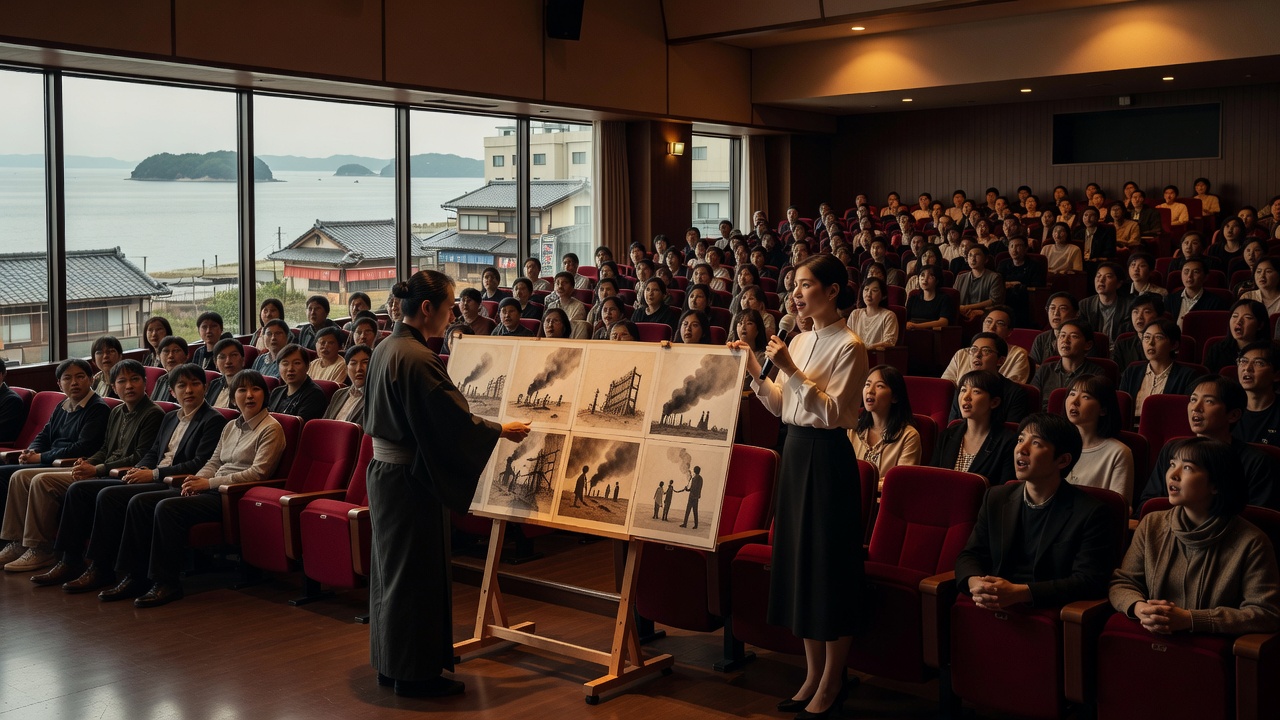
In the same month, the “Sake Festival” was held in Saijo, Higashi-Hiroshima, attracting approximately 220,000 visitors over two days.
One represents the daily school lunch, while the other is an annual festival. The scale and nature of both are entirely different. However, when viewed side by side, a common structure emerges: both are mechanisms that sustain the identity of being the “birthplace” of these products.
This time, I would like to break down this structure. Who does it ease, and what does it aim to pass on to the next generation?
—
Shine Muscat and Higashi-Hiroshima: The Meaning of “Birthplace”
Shine Muscat is a grape variety developed by the National Agriculture and Food Research Organization (formerly the Kaki Fruit Experiment Station Akitsu Branch) in Akitsu Town, Higashi-Hiroshima City, and registered in 2006. With its edible skin and high sugar content, it has become a popular variety nationwide, now cultivated in regions such as Yamanashi, Nagano, and Okayama. The retail price in the market ranges from 1,500 to 3,000 yen per bunch, and it is not uncommon for gift sets to exceed 5,000 yen.
In other words, Higashi-Hiroshima is the “birthplace” of this variety that has spread across the country. However, in terms of production volume, other prefectures have surpassed it. The distinction of being the birthplace and maintaining a presence as a production area are entirely different matters.
This is where the mechanism of school lunches comes into play.
—
Behind 17,000 Servings: The “Distribution Design” of School Lunches
Serving Shine Muscat in school lunches sounds simple, but it requires significant planning to execute.
First, there’s the need to secure the quantity. There are approximately 17,000 children and students attending elementary and junior high schools in Higashi-Hiroshima City. Delivering enough for everyone on the same day necessitates prior coordination with local farmers—determining the harvest timing, guaranteeing shipment quantities, and selecting quality. To fit grapes that could sell for several thousand yen per bunch into the school lunch budget, it is reasonable to assume that administrative subsidies and price adjustments with agricultural cooperatives are part of the underlying system.
When viewed from a broader perspective, it becomes clear that school lunches function not merely as a “food education event” but as part of a distribution design that creates a stable outlet for local agricultural products. For farmers, this generates a consolidated demand that is less susceptible to market price fluctuations. For the administration, it becomes a circuit that allows the “birthplace” brand to be experienced by the next generation. For the children, it simply means—delicious.
This is not just the effort of individuals; it operates as a system. That is where the significance lies.
—
220,000 at the Sake Festival: The Underlying Structure Supporting the “Extraordinary”
On the other hand, the Sake Festival is an annual celebration of sake held every October in Saijo, Higashi-Hiroshima. Saijo is considered one of Japan’s three major sake-producing regions, alongside Nada and Fushimi, with several breweries such as Kamotsuru, Kameirei, and Fukumibijin lining the “Sake Brewery Street” around JR Saijo Station.
Over two days, approximately 220,000 people visit—surpassing the population of Higashi-Hiroshima City, which is about 190,000. At the “Sake Hiroba” (Sake Plaza), where around 1,000 varieties of sake from across the country are gathered, advance ticket sales for tastings sell out quickly each year.
However, behind the figure of 220,000 lies a vast network of collaboration among local sake brewers, the Chamber of Commerce, the city hall, volunteers, traffic management, and sanitation control. Just ensuring the safe passage of 220,000 people through the narrow streets of Sake Brewery Street requires considerable logistical planning. Beneath the festival’s glamour lies a foundation built over decades of meticulous preparation.
Here too, being the “birthplace”—or more accurately, the “brewing ground”—serves as the starting point of the system. Because the breweries are actively operating, the festival becomes an “experience” rather than just a “display.” Visitors enter the breweries, drink the brewing water, and listen to the toji (master brewer). They taste what is made in that place, in that place. This alignment is a strength that cannot be easily replicated in other regions.
—
The Nested Structure of Daily Life and the Extraordinary
Shine Muscat school lunches and the Sake Festival. When these two are placed side by side, what emerges is a nested structure of “daily life / extraordinary.”
School lunches are a mechanism that integrates local specialties into everyday life, moving towards making something special “ordinary.” On the other hand, the Sake Festival transforms the regularly existing breweries into a “special experience,” moving towards making the ordinary “extraordinary.”
Though the vectors are opposite, both start from the premise of being the “birthplace.” Moreover, neither can exist solely based on individual enthusiasm—collaboration between farmers, administration, and schools, as well as cooperation among sake brewers, the Chamber of Commerce, and the city. Designed as a system and repeated annually, these circuits become entrenched within the community.
This “entrenchment of circuits” is what distinguishes it from one-off events or fleeting trends.
—
Economic Sphere Revealed by Numbers: Who Does It Ease?
Let’s consider some specific numbers.
The economic ripple effect of the Sake Festival is estimated to be in the tens of billions of yen, based on past reports and municipal documents. The 220,000 attendees spend on transportation, accommodation, food, and souvenirs. For restaurants and lodging facilities around Saijo Station, this becomes a significant pillar of their annual sales.
In contrast, the scale of the Shine Muscat school lunch is much smaller. Even if we estimate the cost of grapes per serving at 200 to 300 yen, for 17,000 servings, it amounts to about 3.4 million to 5.1 million yen. In terms of economic scale, it cannot be compared to the Sake Festival.
However, the school lunch “eases” more than just economic matters. For local farmers, it becomes a place to reaffirm the “meaning of continuing to produce in the birthplace.” For children, it plants the seeds of memory that “this is what exists in my hometown.” And for the administration, by placing policies for brand maintenance within the context of “education,” it becomes easier to justify budgets.
The system eases each person involved, even if subtly. While it may lack flashiness, its annual recurrence holds significance.
—
Structural Challenges: The Future Cannot Operate on “Birthplace” Alone
Of course, this system has its challenges.
In terms of production volume, Higashi-Hiroshima has already fallen behind Yamanashi and Nagano in Shine Muscat production. The label of “birthplace” is a historical fact, but how much consumers recognize this is another matter. While delivering locally to children through school lunches is important, a different circuit is needed for external brand communication.
Regarding the Sake Festival, the number of attendees, 220,000, is nearing the capacity limit of the venue. Increasing costs for safety management, impacts on local residents’ lives, and burdens on breweries—expanding the scale does not necessarily equate to sustainability.
Moreover, with the significant trends of a shortage of agricultural workers and a decrease in domestic consumption across the sake industry, it is uncertain how long the “local circulation system” can endure.
Nevertheless, the existence of a system means that even if individuals falter, the circuit remains. It is not just about personal efforts; there is something that can be passed on to the next generation as a structure. That in itself is the quiet strength of this region.
—
A Small Grape and a Toast from 220,000
A child puts a single Shine Muscat grape from the lunch tray into their mouth. On Sake Brewery Street, strangers exchange cups.
Both are fleeting moments. However, to make that moment happen, farmers go out to the fields, brewers monitor the koji (fermented rice), the administration allocates budgets, and volunteers set up chairs.
The term “birthplace” seems to refer to the past, but it is actually a blueprint for the future. Someone is continuously operating the mechanism that allows what was born here to be tasted here—within that unassuming endeavor lies the warmth of the community.


 JA
JA EN
EN