



Fuchu Town Becomes a City, and Otake City Elects a New Mayor After 20 Years — What Changes in Daily Life When the ‘Framework’ of Local Governments Shifts?

Related Articles
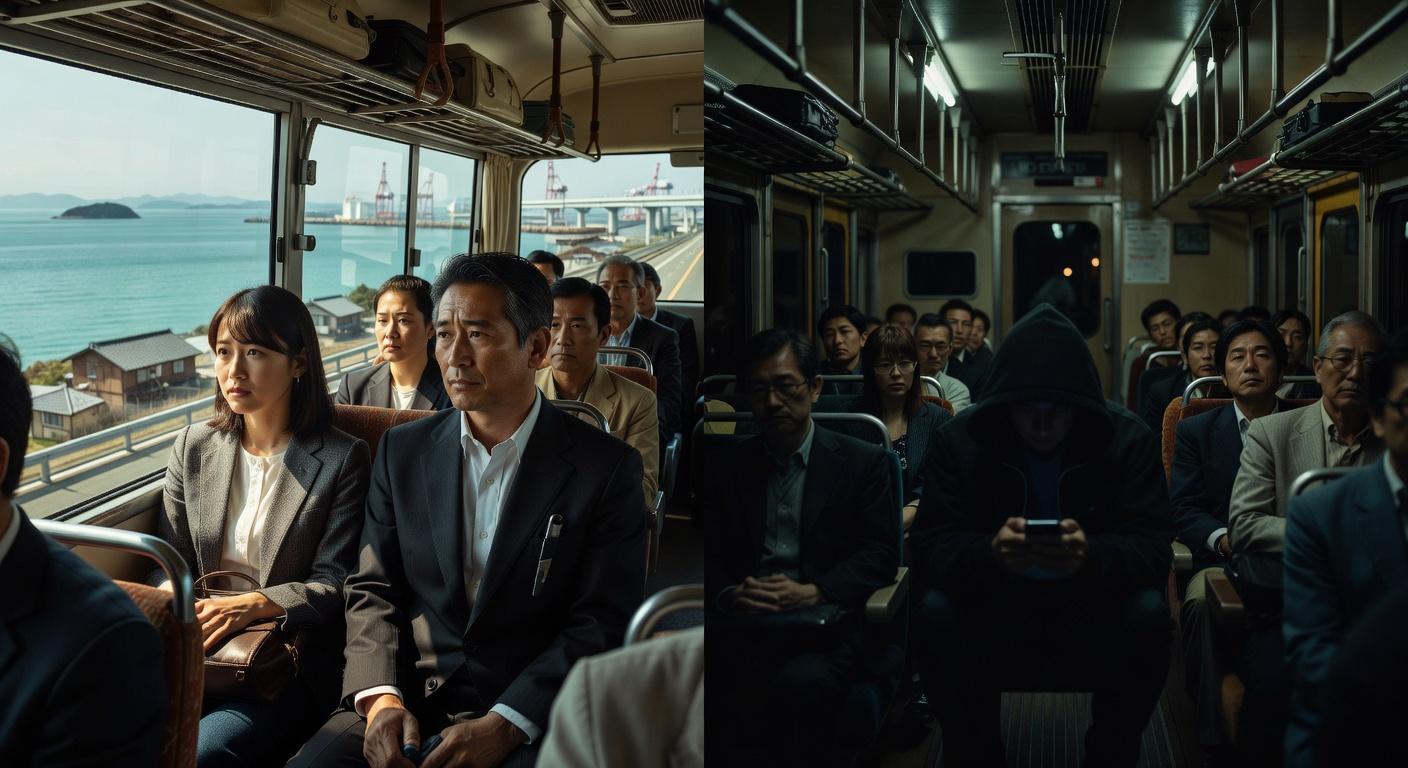

What Changes in Daily Life When the ‘Framework’ of Local Governments Shifts?
About 70 residents gathered for an explanatory meeting in Fuchu Town, Aki District, Hiroshima Prefecture. The theme was “Transition to City Status.” With a population of approximately 51,000, this municipality, which is the largest in Japan as a “town,” aims to transition to a “city” by the fiscal year 2028. While voices of expectation were raised during the meeting, some questioned, “Isn’t the current situation sufficient?”
In nearby Otake City, Keiko Fujii, an independent newcomer, won the mayoral election in April, marking a change in leadership for the first time in 20 years. New hands will be involved in the administrative structure that has long operated under the same leader.
The transition from a “town” to a “city” and the change in mayor both represent shifts in the “framework” of local governments — the name, structure, or the top leader. However, when the framework changes, what specifically happens to the lives of the residents? By examining these two cases side by side, structural questions facing local governments emerge.
—
Fuchu Town — A Unique Entity That Grew While Remaining a ‘Town’
Fuchu Town is a rare municipality surrounded on all sides by Hiroshima City. With an area of about 10.4 square kilometers, it is quite small, but it has a high population density as a bedroom community for Hiroshima City and is also known as the location of Mazda’s headquarters. Blessed with corporate tax revenue, its fiscal power index ranks among the top in the prefecture. Despite being a “town,” it possesses a richer financial foundation than many “cities.”
The requirements for city status are defined in Article 8 of the Local Autonomy Law. These include a population of over 50,000, at least 60% of housing units in the central urban area, and various other conditions, which Fuchu Town is generally said to meet. So why has it remained a “town” until now?
One reason is that the advantages of remaining a “town” have not been negligible. Towns and villages receive fewer delegated administrative tasks from prefectures than cities do, and there are differences in obligations such as the establishment of welfare offices. In other words, as long as it remains a “town,” there are tasks that the prefecture will cover. If it becomes a city, it will need to take on those responsibilities itself. The background to the voices expressing that “the current situation is sufficient” at the explanatory meeting lies in this difference in structure.
According to materials released by the town, new tasks required due to the transition to city status include the establishment of welfare offices and the transfer of authority to determine urban planning areas. A review of personnel allocation and the expansion of office functions are also anticipated, with initial costs projected to be in the hundreds of millions of yen. On the other hand, becoming a city may increase the number of tasks that can be handled directly with the national government, potentially speeding up decision-making.
At this point, I want to pause and consider the substance behind the term “enhancement of brand power.” Although it was mentioned by the town during the explanatory meeting, there is a lack of empirical data on how much the designation of “city” contributes to attracting businesses or promoting migration. Rather, what deserves attention is the change in the “distribution of authority” that will occur with the transition to city status — who will be able to make which decisions. The change in decision-making pathways will resonate more directly with residents’ lives than merely changing the name.
—
Otake City — What the Change in Mayor After 20 Years Means
Otake City is located at the western edge of Hiroshima Prefecture, bordering Yamaguchi Prefecture. With a population of about 25,000, it has been experiencing a declining trend in recent years. The industrial structure is centered around chemical industries in the coastal area, but the outflow of young people has been a persistent issue.
The newly elected Mayor Fujii has advocated for enhanced childcare support and improved regional transportation. While the long-standing mayor provided stability in administrative operations over the past 20 years, there have been some criticisms regarding a sense of stagnation due to the lack of change. The details of the election results, such as voter turnout and the margin of victory, reflect the extent to which residents were seeking change.
A change in mayor means a change in the priorities of budget formulation. The general account budget for Otake City is approximately 16 billion yen (for the fiscal year 2024). Within this limited financial resource, which projects to prioritize and which to scale back? The budget proposal for the fiscal year 2026, which will be the new mayor’s first full budget, will serve as the initial material to decipher the policy direction.
What is noteworthy is how much the change in leadership can influence the structural challenges Otake City faces — population decline and the transformation of its industrial structure. While the enthusiasm and policy vision of the mayor are certainly important, the movement of the municipality is not determined solely by the leader. The relationship with the city council, personnel allocation, collaboration with the prefecture and the national government, and resident participation all play a role. How these gears mesh will result in vastly different outcomes for the same policies.
—
Common Questions Reflected in Two Cases
Fuchu Town and Otake City. These two municipalities differ in population size, location, and financial situation, but when we juxtapose what is happening now, common questions emerge.
“If we change the framework, will the contents change?” — This is the question.
In the case of Fuchu Town, the change from a “town” to a “city” signifies a reallocation of authority and responsibility. Decisions that were previously left to the prefecture will now be made independently. This requires greater expertise from staff and increases fiscal burdens. However, at the same time, it allows for decisions that are more closely aligned with local realities to be made at a closer distance.
In the case of Otake City, the “person within the framework” of the mayor changes. The direction of policies shifts, and the atmosphere within the organization changes. However, the structure of local governments does not dramatically change due to one leader. A significant portion of the budget consists of mandatory expenses, and the discretionary policy expenses are limited. Whether the new mayor can truly bring about change depends on how existing structures are rearranged.
What is common to both cases is the need to weigh the “cost of change” against the “cost of maintaining the status quo.” When residents of Fuchu Town say, “the current situation is sufficient,” it is essential to consider the fact that maintaining the status quo also incurs costs — for example, there are authorities that cannot be obtained while remaining a “town,” and decision-making takes time due to the need to go through the prefecture. When residents of Otake City express expectations for the new mayor, they must also recognize the value of the foundation built over 20 years of stability; otherwise, the evaluation of change will be incomplete.
—
When the Structure Changes, Who Benefits?
In discussions about changing the “framework” of local governments, what is often overlooked is the perspective of who will specifically benefit from these changes in their daily lives.
When Fuchu Town becomes a city, will the pathways for residents to carry out procedures at the service counter change? Will applications for welfare services be processed more quickly? In childcare and nursing care settings, will the speed of decision-making increase? When the mayor changes in Otake City, will the transportation options for elderly residents living in underserved areas increase? Will the conditions that make young generations want to “raise children here” be established?
Changes in systems and frameworks are not an end in themselves. It is only when we can see that someone’s day becomes a little easier as a result of these changes that the act of “changing the framework” gains meaning.
I believe that the approximately 70 residents who gathered at the explanatory meeting in Fuchu Town came to confirm this connection. The residents who cast their votes in Otake City were likely asking the same questions.
The outcome of the discussions in Fuchu Town leading up to 2028 and the first budget formulated by the new administration in Otake City — following these two municipalities will serve as a point of observation to measure the “distance between the framework of local governments and daily life.” It takes time to see the results of change. That is why I want to record the sound of the gears that have begun to move.


 JA
JA EN
EN