



53 Unserved Areas × Specialization in Child Abuse Investigations × Fastest Influenza Outbreak — Overlaying the Map of “Inaccessible Healthcare”

Related Articles
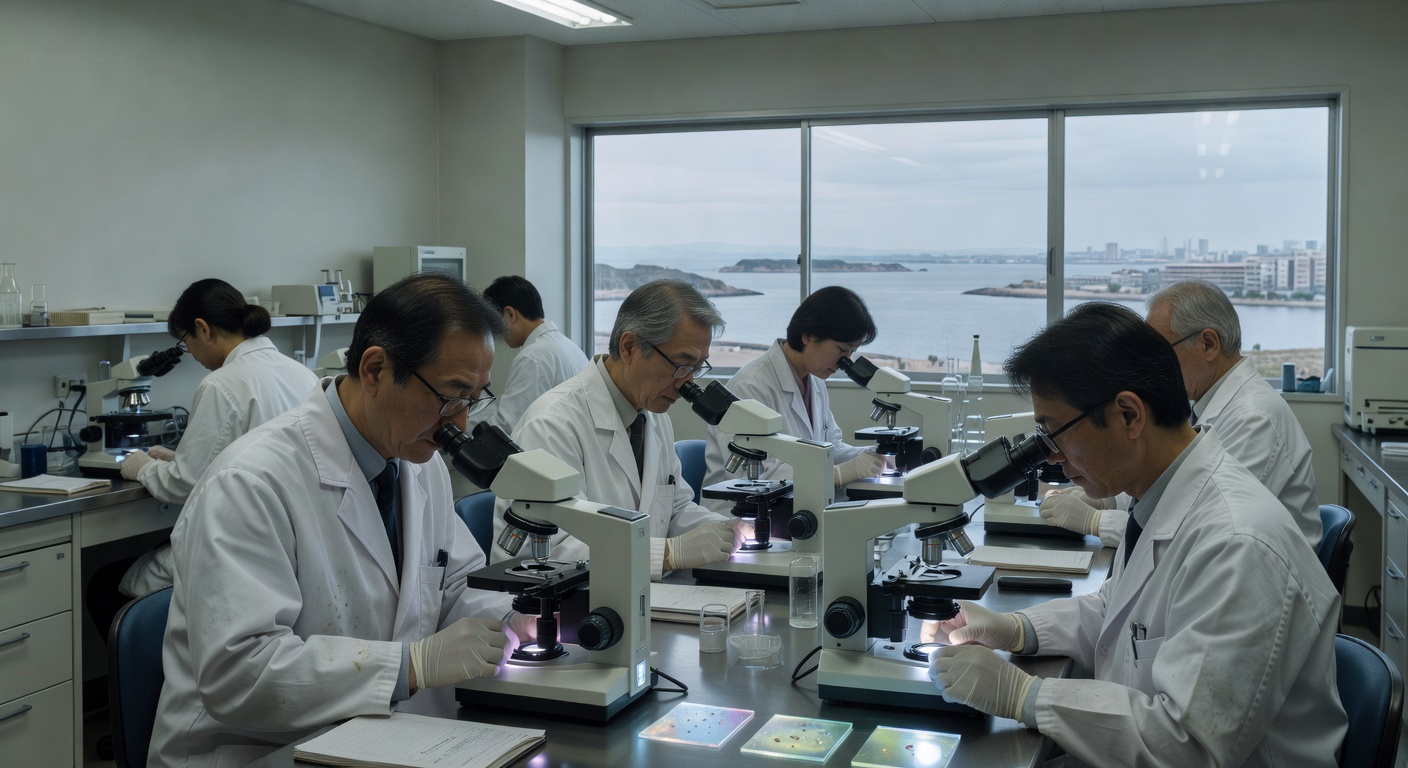
Three Maps Overlaid Reveal a Contour
There are 53 “unserved areas” in Hiroshima Prefecture — a fact that has remained unchanged for over a quarter of a century. This places it second worst in the nation. At first glance, this number can easily be reduced to the familiar narrative of “medical desolation in rural areas.”
However, when we overlay two recent events onto this map, a slightly different picture emerges. One is the Hiroshima Prefectural Police’s specialization in investigations of child abuse, which has led to a partnership agreement with the Hiroshima Prefectural Hospital. The other is that this season’s influenza outbreak has entered its peak earlier than any time in the past decade.
Each of these three points is a separate piece of news. Yet, when we connect them with the question, “What happens to the most vulnerable individuals in areas where healthcare is inaccessible?” they form a single line.
—
The Unchanging Structure of 53 Areas
According to the Ministry of Health, Labour and Welfare, unserved areas are defined as regions where more than 50 people reside within a radius of approximately 4 kilometers and have difficulty accessing medical institutions. The 53 unserved areas in Hiroshima Prefecture are concentrated in the mountainous northern regions, such as Shobara City, Miki City, Akiota Town, and Kitahiroshima Town.
What is noteworthy is that this number has hardly decreased. As of a 2019 survey by the Ministry of Health, Hiroshima Prefecture ranked second in the nation for the number of unserved areas, following Hokkaido. Although the prefecture has been promoting mobile clinics and online medical consultations, most of these areas still lack a resident physician.
Why does this number remain stagnant? The background lies in the declining and aging population of the mountainous regions. According to the 2020 national census, the aging rate in Shobara City is approximately 43%, while Akiota Town reaches about 50%. With fewer patients, the operation of clinics becomes unviable, leading physicians to migrate to urban areas. As the population decreases, healthcare withdraws, and as healthcare withdraws, the population decreases further — this cyclical structure itself fixes the number at 53.
The issue appears to be simply that “there are no doctors,” but in reality, it is intertwined with transportation, demographic trends, finances, and the shrinking of local communities.
—
The Reason Behind the Partnership Between the Police and the Hospital — The Need for Medical Insight in Abuse Investigations
The Hiroshima Prefectural Police have signed a partnership agreement with the Hiroshima Prefectural Hospital regarding child abuse investigations. The focus is on head injuries in infants — specifically the differentiation of so-called “Shaken Baby Syndrome (SBS/AHT).”
To determine whether a child’s head injury is due to abuse or an accident or illness, advanced pediatric and neurosurgical knowledge is essential. According to the police announcement, the pillars of the agreement are “early judgment based on medical knowledge” and “simultaneous progress of investigation and medical support.” In other words, areas where the police cannot make assessments are supplemented by medical experts.
This agreement itself was established between urban base hospitals and the police headquarters. However, a question arises here — can children in unserved areas even reach the entrance of this system?
In the early detection of abuse, the first “awareness” often occurs during infant health check-ups or vaccination sessions. Because there are regular opportunities to examine a child’s body, medical professionals can notice unnatural bruises or developmental delays. However, in unserved areas, the premise of “regular examinations” breaks down. If the rate of health check-ups declines, signs of abuse become invisible.
The collaboration between the police and the hospital is a system that operates after suspicions arise. However, in places where there are no routine medical contacts — that is, before suspicions arise — this system itself does not activate. For the specialized investigative framework to function, there needs to be a “discovery net” in place beforehand, and the coarsest mesh of that net is found in unserved areas.
—
Fastest Influenza Outbreak — What the “1.33” Means
This season, Hiroshima Prefecture reported an average of 1.33 influenza patients per designated medical institution, surpassing the threshold of 1.00 that indicates the start of an outbreak. This is the earliest onset of an outbreak in the past decade.
The figure of 1.33 is based solely on “reported patient numbers.” Designated medical institutions refer to approximately 130 medical facilities specified by the prefecture. What must not be overlooked is the fact that there are no designated medical institutions in unserved areas. In other words, what is happening in the 53 unserved areas is not reflected in this number.
The impact of restricted medical access during the outbreak period of infectious diseases has a dual structure. First, there is a delay in diagnosis and treatment. Antiviral medication is crucial for preventing severe illness if administered within 48 hours of symptom onset, but in regions where it takes over 30 minutes by car to reach the nearest medical facility, that time window is drastically reduced. Second, there is a decrease in vaccination rates. In unserved areas, there are limited places to receive vaccinations, and particularly for infants and the elderly, their vaccinations are often postponed.
Hiroshima Prefecture’s aging rate is approximately 30% (estimated for 2023). In the mountainous areas where unserved regions are concentrated, this rate is even higher. In households where the elderly and infants coexist, if one person contracts influenza, the risk of household transmission increases. However, if that household is far from medical facilities, a time of indecision arises where the only option is to “wait and see.”
—
The Intersection of Three Issues — The Existence of the “Invisible People”
Unserved areas, specialization in abuse investigations, and the fastest influenza outbreak. When these three phenomena are lined up, what emerges in common is the existence of “people falling through the cracks of the system.”
The partnership agreement for abuse investigations only functions when a child is brought to a medical institution. Influenza outbreak data only counts patients who have visited designated medical institutions. Both systems are predicated on individuals who have contact with healthcare.
People living in unserved areas are outside of that premise.
This is not only a problem of “inaccessible healthcare” but also a problem of “invisible people.” As systems are developed, the gap between those who can access them and those who cannot quietly widens. The advancement of collaboration between the police and hospitals is a step forward. It is also important that early warning systems for influenza are functioning. However, do the architects of these systems recognize the fact that there are places where these systems do not reach?
—
Who Is the System Designed to Benefit?
In the fiscal year 2024, Hiroshima Prefecture has outlined policies to promote online consultations and expand mobile clinic services. There are also discussions about the onlineization of infant health check-ups and strengthening the home visit system by public health nurses. Each of these initiatives is meaningful.
However, what I want to question is the order of design. Systems are typically designed from the perspective of reaching the largest number of people. Specialized functions are centralized in urban base hospitals, data is collected at designated medical institutions, and systems are connected through partnership agreements. This is efficient. However, are the people living in the 53 unserved areas included in that efficiency calculation?
The question of “who benefits” is, conversely, a question of “who is left behind without benefit.”
Mobile clinics operate a few times a month. Online consultations require a suitable communication environment and digital literacy. The home visit system for public health nurses faces challenges in securing personnel. Each of these is “better than nothing.” However, can this accumulation of “better than nothing” truly detect signs of child abuse? Can it prevent severe cases of influenza?
—
Future Points of Attention — Continuing to Observe the Overlap of Maps
The three phenomena will likely be reported in separate contexts moving forward. The issue of unserved areas will be framed within the context of regional healthcare, abuse investigations within crime reporting, and influenza within infectious disease control.
However, as long as we view them separately, we cannot see the figure of the person standing at the intersection. In unserved areas of the mountainous regions, families raising infants are attempting to navigate the influenza outbreak period without access to medical facilities — are they receiving information about the collaboration in abuse investigations or warnings about the outbreak?
The following three points should be closely monitored:
- The rate of infant health check-ups in unserved areas: If there is a disparity between the overall prefectural average and the numbers from unserved areas, it indicates a gap in the “discovery net.”
- The actual operational status of online consultations: The establishment of the system and its actual use are two different matters. Whether data on usage numbers and regional distribution will be made public.
- The operational results of the partnership agreement: Whether the agreement between the police and the Hiroshima Prefectural Hospital has been applied to cases from specific regions, and whether it is biased towards urban areas.
A system holds meaning not at the moment of its design, but at the moment it reaches people. The map of 53 unserved areas has remained unchanged for a quarter of a century — within that contour, someone is spending another day without access to healthcare.


 JA
JA EN
EN