


Who Determines the ‘Cost of Mobility’ in Setouchi? The Geibi Line’s Deficit Burden, the Abolition of the Innoshima Route, and the Bus for the Micron Factory

Related Articles
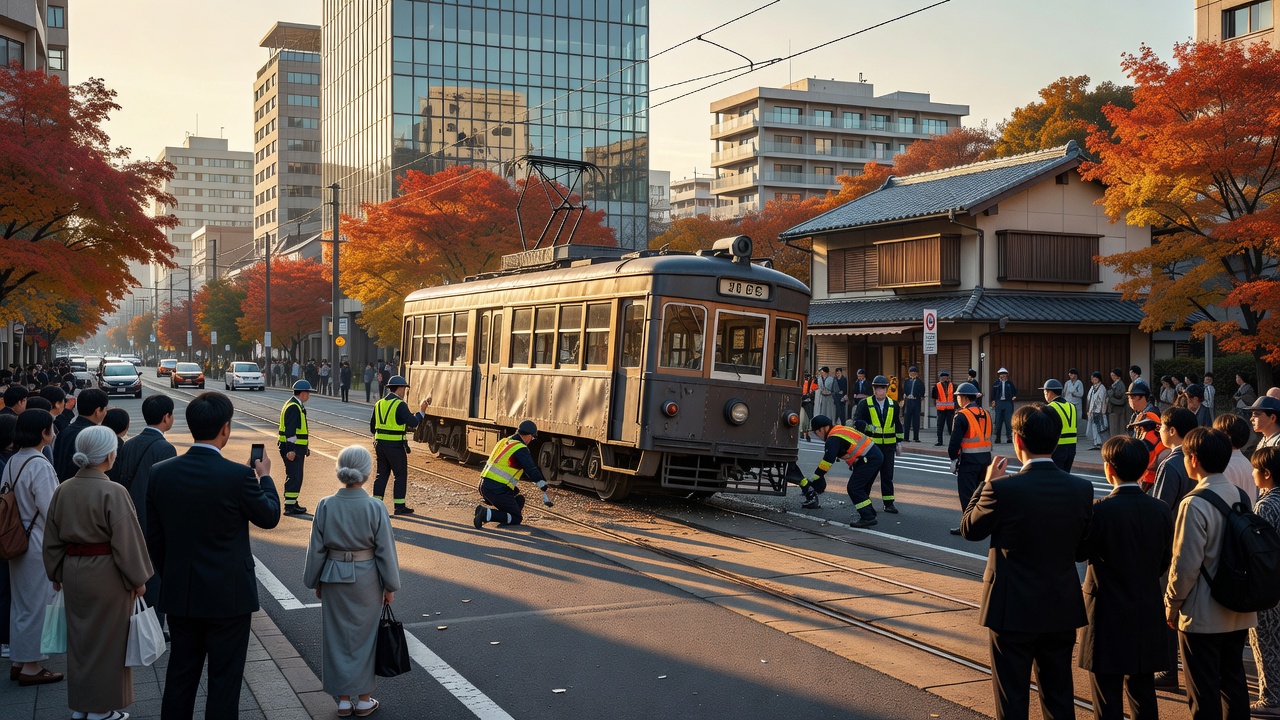

Same Setouchi, Different Decisions: Some Lines Are Kept, Some Routes Are Announced for Abolition, and New Mobility Is Created for Certain Factories
When you spread out a map of Setouchi, you notice that three different decisions are being made simultaneously.
JR Geibi Line — A section where JR West Japan has expressed its intention to bear a deficit for a certain period while considering a transition to bus service. Innoshima-Imabari Route — A maritime route that has been decided to be abolished in the spring of 2028, with four daily services. Micron Hiroshima Factory — A facility where the establishment of a shuttle bus to transport up to 7,500 people daily during peak times has been announced due to its expansion.
To keep. To abolish. To create. These three verbs are lined up in the same region at the same time.
What this article seeks to question is not which decision is correct, but rather who, based on what rationale, is determining the cost of mobility. By examining the differences in these dynamics, we can uncover the structure upon which Setouchi’s transportation currently stands.
—
Geibi Line — What Has Been Offered to Keep It
The debate over the future of the Geibi Line has been ongoing for several years. In the section between Bingo-Shohara and Bichu-Kamizaki in Hiroshima Prefecture, there are segments where the transport density (the average number of passengers per day per kilometer) has plummeted to just a few dozen. According to the revenue and expenditure report for fiscal year 2022 published by JR West Japan, the operating ratio for some sections — an indicator showing how much it costs to earn 100 yen — reached several thousand yen. In other words, it costs several thousand yen to earn just 100 yen.
In this context, JR West Japan has indicated a policy of “bearing the deficit for a certain period even if it transitions to bus service” within the framework of a reconstruction council. Although the details regarding the duration and amount have not yet been disclosed, what is noteworthy is that the railway operator has shown a willingness to “support mobility itself in exchange for relinquishing the line.”
What is being questioned here is the difference between the costs of maintaining the railway form and the costs of maintaining residents’ mobility. Maintenance of tracks, management of level crossings, and updating of rolling stock — there are fixed costs that arise regardless of the number of users when operating a railway “as a railway.” If it transitions to a bus, those fixed costs would significantly decrease. However, the moment it becomes a bus, concerns arise among residents along the line that “the number of services will decrease” or “eventually, it will be withdrawn.”
The declaration of bearing the deficit is one response to those concerns. However, behind the term “for a certain period” lies the possibility that the burden will shift to local governments after that period ends. — Within the decision to keep, the next question is already embedded.
—
Innoshima Route — Was the Decision to Abolish Made Solely by Numbers?
The decision to abolish the route connecting Innoshima and Imabari was announced with a specific deadline of spring 2028. Operated by Geiyo Ferry, this route has four daily services. Since the opening of the Shimanami Kaido, the number of users has continued to decline.
The direct factors cited for the abolition include soaring fuel costs and a shortage of crew members. Fuel costs in maritime transport have ballooned due to the rise in crude oil prices since 2020, compounded by the impact of the weak yen. Furthermore, the aging of domestic seafarers and the shortage of successors are national issues, particularly affecting smaller routes.
The annual deficit is reported to be in the hundreds of thousands of yen, but I would like to pause here for a moment. From the perspective of a local government’s budget, a few hundred thousand yen is by no means a huge amount. Compared to the Geibi Line’s deficit, which is in the hundreds of millions, the difference is stark. Yet, the route has been decided to be “abolished,” while the Geibi Line remains “under discussion.”
Where does this difference come from?
One factor is the difference in systems. The railway has a reconstruction council framework established under the revised Regional Public Transport Activation and Revitalization Act, which was enacted in 2023, providing a structure for national involvement. In contrast, while there are subsidy systems for island routes and local routes, it cannot be said that there is a public forum for discussing their continuation or abolition as there is for railways. Another factor is the existence of alternative means. With the Shimanami Kaido as a land route, the logic that “since there is a bridge, mobility can be achieved without a ferry” easily takes hold.
However, the means of crossing the bridge are limited to private cars or buses. For elderly individuals without a driver’s license and young people without cars, the ferry may not be just “one option” but rather “the only direct means of transport.” Even if the decision to abolish seems rational in numerical terms, the movement of people not accounted for in those numbers quietly disappears.
—
Micron Factory — There Are Investors for ‘Creating’ Mobility
The expansion plan for the Micron Memory Japan factory in Higashi-Hiroshima City, Hiroshima Prefecture, is expected to involve an investment of several hundred billion yen. Supported by the national semiconductor assistance policy, it is anticipated that the number of employees will significantly increase alongside the enhancement of production capacity.
This brings up the issue of commuting. During peak times, 7,500 people will move between the factory and the city center — absorbing this scale of human flow with existing public transport is challenging. The bus routes within Higashi-Hiroshima City are originally limited in frequency, and access from Saijo Station on the JR Sanyo Line is also insufficient.
As a result, a company-led shuttle bus has been planned. While some details of the operation are still being adjusted, it is expected that dedicated schedules will be established with multiple routes aligned with the factory’s operational schedule.
What is interesting about this case is that the “orderer” and “beneficiary” of mobility are clearly defined. In the case of the Geibi Line, the question of who bears the deficit remains unresolved. In the case of the Innoshima Route, the decision to abolish was made without identifying an entity to bear the deficit. However, with Micron’s shuttle bus, the company is “purchasing” mobility for the continuation of its business. Because the cost-bearer is clear, mobility is created.
— Conversely, it can be said that mobility without investors risks being treated as “nonexistent,” regardless of how necessary it may be.
—
The Structure Reflected in Three Decisions
When we line up the three cases we have examined, the contours of the dynamics determining the existence or abolition of mobility begin to emerge.
Geibi Line — There is a system (reconstruction council) in place, with national involvement and the railway operator expressing a certain burden. The decision-making authority is dispersed among multiple parties, which takes time for consensus-building. That time ultimately contributes to the “extension of the line.”
Innoshima Route — The institutional framework is thin, and the existence of alternative means (the bridge) reinforces the rationale for abolition. The operational decisions of the ferry operator directly lead to the disappearance of mobility in the region.
Micron Shuttle Bus — There is a clear investor in the form of a company, and the purpose (commuting) and scale (7,500 people/day) of mobility are specific. Outside the framework of public transport, mobility is designed as a “product.”
What is common to all three is the question of “who bears the cost of mobility.” And how that question is answered separates the existence from the non-existence of mobility.
In discussions about public transport, the causal relationship of “the service is abolished because there are few users” is often recounted. However, the few users may be a result of reduced service frequency. The reduction in service frequency may be due to deficits. The deficits may stem from a structure where fares alone cover fixed costs. — The range of what is considered “inevitable” changes depending on where the chain of causation is cut.
—
The Question of ‘Who Benefits from This?’
The discussion about the transition of the Geibi Line to bus service raises the question of whether it will ease the burden on residents along the line, JR West Japan, or the national system design. The abolition of the Innoshima Route may ease the burden on the operator’s management, but it will undoubtedly make life heavier for those who could only move by ferry. The Micron shuttle bus will ease the burden for both employees and the company, but the benefits are confined to those connected to the factory.
The cost of mobility is determined not only by market principles. The existence of systems, the availability of alternative means, and the intentions of investors — as a result of the complex interplay of these factors, some mobility “remains,” some “disappears,” and some “is created.”
Between the sea and mountains of Setouchi, three decisions are being made simultaneously. Each of those decisions involves someone’s commute, someone’s medical visit, and someone’s return home. We have yet to accurately measure the weight of that one person’s movement that lies beyond the numbers.


 JA
 EN