



Dialogue Events at the Atomic Bomb Museum, Naming Rights, and Admission Fee Increases — Who Supports the ‘Place of Memory’ and How?

Related Articles
Dialogue Events at the Atomic Bomb Museum, Naming Rights, and Admission Fee Increases — Who Supports the ‘Place of Memory’ and How?
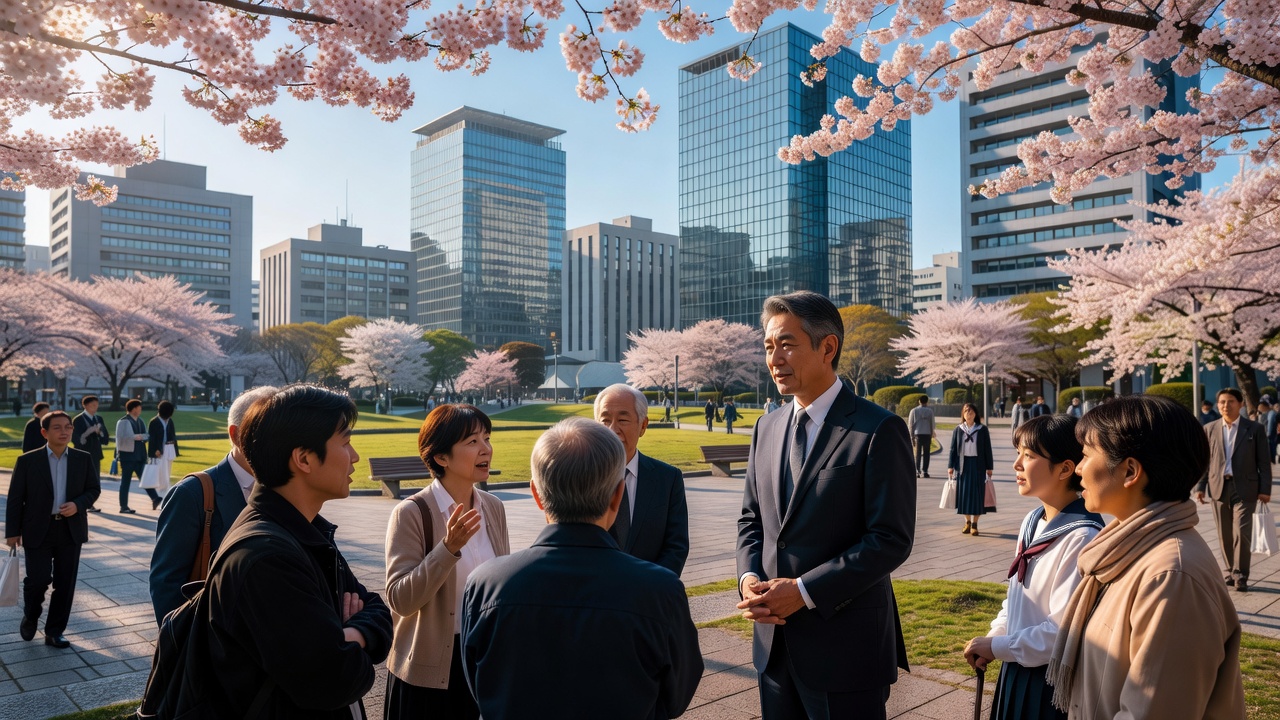
At the Hiroshima Atomic Bomb Museum, a dialogue event called “Youth Peace Lounge” was held, bringing together visitors, atomic bomb survivors, and young facilitators at the same table. In a visitor survey, over 90% expressed a desire to “cherish peace” — however, only about 60% took the step to say they wanted to “take concrete action.” This 30-point gap indicates that while there is a desire, action is lacking. To bridge this gap, three initiatives are now simultaneously underway in Hiroshima.
—
Filling the Gap Between “Desire” and “Action” Through Dialogue
The design of the “Youth Peace Lounge” is somewhat unique. It does not end with a lecture; instead, visitors, survivors, and young facilitators come together in small circles to exchange words. The stories of survivors can be captured through recordings or videos. However, the tremor in their voices and the pauses they take to choose their words — those few seconds of silence can only be felt in the same space.
What is noteworthy here is that the event does not remain just a “place of emotion”; it incorporates the next steps for participants into its design. After the dialogue, there are activities to write down “what I can do,” and guidance is provided for connecting to social media outreach or local storytelling activities. The mechanism for transforming thoughts into actions is embedded in the framework of the event.
The average age of atomic bomb survivors has exceeded 85. The time available for direct dialogue may only last a few more years. Therefore, this space focuses on creating “relationships” rather than merely “records.” Memory is only passed on to the next generation when it is placed between people.
—
Naming Rights — The Meaning and Tension of “Lending a Name”
At universities in Hiroshima, the introduction of naming rights for lecture halls and student cafeterias is spreading. Multiple educational institutions, including Hiroshima Prefectural Hiroshima University and Hiroshima City University, have begun to adopt a system where corporate names are attached to facilities through contracts worth several hundred thousand to several million yen annually. For universities, this serves as a supplement to operational funding, while for companies, it provides a form of community-oriented branding — a mutually beneficial arrangement.
This trend is beginning to extend to public facilities in general. Naming rights have already become established in sports facilities and cultural halls in Hiroshima City. The question arises: what happens when this trend reaches the “places of memory”?
Currently, there are no specific plans reported for the introduction of naming rights at the Atomic Bomb Museum itself. However, as naming rights become “ordinary” as a means of funding public facilities, the likelihood increases that the same logic will be applied to places that convey memory. Staring at the belongings of survivors in an exhibition room bearing a corporate name — whether one feels discomfort at that scene often depends on individual perception. Yet, fundamentally, this is not a matter of perception but of design.
Naming rights carry more meaning than simply “lending a name.” A name defines the character of a place. If a classroom bears a corporate name, it becomes a space that is both a place of learning and one where the presence of a sponsor is acknowledged. If a place of memory bears a corporate name, part of the visitors’ consciousness inevitably shifts toward the brand. Whether that slight diversion of attention dilutes the weight of memory or transforms it into a sense of reassurance that there is a supporting company depends on how the introduction is designed — in other words, the design of the mechanism.
—
Reexamining the Meaning of the 200 Yen Admission Fee
The admission fee for the Atomic Bomb Museum is 200 yen for adults. In a visitor survey conducted by Hiroshima City, 31% responded that “500 yen would be appropriate.” This indicates that there is a certain number of people who feel that the current fee of 200 yen is “cheap.”
I want to pause and reflect on this figure. Although the price of 200 yen has been gradually revised since the museum’s opening in 1955, it has clearly not kept pace with recent inflation and rising maintenance costs. Before the COVID-19 pandemic, the museum welcomed approximately 1.7 million visitors annually. If the admission fee were raised by 300 yen to 500 yen, this would result in an increase of about 500 million yen annually, based on simple calculations. This could provide significant funding for updating exhibitions, multilingual support, and barrier-free renovations — addressing outstanding issues.
On the other hand, increasing the admission fee changes “who can come.” Group rates for school trips, discounts for people with disabilities, and free admission for survivors — these design elements must be carefully discussed alongside the fee increase; otherwise, the “place of memory” could become accessible only to those with economic means. The voices of the 31% who said “500 yen is appropriate” are important, but the circumstances of the remaining 69% — those who believe “200 yen is fine” or “it should be cheaper” — carry equal weight.
Asking whether the fee increase is “for or against” is somewhat simplistic. The real question should be “who will benefit” — will it ease the financial burden for the operators, lighten the load for visitors, or enhance future exhibitions to aid the understanding of those who have yet to visit? It is essential to explore the overlapping points of multiple “benefits.” This is the essence of the fee increase discussion.
—
When Three Layers Overlap — The Mechanism of Sustaining Memory
Dialogue events, naming rights, and admission fees. At first glance, these three topics may seem separate. However, when viewed from a distance, a common question emerges: “Who supports the place of memory, and through what mechanisms?”
Dialogue events represent the layer that supports memory through “human relationships.” Survivors and young people exchange words, and those words reach others. Memory is carried from person to person through a chain of relationships.
Naming rights represent the layer that supports the place through “private funding.” The maintenance costs that cannot be covered by public budgets are supplemented through contracts with companies. However, if the significance of lending a name is underestimated, there is a risk that the very character of the place will be altered.
Admission fees represent the layer that supports operations through “the burden of the visitors themselves.” Visitors pay a fee, and that fee becomes the source for the next exhibition or dialogue event. It is the starting point of a cycle.
If any one of these three layers is missing, the whole structure becomes unstable. Dialogue events alone cannot sustain funding. Naming rights alone will lower the temperature of memory. Admission fees alone will narrow the range of people who can visit. Only when these layers overlap does the “place of memory” become sustainable.
This structure is not limited to the Atomic Bomb Museum. Local war museums, disaster memorial facilities, and pollution record centers — the “places of memory” scattered throughout Japan all face the same three-layered challenges. Hiroshima’s trial and error serve as a direct inquiry for other regions.
—
Future Points of Interest — Ideology Resides in the Details of Design
In the future, attention should be paid more to the details of design than to overarching policies.
If the admission fee is revised, how far should the scope of the exemption system be expanded? If naming rights are introduced, what kind of “distance” should be established between the exhibition space and the corporate name? If dialogue events are to continue, how will the design be adapted after survivors can no longer participate?
Each of these points may seem mundane. However, the quality of the mechanism resides in the details. Rather than grand ideologies, it is the single line of the exemption system, a clause in the contract, or a section of the facilitator training program — that is where the ideology of how to handle memory emerges.
Hiroshima’s “places of memory” are quietly undergoing a redesign. The work of finding the points where dialogue, funding, and burden intersect is not glamorous. Yet, each of these unremarkable arrangements protects the “opportunities to know” for someone who has yet to be born.


 JA
JA EN
EN