


340 Million Yen Repairs to the Governor’s Residence, Closure of a Public Bath, Farewell to a Community Center—What Are the Criteria for Keeping or Letting Go of Hiroshima’s ‘Public Vessels’?

Related Articles
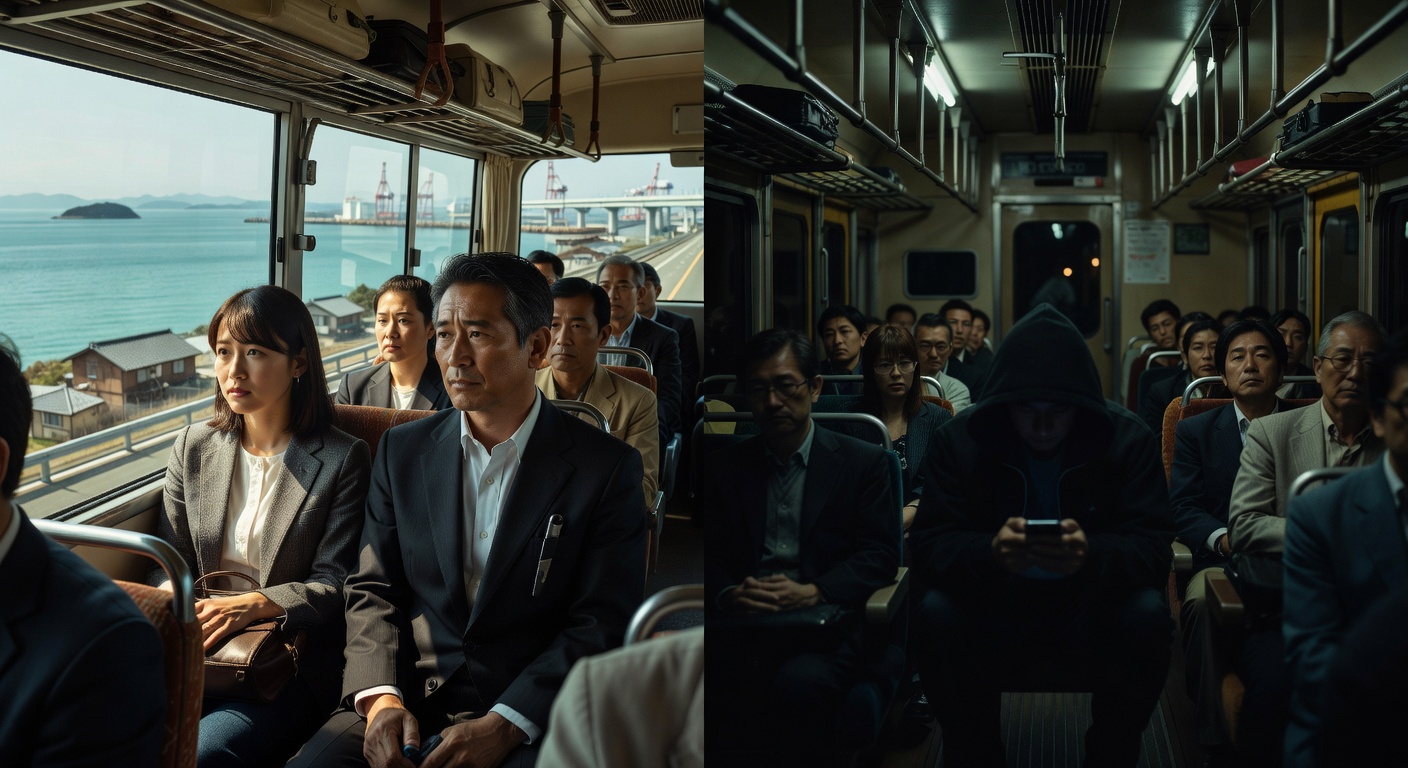
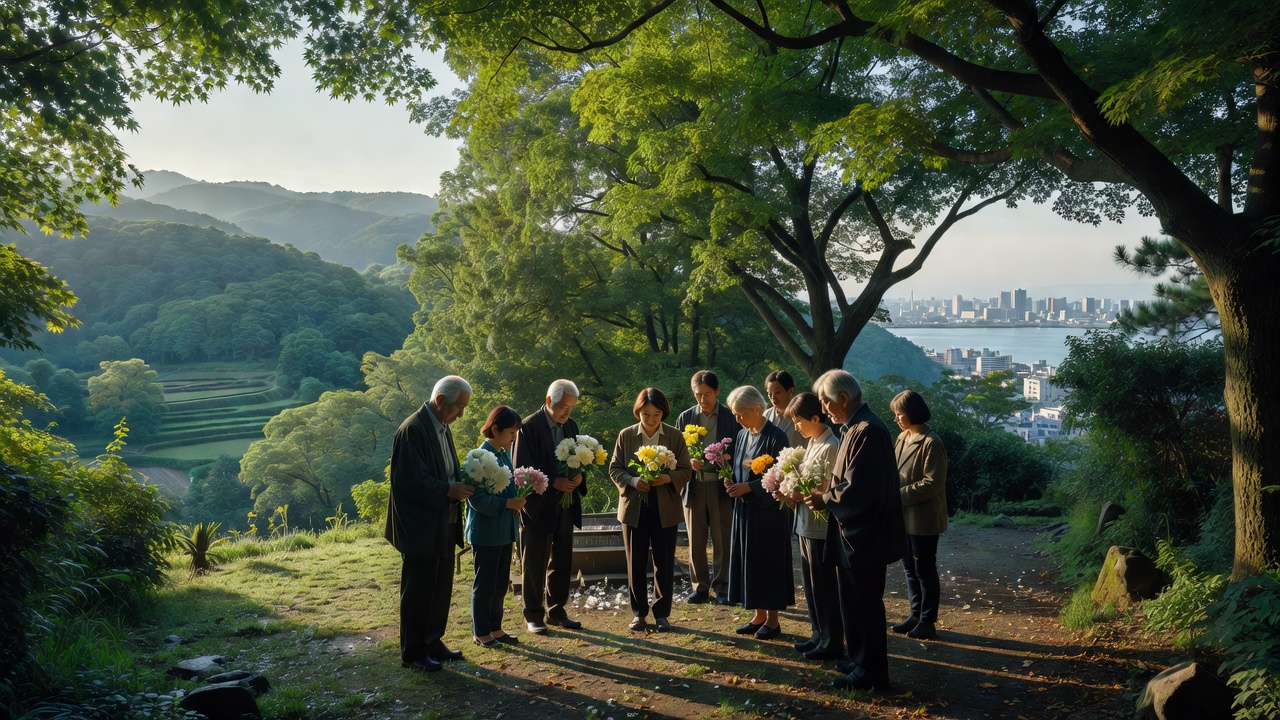
340 Million Yen for Repairs Under the Roof and the Bath Closing After 70 Years
The new governor of Hiroshima Prefecture, Mayuto Yokota, is moving into the governor’s residence. The repair costs amount to approximately 340 million yen—covering waterproofing of the roof, updating the air conditioning system, and enhancing security. The prefecture explains that these are necessary improvements for the residence of the administrative head.
Around the same time, the public bath “Daigaku-yu” in Nishi Ward, Hiroshima City, closed its doors after nearly 70 years of operation. The “family bath of the town,” which had been steaming in the alleys of Yokogawa, quietly closed as regular customers bid farewell. In Fuchu Town, the Fuchu Minami Community Center has initiated a “gratitude project” ahead of its demolition for reconstruction. Residents gather to leave messages on the walls and display cherished photographs—a time to say “thank you” to the building.
One is being repaired and preserved, one is closing down, and one is being demolished and rebuilt. All three are “boxes” for gathering people. So, what distinguishes whether a public vessel is kept or let go? Is it the system, the number of users, or the will of the mayor? When we line up these three cases, what emerges is the varying shades of the question: “Who is being eased?”
—
The Governor’s Residence—A Box Decided to Be ‘Kept’ by the System
Looking solely at the figure of 340 million yen for the repairs to the governor’s residence, it is not an insignificant amount. However, Hiroshima Prefecture’s general account budget is approximately 1.2 trillion yen, meaning this expenditure represents less than 0.003% of the total. Debating the merits of the amount based solely on its size would be somewhat reckless.
Rather, what deserves attention is the “structural framework of the system” that supports this expenditure. The governor’s residence is part of the public residence system established under the Local Autonomy Act, positioned as a base for the mayor’s safety management and crisis response. Securing a location where the governor can immediately take command during a disaster is not a matter of personal luxury; it relates to the continuity of administration. The former governor, Hidehiko Yuzaki, did not use the residence, leaving it vacant for a long time, yet the public residence system was not abolished. “Not using” is different from “not needing.” As long as the system guarantees its continuation, the box remains.
However, one question lingers: Is it being kept because there is a system, or is the system maintained because there is a need to keep it? When repair costs are executed with this order remaining ambiguous, what the citizens see is not the “rationality of the system” but rather the “opacity of priorities.” The prefecture’s careful disclosure of the breakdown of the 340 million yen—waterproofing work, air conditioning updates, security equipment—slightly mitigates that opacity. However, Governor Yokota’s own words about “why now, choosing to move in” have not yet fully reached the public.
—
Daigaku-yu—A Box Decided to Be ‘Let Go’ by User Density
The closure of Daigaku-yu is not a matter of the system. As a privately operated public bath, the decision to continue or cease operations is a business judgment. However, public baths are positioned as “facilities necessary for public health” under the Public Bathhouse Law and have been subject to municipal control over bathing fees. In Hiroshima Prefecture, the bathing fee for general public baths is 480 yen for adults (as of 2024). In a structure where it is difficult to pass on rising raw material and utility costs to prices, continuing operations has been a precarious balancing act.
The number of general public baths in Hiroshima City has decreased from dozens at its peak to just a handful. This trend is seen nationwide as well. According to statistics from the Ministry of Health, Labour and Welfare, the number of general public baths has dropped from about 8,700 in 2000 to approximately 3,400 in 2022, falling below half. The closure of Daigaku-yu is merely a part of this nationwide structural change.
However, there are aspects that numbers alone cannot reveal. For the residents of the Yokogawa area, Daigaku-yu was not just a bathing facility. The public bath served as a place for those without a bath at home to wash, as well as a space for elderly individuals living alone to exchange words with someone. “Grandma comes every day, talks a little at the front desk, and goes home. It’s just that, but who will notice when that’s gone?”—words once spoken by the owner of another public bath in Hiroshima City resonate here as well.
When user density decreases, business cannot continue. This is correct from the perspective of market logic. However, who will take on the functions that cannot be measured by “density”—preventing isolation, community monitoring, and hygiene support for those who find it physically difficult to move? The void left after the closure of the public bath has yet to be named by either the administration or the community.
—
Fuchu Minami Community Center—A Box ‘Sent Off’ by Residents
The case of Fuchu Minami Community Center differs slightly from the previous two. Here, the box is not “disappearing” but “being rebuilt.” It is not a matter of abolition but of renewal. However, the old building will be demolished as part of the reconstruction. Before that, the residents themselves have initiated a “gratitude project” to create a farewell space.
This movement indicates that the “density of resident involvement” becomes another variable in the decision to keep or let go of public facilities. The community center is a facility based on the Social Education Act, and its establishment and operation are determined by the municipality. However, the daily activities that support it come from local circles, parenting generations, and gatherings of the elderly—”users” of the space. While the building belongs to the administration, the time accumulated there belongs to the residents.
The wall of messages, the exhibition of cherished photographs, the final user event—these are not merely ceremonies. They are procedures to carry over the memory of “this place was ours” to the next building. When the new community center is completed, whether there are people who carry the “memories of the previous building” will dramatically change the atmosphere of the space. Whether the residents of Fuchu Town are consciously aware of it or not, they are actively engaged in this “inheritance of temperature.”
—
15 Billion to 78 Billion Yen Cultural Hall Project—Do Standards Change with Scale?
Alongside these three cases, a new plan for a cultural hall is underway in Hiroshima City. The estimated project cost ranges from 15 billion yen to 78 billion yen. The figures differ by two or three orders of magnitude.
Hiroshima City’s Basic Plan for Cultural Arts outlines the establishment of a base for diverse cultural activities, including theater, classical music, and entertainment. This is linked to the redevelopment of the former municipal baseball stadium site, envisioning a cultural facility as the “face” of the city. The logic is that enhancing cultural infrastructure contributes to an increase in both resident and visitor populations amid urban competition.
However, we should pause here. The 340 million yen repairs to the governor’s residence have a systemic basis as a “crisis management base.” The closure of Daigaku-yu is driven by the market logic of “decreasing users.” The reconstruction of the Fuchu Minami Community Center is based on “deterioration and resident consensus.” So, what is the basis for the cultural hall project costing 15 billion to 78 billion yen?
“Cultural promotion” is important. However, that phrase alone does not explain how an administration that could not save a single public bath is building a box costing hundreds of billions of yen. The question that should be asked is, “Who does this box ease?” The performers, the audience, the city’s brand, or the daily lives of the people living in the area? Whether the resolution of that answer matches the scale of the project cost will be the focal point of future discussions.
—
In the End, What Distinguishes What to Keep and What to Let Go?
When we line up the three “boxes” and one plan, three variables emerge.
First, the system. The governor’s residence remains because it has a legal position. The community center is rebuilt within the framework of the Social Education Act. The public bath, while protected under the Public Bathhouse Law, is expected to be self-sufficient and thus disappears. There is a gradient in how systems are “protected.”
Second, user density. Places where people gather remain, while those that no longer attract crowds close. However, the definition of “gathering” is not uniform. A public bath with five visitors daily versus a hall that is full a few times a year. Which “density” supports the community’s life?
Third, will. The repairs were initiated because the governor decided to move in. The memory of the community center is preserved because residents launched the gratitude project. The bath is empty because the owner of Daigaku-yu judged that they could no longer continue. Ultimately, the existence or absence of these boxes is determined by someone’s will.
The intersection of these three variables reveals the priorities of public services. And those priorities cannot be read solely from the numbers in the budget. “Who needs that box?” “Can that need be replaced by other means?” “If it cannot be replaced, who will bear the cost?”—only by carefully tracing this chain of questions can we see the criteria.
—
What to Watch for Moving Forward
Here are three specific points to keep an eye on.
First, the depth of information disclosure regarding the governor’s residence repairs. While the breakdown of the 340 million yen has been published, how thoroughly will the reasons for the decision to move in and comparisons with alternatives to using the residence be presented? Whether the citizens can accept the rationality of the system hinges on this transparency.
Second, the response to the “void” left after the closure of the public bath. Who will take over the community monitoring functions and support for those who find bathing difficult, and through what mechanisms? Will this perspective be incorporated into Hiroshima City’s community welfare plan and policies for the elderly?
Third, the direction of the discussion on “whose box is the cultural hall for?” The extreme range of project costs from 15 billion to 78 billion yen itself indicates that the contours of the plan are still not clearly defined. During the process of formulating the basic plan, how much will the function as a space for citizens’ daily cultural activities be discussed? Whether small spaces are designed within the large box remains to be seen.
—
In the city of Hiroshima, one roof is being repaired, one bath is left empty, and one wall is accumulating messages. Each is a decision regarding a “public vessel.” Reading the criteria underlying those decisions not just from numbers and systems, but also from the footsteps of those who have passed through—this will determine the shape of the “next box” in this city.


 JA
 EN