



New Rice Cheaper than Old Rice × Fastest Flu Outbreak on Record × Strict Alert for Oysters — Fall 2026 in Hiroshima: A Misalignment of Seasonal Gears

Related Articles
Seasonal Changes Are Not Ahead of Schedule; The Gears Themselves Are Misaligned
In the fall of 2026, three unusual phenomena are occurring simultaneously in Hiroshima.
A reversal where the retail price of new rice is lower than that of old rice. The earliest recorded onset of influenza in the past decade. And the issuance of the first-ever “strict alert” for farmed oysters in Hiroshima Bay.
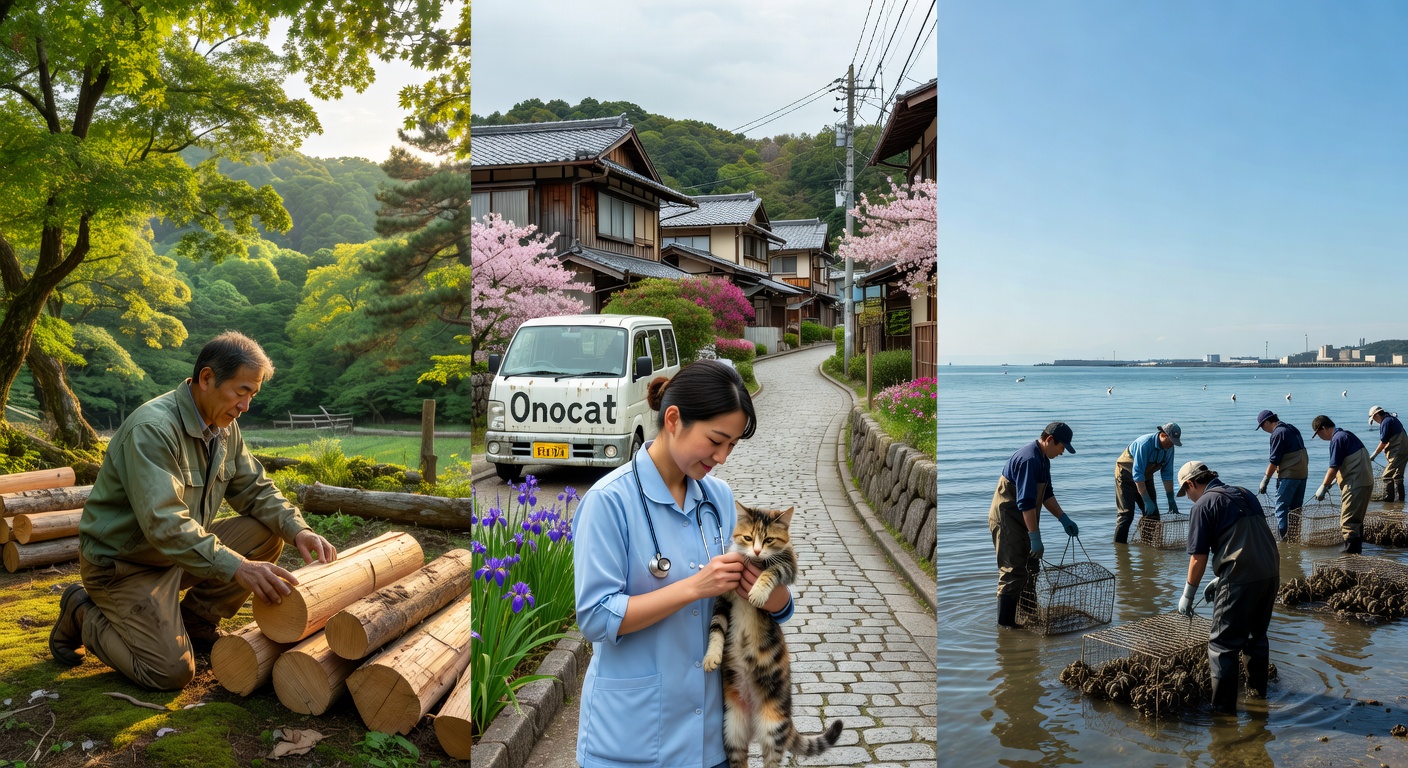
Individually, each of these events might be dismissed as simply “a bit strange this year.” However, when viewed together, a common structure emerges. Agriculture, healthcare, and fisheries — each distinct field is being thrown into disarray by the same seasonal misalignment. This misalignment weighs most heavily on those who are managing daily operations on the ground.
—
New Rice Cheaper than Old Rice — What the Price “Reversal” Destroys
In supermarkets across Hiroshima Prefecture, 2026’s new crop of Koshihikari rice is priced around 1,980 yen for 5 kg. In contrast, the 2025 crop of old rice of the same variety is priced between 2,400 and 2,600 yen for 5 kg. New rice is cheaper.
Typically, new rice carries a premium due to its “seasonal” appeal. Consumers value its aroma and texture, often willing to pay a bit more for it. Old rice, on the other hand, is typically sold at a lower price to clear inventory — this has been the usual flow. This year, however, that order has reversed.
The underlying issue is the inventory problem with the 2025 crop of rice. Due to quality degradation from last year’s extreme heat and subsequent delays in shipment adjustments, the distribution inventory of old rice has remained higher than usual. The storage cost in warehouses is around 200 to 300 yen per 60 kg bag per month. Holding onto it only increases losses. Farmers and collection agents are forced to decide that they want to sell old rice first, even if it means realizing a loss. However, consumer interest is directed towards new rice. They cannot raise prices on old rice to move it, resulting in a situation where the price of new rice is dragged down by that of old rice — a reversal of the supply-demand gears.
Rice accounts for about 15% of Hiroshima Prefecture’s agricultural output. An official from JA Hiroshima Chuo stated, “What is more concerning than the drop in prices is that farmers may lose their motivation to plant next year.” The price reversal is not just a temporary profit-and-loss issue. The feeling that “efforts are not rewarded” undermines the production area for the following year — essentially eroding the foundation of local food supply.
From a structural perspective, the problem lies not in “new rice being cheap” but in “the exit strategy for inventory not aligning with the seasonal rhythm.” As climate change causes harvest times to shift and quality variability to increase, the traditional distribution calendar of “new rice = fall, old rice = sold out by spring” has become misaligned with reality.
—
Influenza Enters Outbreak Phase in September — The Vaccination Schedule Cannot Keep Up
In the second week of September 2026, Hiroshima Prefecture announced the onset of an influenza outbreak, as the number of reported cases per designated medical institution exceeded the baseline of 1.0. In the past decade, even the earliest outbreak onset occurred in late October, making this nearly two months earlier.
By September 8, three elementary schools and one middle school in the prefecture had closed classes. At a pediatric clinic in Hiroshima City, the number of fever patients reached about 2.5 times the usual September figures, with the clinic director noting, “There are days when we run out of chairs in the waiting room.”
What is noteworthy here is not just the severity of the outbreak itself but the misalignment with the vaccination supply schedule. The shipment of influenza vaccines typically begins in early October. This means that there is a gap where the outbreak has already begun, but vaccines have not yet arrived. The Ministry of Health, Labour and Welfare is reportedly considering advancing the shipment schedule, but since vaccine production via egg culture takes about six months, a sudden increase in production is physically challenging.
The system of “vaccinations starting in October” is designed based on the premise that “outbreaks start in December.” When that premise collapses, the system becomes a wall that delays response rather than a shield that protects people.
The burden on the healthcare system is also structural. September is still a time when summer infections — such as hand-foot-and-mouth disease and herpangina — are prevalent. The overlap with influenza further strains pediatric care capacity. Shifts and bed allocations, which are implicitly organized around the assumption that infections change with the seasons, cannot cope with simultaneous outbreaks.
—
Strict Alert for Oysters — A Situation Where the Only Option Is to “Shake the Rafts”
The first-ever “strict alert” for farmed oysters in Hiroshima Bay was issued on September 5. According to the Hiroshima Prefectural Fisheries Division, a “hypoxic water mass” with dissolved oxygen levels below 1 mg/L has formed more extensively than usual near the seabed. The continued water temperatures exceeding 28°C since late August have weakened the mixing of seawater, leading to oxygen supply disruptions.
Hiroshima Prefecture accounts for about 60% of the nation’s oyster production. For aquaculture operators, September marks the time when management of seed oysters for the upcoming season intensifies. Oxygen deficiency not only halts oyster growth but can also lead to mass mortality. While there were small-scale hypoxic incidents in 2023, this is the first time the prefecture has used the term “strict alert.”
On-site responses have become a literal test of physical endurance. Aquaculture operators are repeatedly moving the oysters suspended from rafts up and down to expose them to the oxygen-rich surface water. One operator stated, “I go out to the rafts at 4 a.m. and pull the ropes by hand. Three times a day. I do this every day.” While large-scale aquaculture facilities are using pumps for aeration, small family-run operations cannot afford such capital investments.
From a structural perspective, this too is a problem of “misalignment between the system and the season.” Farmed oysters in Hiroshima Bay have relied on the natural cycle where seawater mixes and oxygen levels recover with the autumn temperature drop. If the start of that cycle is delayed, oysters must endure in oxygen-poor water. Shaking the rafts by hand is nothing more than a way to buy time until the natural gears begin to turn again.
The impact on consumers is also unavoidable. According to estimates from the Hiroshima Prefectural Fisheries Cooperative, if hypoxic damage persists, the shipment volume of shucked oysters this season could decrease by as much as 20% compared to the previous year. Price increases are certain, and for restaurants serving Hiroshima’s famous oyster dishes, rising procurement costs will strain their operations.
—
A Common Structure Behind the Three Anomalies — “The Premise Has Changed, but the System Has Not Caught Up”
The rice distribution calendar, the vaccine supply schedule, and the oxygen circulation in seawater. The three fields may seem unrelated. However, all are structured on the premise that “the usual seasonal patterns will occur,” and when that premise collapses, the greatest burden falls on those making daily decisions on the ground — farmers, private practitioners, and aquaculture operators.
This can be encapsulated in the broad term of climate change. However, doing so obscures “who is struggling with what.”
Rice farmers are not struggling with the heat itself but with the misalignment of the inventory exit strategy with the seasons. Pediatricians are not struggling with the increase in patients but with the vaccination supply system’s inability to adapt to changes in outbreak timing. Aquaculture operators are not struggling with rising water temperatures but with the limitations of a farming model that has relied on natural oxygen recovery.
In every field, people are working hard. They are discounting old rice, adding chairs in waiting rooms, and shaking rafts from 4 a.m. However, there is a limit to how much individual effort can absorb seasonal misalignments. The question is whether the systems themselves can be updated to align with changes in the seasons.
—
Future Points of Interest
Rice Distribution: How far the Ministry of Agriculture, Forestry and Fisheries’ consideration of “flexibility in inventory adjustments” will materialize. We should also keep an eye on the trends of Hiroshima Prefecture’s unique rice stockpiling purchase system.
Influenza: Whether advanced shipment of vaccines will be realized. Additionally, whether the criteria for school attendance suspension will be revised to respond to the earlier onset of outbreaks.
Oyster Aquaculture: The timing of the strict alert’s lifting and its final impact on this season’s shipment volume. The fate of the aeration equipment subsidies for small-scale aquaculture operators that the prefecture is reportedly considering.
There is no guarantee that the three gears will mesh again. That is precisely why we want to continue observing the efforts of those trying to restructure their systems in each field.


 JA
JA EN
EN