



Fuji TV Secures Exclusive F1 Rights: DAZN Exits and a New Era Begins in 2026

Related Articles
The Shock of a “Return to Exclusivity”: DAZN’s Exit and Fuji TV’s High-Stakes Gamble in F1’s 40th Year

On December 5, 2025, shockwaves rippled through Japan’s motorsports community. What many fans saw when they opened their smartphones was the stunning headline: “Fuji TV Acquires Exclusive F1 Broadcasting Rights,” followed immediately by “DAZN to End F1 Streaming.” Fuji Television Network announced that it had signed an “exclusive all-rights agreement” for Formula 1 in Japan covering five seasons from 2026 through 2030.
This was far more than a routine contract renewal. It marked the end of the long-standing “coexistence era,” in which F1 was available via both CS broadcasting (Fuji TV NEXT) and online streaming (DAZN). It is a historic turning point that will fundamentally reshape how F1 is watched in Japan.
For many sports fans, DAZN had become a central hub: pay a single monthly fee and watch professional baseball, the J.League, and F1 all in one place. Its convenience was overwhelming, especially for younger viewers without televisions and for fans who followed races on their smartphones while on the move. With this announcement, however, DAZN declared that it would end F1 streaming after the 2025 season.
From 2026 onward, the only practical way to watch F1 in Japan will be through platforms operated by the Fuji TV Group—either CS broadcasting or its streaming service, FOD. An “exclusive all-rights” contract means that Fuji TV controls every aspect of F1 distribution: television broadcasts, internet streaming, catch-up viewing, and archive usage. Even the potential entry of global players such as Apple or Netflix is effectively shut out of the Japanese market for at least the next five years.
Why did Fuji TV choose this moment to commit to an exclusive deal requiring such massive investment? The answer lies in the special significance of the year 2026. It marks exactly 40 years since 1987—the year when Satoru Nakajima debuted as Japan’s first full-time F1 driver and the Japanese Grand Prix was held at Suzuka Circuit for the first time, igniting the original F1 boom.
For Fuji TV, which once delivered ratings exceeding 20% during prime-time terrestrial broadcasts and fueled nationwide excitement over the Senna–Prost rivalry, F1 is more than just content—it is part of the network’s DNA. At a time when many broadcasters have withdrawn due to soaring rights fees, Fuji TV’s decision to take full control reflects both pride as a terrestrial broadcaster and a strong determination to rapidly grow its streaming platform, FOD, amid a radically changing media landscape.
For viewers, however, the move raises concerns about the loss of choice and rising costs. Fans who previously accessed DAZN at discounted rates through bundled plans with services like NTT Docomo or au—and those who watched multiple sports beyond F1—will now need a new subscription solely for F1. Yet Fuji TV’s strategy goes beyond simply locking up rights. What it has proposed is an ambitious “next-generation viewing experience” that could more than compensate for lost convenience. At the heart of this vision lies the long-awaited launch of F1 TV Pro in Japan.
F1 TV Pro Finally Unlocked: A Viewing Revolution Through Integration with FOD
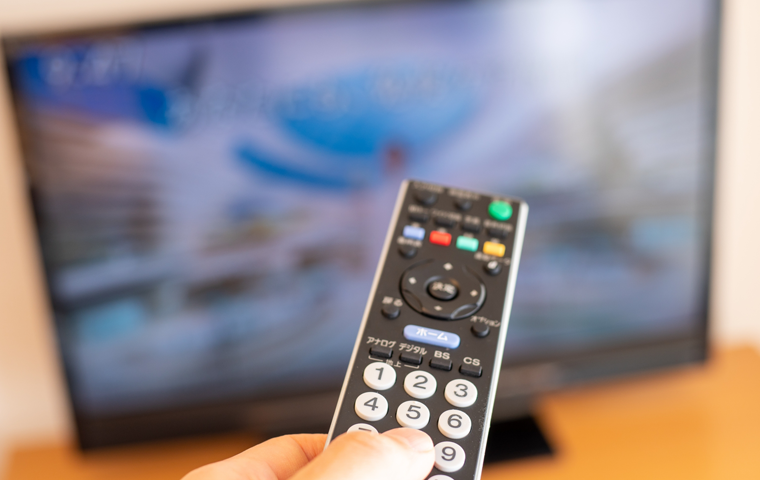
The news that most thrilled hardcore fans in this exclusive deal is the integration of Formula 1’s official streaming service, F1 TV, with Fuji TV’s FOD platform. Until now, Japan had been subject to geo-blocking due to complex rights issues, making the advanced global service F1 TV Pro—available to fans worldwide—officially inaccessible without workarounds such as VPNs.
Starting in 2026, however, F1 TV Pro will be available through FOD via official channels, complete with Japanese-language support. This effectively ends Japan’s long-standing “isolation” in F1 viewing.
So what changes when F1 TV Pro becomes available? The biggest shift is the freedom of perspective. Traditional TV broadcasts and DAZN streams largely limited viewers to the international feed selected by the on-site director. Fans often missed key battles involving their favorite drivers or crucial moments such as retirements.
With F1 TV Pro integrated into FOD, viewers will be able to freely choose onboard cameras from all 20 drivers. For fans of Yuki Tsunoda, for example, it will be possible to follow the entire race—from start to finish—exclusively from his cockpit perspective.
Even more striking is the full release of team radio communications. Unlike edited radio messages aired on television, F1 TV Pro allows fans to hear raw, near real-time conversations between drivers and teams—unfiltered and uncensored. From tense debates over pit stop timing to complaints about rival cars, and even language unsuitable for broadcast, everything is laid bare.
In addition, viewers will have access to detailed telemetry data such as tire usage history, sector times, and precise on-track positioning. Watching F1 will no longer be a passive experience; it will evolve into a “pit wall experience,” where fans analyze data on their smartphones or tablets and interpret races from their own strategic viewpoint.
Another key element of Fuji TV’s strategy is the return of terrestrial broadcasting after an 11-year absence. While not all races will be aired live, plans are in place for highlight broadcasts of up to five selected races. These broadcasts will serve as a showcase aimed at attracting new fans rather than catering solely to existing ones.
By airing high-profile events such as the Japanese Grand Prix or the glamorous Monaco Grand Prix on free-to-air television, Fuji TV can draw in casual viewers and then funnel them toward FOD free trials or CS broadcasts. This three-pronged media mix—terrestrial TV, streaming, and CS broadcasting—is Fuji TV’s greatest strength, one that other platforms cannot easily replicate. In 2026, F1 in Japan is poised to transform once again from a niche enthusiast pursuit into entertainment that seamlessly blends living-room viewing with digital engagement.
2026: A Year of Radical Change—Honda’s Full Works Return and the Challenge of the “Nimble Car”
The importance of 2026 extends far beyond broadcasting rights. Formula 1 itself will undergo the most sweeping regulatory overhaul in its history, making it a true “reset year.” In this context, the timing of the broadcast transition feels almost inevitable.
The key concept of the new regulations is “nimble.” After years of growth in size and weight driven by safety requirements and hybrid systems, F1 cars will become smaller and lighter from 2026. Both length and width will be reduced, and minimum weight will drop by 30 kilograms, enabling drivers to handle more agile machines and deliver even more thrilling battles at circuits like Suzuka’s S Curves and the tight streets of Monaco.
The technological centerpiece is a dramatic transformation of the power unit. The complex MGU-H system will be eliminated, and the balance between engine output and electric motor output will shift to roughly 50:50. Electric motor power will nearly triple to 475 horsepower (350 kW).
This will also revolutionize the viewing experience. The current DRS overtaking system will be abolished or modified, replaced by a new “overtake mode” or manual boost. When a driver closes in on a rival and presses a button, electric energy is fully deployed for a limited time, delivering explosive acceleration. Fans watching on FOD will monitor battery levels and shout at their screens, “Now—use the boost!” as if they were strategists themselves.
Aerodynamics will also evolve with the introduction of active aero, allowing wings to flatten on straights for top speed and stand upright in corners for increased grip.
For Japanese fans, however, the biggest headline is Honda’s full works return. After ending its partnership with Red Bull, Honda will re-enter F1 in 2026 in collaboration with the prestigious British team Aston Martin, competing as Aston Martin Honda. This is not merely an engine supply deal; Honda engineers will be deeply involved from the chassis design stage onward.
Leading that design effort is Adrian Newey, widely regarded as the greatest genius in F1 design history. The prospect of Newey’s aerodynamic mastery combined with Honda’s power unit expertise represents perhaps the greatest hope for reshaping the competitive order in 2026.
As Koji Watanabe, President of Honda Racing (HRC), put it, “We are on the eve of something special.” With electric energy management becoming the key to success under the new regulations, Honda’s world-leading hybrid technology is expected to be a major advantage. To witness this fusion of Japanese engineering and global excellence through Fuji TV’s exclusive coverage promises an unparalleled level of excitement.
Yuki Tsunoda’s Trial in 2026: A Comeback from Reserve Status and the Future of F1 Broadcasting
Yet where there is light, there is also shadow. The greatest concern for Japanese F1 fans heading into 2026 is the status of Japanese drivers. News reported in December 2025 dealt a heavy blow: the Red Bull Group confirmed its 2026 driver lineup, and Yuki Tsunoda lost his full-time seat.
Red Bull Racing retained Max Verstappen and junior graduate Hadjar, while sister team Racing Bulls opted for young talents Lawson and Lindblad. Tsunoda will spend the 2026 season as a test and reserve driver for the Red Bull Group.
According to Tsunoda himself, contractual restrictions limited negotiations with other teams, contributing significantly to the loss of his seat. After five seasons of steady improvement in speed and maturity, being forced off the grid due to politics and timing once again underscores the unforgiving nature of Formula 1.
The absence of a Japanese driver on the grid at the 2026 season opener will undoubtedly be a headwind for Fuji TV as well, as F1 broadcasts without a domestic driver tend to attract less attention from casual viewers.
Still, hope is not lost. While reserve status may appear like a setback, it is a critical role involving simulator work, testing, and direct contribution to car development within a top team. With 2026 marking the first year of new regulations, reliability issues and driver adaptation problems are likely, increasing the chances of unexpected opportunities.
History shows many examples of reserve drivers stepping in, delivering results, and reclaiming full-time seats. Tsunoda himself has framed this period as preparation for the next opportunity. Enduring 2026 with Red Bull could also open realistic paths to Aston Martin or other Honda-powered teams from 2027 onward.
For Fuji TV’s production team, 2026 will be a true test of creativity. Rather than relying solely on cheering for a Japanese driver, they must convey the intrinsic appeal of F1—the ferocity of technological competition, the nuance of team strategy, and the personalities of international drivers. Leveraging FOD’s new features, documentary-style coverage spotlighting Tsunoda’s behind-the-scenes role and the efforts of Honda’s engineers will be essential.
With DAZN gone, terrestrial TV returning, streaming evolving, and regulations completely rewritten, 2026 will be a year of “reboot” for Japanese F1 culture. It will determine whether F1 in Japan can mature beyond reliance on fleeting booms or star drivers and instead be enjoyed as a deeply rooted sport. As witnesses to this transformation, all that remains is to await the dawn of a new era.