



When a Product Photo Goes from 300,000 Yen to 500 Yen: The Real Challenge for Local E-Commerce Businesses Posed by Amazon’s AI Image Generation

Related Articles

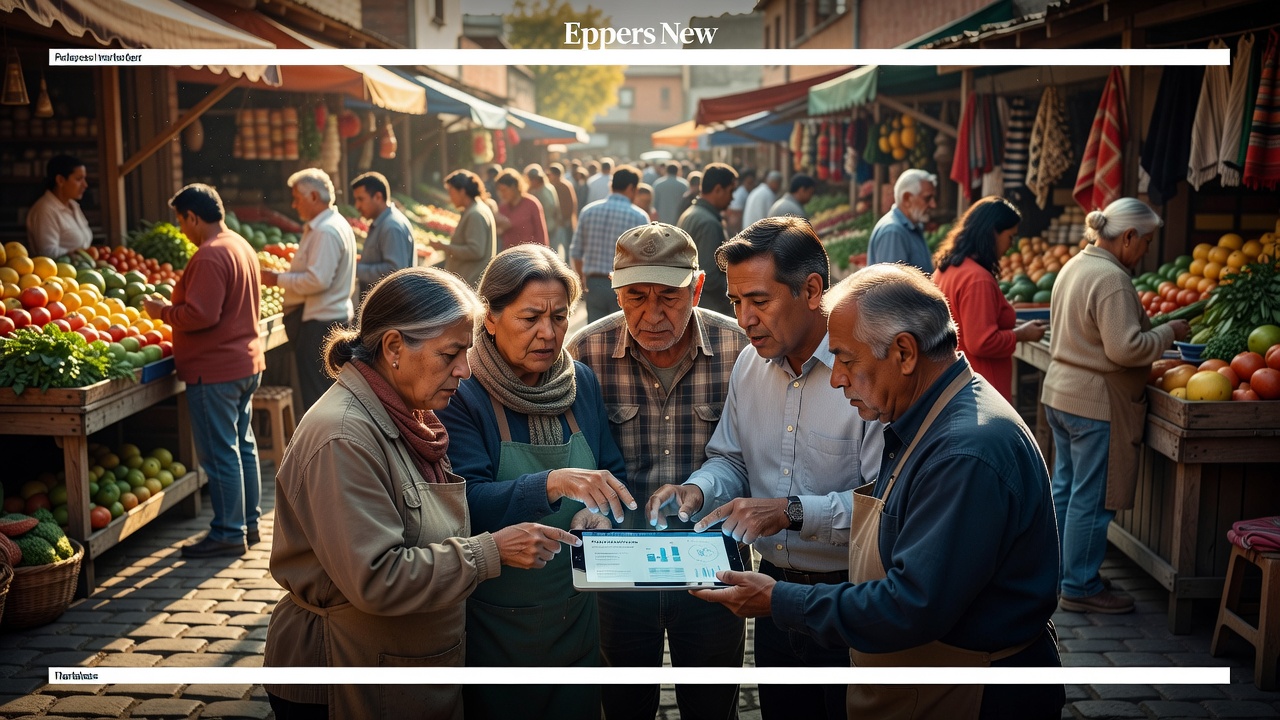
30万円が500円になったら、何が起きるか
Amazon has officially introduced its AI image generation feature for product images. Sellers can simply input text or basic materials, and the system automatically generates background compositions and lifestyle images. No professional photographers needed. No studios required. No shooting direction necessary.
At first glance, this may seem like a convenient development, but the essence goes beyond that.
“The cost structure of product images has collapsed” — This is something that local small and medium-sized e-commerce businesses should seriously consider.
撮影コストの現実を直視する
First, let’s clarify the current numbers.
When local small and medium-sized e-commerce businesses hire professionals for product images, it generally breaks down like this:
- Photographer’s labor cost: 50,000 to 150,000 yen per day
- Studio rental: 30,000 to 80,000 yen per day
- Stylist and props: 20,000 to 50,000 yen
- Retouching and editing: 3,000 to 10,000 yen per shot
- Direction and project management: 30,000 to 50,000 yen as labor cost
For a single product, a white background shot plus 2 to 3 usage scene shots typically costs between 150,000 to 300,000 yen. If you are launching 10 products, that amounts to 1.5 million to 3 million yen. For a small business with annual sales of 50 million yen, this amount represents 3% to 6% of their revenue. In a business with a gross profit margin of 30%, this means that 10% to 20% of their profits are disappearing just to “take photos.”
As a result, many small and medium-sized e-commerce businesses compromise. They resort to smartphone photography. The background is a white wall. The lighting is fluorescent. Consequently, when compared to the polished product pages of major brands, they fall short and lose out.
This structure is fundamentally changing with AI.
AI画像生成のリアルなコスト感
So, how much does it actually cost to switch to AI generation?
The AI image generation feature offered by Amazon for sellers can currently be used at no additional cost. In other words, it is included in the listing fees. Even if you use your own generative AI tools (like Midjourney, Stable Diffusion, Adobe Firefly, etc.), you can generate hundreds of images with a subscription costing between 2,000 to 6,000 yen per month.
When calculated per product, it amounts to 500 to 2,000 yen. This is 1/150 to 1/600 of the original shooting cost of 300,000 yen.
Let’s compare this specifically:
| Item | Traditional (Professional Shooting) | AI Generation |
|---|---|---|
| Cost per product | 150,000 to 300,000 yen | 500 to 2,000 yen |
| Total for 10 products | 1.5 million to 3 million yen | 5,000 to 20,000 yen |
| Delivery time | 2 to 4 weeks | A few minutes to a few hours |
| Additional variations | Extra costs for reshooting | Only prompt changes |
This difference is not just about “efficiency.” The dimension of the cost structure has changed.
損益分岐点が激変する——具体的に何が起きるか
Let’s think in numbers.
When launching a new product with a gross profit of 5,000 yen, traditionally, you would need to sell 40 units to recover the shooting cost of 200,000 yen. If only 10 units sell per month, it takes 4 months to recover the costs. This leads to the decision to “not launch products that may not sell.” The product lineup gets narrowed, and challenges decrease.
With AI generation, the image cost is 1,000 yen. You can recover the costs with just one sale.
What this difference signifies is as follows:
- “Trying it out” becomes rational. Even niche products that only sell 2 to 3 units a month make sense to launch if the image cost is 1,000 yen.
- You can rapidly increase the number of products. Launching 100 products would only cost 100,000 yen for images, compared to the 20 million yen it would have cost before.
- Seasonal updates and A/B testing can be done easily. Changing to a “summer version background” or a “Christmas theme” that previously required reshooting at a cost of tens of thousands of yen can now be done with just a line of prompt.
For local small businesses, this means the barrier to “launching products” has vanished.
「画像がきれい」は差別化ではなくなる
This is where the real point of consideration lies.
As the cost of AI image generation approaches zero, everyone will have access to beautiful images. The aspect that previously differentiated businesses simply by having “nice photos” will no longer be a competitive advantage.
In other words, a reversal occurs:
In the era of high costs: Financial power to take beautiful photos = competitive advantage
In the era of zero costs: What else you are chosen for = competitive advantage
So, what are these “other factors”?
- Uniqueness of the product itself. Not just OEM products, but items that can only be purchased from your company.
- Real information about user experience. Not AI-generated images, but videos of actual use or in-depth user reviews.
- Story and context. Who, where, and why is it made? Local small businesses are inherently strong in this area.
- Relationship with customers. Direct connections with repeat customers through LINE, newsletters, or included flyers.
An interesting paradox exists. The more AI images become widespread, the more the value of “real photos” and “photos of real people using products” increases. Amidst beautifully polished product pages filled with AI-generated images, actual photos of artisans handcrafting items in workshops or the aging process of well-used leather products will stand out.
What local small businesses should do is lower the “minimum cost” with AI-generated images while redirecting investment towards content that conveys their authentic story.
信頼性の問題は「リスク」ではなく「設計」の話
There are concerns regarding the “reliability” of AI-generated images. If images that differ from the actual product are shown, returns may increase, and complaints may arise.
This is a valid concern, but the thought process should be organized.
First, there are two types of AI-generated images:
- AI generates the product itself (risk of differing from the actual item)
- The actual product photo remains, but the background or scene is AI-composed (lower risk)
What Amazon primarily offers is the latter. It bases the images on actual product photos and uses AI to compose scenes like “when placed in a living room” or “when used in a kitchen.” It does not fabricate the product itself.
The approach that small and medium-sized e-commerce businesses should take is clear:
- Main image: Use a real photo (even smartphone photography is acceptable. Free automatic background removal tools are available.)
- Sub-images and usage scenes: Prepare multiple patterns using AI generation.
- Detailed information: Accurately supplement size, material, and color with text and actual swatches.
With this combination, costs can be minimized while ensuring reliability. The confusion arises from thinking in terms of “all AI or all real photos.” The key is in the design of how to differentiate.
で、結局どうすればいいのか
Here are three things local small e-commerce businesses should start doing today:
1. First, try AI image generation with one product.
If you are an Amazon seller, you can use it for free from the management screen. For your own e-commerce site, tools like Canva AI, Adobe Firefly, or Photoroom (which has a free plan) are sufficient. Just try background composition for one product. It will take about 30 minutes.
2. Decide how to use the saved costs.
If you were spending 300,000 yen on photography, you will save 295,000 yen. Redirect that amount towards “product development,” “building customer connections,” or “review acquisition strategies.” Invest the savings from image costs into true differentiation.
3. Create one piece of content that showcases the “real thing.”
Footage of the factory, the faces of the makers, actual usage scenes — a 30-second video shot on a smartphone is sufficient. In an era overflowing with AI images, the value of content that conveys “this is real” will continue to rise.
写真のコストが消えた先にある勝負
The cost of product images will go from 300,000 yen to 500 yen. This is not just about “photos becoming cheaper.”
It signifies that the rules of the game, where “companies that can spend money on photos win,” have changed.
When everyone stands on the same starting line, what will differentiate the competition is not financial power but the uniqueness of the products and the depth of relationships with customers.
This is the strength that local small businesses should inherently possess.
Now that the barrier of 300,000 yen for photography has disappeared, a simple question is being posed:
“What is the reason your product will be chosen, aside from the photos?”
Only those companies that can answer this question will be able to move on to the next stage.


 JA
JA EN
EN