



Companies That Laid Off Employees with AI vs. Companies That Preserved Employment with AI: The Key Difference Lies in Whether They ‘Replaced People or Empowered Them’

Related Articles
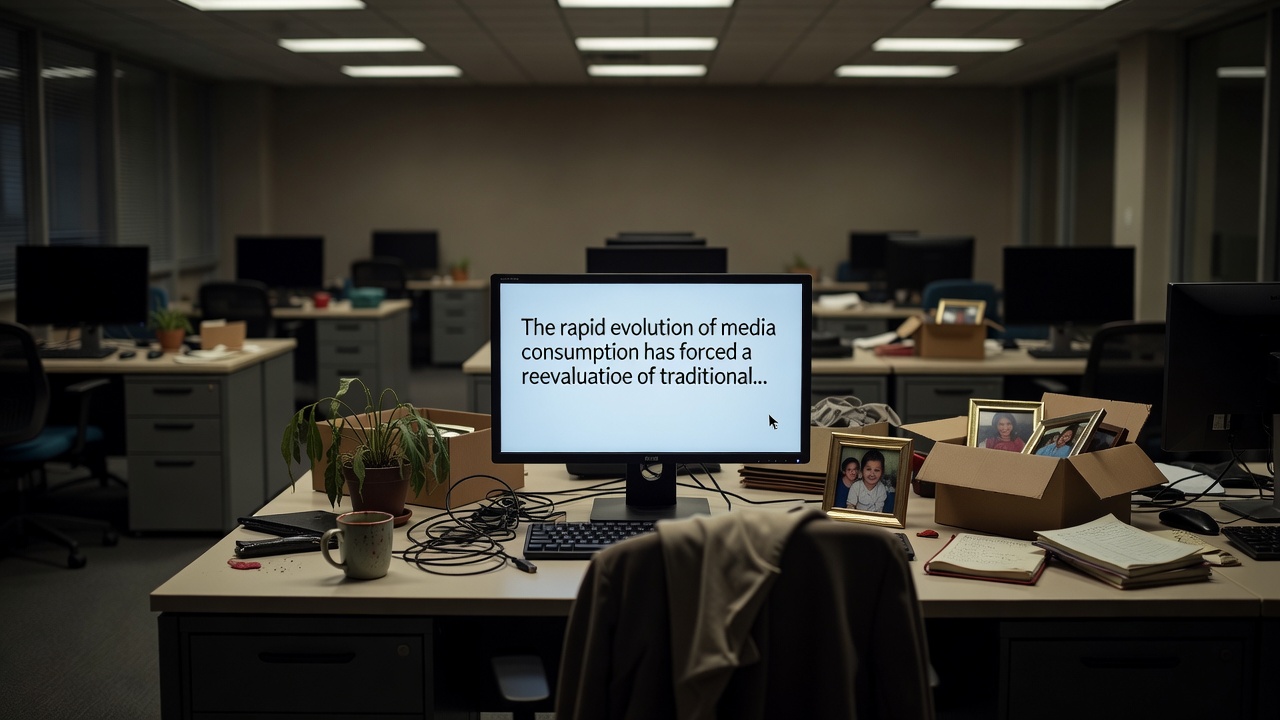

Same Technology, Opposite Results
There are large corporations that have laid off hundreds of employees due to the introduction of AI. Conversely, there are small and medium-sized enterprises (SMEs) that have adopted AI without letting a single employee go while increasing their sales.
The technology being used is almost the same: GPT-based language models, voice recognition, and automation tools, all of which can be accessed for a few thousand yen a month.
Yet, the outcomes are completely opposite.
Where does this difference come from? To put it simply, it boils down to “Did they replace people or empower them?”
—
What’s Happening in Large Corporations: The Choice to ‘Eliminate People’ with AI
Between 2024 and 2025, over 20 companies announced layoffs citing AI as the reason. Notable names include Duolingo, Klarna, Chegg, and UPS.
A symbolic example is Klarna, which reduced its customer support staff by approximately 700 employees through the introduction of an AI chatbot. The CEO publicly stated, “AI is doing the work of 700 people.” The estimated annual savings in labor costs is around $40 million (approximately 6 billion yen), which is likely good news for shareholders.
Chegg is similar. The proliferation of AI-powered learning tools has drastically reduced the demand for human tutors and editors, leading to layoffs of hundreds of employees, accounting for about 23% of its workforce.
What these companies have in common is that they are implementing AI as a “replacement for people.”
- Customer support operators → Replaced by AI chatbots
- Content editors → Replaced by AI generation tools
- Data entry staff → Replaced by automated processing
The approach is straightforward: they are targeting the largest cost item, “labor costs,” with a cheaper alternative in the form of AI. From a management perspective, this seems like a rational decision.
However, I want to pose a question here.
Does this “rationality” apply to SMEs as well?
—
What’s Happening in Small and Medium-Sized Enterprises: The Choice to ‘Empower People’ with AI
An interesting case is that of a small remodeling company in the United States, with about 15 employees.
The owner of this company invested around $10,000 (approximately 150,000 yen) to develop an AI application. The functionality is simple: it uses voice recognition to listen in real-time to conversations between salespeople and customers, automatically generating draft estimates.
The results were as follows:
- Customer interactions per salesperson increased by 30% per day
- The error rate in estimates significantly decreased
- Time spent on administrative tasks was reduced by about 2 hours per day
- Zero layoffs; in fact, they are considering new hires
With an investment of 150,000 yen, the productivity of the entire sales team increased by 30%. Since sales per person increased, there was no reason to cut staff. Instead, they found themselves in a position of wanting “more people.”
What is happening here is structurally completely different from Klarna.
What AI replaced was not “people,” but “tasks.”
AI took over the “tedious but error-prone administrative task” of creating estimates, allowing salespeople to focus on the “human-only task” of engaging with customers.
This distinction is critically important.
—
Structuring the Differences: What Happens After Costs Decrease
Let’s think a bit more structurally.
AI dramatically reduces the “cost of information processing.” Writing text, organizing data, answering inquiries, creating estimates—these tasks can see costs drop to one-tenth or even one-hundredth of traditional levels.
The question is, where to apply this cost reduction?
Pattern A: Using it to Replace Labor Costs (Large Corporation Model)
- Operator annual salary of 4 million yen × 100 people = 400 million yen
- Annual operating cost of AI chatbot = 20 million yen
- The difference of 380 million yen is “saved”
Management metrics improve. However, 100 jobs disappear. Moreover, it remains questionable whether the quality of service provided by the AI chatbot genuinely surpasses that of humans. There are already voices pointing out a decline in customer satisfaction at Klarna.
Pattern B: Using it to Reduce Task Costs (SME Model)
- Time spent by salespeople on administrative tasks = 2 hours per day
- As a result of automation with AI, those 2 hours are redirected to customer interactions
- Labor costs remain unchanged, but sales per person increase by 30%
The number of employees does not decrease. Rather, the value per person increases. If the overall sales of the company grow, there will be more capacity for hiring.
It goes without saying which approach is more “sustainable.”
—
Why SMEs Are More Likely to Use AI Correctly
This is where I believe the essence lies.
Large corporations are prone to gravitate towards Pattern A due to the dynamics of cost-cutting appeals to shareholders. Announcing in quarterly reports that “we saved X billion yen in labor costs through AI” can boost stock prices, making it seem like a rational choice for executives.
However, SMEs do not face that pressure.
The considerations of SME owners are much simpler:
- “It would be a problem if this person left.”
- “Hiring costs are too high to easily replace people.”
- “If one person leaves, the operation won’t run smoothly.”
That’s why they use AI to “empower people rather than cut them.” This is not a noble story; it reflects the structural realities that SMEs must navigate.
Ironically, this “necessity” leads to the correct use of AI.
—
Specifically, What to Start With
Now, let’s discuss the practical steps.
For SMEs to achieve results with AI, the first three steps should be:
1. Identify the “Tedious Tasks”
Ask the people on the ground. “What tasks do you do every day that are honestly tedious?” Tasks like creating estimates, entering daily reports, processing invoices, and categorizing inquiry emails—these are strong candidates for AI automation, as they are tasks that should yield the same results regardless of who performs them.
2. Clarify the “Things Only Humans Can Do”
Building trust with customers, making on-the-spot decisions, and providing that final push in handling complaints—these are tasks that cannot be entrusted to AI. By clarifying this, you can draw the line between “what to automate and what to leave to humans.”
3. Start Small. For Less Than 50,000 Yen a Month
There’s no need to set up a large-scale system from the start. Tools like ChatGPT (around $20 a month), Zapier (around $20 a month), and voice recognition tools (a few thousand yen a month)—these can all be started with an investment of less than 50,000 yen a month.
We are in an era where automation that once cost 3 million yen can now be achieved for just 50,000 yen a month. There’s no reason not to take advantage of this “collapse in costs.”
—
The Real Turning Point Lies in How Leaders Frame Their Questions
Finally, I want to emphasize the most important point.
The turning point between companies that lay off employees with AI and those that preserve employment with AI is not a difference in technology or budget.
It is the difference in the initial questions that leaders ask.
If you ask, “How much can we cut labor costs with AI?” the answer will lead to layoffs. If you ask, “How can we empower our employees with AI?” the answer will lead to increased productivity.
The same technology, the same costs, the same era. If the questions differ, the outcomes will be completely opposite.
What I want to convey to the leaders of local SMEs is this:
AI is not a tool for reducing people; it is a tool for enhancing human value.
And ironically, those who can best utilize it are not large corporations, but SMEs where the distance between the field and management is closer.
I hope you will start by delegating one of the “tedious tasks” to AI. From there, the perspective will change.


 JA
JA EN
EN