



The ‘Silent Failures’ of AI Agents Are Eroding Revenue—The Reality of 54% of Responses Being Useless and Three Inspection Methods to Prevent It in Just 15 Minutes a Week

Related Articles

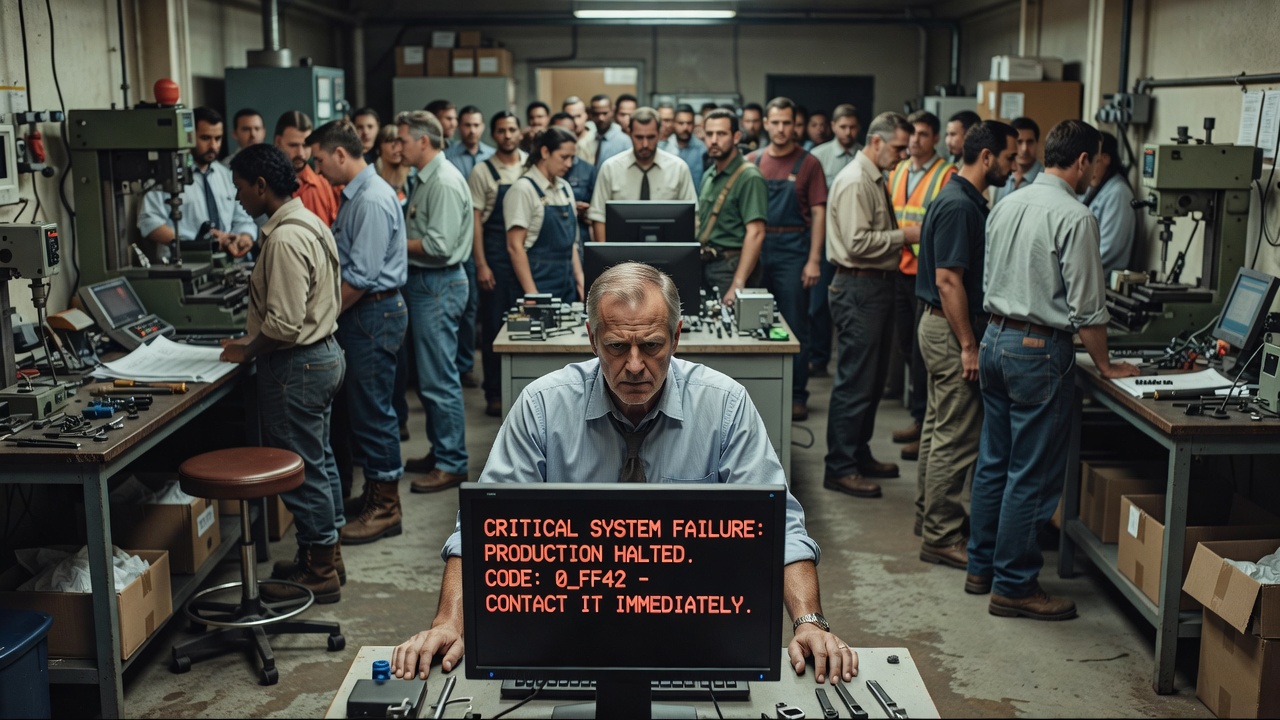
The AI Agent Is Implemented. It’s Running. — Really?
When speaking to small and medium-sized business owners who have implemented AI agents, the typical response is, “It’s working, sort of.”
This “sort of” is concerning.
If it stops due to an error, you can notice it. If the screen turns bright red, anyone can take action. The problem lies in the type of failure that continues to make mistakes without stopping. Responses to customers are off-target. The API running in the background is returning outdated data. Even though it makes wrong judgments during the workflow, the final output looks “correct.”
This is what we call a “silent failure.” It appears normal on the surface, but it is malfunctioning inside. By the time you realize it, revenue has quietly disappeared in the form of missed inquiries, incorrect estimates, and customer churn.
In this article, we will organize the three major patterns of “silent failures” based on the latest research data and present specific methods for small and medium-sized enterprises to prevent damage with just 15 minutes of inspection per week.
—
Failure Mode 1: 54% of Responses Are “Useless”
First, let’s look at the numbers.
In a recent study evaluating the response quality of LLM agents, human evaluators assessed 480 responses generated by AI agents, and 54% were rated as “useless.” Even the highest-performing model had a failure rate of 30%. In other words, one in three responses is off the mark.
What happens if this is a customer service chatbot? Out of ten inquiries, three receive irrelevant answers. Customers leave silently. There are no complaints. Revenue quietly vanishes.
Why Does This Happen?
The cause is simple. The agent has not been told “what constitutes a correct response.”
In many small and medium-sized enterprises, the implementation of AI agents often ends with “just feeding it the FAQ and letting it run.” However, by explicitly defining the requirements for responses—such as “must include pricing,” “mention stock status,” and “answer within three sentences”—the failure rate can drop from 0.52 to 0.43. Furthermore, if you check the output with another AI model, the failure rate can improve to 0.36, according to the data.
15-Minute Weekly Inspection: Response Sampling
The countermeasures are not high-tech.
- Every Monday, randomly select 10 responses from the agent’s replies over the past week.
- Mark each response with a check or cross based on whether “the customer receiving this response can proceed to the next action?”
- If there are three or more crosses, review the requirements definition of the prompt.
That’s it. Five minutes for sampling, ten minutes for evaluation. No expensive tools are needed. A single spreadsheet will suffice.
The key point is to judge not whether it is “running” but whether it is “helpful.” An AI agent that is only running is like an employee who receives a salary but does not do any work.
—
Failure Mode 2: Misconnections of Tools — 91 Silent Failures
The value of AI agents is not merely in generating text. It lies in their ability to connect with external tools and APIs to automate actual business operations. They interact with inventory management systems, schedule appointments in Google Calendar, and issue invoices.
However, there is a second landmine here.
In an experiment using 15 scientific tools and their APIs, 91 silent failures were detected. The most common issues were “data omissions” and “parameter inconsistencies.” Cases where the values passed by the agent to the API were incorrect, or where the agent ignored errors returned by the API and continued processing.
Translating this to the context of small and medium-sized enterprises, it looks like this:
- Registered as “quantity: 0” in the order management system.
- The date and time of the scheduled appointment in the calendar is off by one day.
- A PDF of the estimate was generated, but the unit price is still the old price.
All of these appear to be “working” when looking at the output. The PDF was generated. The calendar has an appointment. However, the content is incorrect. This is the essence of a silent failure.
Why Does This Happen?
The agent can “call the tools,” but its ability to “verify whether the tools responded correctly” is weak. Where a human might notice, “Wait, isn’t this number strange?” the AI moves on to the next step without realizing it.
What complicates matters further is changes in API specifications. If the connected service upgrades its API version or changes the response format, the agent continues processing based on outdated assumptions. The belief that “it was working at the time of implementation, so it should be fine” becomes the biggest risk.
15-Minute Weekly Inspection: Cross-Referencing Input and Output Logs
- Record the logs of requests sent by the agent to external tools and the responses received. (Most agent-building tools have logging features.)
- Every week, extract five recent logs and cross-reference them with the actual data in the system.
- If there are discrepancies, check the API connection settings and parameters.
Companies that do not keep logs should start there. Without logs, failures cannot be detected. It’s like an airplane’s black box. If an accident occurs and you say, “We have no records,” it’s too late.
—
Failure Mode 3: Not Knowing Where in the Workflow It Broke
The third issue pertains to the entire workflow of the agent.
Recent AI agents operate not on a single task but by chaining multiple steps together. For example, “reading the customer’s email → classifying the content → routing it to the appropriate person → generating a reply draft.”
If any one of these links in the chain breaks, the final output will be skewed. However, it is not visible from the outside which step has broken.
Recent research has proposed a method of classifying failures in agent workflows into the following three layers:
| Layer | Content | Specific Examples in Small and Medium Enterprises |
|---|---|---|
| Planning/Inference Layer | Errors in task decomposition or prioritization | Classifying an “urgent estimate request” as a “general inquiry” |
| Execution Layer | Mistakes in executing individual actions | Correctly identifying the customer but sending to the wrong email address |
| Tool Integration Layer | Connection failures with external systems | Writing to the CRM fails due to authentication errors, but the agent judges it as successful |
Just having this classification allows you to differentiate between “Is it a planning layer issue, an execution layer issue, or a tool integration issue?” If you can differentiate, you can take action.
15-Minute Weekly Inspection: Three-Layer Check
- Planning Layer Check (5 minutes): Review the classification results of tasks processed by the agent in the past week. Check for classification errors.
- Execution Layer Check (5 minutes): Review the results of executed actions (email sending, data registration, etc.) for three cases. Were they as intended?
- Tool Integration Layer Check (5 minutes): Check the error logs. Are there any ignored errors?
Totaling 15 minutes. By doing this weekly, the overall health of the workflow becomes visible.
—
Considering Costs — What Is the Risk of Not Inspecting?
You might think, “15 minutes of inspection each week is a hassle.” So, let’s consider the costs of not inspecting.
For a small and medium-sized enterprise with a monthly revenue of 5 million yen, suppose the AI agent handles part of customer interactions. If 30% of responses are “useless,” some percentage of customers will churn. Even if the churn rate is 10%, that results in a monthly opportunity loss of 150,000 yen. Annually, that’s 1.8 million yen.
If the monthly usage fee for the AI agent is 20,000 to 30,000 yen, the losses from neglecting inspections exceed five times that amount. This isn’t about “AI being expensive”; it’s about “not inspecting being expensive.”
On the other hand, the inspection cost of 15 minutes per week, or one hour per month, translates to about 2,000 to 3,000 yen at an hourly rate. If a 3,000 yen investment can prevent a monthly loss of 150,000 yen, the ROI would be 50 times.
—
Conclusion: AI Agents Are Not Just “Set It and Forget It”
Let’s summarize the three major failure modes of AI agents:
- Useless Responses — 54% of responses are off-target. Explicit requirements definition can improve this to the 30% range.
- Misconnections of Tools — 91 silent failures. Early detection through log cross-referencing.
- Chained Failures in Workflow — Classification into three layers allows for differentiation, with five minutes of inspection per layer to address issues.
The common thread is that they all appear to be “working.” If they stopped, you would notice. It’s the fact that they don’t stop that is frightening.
For small and medium-sized enterprises, AI agents are an overwhelmingly cost-effective labor force compared to hiring people. They work 24/7 for 20,000 to 30,000 yen a month. However, if not managed, they can become a “24/7 source of errors.”
Fifteen minutes. One spreadsheet. Checking logs.
With just this, you can reclaim the revenue that was quietly disappearing. Start by reviewing ten responses from the agent next Monday. You should be able to see what lies beneath the surface of “it’s working, sort of.”


 JA
JA EN
EN