



Rejected by AI Interviews, Favored by AI Resumes—As Recruitment Becomes Increasingly ‘Human-Free,’ Small and Medium Enterprises Find a Winning Structure in Talent Acquisition

Related Articles

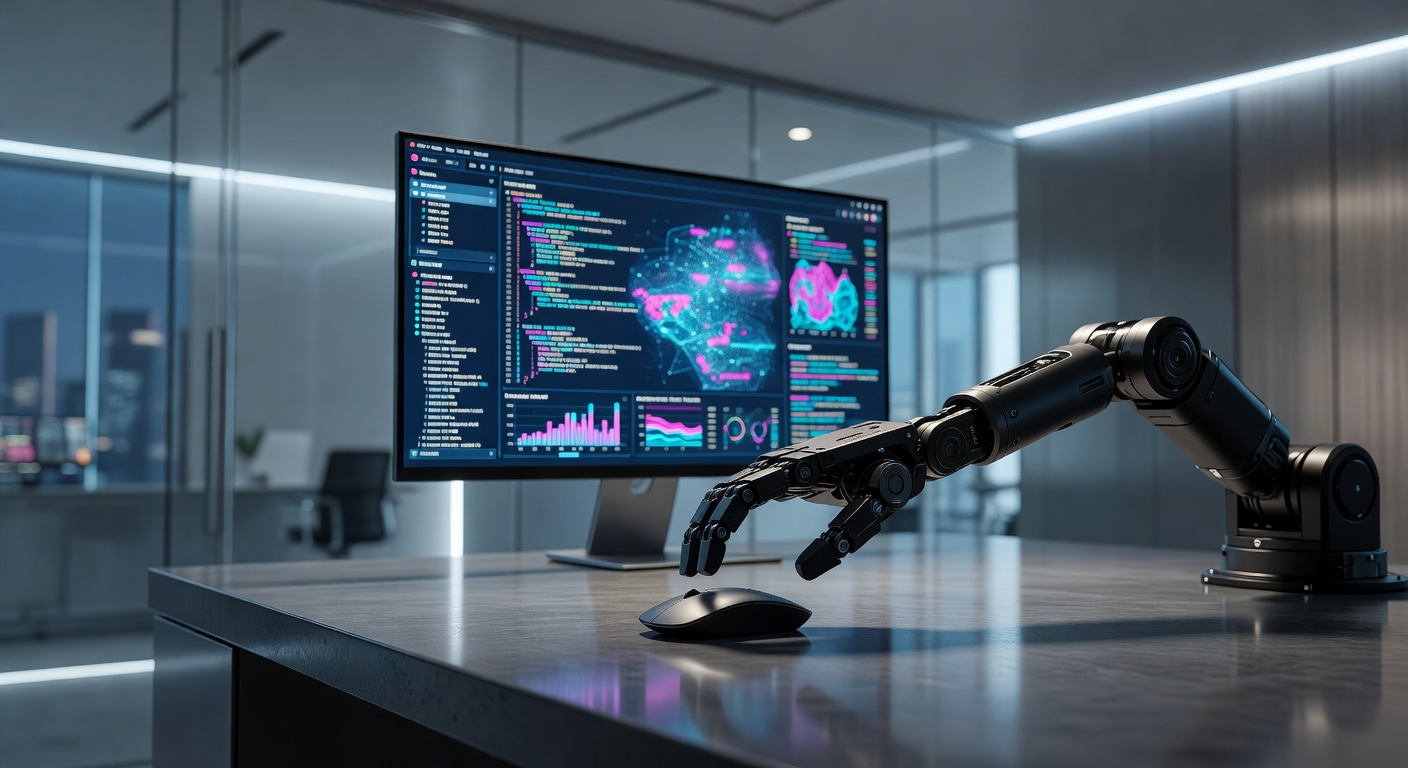
AI conducts interviews, and AI evaluates resumes written by AI. Where is the ‘human’ in this recruitment process?
An unusual scene is unfolding in the recruitment processes of large corporations. Applicants speak alone into a camera, with no human present on the other side of the screen. The evaluations are done by AI, and it is also AI that writes resumes that are likely to pass the screening.
When viewed calmly, this structure is turning into the ‘best tailwind for small and medium enterprises.’ Why? Let’s explain step by step.
‘Dystopian and Inhumane’—What is Happening in AI Interviews
Australian journalist Giselle Au-Nhien Nguyen described her experience with an AI interview as ‘dystopian and inhumane,’ sparking discussion. Applicants record their responses to questions displayed on the screen within a time limit, with no prompts or feedback on their expressions.
Although she has experienced numerous interviews across various job types, this was her first AI interview. ‘If the interviewer were human, I could naturally convey my strengths through the flow of conversation. But with AI, I don’t even know what is being evaluated,’ she stated.
This is not an isolated case. In the United States, a survey indicates that over 40% of large companies have already implemented AI interview tools or are considering doing so. Platforms like HireVue claim to have processed tens of millions of interviews cumulatively.
If we look only at the numbers regarding efficiency, the impact is indeed significant. A single HR representative can handle at most 5 to 8 first interviews in a day. With AI interviews, hundreds can be processed simultaneously. In some cases, hiring costs can drop to less than a third of traditional methods.
However, the question we should ask is, ‘What happens after costs decrease?’
AI Resumes Pass AI Screening—The Cycle of ‘Machines Evaluating Machines’
Another phenomenon that cannot be overlooked is that resumes written by AI are more likely to pass AI screening than those written by humans.
A study by a U.S. job support service reported that resumes generated by tools like ChatGPT had a document screening pass rate approximately 1.5 to 2 times higher than those handwritten by humans. The reason is simple: ATS (Applicant Tracking Systems) are designed to favor specific keywords and formats, and AI can accurately replicate those patterns.
In other words, the structure looks like this:
- Companies screen resumes with AI.
- Applicants generate ‘easy-to-pass’ resumes using AI.
- AI gives high evaluations to resumes written by AI.
- ‘Unique’ resumes written by humans are filtered out.
A cycle where machines evaluate machines. There is no human judgment involved here.
Even more serious is the issue of bias. A 2024 study from the University of Washington showed that in scenarios using AI for hiring, the inclusion of information about disabilities in resumes significantly lowered evaluations. Since AI learns from past hiring data, it reproduces past biases. The notion that ‘AI is fair’ is an illusion.
As Large Corporations Advance AI Hiring, Talent Flows to Small and Medium Enterprises
Now, to the main point.
As this ‘human-free recruitment process’ spreads, the dissatisfaction among job seekers is certainly accumulating.
According to a job seeker survey conducted by Greenhouse in 2024, about 58% of candidates who experienced AI interviews responded that they ‘never want to do it again.’ Furthermore, about 47% indicated that their desire to work for companies implementing AI interviews had decreased.
What does this mean?
The more large companies streamline their hiring with AI, the more the value of companies that ‘actually have humans looking at candidates’ increases relatively.
For local small and medium enterprises, this becomes a structural tailwind. Consider the following:
- Large Corporations: Tens of thousands of applications per year → Forced to streamline with AI screening → Human-free process
- Small and Medium Enterprises: Tens to hundreds of applications per year → AI screening is unnecessary → Humans can directly assess candidates
In this context, the smaller number of applications becomes a weapon.
The president or frontline managers of small and medium enterprises conduct interviews directly. They prioritize the impression from conversations over resume formats. They value the intuition of ‘This person seems to fit our company.’ This is something large corporations cannot do, even if they want to, when faced with tens of thousands of applications.
What Specifically Should Be Done?
To leverage ‘human-reviewed hiring’ as a weapon, there are three things small and medium enterprises can do right now.
1. Clearly State ‘The President Will Conduct Interviews’ on the Recruitment Page
A time has come where this alone can differentiate a company. For job seekers exhausted by AI interviews, the fact that ‘humans will review’ is valuable in itself. Include a photo of the president or frontline manager along with the phrase ‘I will talk to you directly’ on the recruitment page. The cost is zero, but the impact is significant.
2. Do Not Be Particular About Resume Formats
AI screening demands a ‘correct format.’ Conversely, small and medium enterprises can widen their doors by allowing ‘free format,’ ‘video applications okay,’ or ‘portfolios alone are fine,’ thus attracting talented individuals who might be filtered out by AI. In fact, there have been cases where local manufacturing companies that introduced video applications were able to hire candidates who could not be identified through traditional document screening.
3. Win with Speed in Selection
While AI hiring in large corporations may seem efficient, the overall process is actually lengthy. AI first screening → AI second screening → human interview → executive interview → offer can often take 1 to 2 months. Small and medium enterprises can achieve ‘one interview, offer the next day.’ This speed is something large corporations cannot replicate. Just aiming for a timeline of one week from application to offer can dramatically enhance hiring competitiveness.
‘Reverse in Hiring Costs’ is Also Occurring
Let’s also look at the costs that large corporations invest in AI interview tools. The implementation costs for major AI interview platforms like HireVue range from several million to tens of millions of yen annually. While the cost per person decreases for companies that hire in large volumes, the fixed costs of the tools themselves are high.
On the other hand, what is the cost for small and medium enterprises that have the president conduct interviews directly via Zoom? Almost zero. A paid Zoom plan costs about 2,000 yen per month. Annually, that’s just 24,000 yen.
Large Corporations: AI interview tool annual cost of 5 million yen or more
Small and Medium Enterprises: Zoom annual cost of 24,000 yen
With this 200-fold cost difference, small and medium enterprises surpass in terms of ‘human review’ satisfaction for job seekers. This is the structure of the reversal.
The Essence is the Rising Value of ‘Human Judgment’
To summarize what is happening with the spread of AI hiring in one sentence: the rarity of ‘human judgment’ is increasing.
As technology advances, the value of analog increases. This is not limited to hiring. As AI writes texts, the value of ‘human-written texts’ rises, and as AI translation becomes widespread, the value of ‘human interpreters’ also increases. It’s the same structure.
The more large corporations advance AI hiring, the more the value of ‘hiring with human oversight’ continues to rise. And the ones who can do this naturally are the smaller, more agile small and medium enterprises.
So, What Should Be Done?
There is nothing complicated about it.
‘We have humans reviewing’ is all you need to declare.
Rewrite the recruitment page. Show the faces of interviewers. Lower the barriers to application. Speed up the selection process. Just by doing this, we are moving toward an era where talented individuals exhausted by AI hiring will come to us.
As large corporations streamline with technology, the ‘human touch’ of small and medium enterprises will become a competitive advantage. This structural change should not be overlooked.


 JA
JA EN
EN