



KAIROS Launch Vehicle No. 3 to Retry on February 25: Japan’s Private Space Sector Takes a Do-or-Die Challenge

Related Articles


“Third Time’s the Charm” — A Comeback Decision to Break 14 Months of Silence
A critical announcement determining the fate of “independence” and “commercialization” in Japan’s private space development has been made. Space One Co., Ltd., a space startup headquartered in Tokyo, officially announced on December 15, 2025, that it will launch the third vehicle of its small solid-fuel rocket, KAIROS, on February 25, 2026.
The launch window is scheduled between 11:00 and 11:20 a.m., with backup dates secured from February 26 through March 25. The launch site will once again be Spaceport Kii in Kushimoto Town, Wakayama Prefecture—the first private rocket launch site in Japan, located at the southernmost tip of Honshu.
This mission goes far beyond a routine “third launch.” It represents a decisive moment that will test the very survival of Space One and, by extension, the true capability of Japan’s private space transportation sector. Space One has endured bitter disappointment in its previous two attempts: the inaugural launch in March 2024 and the second launch in December of the same year both failed to achieve orbital insertion.
The first vehicle self-destructed just five seconds after liftoff when the autonomous flight termination system was activated, while the second detected signs of insufficient thrust and trajectory deviation during ascent, triggering a mid-flight abort to ensure safety. In response, the company has conducted exhaustive investigations, flight data analysis, and design revisions.
As President Masakazu Toyoda stated, “KAIROS No. 3 embodies Space One’s resolve.” This launch can be seen as a last chance to restore technical credibility and revive the company’s ambitious business plan to conduct up to 30 launches per year in the 2030s. The decision to retry just 14 months after the second failure reflects strong confidence among engineers in having identified the root causes and implemented countermeasures. At the same time, it underscores a sense of urgency: in the rapidly expanding global small-satellite launch market, further delays are simply not an option.
KAIROS aims to offer the “world’s shortest time from contract to launch” and the “highest launch frequency.” Success would demonstrate that Japan can establish its own independent launch capability in a market currently led by companies such as U.S.-based Rocket Lab, marking a critical milestone from the standpoint of economic security.
Five Payloads of Hope: Cooperation with Taiwan and a Baton to the Next Generation
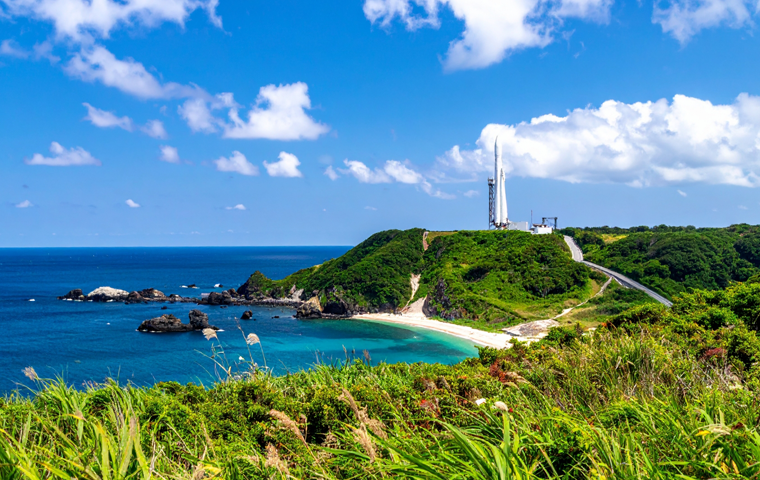
The payloads aboard KAIROS No. 3 symbolize the diversity, future potential, and international reach of Japan’s space industry. In addition to the originally planned satellites, it was revealed that a satellite from Taiwan’s National Space Organization (TASA) will also be onboard, bringing the total to five satellites targeting orbital insertion. These payloads are more than mere “cargo”; they represent renewal, new challenges, and cross-border collaboration.
Of particular note is TASA’s NutSat-3, which has attracted international attention. The NutSat series consists of ultra-small satellites designed to conduct experiments such as receiving ADS-B (Automatic Dependent Surveillance–Broadcast) signals to track aircraft position data, contributing to the elimination of air traffic surveillance blind spots and enhanced aviation safety.
Taiwan has been accelerating its independent space development efforts in recent years, and its decision to use KAIROS—a Japanese private launch vehicle—demonstrates the deepening of Japan–Taiwan space cooperation at an operational level. If successful, this mission could serve as a major turning point in establishing KAIROS as a reliable partner in the international commercial launch market.
From within Japan, two satellites symbolizing “rebirth” will also be launched: TATARA-1R by Terra Space Co., Ltd. (Kyoto Prefecture) and SC-Sat1a by Space Cubics LLC. These are reflight replacements for TATARA-1 and SC-Sat1, which were lost in the failure of KAIROS No. 2. The decision to entrust the same launch provider again, even after losing satellites once, speaks volumes about the strong trust between the customers and Space One, as well as their determination to see the mission through.
In particular, SC-Sat1a aims to demonstrate a high-performance onboard computer (OBC) using commercial off-the-shelf components, a key step toward enabling low-cost space development.
From an educational and human resource development perspective, the satellite HErO, developed with the involvement of students from Hiroo Gakuen Junior and Senior High School in Tokyo, stands out. If successfully placed into orbit, it would mark a groundbreaking achievement in nurturing the next generation of space professionals.
In addition, AETS-1 by ArkEdge Space is believed to be a technology demonstrator for mass-produced ultra-small satellites, representing an important step toward future satellite constellation deployment. Together, KAIROS No. 3 carries a wide range of “hopes”—spanning industry, international cooperation, education, and technological validation—into space.
Lessons from Failure and a Tailwind from the “Space Strategy Fund”
The challenges faced by Space One have once again highlighted how unforgiving rocket development can be. Yet, within the process of failure, steady technological progress can also be observed. The failure of the first launch may have been caused by an overly sensitive response of the autonomous flight safety system following a delay due to vessel intrusion. In the second launch, thrust degradation and trajectory deviation occurred during first-stage combustion, but the system functioned as designed, detecting the anomaly and terminating the flight without causing damage on the ground.
Paradoxically, this demonstrated that one of the most critical aspects of private rockets—safety assurance—had been successfully established. For KAIROS No. 3, flight programs are expected to have been thoroughly optimized based on past flight data, with revised margins to account for environmental conditions.
This renewed attempt also coincides with a turning point in Japan’s national space policy. The Japanese government has announced plans to establish a ¥1 trillion “Space Strategy Fund” over ten years through JAXA, providing strong support for technological development and demonstrations by private companies and universities. The success of KAIROS will serve as a litmus test for this national strategy.
While JAXA-led H3 and Epsilon S rockets are positioned as large and medium core launch vehicles for national missions, private small rockets like KAIROS are expected to function as “space delivery services,” supporting responsive small-satellite constellations and corporate technology demonstrations.
Space One was founded by four pillars of Japan’s manufacturing and finance sectors: Canon Electronics, IHI Aerospace, Shimizu Corporation, and the Development Bank of Japan. Even with this “All-Japan” structure—combining mass-production expertise in precision equipment, solid-fuel rocket know-how, launch site construction capabilities, and financial strength—the barrier to space proved formidable.
Precisely because of this, breaking through that barrier under private-sector leadership carries immense significance. A successful third launch would represent not just a corporate victory, but a decisive step toward freeing Japan’s space industry from dependence on government demand and building a self-sustaining ecosystem.
Spaceport Kii as a Compass for Regional Revitalization and the Future
The launch of KAIROS No. 3 is also a long-cherished hope for Kushimoto Town in Wakayama Prefecture, where the launch site is located. Leveraging its geographic advantage at the southernmost tip of Honshu, Spaceport Kii allows rockets to be launched eastward and southward over open seas.
Locally, efforts are underway to utilize rocket launches as a tourism resource, with several thousand spectators expected on launch day. Even after the previous two failures, local residents expressed disappointment alongside warm encouragement of “next time for sure.” Success this time could become a model case for “space-driven regional revitalization,” demonstrating tangible economic benefits of the space industry to local communities.
The year 2026 is likely to be a “year of leap” for Japan’s space industry. In Hokkaido, Interstellar Technologies is accelerating development of its orbital launch vehicle ZERO, sparking competition in private space development from north to south across the Japanese archipelago. A successful mission by Space One, leading the charge, would inspire subsequent startups and sharply raise interest from investors and overseas customers in the Japanese market.
Conversely, another failure could reinforce a sense of stagnation in Japan’s private space sector and risk cementing a loss of international competitiveness.
Carrying five satellites, KAIROS No. 3 will lift off bearing Japan’s “independent access to space” and the future of its space business. The company’s approach—learning from failure, refining technology, and retrying together with its customers—embodies the very spirit of the NewSpace era, which dares to pioneer frontiers without fear of risk.
On February 25, the rocket trail drawn across the skies of the Kii Peninsula may well open a new horizon for Japan’s—and the world’s—space industry. We at WorldInsight will continue to report on this historic moment in detail for a global audience.


 JA
JA EN
EN