



Thirty Minutes of Terror: Chinese Aircraft Radar Targeting and Japan’s Resolve

Related Articles
The Chilling Thirty Minutes: An “Invisible Trigger” Drawn in the Skies Over Okinawa

On December 6, 2025, the airspace overlooking Okinawa’s beautiful seas was gripped by an extreme tension rarely seen even during the Cold War. The incident occurred inside Japan’s Air Defense Identification Zone (ADIZ), at a point roughly 52 kilometers southeast of Okinawa’s main island—close enough that a fighter jet could reach it in just minutes. A frontline carrier-based fighter, the J-15 “Flying Shark,” launched from the Chinese Navy aircraft carrier Liaoning, illuminated a Japan Air Self-Defense Force (JASDF) F-15J—scrambled in response—with fire-control radar (FCR).
For readers unfamiliar with military terminology, fire-control radar illumination—often described as a “lock-on”—is fundamentally different from ordinary search radar that scans wide areas. It is the act of telling a missile’s guidance system, “This is the target to kill.” For a pilot, it is the equivalent of having a gun barrel pressed to the temple and hearing the hammer being cocked.
According to Japan’s Ministry of Defense, this “advance notice of death,” so to speak, occurred twice: first, for about three minutes starting at 4:32 p.m.; and second, beginning at 6:37 p.m., for an abnormal duration of more than 30 minutes.
The second episode—over 30 minutes of sustained targeting—far exceeded the realm of mere intimidation. Imagine being in a dark cockpit with the lock-on warning tone ringing continuously. It is an act closer to psychological torture, a cold declaration from China that “we can shoot you down at any time.”
In response, Defense Minister Shinjiro Koizumi held an extraordinary late-night emergency press conference at 2:00 a.m. on the 7th, after midnight. Standing before cameras with bloodshot eyes, Koizumi’s words—calling it an “extremely dangerous act”—left the world with a clear impression: Japan viewed this not as a simple incident, but as a “near-contingency” crisis that could directly lead to an actual conflict.
Why would China carry out such a dangerous provocation? The fact that the incident took place on the Pacific side—far from the Chinese mainland—carries major strategic significance. By deploying the Liaoning, China demonstrated its ability to encircle the Nansei Islands, including Okinawa, from the east and to neutralize Japan’s defensive line known as the “First Island Chain.” A distance of 52 kilometers lies squarely inside the “no-escape zone” of modern air-to-air missiles. In those moments, the risk was real: an accidental collision—or a deliberate strike—could have shattered East Asia’s peace in an instant.
Retaliation for the “Takaichi Doctrine”?: Political Intent and Escalation
This military provocation cannot be dismissed as an on-the-spot decision by local units. In the latter half of 2025, Japan–China relations were more strained than ever, amid political verbal clashes. At the center stood Prime Minister Sanae Takaichi—often described as an “Iron Lady.” Since taking office, she has inherited the Abe-era diplomatic line while making it even more explicit that “maintaining the status quo in Taiwan” is directly linked to Japan’s national security.
In particular, her statement in the Diet in November—that a Taiwan contingency could qualify as a “survival-threatening situation” for Japan—was seen in Beijing as crossing a “red line,” especially because it implied the possibility of exercising collective self-defense.
Adding fuel to the fire was the domestic debate in Japan around this time over “nuclear sharing.” A leaked off-the-record comment by a senior figure close to the administration—suggesting that “Japan should not rule out nuclear options”—triggered fierce pushback from China’s foreign ministry. In the logic of the Chinese Communist Party, Japan is framed as a “troublemaker” expanding its military while pretending to be a “victim.” Under that narrative, the radar targeting becomes “legitimate defensive action” against Japan’s “provocations.” In fact, after the incident, China’s Ministry of National Defense did not deny the radar illumination; instead, it issued a counter-accusation claiming that Japanese aircraft had interfered with Chinese naval training.
This is a textbook deployment of China’s “Three Warfares” approach—public opinion warfare, psychological warfare, and legal warfare. Before firing physical missiles, it seeks to amplify the opponent’s fear (psychological warfare) while arguing its own legitimacy to the international community (public opinion warfare). Prime Minister Takaichi’s comment—delivered while inspecting Ishikawa Prefecture—that Japan would respond “calmly and resolutely,” was a sophisticated political message: do not take the bait, but do not yield an inch.
Yet the shift from verbal deterrence to the “physical” intimidation of radar targeting is a grave escalation. It indicates that the Japan–China rivalry has mutated from diplomatic friction into a military chicken game.
The “Takaichi Doctrine”—the stance of “not allowing unilateral changes to the status quo by force”—is supported by conservatives at home and by the United States. But it also carries the risk of sharpening China’s reaction. This incident was the moment China’s frustration with Japan’s strengthening defense posture erupted in a dangerous form—and for the Takaichi administration, it became the first major test in which its “survival security” agenda ceased to be a slogan and appeared as a tangible threat.
The Threat of the *Liaoning* and the J-15: The Reality of a Technical Gap
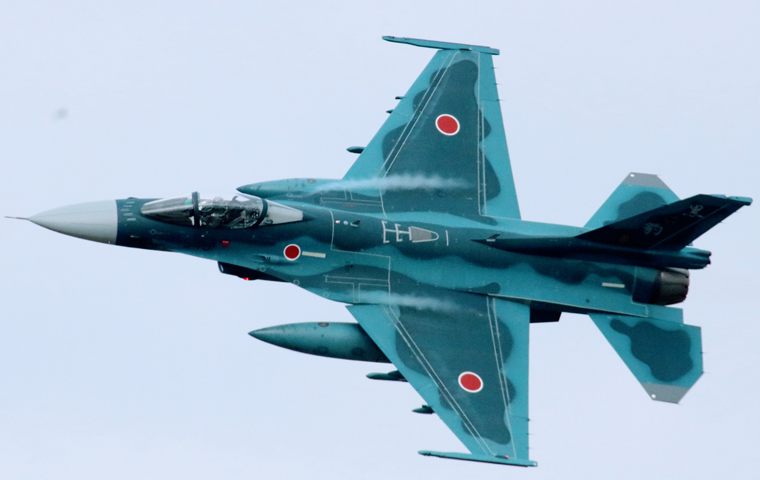
What shocked military experts was not only the fact that Japan’s aircraft was “locked on.” It was the technical detail of who locked on how that rattled Japan’s defense establishment. The central actor was the Chinese Navy’s carrier-based fighter, the J-15. Once mocked as a mere imitation of Russian designs, the latest operational model in 2025 has evolved into something fundamentally different.
Most notable is its “eye”—its radar capability. The persistent targeting for more than 30 minutes is believed to have been enabled by an AESA (Active Electronically Scanned Array) radar mounted on the J-15. AESA radars can electronically steer beams at high speed, track multiple targets simultaneously, and employ special waveforms that are harder for enemy warning receivers to detect.
By contrast, the JASDF’s F-15J—despite many upgrades—remains based on a Cold War-era airframe. Some aircraft reportedly have limitations in accurately identifying the latest digital waveforms. In this incident, it is possible that the J-15 intentionally “tested” the F-15J’s electronic warfare systems.
Even more alarming is the J-15’s ability to carry the long-range air-to-air missile PL-15. With an estimated range exceeding 200 kilometers, it can engage targets long before Japanese fighters reach an effective counterattack distance. A lock-on at 52 kilometers is, for the PL-15, essentially a “cannot-miss” range—meaning the F-15J pilot was literally inside a kill zone where life could be taken with a single finger movement.
During the 30-minute targeting, the Chinese military likely gathered data on how the F-15J would maneuver to evade, and when it would activate jamming. This is akin to stealing “answer keys” for future air-combat simulations—and could reduce Japan’s survivability in real conflict.
The very fact that the Liaoning was operating on the Pacific side is itself a nightmare for Japan’s defense planning. Japan’s air defense architecture was traditionally built with threats from the west—toward the continent—in mind. If an aircraft carrier strike group can apply pressure from the east, Japan is forced to respond to threats from all directions, dispersing forces and stretching resources.
This incident vividly demonstrated that the Chinese Navy is no longer merely an extension of coastal defense—it now has the capability to conduct organized carrier aviation operations in the open ocean and to threaten Japan’s control of the air.
The Normalization of “Near-Contingency” Conditions: The True Test of the Japan–U.S. Alliance and Japan’s Determination
Japan’s greatest fear is that “lock-ons” become the “new normal” in the East China Sea. If China repeats radar targeting whenever it has diplomatic grievances, frontline personnel will be worn down and desensitized. And when that desensitization reaches its limit, catastrophe follows—an accidental missile launch, a collision, or an escalation no one intended.
Amid this crisis, Japan’s one greatest hope was the response of its ally, the United States.
Immediately after the incident, the U.S. State Department condemned China using the specific term “targeting” by radar—an unusually direct stance compared to traditional, more cautious diplomatic phrasing. The U.S. military then backed words with action: it dispatched B-52 strategic bombers—capable of carrying nuclear weapons—to Japan’s vicinity and conducted joint training with the JASDF. This sent Beijing the strongest possible signal: “An attack on Japan could invite U.S. nuclear retaliation.”
Defense Minister Koizumi also moved quickly, holding phone calls with the NATO Secretary General and the Australian defense minister—pursuing “horizontal escalation” by sharing China’s threat with Europe and Oceania.
Looking toward 2026, Japan faces an extraordinarily difficult course. Under the Takaichi administration, a sweeping reinforcement of defense capabilities is underway—particularly the development of counterstrike capabilities (the ability to strike enemy bases) and the deployment of missiles to the Nansei Islands. These moves will further heighten China’s wariness.
Yet if Japan changes policy under the pressure of such overt intimidation, it would effectively accept “changing the status quo through violence.” What Japan needs now is legal reform that allows personnel on the front line to protect themselves without hesitation, an urgent upgrade of electronic warfare capabilities, and—above all—the national resolve to confront the reality of this “invisible war.”
The 30 minutes in the skies over Okinawa offered a glimpse into the abyss of cold power politics lying just beneath the thin skin of peaceful daily life. Whether Prime Minister Takaichi’s promise of “a resolute response” becomes more than bravado—whether it functions as effective deterrence—will depend on political leadership and on the maturity of Japanese society that supports it.
The waves in the East China Sea are high, the sky remains a heavy leaden gray, and Japan is preparing to cross into a year of turbulence.