



Prime Minister Takaichi Opens a “New Silk Road”: Envisioning Central Asia’s Future with ¥3 Trillion

Related Articles
Eurasia’s Tectonic Shift and Japan’s Moment of Opportunity: A New Compass in the “Tokyo Declaration”
On December 20, 2025, at Tokyo’s State Guest House, Akasaka Palace—wrapped in crisp winter air—a new page was added to Japan’s diplomatic history. Chaired by Prime Minister Sanae Takaichi, the first-ever “Central Asia + Japan” leaders’ meeting convened the heads of state from the five Central Asian countries: Kazakhstan, Kyrgyzstan, Tajikistan, Turkmenistan, and Uzbekistan. This historic summit was not merely a confirmation of friendship; it became a forum for sharing a “survival strategy”—how Japan and Central Asia can join hands to endure and thrive amid a rapidly transforming international environment.
The “Tokyo Declaration,” adopted as the meeting’s key outcome, presents an ambitious roadmap grounded in the maintenance of an international order based on the rule of law. It aims to transform the region from a “geopolitical crossroads” into a “self-sustaining hub of prosperity.”
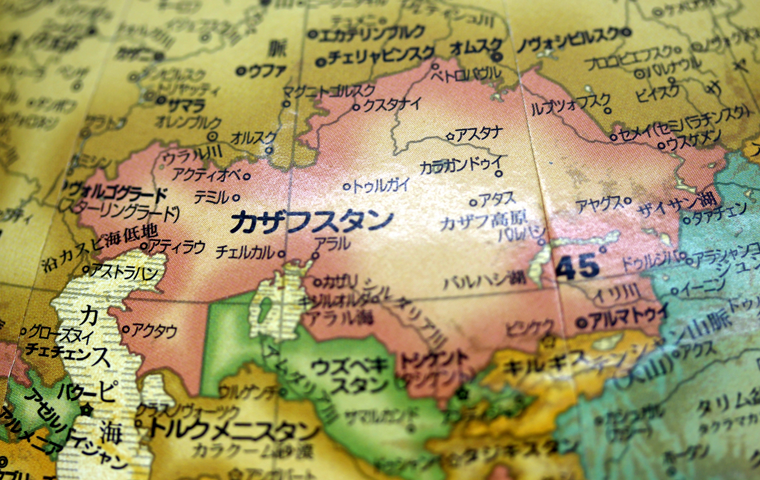
Why has cooperation between Japan and Central Asia drawn such attention right now? The backdrop is a profound tectonic shift unfolding deep within the Eurasian continent since Russia’s invasion of Ukraine in 2022. Central Asian states—once part of the Soviet Union and long under Russia’s political, economic, and military influence—have become acutely aware of the risks of excessive dependence on Moscow and are increasingly pursuing diplomatic diversification through “multi-vector diplomacy.”
At the same time, China has expanded its influence from the east through its Belt and Road Initiative. Yet Central Asian countries remain wary of becoming overly dependent on any single great power. In this environment—almost a “vacuum of power”—Japan, which harbors no territorial ambitions and is known for high-quality technology and sincere, long-term human resource development, has emerged as a “reliable third partner” for the region.
Prime Minister Takaichi’s “CA+JAD (CA-JAD) Tokyo Initiative” was designed to meet these expectations and to clearly demonstrate Japan’s commitment to Eurasian stability. A defining feature of this initiative is that it is not one-way assistance, but a vision of two-way “co-creation,” laying the foundation for a strategic partnership spanning the next 30 years.
The Shock of ¥3 Trillion and Economic Security: New Arteries Opened by the Caspian Route and Critical Minerals
The biggest highlight of the summit was the setting of a business project target—public and private combined—totaling ¥3 trillion (about USD 19 billion) over the next five years, a scale that far exceeds previous levels. This massive commitment symbolizes a shift from an aid-centered framework—historically anchored by ODA—toward an “investment phase,” in which Japanese companies directly participate in Central Asia’s growth and share in the returns.
At the core are two priority challenges tightly linked to Japan’s economic security strategy: “diversifying logistics routes” and “strengthening critical mineral supply chains.”
On logistics, the leaders agreed to support development of the “Caspian Sea Route,” formally known as the Trans-Caspian International Transport Route, which connects Central Asia to Europe without transiting Russia. Traditionally, the “Northern Route” through Russian territory dominated Central Asian logistics, but rising sanctions risks have made alternative corridors an urgent necessity.
This route—running from Kazakhstan across the Caspian Sea and onward through Azerbaijan and Georgia into Europe—is also called the “Middle Corridor.” Japan plans to help remove bottlenecks by improving port infrastructure, supporting the digitalization of customs procedures, and replacing aging bridges, among other efforts. For Japanese businesses, this corridor becomes a lifeline—securing access to the Eurasian interior and establishing a foothold into vast markets.
Partnership with resource-rich Central Asia is also crucial for Japanese industry. The region holds critical minerals essential for high-tech products and decarbonization technologies: Kazakhstan’s uranium and rare earths, Uzbekistan’s gold, and Tajikistan’s antimony, among others. In particular, reducing dependence on a limited number of supplier countries for rare earths—indispensable for EVs and semiconductor manufacturing—is a national priority for Japan.
The agreements include providing efficient mineral exploration technologies using AI, and jointly building supply chains from extraction through refining. This is not simply “bulk resource buying.” Instead, it reflects a distinctly Japanese approach: creating high-value-added industries locally by supplying technology and know-how. Prime Minister Takaichi’s emphasis on “strengthening critical mineral supply chains” is expected to become a win-win model that fuses Japan’s technological strengths with Central Asia’s resource potential for mutual benefit.
Co-Creation Through “Decarbonization” and “Digital”: An Industrial Revolution Led by Japanese Companies

Among the pillars of cooperation set out in the Tokyo Declaration, the most future-oriented areas are “green (decarbonization)” and “digital.” For Central Asian nations with abundant fossil fuels, the global decarbonization wave is both a threat—forcing structural economic change—and a new opportunity, leveraging vast territory and renewable energy resources for growth.
Japan is one of the few countries able to offer a broad menu of practical transition solutions—not only rapid EV shifts, but also higher-efficiency thermal power generation, hydrogen and ammonia co-firing technologies, and CCS (carbon capture and storage).
Concretely, Japan will use the framework of the Asia Zero Emission Community (AZEC), which it has spearheaded, to support decarbonization tailored to each country’s circumstances. For example, in Turkmenistan—home to the world’s fourth-largest natural gas reserves—a unique gasoline-from-natural-gas (GTG) plant, built with involvement from firms such as Kawasaki Heavy Industries, is already operating, and Japanese companies have entered ongoing maintenance agreements. This reflects efforts to upgrade resources into higher-value chemical products rather than simply burning them.
In Kazakhstan, Japanese technologies are being considered to reduce CO₂ emissions from refineries and address methane leakage, positioning the country at the leading edge of “Green Transformation (GX)”—an attempt to reconcile environmental measures with economic growth.
On the digital front, a major headline was the agreement to build an “AI Partnership” between Japan and Central Asia. Uzbekistan’s President Shavkat Mirziyoyev proposed establishing a “Central Asia–Japan Digital Hub” to promote cooperation in AI, cybersecurity, and IoT, and Japan responded by signaling support through technical cooperation and participation in shaping international rules.
For landlocked Central Asia, cross-border data flows and the expansion of e-commerce are key to overcoming geographic disadvantages. Introducing trade platforms that leverage Japan’s blockchain technologies could also enhance logistics transparency and reduce corruption risks. These efforts offer Japanese startups, too, a valuable opportunity to use Central Asia—where population growth and urbanization are accelerating—as a living “testbed” for real-world deployment.
Infrastructure of Trust and “Human Development”: Toward a Lasting Bond Across More Than 4,000 Kilometers
No matter how grand the infrastructure plans or how large the investment targets, they will amount to little without people to drive them. Alongside infrastructure development, Prime Minister Takaichi most strongly emphasized Japan’s commitment to “human resource development.”
Japan has long pursued steady efforts to foster young government officials and business leaders in Central Asia through programs such as JDS (Japanese Grant Aid for Human Resource Development Scholarship) and the operation of Japan Centers for Human Development. In fact, many “Japan-friendly” elites—who studied at Japanese graduate schools and gained a deep understanding of Japan’s social systems and work ethic—now serve in the core of Central Asian governments, supporting the backbone of today’s strong bilateral ties.
Under the CA+JAD Tokyo Initiative, the policy direction is to elevate these exchanges to the next stage. Beyond expanding student acceptance, Japan will strengthen:
development of industrial talent by exporting the KOSEN (National Institute of Technology) model,
circulation of labor talent through Japan’s Specified Skilled Worker programs,
cooperation in the judicial sphere through support for legal and institutional development.
In particular, legal system support is vital for building the foundations of a sound business environment—ensuring contract enforcement and protecting intellectual property rights—thereby reducing risks for Japanese companies entering the market. Japan’s diplomatic emphasis on the “rule of law” has earned strong trust from Central Asian countries seeking predictability and transparency.
Cultural ties are also significant. President Mirziyoyev of Uzbekistan, who visited Japan for the summit, looked back on relations since the establishment of diplomatic ties in 1992 and described the strengthening of partnership with Japan as a “historic milestone.” The leaders also reaffirmed participation in the Osaka–Kansai Expo and the promotion of tourism exchanges, signaling the emergence of a new wave of interaction—especially among younger generations.
Japan and Central Asia are separated by more than 4,000 kilometers, yet their complementary relationship—resources and technology, youth and experience, and mutual respect—has forged bonds that transcend geography. The Tokyo leaders’ meeting of December 2025 proclaimed to the world that Japan and Central Asia are beginning a journey not of short-term gains, but of an “interdependent community of destiny” built for decades to come.
At the end of this new Silk Road lies a future in which a divided world can be reconnected—and prosperity can be built together.


 JA
JA EN
EN