



The Disappearance of ‘Chairs’ in a Shrinking Town: The Blueprint of a Withdrawal Strategy Revealed by the Merger of Etajima, Police Station Reorganization, and Ambulance Shortages

Related Articles
The Disappearance of ‘Chairs’ in a Shrinking Town: The Blueprint of a Withdrawal Strategy Revealed by the Merger of Etajima, Police Station Reorganization, and Ambulance Shortages
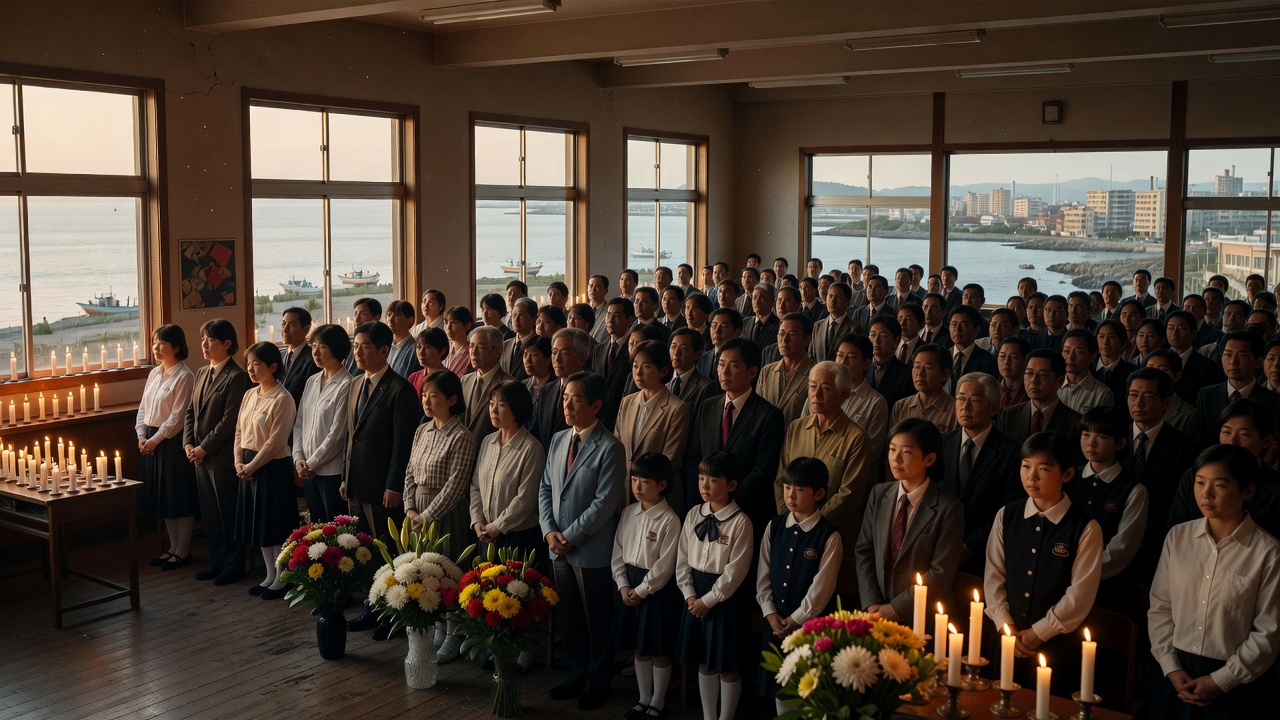
Seats in the prefectural assembly, counters at police boxes, and even one ambulance—each belonging to a different system, are all set to decrease at the same time and for the same reason. This movement, often summarized by the single term “population decline,” deserves a broader perspective. What is disappearing is not just numbers, but “chairs”—the very seats where someone once sat to convey the voices of the community, ensure safety, and preserve lives.
Currently, three reorganizations are taking place simultaneously in Hiroshima Prefecture. The merger of the electoral district of Etajima City with that of Kure City, the reorganization of the 26 police stations into 18, and the personnel shortages in firefighting and emergency services that have become evident in Kitahiroshima Town. Each angle is different, but when viewed together, they reveal a blueprint for a withdrawal strategy regarding how local public services are being “folded up” and from where.
The question at hand is not about the pros and cons of “efficiency”—it is about who benefits and who bears the burden in this structural narrative.
—
I. Merger of Electoral Districts: The Reduction of ‘Chairs’ for Delivering Voices
The Special Committee on the Number of Members of the Hiroshima Prefectural Assembly has decided to merge the Etajima City electoral district (with one seat) with that of Kure City. The rationale is based on the reversal of population ratios under Article 15, Paragraph 8 of the Public Offices Election Act, aimed at eliminating what is known as a “reverse district.” According to the 2020 national census, the population of Etajima City is approximately 21,000, placing it among the smallest municipalities in the prefecture. In contrast, the neighboring Kure City has a population exceeding 210,000, creating a roughly tenfold difference in population size between the two municipalities that will now share an electoral district.
From a numerical standpoint, this appears to be a rational decision. However, an electoral district is fundamentally the circuit through which residents send representatives. Etajima City has unique geographical conditions, connecting its islands to the mainland via ferries, and the challenges related to healthcare, transportation, and education differ qualitatively from those in the center of Kure City. If no candidates emerge from Etajima City after the merger, this circuit will effectively close. The disappearance of a “chair” for delivering voices signifies that reality.
In the Hiroshima Prefectural Assembly, there is also a concurrent discussion about increasing the number of seats for Fukuyama City from six to seven. Adding seats in growing cities while removing them from declining areas may seem logical within the framework of the system. However, the number of seats does not necessarily correlate with the diversity of “voices that reach” the assembly. After the merger is decided, who will take responsibility for ensuring that voters in Etajima City have viable choices? This question, which lies outside the design of the system, remains unanswered.
—
II. Police Station Reorganization: The Relocation of ‘Chairs’ for Protecting People
In 2024, the Hiroshima Prefectural Police announced plans to reorganize the 26 police stations in the prefecture into an 18-station system. There are two main pillars to this reorganization. One is the consolidation of jurisdictions due to population decline and a decrease in reported crimes. The other is to strengthen the capacity to respond to “location-less crimes” such as cybercrime and special fraud.
Specifically, police stations with small populations will be merged with neighboring stations, reallocating personnel to focus on cybercrime and large-scale investigations. The total personnel of the prefectural police is approximately 6,700. Given that it is not feasible to significantly increase the number of personnel, the decision to optimize deployment is a logical approach to organizational management.
However, behind the term “consolidation” lies the issue of physical distance. The disappearance of a police station means that the patrol range of police cars will expand, and the support provided by local stations will become more distant. Particularly in mountainous areas where the aging rate exceeds 40%, the presence of a police box symbolizes the assurance that “there is a public eye here.” When that light goes out, how much will the anxiety that does not appear in crime statistics grow? This is a loss that is difficult to quantify.
The prefectural police have stated that they will “maintain the placement of police boxes and local stations,” but it cannot be denied that the personnel at these stations may effectively diminish after the consolidation. Even if the structure remains, if the substance becomes hollow, it is no different for residents than if it had “disappeared.” A verification mechanism to prevent the gap between the system and reality must be designed alongside the reorganization.
—
III. Ambulance Shortages: The Insufficient ‘Chairs’ for Saving Lives
The situation in Kitahiroshima Town is even more urgent. The reorganization of firefighting services combined with chronic personnel shortages has led to a scenario where, when fire trucks are dispatched, there are not enough personnel available to operate ambulances.
The regionalization of firefighting has been a policy promoted by the Ministry of Internal Affairs and Communications since 2006. The design aimed to integrate small firefighting headquarters to enhance response capabilities through economies of scale. However, if the speed of population decline surpasses the regionalization efforts, even the merged headquarters will lack sufficient personnel. The case of Kitahiroshima Town exemplifies this structural limitation.
According to the standards set by the Fire and Disaster Management Agency of the Ministry of Internal Affairs and Communications, a minimum of three personnel are required to operate one ambulance. Since a certain number of personnel are also needed for fire truck dispatches, when simultaneous dispatches occur, the remaining personnel will be unable to operate either vehicle. Given that both critical operations draw from the same pool of personnel, prioritizing one will halt the other.
In mountainous areas, the distance to hospitals is long, and the time an ambulance is tied up is longer than in urban areas. Kitahiroshima Town covers an area of approximately 646 square kilometers, roughly the same size as the 23 wards of Tokyo. With a limited number of personnel, they are trying to cover this vast area. The current situation, where on-site personnel are forced to choose between a fire truck or an ambulance, is nothing but a failure of the system being compensated for by individual judgment.
—
Common Structure Reflected in the Three Reorganizations
Electoral districts, police stations, and firefighting/emergency services. Each of these systems operates under independent legal frameworks and jurisdictions. However, when placed side by side, a common structure becomes apparent.
Population decline → Falling below standards → Consolidation/Reorganization → Expanding physical distance → Emergence of those who cannot be reached
This flow progresses in the same order across all fields. And the group that is most likely to be left behind consists of the elderly, residents without means of transportation, and those who lack the energy to raise their voices. The benefits of efficiency accrue to those at the center of the system, while those on the periphery bear the greater burden. This is the asymmetry inherent in the blueprint of a withdrawal strategy.
Another commonality is the tendency for a gap to arise between the facade of “remaining in the system” and the reality. Voting can still occur after the merger. Police boxes will remain. Firefighting headquarters exist. However, the quality of voices that can be delivered, the density of patrols, and the speed of response—these tangible aspects of service will undoubtedly change. Who will measure that change, and who will take responsibility for correcting it? That part, which is not written in the reorganization plan, is what will determine the success or failure of the withdrawal strategy.
—
Future Points of Interest: What is Needed for the Design of ‘Folding Up’
The withdrawal itself is not something to be condemned. Given the population decline, it is physically impossible to maintain all services as they currently are. What should be questioned is the prioritization of “what to keep and what to let go” and the procedural issue of how much involvement stakeholders have in those decisions.
Three points deserve attention:
First, measures to ensure regional representation in Etajima City after the merger. Will there be a separate mechanism to represent the unique challenges of the islands in the merged electoral district with Kure City? Are complementary circuits such as regional councils or resident deliberative councils being considered?
Second, monitoring of the actual situation after the police station reorganization. Is there a framework to quantitatively track changes in patrol frequency, response times, and residents’ perceived safety one year and three years after the merger? Without a verification plan presented alongside the reorganization plan, it risks becoming a “set it and forget it” situation.
Third, institutional measures for securing personnel in firefighting and emergency services. Within the framework of regionalization, how effective will mutual support agreements during simultaneous dispatches and personnel sharing arrangements with neighboring municipalities be? Will the case of Kitahiroshima Town remain an isolated issue, or will it lead to a reevaluation of the system’s design?
—
The reduction of chairs may itself be a consequence of the times. However, those who once occupied those seats do not simply disappear. Voters crossing over to the mainland via ferry, elderly residents living in mountainous villages, and those clutching their chests in the middle of the night are still there.
What is needed in the blueprint for a withdrawal strategy is not just calculations of efficiency. It is fundamentally a question of will—who will the last seat be preserved for?


 JA
JA EN
EN