



The Birthplace of Nobuhiko Obayashi, the Statue of Takauji Ashikaga, and Honkawa Elementary School—Where is the Boundary Between ‘Restoration’ and ‘Preservation’?

Related Articles
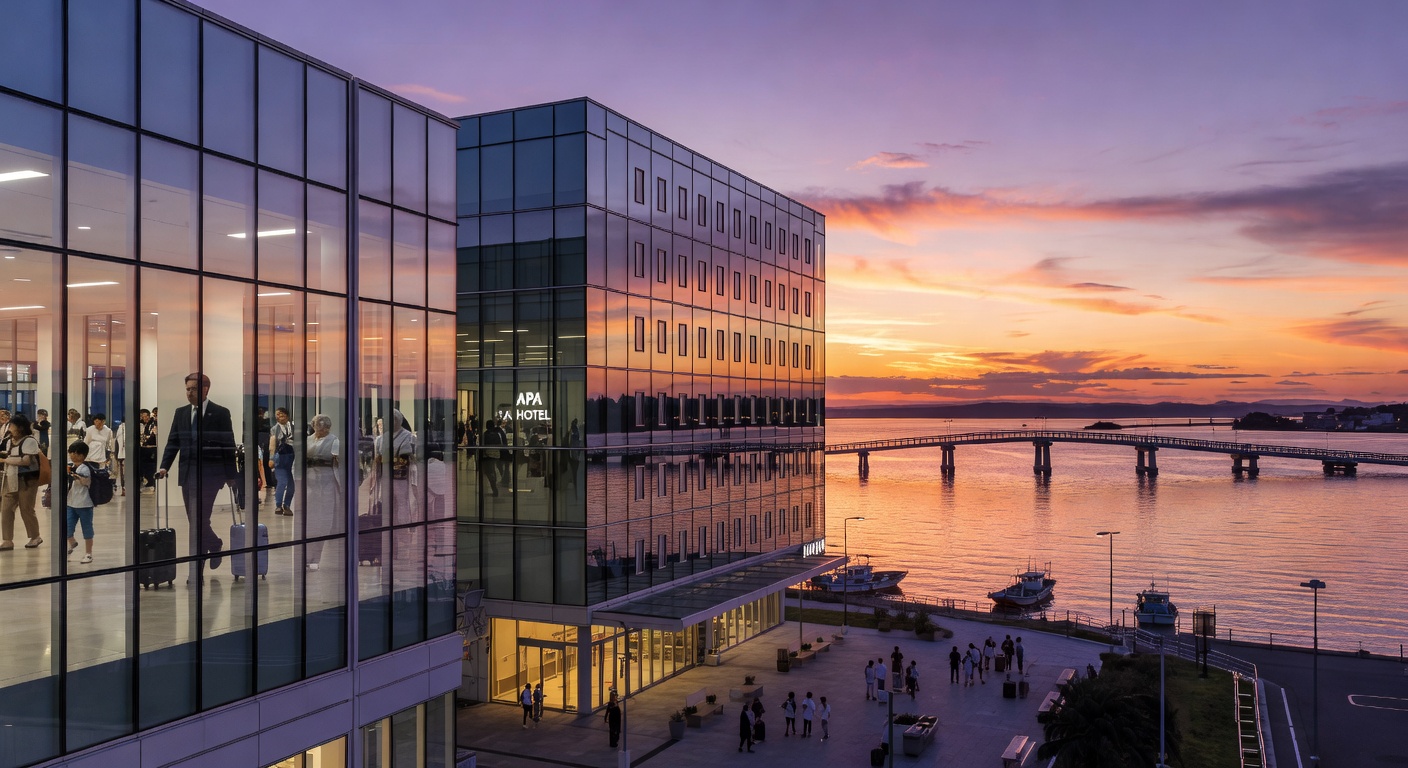
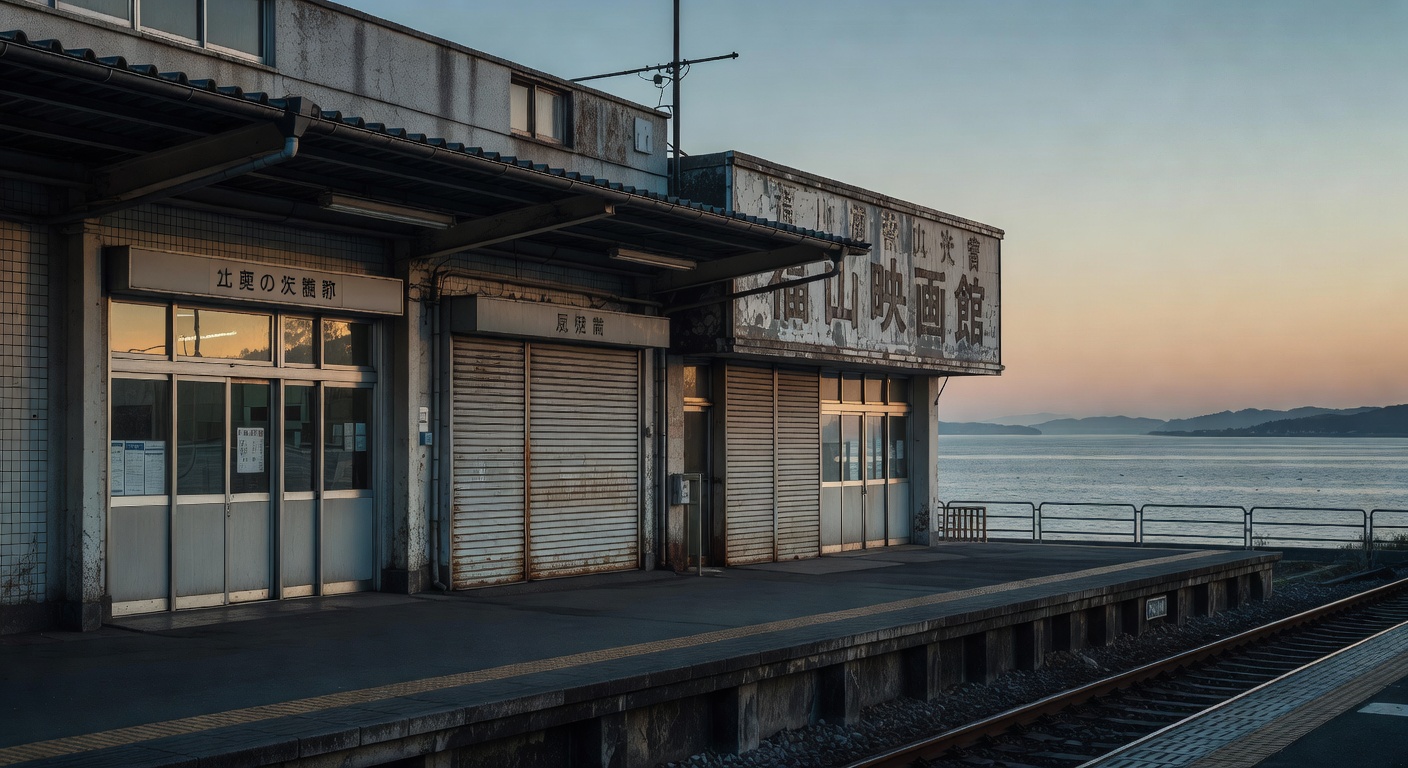
The Birthplace of Nobuhiko Obayashi, the Statue of Takauji Ashikaga, and Honkawa Elementary School—Where is the Boundary Between ‘Restoration’ and ‘Preservation’?
It is easy to destroy old things. Leaving them as they are can also be, in a sense, easy. What is difficult is to intervene—deciding what to change and what to leave unchanged, and how to draw that boundary.
In Onomichi City, plans are underway to transform the birthplace of film director Nobuhiko Obayashi into a cultural salon. His eldest daughter, Chigumi Obayashi, expresses the desire for it to be “a space open to the future.” Meanwhile, the Hiroshima Prefectural Museum of History has completed the restoration of a portrait believed to be of Takauji Ashikaga and has unveiled it to the press. In addition, Honkawa Elementary School in Hiroshima City, which has a building that was affected by the atomic bombing and is the closest school to the epicenter, is planning to renew itself as a peace museum by the fiscal year 2030.
These three cases are entirely different in subject and scale. However, they all stand before the same question of “not destroying, but also not leaving it as it is.” Where is that boundary? What criteria do those who intervene use to draw the line?
The Birthplace of Nobuhiko Obayashi—Designing to Transform a ‘Place of Memory’ into an ‘Open Space’
Director Nobuhiko Obayashi is known for his “Onomichi Trilogy” (“The Transfer Student,” “The Girl Who Leapt Through Time,” and “Lonely Hearts”). Even after his passing at the age of 82 in 2020, fans continue to visit Onomichi to explore the world of his films. His birthplace is set to be revitalized as a cultural salon.
What stands out in this project is the choice to create a “salon” rather than a “memorial museum.” A memorial museum is a place to view exhibits and is fundamentally a one-way experience. A salon is a place where people gather, exchange words, and create something new. Chigumi Obayashi’s statement about wanting it to be “a space open to the future” reflects a desire not to merely “preserve” her father’s memory, but to use that memory as a catalyst for new interactions.
The design of the building also reflects this philosophy. While preserving the exterior and spatial memories of the old building, a flexible interior space will be created to accommodate exhibitions and events. The delineation between the “parts to be preserved” and the “parts to be changed” is both an architectural judgment and a future-oriented design based on “what we want to happen in this place.”
For Onomichi City, Obayashi’s birthplace is both a tourist resource and part of the local identity. While the slopes and alleys that served as the backdrop for his films still remain, whether the place where the director lived continues to function as a “living space” depends on the design of this revitalization project.
The Restoration of the Statue of Takauji Ashikaga—What Does ‘Restoring’ Mean?
The “Portrait of Takauji Ashikaga” that the Hiroshima Prefectural Museum of History has restored is a work surrounded by academic debate regarding whether it is indeed a portrait of Takauji Ashikaga. It was once published in textbooks as the “Statue of Takauji Ashikaga,” but is now often referred to as a “Mounted Warrior Statue.” The identification of the depicted figure itself is uncertain—what does it mean to “restore” this work, and on what basis is the “original state” defined?
In this restoration, the work involved removing spotted discoloration that appeared on the surface due to past treatments with glue—what the restorers referred to as “freckles.” The restoration cost approximately 2 million yen. This work is based on the principle of “removing the deterioration caused by later interventions” rather than “returning it to the state at the time of creation.” In other words, the “original” in “restoring to the original” is defined not as the moment of creation but as the state where “no inappropriate interventions occurred.”
This principle is standard in the world of cultural heritage restoration, but it is not widely known among the general public. Restoration is not about “cleaning it up” but rather an intellectual task of determining “what is defined as the original state.” Depending on that definition, the scope of intervention changes. The restoration of the Takauji Ashikaga statue encapsulates the way to draw the boundary between “restoration” and “preservation” within a small task.
Honkawa Elementary School—The Weight of ‘Preserving’ a Bombed Building and the Changes in ‘Conveying’ History
Honkawa Elementary School is located approximately 410 meters from the epicenter. On August 6, 1945, nearly all the teachers and students present in the school building were victims of the bombing. Part of the school building that was rebuilt after the war retains traces of the bombing and is currently open to the public as a peace museum.
The renewal plan for the fiscal year 2030 aims to enhance exhibitions, particularly for children. With 85 years having passed since the bombing and the aging of survivors, the question of “how to convey the experience after the direct witnesses are gone” is a challenge for all of Hiroshima. The renewal of Honkawa Elementary School will be one concrete answer to that challenge.
What is questioned here is the relationship between “preserving” and “conveying.” Preserving the bombed building as it is is an act of “preservation,” but that alone does not guarantee that the message is conveyed. Especially for children of generations who do not know war, old buildings and exhibition panels may not effectively deliver the experience. On the other hand, if too much emphasis is placed on experiential exhibits and digital technology, there is a risk that the “weight of simply being there” that the bombed building holds may diminish.
The designers of the renewal must draw lines within this tug-of-war. The physical preservation of the building, the updating of exhibits, and the design of educational programs—decisions about “what to change and what not to change” must progress simultaneously across these layers.
Common Structures Illuminated by the Three Cases
The birthplace of Nobuhiko Obayashi, the statue of Takauji Ashikaga, and Honkawa Elementary School—when these three cases are lined up, a common question arises regarding how to draw the boundary between “restoration” and “preservation.”
That question is: “For whom does this place (or object) exist from now on?”
Obayashi’s birthplace is designed as an “open space” not just for fans of the director but also for future residents and visitors of Onomichi. The statue of Takauji Ashikaga will have its “appropriate state” defined for both academic researchers and general visitors. Honkawa Elementary School is exploring a “form of conveying” that resonates with children of generations who do not have the experience of the bombing.
All of these cases, while seemingly looking to the past, are actually drawing boundaries with an eye toward future recipients. “Preserving” is an act of respect for the past, while “restoring” is a design for the future. The intersection of these two points is where the boundary lies.
The work of drawing boundaries is not glamorous. Architects, restoration technicians, curators, and educators—those whose names rarely appear in the spotlight are making decisions one by one. Within that diligent process lies the answer to how the memory of the community will be passed on.
Destroying something can be done in a day. Preserving it is a continuous series of daily judgments.


 JA
JA EN
EN