



Names of 11 Prosecutorial Review Committee Members Leaked — Who Will Protect the Mechanism for Citizen Participation in Justice?

Related Articles
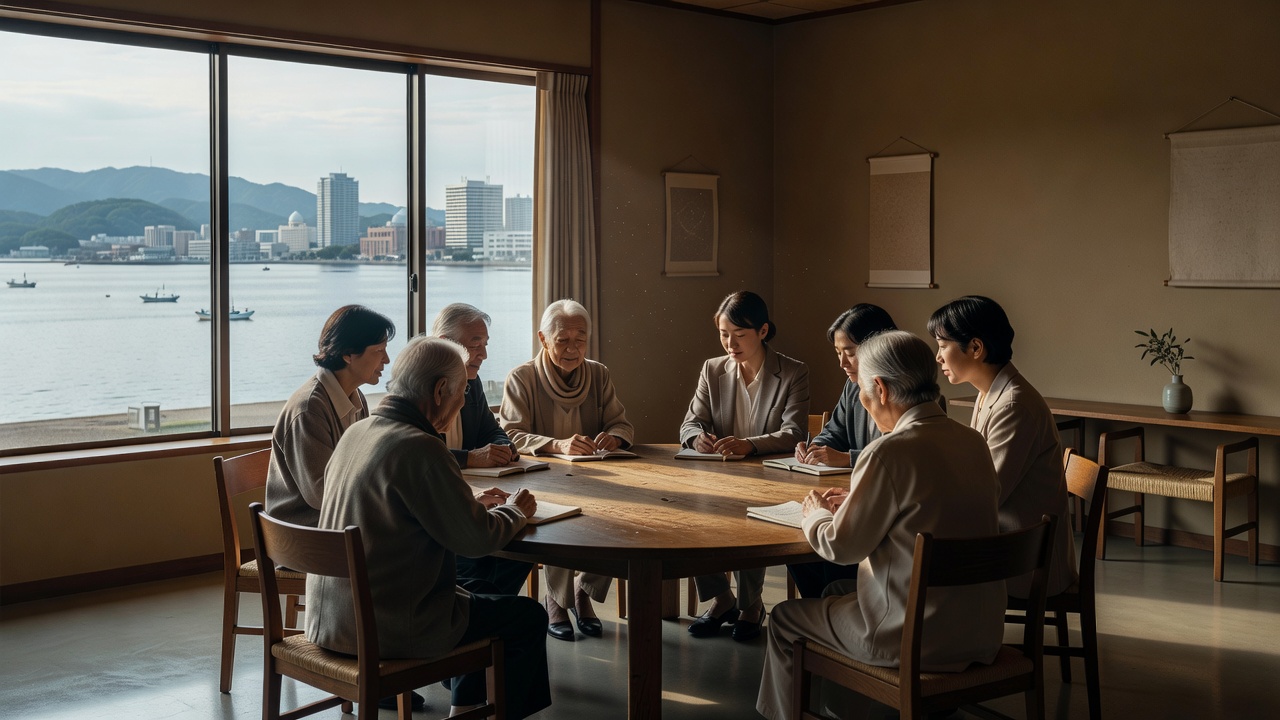

Names of 11 Prosecutorial Review Committee Members Leaked — Who Will Protect the Mechanism for Citizen Participation in Justice?
One day, I received a document containing the names of 11 individuals I should not have known.
The leak of the names of prosecutorial review committee members at the Iwakuni branch of the Yamaguchi District Public Prosecutors Office cannot simply be dismissed as a case of “misdelivery of documents.” Prosecutorial review committee members are ordinary citizens selected by lottery to assess the appropriateness of a prosecutor’s decision not to prosecute. The names of those 11 individuals ended up in the hands of the parties involved in the case under review. It wasn’t just their names that were leaked; the very relationship—”These people are reviewing your case”—became visible to the parties involved.
What this incident highlights is not merely a problem of personal information protection. It raises the question of what happens to the design principle of “anonymity” that underpins the mechanism for citizen participation in justice when it is shattered by a single document. Who does the system fail to protect?
—
The Burden Carried by “Citizens Selected by Lottery”
The prosecutorial review committee system began in 1948. Eleven citizens selected by lottery from the electoral roll review whether the prosecutor’s decision not to prosecute a case is appropriate. Following a legal amendment in 2009, if the review committee votes “sufficient grounds for prosecution” twice, it can lead to a mandatory prosecution. This allows citizens to overturn prosecutorial decisions—an exceptionally strong form of participation within the judicial system.
That is why the anonymity of committee members is fundamental to the system. Article 44 of the Prosecutorial Review Committee Act prohibits the disclosure of the names of committee members. If the identities of the committee members become known externally, they could become targets of pressure or harassment. Anonymity is the very condition that allows citizens to make judgments freely.
The recent leak occurred because a list of committee members, which should not have been included, was mistakenly sent to the applicant for the review by the Iwakuni branch of the Yamaguchi District Public Prosecutors Office. According to reports, the prosecutors’ office explained it as a clerical error. However, we must not only ask “why did this happen?” but also “what changes after it has happened?”
According to the announcement from the Yamaguchi District Public Prosecutors Office, concerns have been raised by the committee members whose names were leaked. This is only natural. Knowing that their names are known to the parties involved in the case they are reviewing—being told to “make a fair judgment” under such circumstances imposes an immeasurable psychological burden. Furthermore, the very reporting of this incident instills a sentiment of “I do not want to participate” in citizens who may be selected by lottery in the future.
The anonymity that the system’s designers sought to protect was not solely for the sake of individual committee members. It was a structure that supported the overall reliability of the system by ensuring that “citizens’ judgments are not influenced by external dynamics precisely because no one knows who is reviewing the case.” A single document has cracked that structure.
—
The Government-Driven Bid Rigging in Onomichi City — What the Choice of “Not Investigating” Means
Around the same time as this name leak, another incident concerning citizen participation occurred in a nearby location.
In Onomichi City, Hiroshima Prefecture, a resolution was proposed in the city council to establish a third-party committee in response to a government-driven bid rigging incident, but it was rejected. This incident, which raised suspicions of government involvement in public works bidding to favor specific contractors, aimed to create a mechanism for external scrutiny, but the council dismissed it.
A third-party committee consists of external experts without vested interests who investigate the facts and propose measures to prevent recurrence. There is no legal obligation to establish such a committee. Therefore, the decision of whether or not to establish one reflects the attitude of the municipality towards addressing misconduct.
The reason reported for the rejection was essentially that “since the judicial process is already clarifying the facts, there is no need for the council to establish its own committee.” At first glance, this may seem reasonable. However, what the judiciary clarifies are the individual criminal facts of “who did what,” not the structural issues of “why that misconduct was possible within the organization” or “where the flaws in the bidding system were.” The third-party committee was supposed to be responsible for precisely that structural verification.
The choice of “not investigating” is not the same as condoning misconduct. However, it does represent a judgment that “it is acceptable to leave the flaws in the system unaddressed.” Whether citizens can trust the public works of that municipality depends not on whether individuals are punished, but on whether the structure prevents the same thing from happening again.
—
Reduction of Hiroshima City’s Public Relations Paper — The Circuit That Will No Longer Reach
Another notable change supporting local citizen participation is the reduction in the frequency of publication of Hiroshima City’s public relations paper, “Citizens and City Administration.” From twice a month to once a month—while this may seem like a minor change when looking at the numbers, considering the role this publication has played, a different perspective emerges.
For the elderly population, who do not regularly use the internet, the public relations paper is almost the only regular channel for receiving information from the administration. As of 2024, approximately 28% of Hiroshima City’s population is over 65 years old. The printed public relations paper delivered to each household through neighborhood associations and community groups was a vital “connection” for those less likely to benefit from digitalization.
The reduction in publication frequency is based on the administrative rationale of cost reduction. It involves compressing printing and delivery costs and promoting a shift to digital media—financially understandable decisions. However, reducing the frequency of delivery also means creating “periods when information does not reach.” Disaster prevention information, changes in welfare systems, announcements of local events—information that cannot be fully captured once a month.
When the circuit connecting the administration and citizens becomes thinner, those who are most affected first are those who lack the means to seek out information themselves. When the mechanism for “delivery” retreats, who will fill that gap—neighborhood associations, welfare commissioners, or is it possible that no one will?
—
What the Three Incidents Indicate
The leak of the names of prosecutorial review committee members, the rejection of the third-party committee establishment, and the reduction of the public relations paper publication—these three events occurred in different domains: the judiciary, the legislature, and the administration. However, they share a common structure.
In each case, the mechanism for “citizens to engage in public decision-making” is weakened due to mistakes or judgments made by those operating the mechanism.
In the prosecutorial review committee, the design of anonymity was shattered by clerical error. In Onomichi City, the function of verification was dismissed by political judgment. In Hiroshima City, the circuit for information transmission was narrowed by financial judgment. None of these arose from malice. There are “reasons” for mistakes, rational judgments, and political decisions. However, the result is that the footing for citizens is weakened in each case.
A system is not something that is completed the moment it is created. It only functions when it is continuously upheld in practice. Even if the Prosecutorial Review Committee Act stipulates the anonymity of committee members, if the document management procedures are lax, it can collapse with a single piece of paper. Even if the authority to establish a third-party committee lies with the council, it is the same as if it does not exist if it is not exercised. No matter how excellent the public relations paper is, if the frequency of delivery decreases, there will be people who do not receive it.
The mechanism is built on the accumulation of daily arrangements that support it. Not through flashy reforms, but through mundane procedures such as “putting the list in a different envelope,” “double-checking before printing,” and “counting to see if there are people who do not receive it”—each of these unremarkable steps weaves the trust in the system.
—
Who Does This Make Comfortable?
In the future, it will be important to observe what measures the Iwakuni branch of the Yamaguchi District Public Prosecutors Office will take to prevent recurrence. However, a mere declaration of “this will never happen again” is insufficient. What specifically will change—document management procedures, checking systems, or perhaps a reduction in physical documents through digitization? Repairing the mechanism must be visible as concrete changes in procedures.
In Onomichi City, it will also be questioned whether structural verification will be conducted after the conclusion of judicial procedures. In Hiroshima City, whether there is a mechanism to track how many “people who no longer receive information” emerge after the reduction will be key.
What is common to these questions is the perspective of “who does this mechanism make comfortable?” The anonymity of the prosecutorial review committee makes the committee members comfortable—more precisely, it guarantees a state where they can make judgments without worrying about external pressure. The third-party committee makes citizens comfortable—providing reassurance that the structure of misconduct will be verified and that the same thing will not happen again. The public relations paper makes information-poor individuals comfortable—creating a state where necessary information is delivered without them having to seek it out.
None of these will immediately change daily life if the mechanisms disappear. What will change is a little further down the line. When the next citizen selected by lottery feels “I do not want to take this on.” When the next resident who notices the irregularity in bidding thinks, “it won’t be investigated anyway.” When the disaster prevention information that was supposed to arrive does not.
When the mechanism quietly breaks, those who are first unable to raise their voices are the people who were protected by that mechanism. That is why, before it breaks—while it is still on the verge of breaking—there must be someone who inspects each of those arrangements.


 JA
JA EN
EN