



Kitchen Car Agreement, Three-Day Movement of Firefighters, and Sea Patrol Collaboration—How Systematic is Hiroshima’s ‘Behind-the-Scenes Disaster Management’?

Related Articles
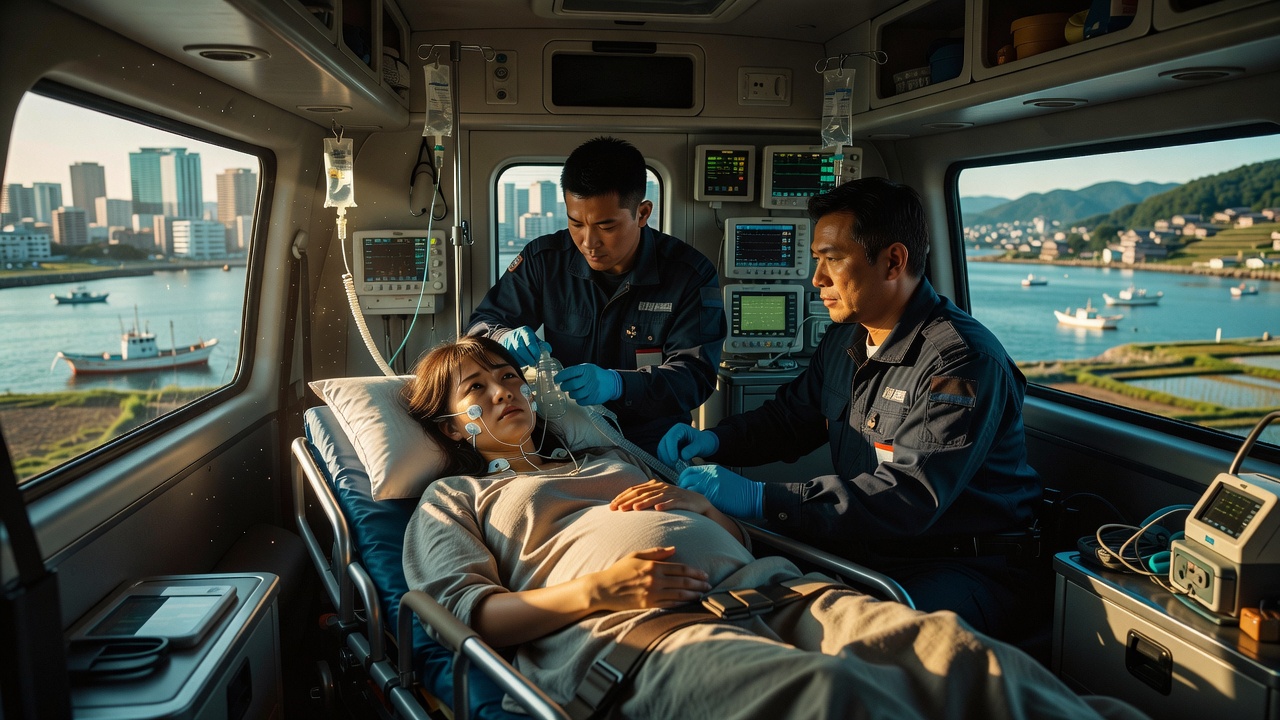
Before a Disaster Strikes, Who is Making the Arrangements?
When a disaster occurs, the first thing that catches the eye is the rescue scene. Helicopters, team members trudging through mud, people wrapped in blankets at evacuation centers—media coverage focuses on these moments. However, behind the scenes lies a layer of unremarkable arrangements that revolve around what has been decided in advance during peacetime.
In July 2018, the heavy rains in western Japan caused significant damage in Hiroshima Prefecture, resulting in 114 fatalities and over 1,000 completely destroyed homes. How has that experience changed disaster prevention in Hiroshima? It is not just the equipment and budget that have changed. The very system of deciding “who will act, when, and what” during peacetime has been gradually, yet surely, built up.
The kitchen car food provision agreement, the nationwide joint training where firefighters traveled to Miyagi over three days, and the “Sea Patrol” monitoring illegal dumping in collaboration with the Japan Coast Guard—what connects these seemingly unrelated initiatives is the design philosophy of “wiring the circuits for action during emergencies in peacetime.”
This article will explore the structure of each system and the human warmth involved.
—
Kitchen Car Agreement—Entrusting the “Power to Deliver” to the Private Sector
The background of the disaster food provision agreement between Hiroshima City and the Hiroshima Prefectural Kitchen Car Association lies in specific challenges faced at evacuation centers during the 2018 heavy rains. At that time, food supply to evacuation centers heavily relied on government stockpiles and meals prepared by the Self-Defense Forces. However, as the evacuation extended over time, the continuous offering of cold rice balls and bread took a toll on the mental and physical well-being of the evacuees. “We want to eat something warm”—this demand was not just a matter of nutrition but also a matter of dignity.
The key point of this agreement is that the government does not hoard cooking capabilities for itself. Kitchen cars are equipped for mobility, with power sources, water, and cooking utensils all contained within the vehicle. This means that even in disaster-stricken areas where infrastructure is disrupted, as long as there is parking space, they can immediately become cooking bases. Businesses participating in the agreement will respond to requests from the city during a disaster and provide meals at evacuation centers or affected areas.
What is noteworthy here is that this system is designed as a “division of roles based on an agreement” rather than relying on “the goodwill of volunteers.” The division of costs for fuel and ingredients during deployment, the application of hygiene management standards, and the communication flow for deployment requests have all been predetermined. A system that relies on goodwill stops the moment that goodwill runs out. The format of an agreement serves as a mechanism to eliminate personal dependency and ensure reproducibility.
Of course, there are challenges. The potential for participating businesses to be affected by disasters, securing training opportunities during peacetime, and confirming supply routes for ingredients are all factors that determine the effectiveness of the operational design “after the agreement is signed.” The day the agreement is signed is not the goal; that is just the beginning of the real arrangements.
—
Three-Day Movement—The Meaning of Firefighters “Going Far”
Firefighters from the Hiroshima City Fire Bureau traveled by vehicle to Miyagi Prefecture to participate in a nationwide joint training of the Emergency Firefighting Assistance Team. The required travel time was three days. The significance of this “three days” lies at the heart of the training.
The Emergency Firefighting Assistance Team is a system that dispatches support units from fire departments across the country when the firefighting capacity in a disaster-stricken area is insufficient to respond to large-scale disasters. Established in the wake of the 1995 Great Hanshin-Awaji Earthquake, it has been extensively utilized during the Great East Japan Earthquake and the Kumamoto Earthquake. While the system is well-established, having a system in place is different from being able to act effectively.
Traveling from Hiroshima to Miyagi by fire truck over three days is itself a form of training. Managing the vehicle during long-distance travel, planning crew changes and rest periods, arranging for refueling and accommodation along the way, and confirming the operation of communication devices—these are all practical tasks that arise during actual disaster deployments. Training is not limited to firefighting and rescue exercises once on-site. The significance of this movement lies in embedding the “process of getting there” into the body.
One of the participating firefighters remarked, “When we first meet teams from other prefectures, we start by coordinating radio frequencies. If we are told to do it on the spot during an actual event, it won’t go well at all.” This statement highlights that collaboration is not merely about being “connected by a system” but rather about having the experience of exchanging voices and confirming procedures together.
Hiroshima received support from the Emergency Firefighting Assistance Team during the heavy rains of 2018. Having experienced receiving aid, they understand the weight of the arrangements made when going to assist others. This reciprocal experience is transforming Hiroshima’s fire department from an organization that is “on the receiving end” to one that can also “become a supporter.”
—
Sea Patrol—Connecting Environmental Monitoring to Disaster Prevention
Hiroshima Prefecture’s “Sea Patrol” is an initiative to monitor illegal dumping in the sea and along the coast. The Japan Coast Guard’s Sixth Regional Headquarters, Hiroshima Prefectural Environmental Bureau, coastal municipalities, and local fisheries cooperatives collaborate to conduct multi-layered monitoring from ships, aircraft, and land.
At first glance, this seems to be an environmental administration issue, separate from disaster prevention. However, upon examining the structure, it becomes clear that the two are deeply interconnected.
The Seto Inland Sea is a highly enclosed body of water, and illegally dumped waste can drift to the coast with the currents. There have been multiple reports of cases where debris washed ashore during typhoons and storm surges blocked drainage systems, exacerbating flooding damage. In other words, neglecting illegal dumping during peacetime carries the risk of amplifying damage during emergencies.
What is noteworthy about the Sea Patrol system is that the “eyes” of monitoring are not limited to the government. There is a mechanism for fishermen to report illegal dumping they discover while operating, and a window for coastal residents to provide information. The government’s monitoring capacity has its limits. By incorporating the eyes of people who are regularly out at sea as “sensors,” the density of the monitoring network is increased.
This structure can be directly repurposed for information gathering during disasters. The “circuit for reporting anomalies by those who regularly observe the sea” is fundamentally the same mechanism that captures early signs of tsunamis or storm surges. The network established for environmental monitoring also functions as a nervous system for disaster prevention—this dual role exemplifies the beauty of the system.
—
The Underlying Design Philosophy of the Three Initiatives
The kitchen car agreement entrusts the “power to deliver” to the private sector, the joint training of firefighters engrains the “power to reach” into their bodies, and the Sea Patrol disperses the “power to discover” among the community. While the three initiatives target different subjects and involve different stakeholders, they share a clear common design philosophy.
First, a structure that does not allow the government to shoulder everything alone. Private businesses, fire departments from other prefectures, fishermen, and residents—people in their respective positions are incorporated into the disaster response circuit during peacetime.
Second, the idea of not “only acting during emergencies” but rather “repurposing what is already in motion during peacetime for emergencies.” Kitchen cars can respond immediately because they are already in operation. Fishermen can notice anomalies because they are regularly out at sea. Designing emergency responses as an extension of daily routines is the condition for sustainable disaster prevention.
Third, a continuous questioning attitude towards the “operation” after the system is created. Simply signing an agreement or conducting a training session once will render the system ineffective. Are the communication flows updated? Has the roster of participating businesses changed? Is the reporting window functioning? This kind of inspection is what keeps the system alive.
—
Who Does This Make Easier?
Systematizing disaster prevention is difficult to measure in numbers. While the signing of agreements is reported, it remains unclear how many people were able to enjoy warm meals thanks to those agreements until a disaster strikes. The effectiveness of training can only be verified when the real event occurs.
Still, there is a question that must be asked. Who does this system make easier?
The answer is clear. It makes the next disaster victims a little bit easier. Instead of cold bread, warm meals will be served at evacuation centers. Supporting firefighters will arrive at the scene without hesitation. The amount of debris washed ashore will decrease, preventing drainage systems from clogging—none of these are dramatic changes. However, that “little bit” of difference supports the daily lives of those affected by disaster.
Seven years have passed since the heavy rains of 2018. The system of “behind-the-scenes disaster management” that Hiroshima has built up is still not complete. It is precisely because it is not complete that there is meaning in continuing to update it. Arrangements become a true system when they continue to function, even when the faces of those who made the arrangements are no longer visible.


 JA
 EN