


AI Data Centers Gobble Up Electricity—The Reality of Increased Power Bills for SMEs: “An Annual Increase of 300,000 Yen”

Related Articles

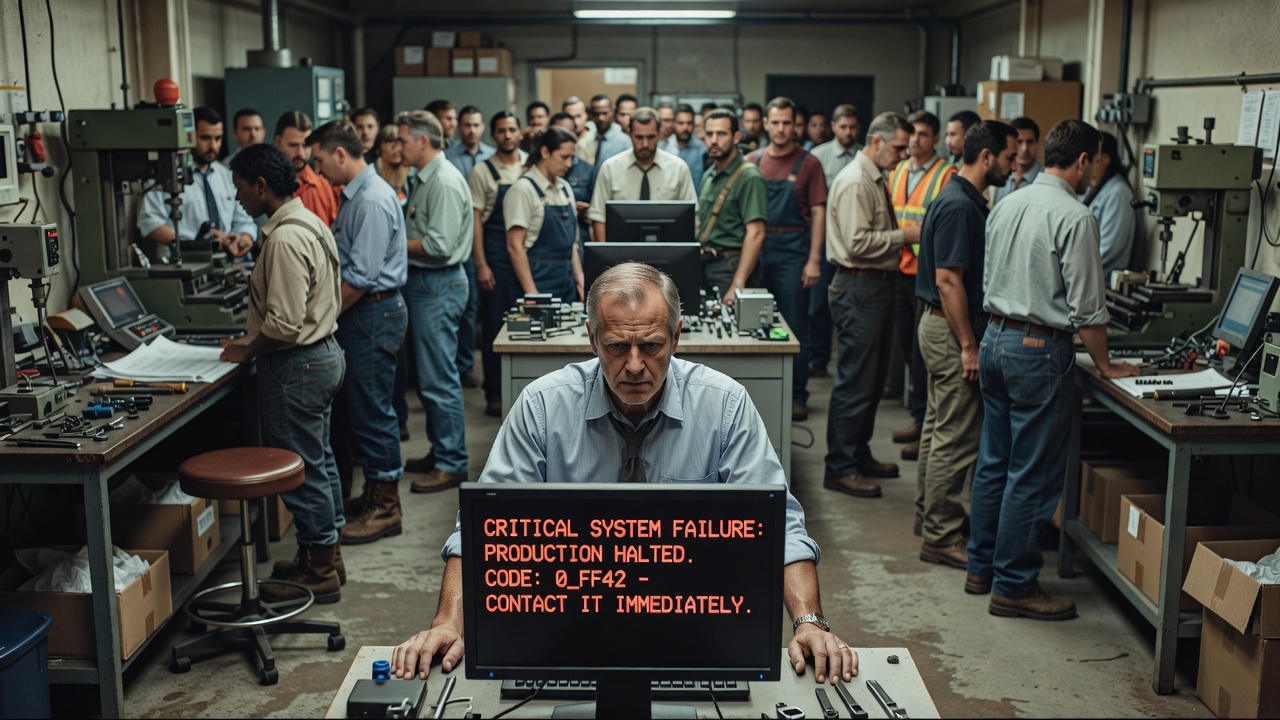
Conclusion First: Electricity Costs Will Rise. The Question is “When and How Much”
AI data centers are exploding in number around the world. Their power demand is no longer at a level that can be described as “slightly increased.”
According to a report by The Guardian, the total output of gas-fired power plants planned by AI companies in the United States and Europe is 181GW. This is about four times the peak power demand of the entire UK and corresponds to more than half of Japan’s total power generation capacity (approximately 340GW).
Why is this happening? AI data centers are unable to connect to the existing power grid quickly enough, forcing them to build their own power plants. Microsoft is investing in nuclear power, Google in geothermal, and Amazon in natural gas—giant tech companies are becoming “power companies.”
The impact of this power struggle will undoubtedly reflect on the electricity bills of small and medium-sized enterprises (SMEs). The issue is not whether it will happen, but rather “when and how much.”
Looking at the Numbers: How Much Will Electricity Bills for SMEs Increase?
Let’s do some specific calculations.
In Japan, a rush to build AI data centers has already begun. In 2024 alone, large-scale data center construction plans have been announced in Hokkaido, Chiba, Osaka, and other locations. According to estimates by the Ministry of Economy, Trade and Industry, the power consumption of domestic data centers is expected to increase by about 2 to 3 times by 2030.
Currently, the average unit price of industrial electricity in Japan is about 20 to 25 yen/kWh. The International Energy Agency (IEA) has pointed out that the rapid increase in demand from data centers could lead to a 10 to 20% rise in electricity prices in the medium term.
For a small and medium-sized enterprise with a monthly electricity bill of 150,000 yen, the calculations would be as follows:
- In the case of a 10% increase: an additional 15,000 yen per month → an annual increase of 180,000 yen
- In the case of a 20% increase: an additional 30,000 yen per month → an annual increase of 360,000 yen
For an SME with annual sales of 30 million yen, an increase of 360,000 yen in fixed costs would reduce the profit margin by 1.2 points. For companies with an operating profit margin of 3 to 5%, this means that 20 to 40% of their profits could vanish.
This is not just a matter of “merely electricity costs.” It represents a structural increase in costs that gradually pressures management.
Why is There a Structure Where “AI Companies Hoard Electricity”?
It is essential to understand the structure of the electricity market here.
AI data centers require stable, large amounts of electricity 24/7, 365 days a year. Moreover, while demand is surging, the enhancement of generation capacity is not keeping pace. It takes 5 to 10 years to improve the transmission grid. If supply cannot keep up, prices will rise. This is basic economics.
What complicates matters further is that AI companies have the “financial muscle to not worry about electricity costs.” OpenAI’s annual revenue is in the billions of dollars, and Microsoft’s market capitalization exceeds 3 trillion dollars. For them, electricity costs are considered an “investment,” and they will continue to buy even if prices rise.
On the other hand, for SMEs, electricity is a “cost.” They lack negotiating power. They end up purchasing overpriced electricity that remains after large corporations secure cheaper rates through long-term contracts—this structure is beginning to take shape.
This is not just a distant issue for Japan. In Hokkaido, there are already reports of concerns about local power supply due to the concentration of semiconductor factory Rapidus and data center construction plans. The impact is likely to hit rural areas before it reaches large cities, as they have less leeway in power infrastructure.
So, What Should SMEs Do?
An article that ends with “it seems electricity costs will rise” is of no value. We need to organize what specific actions should be taken, prioritizing them.
1. First, Visualize “Your Company’s Electricity Consumption” (Cost: Almost Zero)
Surprisingly, many SMEs do not grasp the breakdown of their electricity consumption. They need to know which equipment uses how much electricity, when. Without this knowledge, they cannot implement effective measures.
By introducing smart meters or using free usage analysis tools provided by electricity companies, they can visualize their consumption with almost zero initial costs. “Visualization” may seem mundane, but this is where it all begins.
2. Review Electricity Contracts (Cost: Zero to Several Thousand Yen)
The pricing plans of new electricity companies are diverse. Since the liberalization of electricity in 2016, the options for corporate plans have significantly increased. Companies should review whether their current contracts are optimal at least once a year.
The key is not just choosing between “fixed or variable,” but selecting a plan that fits their usage patterns. Manufacturing industries that operate mainly at night and retail businesses that operate during the day will have different optimal plans. It is not uncommon for a simple 10-minute comparison on a comparison site to result in a monthly change of several thousand to 10,000 yen.
3. Invest in Energy Efficiency (Cost: Several Tens of Thousands to Several Hundreds of Thousands of Yen, Payback Period: 1 to 5 Years)
Let’s look at specific investment returns:
- Switching to LED lighting: Replacing 20 fluorescent lights with LEDs → Initial investment of about 100,000 yen, annual electricity cost reduction of about 30,000 to 50,000 yen. Payback in 2 to 3 years.
- Updating air conditioning (models over 10 years old): Replacing one commercial air conditioner → Initial investment of 300,000 to 500,000 yen, annual electricity cost reduction of about 50,000 to 100,000 yen. Payback in 3 to 5 years.
- Introducing demand controllers: Automatically controlling peak power → Initial investment of 100,000 to 300,000 yen, annual reduction of 50,000 to 150,000 yen in basic fees.
Many companies understand that they “should do these things” but procrastinate. Now, before electricity prices rise, is the perfect time to invest, as the payback period will be shorter.
4. Consider Installing Solar Power (Cost: 1 to 3 Million Yen, Payback Period: 7 to 10 Years)
As of 2024, the installation cost of solar power systems under 10kW has dropped to about 250,000 to 300,000 yen per kW. A 5kW system would cost 1.25 to 1.5 million yen. With municipal subsidies, there are cases where the effective cost can be under 1 million yen.
Annual power generation varies by region, but a 5kW system can generate about 5,000 to 6,000 kWh annually. When converted to electricity costs, this amounts to about 100,000 to 150,000 yen per year. The higher electricity prices rise, the greater the economic benefits of self-generation become.
Manufacturing and warehouse industries with roofs are particularly well-suited for this. The PPA model (installing with zero initial investment and paying a portion of the electricity bill) is also becoming popular, providing options for those without capital to implement.
5. Engage in Joint Procurement in the Community (Cost: Almost Zero)
There is a growing movement across various regions to conduct joint electricity purchases through chambers of commerce and industry associations. Purchasing in bulk increases negotiating power. Electricity companies that may not pay attention to individual companies will listen when approached by a group of 50.
This is a “herding strategy” that only SMEs can adopt. While large corporations can complete everything on their own, SMEs can collaborate to obtain conditions that individual companies cannot achieve.
What We Really Need to Consider
While we have discussed electricity costs, there is a deeper question to ponder.
If AI consumes electricity, SMEs should leverage that AI to gain returns that exceed their electricity costs.
This may sound contradictory. However, consider this: if the introduction of AI can save 50,000 yen in costs per month, even if electricity costs rise by 30,000 yen per month, the net effect is positive.
For instance, automating customer inquiries with an AI chatbot could save the equivalent of one part-time employee’s salary (80,000 to 100,000 yen per month). Optimizing inventory management with AI could reduce waste losses by several tens of thousands of yen per month. Automating invoice processing with AI could reduce accounting overtime by 10 hours a month.
Should we view the rise in electricity costs solely as “increased costs” or as an opportunity to enhance productivity through AI utilization? The same phenomenon can lead to different strategies depending on how we perceive it.
Summary: Three Actions
The rapid increase in electricity demand from AI data centers could raise electricity costs for SMEs by 180,000 to 360,000 yen annually. Moreover, the impact will be felt sooner and more significantly in rural areas.
Here are three actions that can be taken starting today:
- Visualize your company’s electricity consumption—first, understand the current situation.
- Review electricity contracts and energy efficiency investments—strengthen defenses.
- Leverage AI to achieve returns exceeding electricity costs—shift to offense.
It will be too late to scramble after electricity prices rise. The difference between companies that act before prices rise and those that act afterward will become irreparable in a few years.


 JA
 EN