



Consideration of the Closure of the Innoshima Flower Center and the Opening of the New Onomichi Library: What is Being Questioned Beyond the “Annual 10 Million Yen” is Who Needs That Place

Related Articles

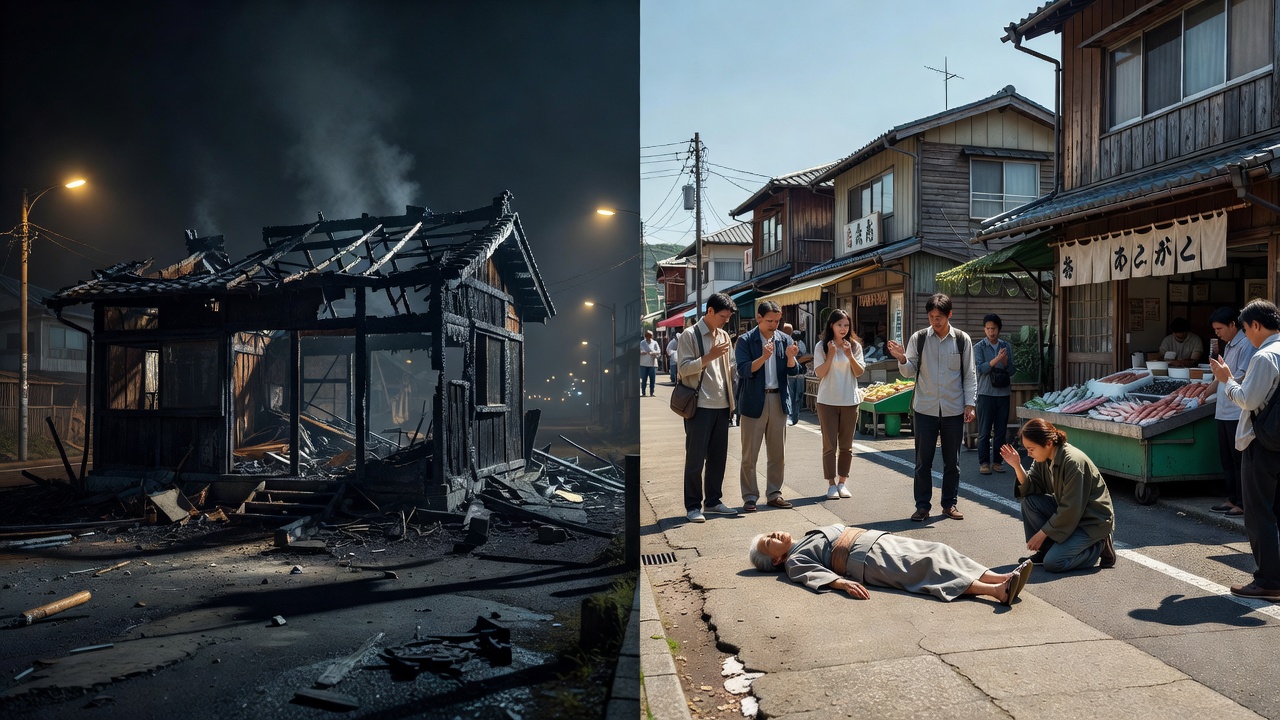
Same City, One Facility Closing and Another Opening
In Onomichi City, two public facilities are moving in opposite directions.
One is the Innoshima Flower Center, where discussions about its closure are underway in light of an annual maintenance cost of approximately 10 million yen. The other is the new library at Onomichi City University, which opened on April 26. On the first day, a signing event featuring author Kanae Minato was held, attracting many visitors.
The simultaneous existence of a “closing facility” and an “opening facility” within the same municipality highlights the questions that public facilities in the region are currently facing. The figure of 10 million yen is not just about the Flower Center; it represents a facet of the decision-making process that municipalities across the country are grappling with: “Should we maintain it or let it go?”
However, the survival of a facility is not determined solely by cost. What needs to be questioned is, “Who does that place serve?”—in other words, who has incorporated it into their daily lives?
—
Innoshima Flower Center: The Time of the “Regular Visitors” Behind the Numbers
The Innoshima Flower Center has long been a beloved facility for local residents, functioning as a botanical garden that utilizes the natural beauty of Innoshima. The garden, with its seasonal flowers, has served as a place that residents could easily visit as part of their daily lives.
However, in recent years, the number of visitors has been declining. The annual maintenance cost is around 10 million yen, which includes personnel costs, utilities, plant management, and facility repair expenses. The income from entrance fees and related events is insufficient to cover these costs, and the shortfall is supplemented by the city’s general funds—essentially, taxpayer money.
There are movements in the local community advocating for its continuation. Initiatives such as markets organized by volunteers and seasonal event planning are ongoing efforts to create a sense of “being used.” However, it is currently uncertain whether these one-off events can consistently cover the fixed costs of 10 million yen annually.
It is important to note that the equation “few users = unnecessary facility” does not hold. Among those who frequented the Flower Center were elderly individuals who used it as a regular walking destination, and families with children who incorporated it into their weekend outings. The “time of the regular visitors,” which is difficult to quantify, has accumulated there.
If the closure becomes a reality, what will be lost is not just the facility itself. The small pathways formed around that place—stopping by after shopping, enjoying flowers while on a walk—will be disrupted. While it has aspects as a local tourism resource, the significance of losing the “little space” that existed in the island’s daily life is hard to measure in numbers.
—
Onomichi City University’s New Library: What Changes with Its Opening?
On the other hand, the new library at Onomichi City University opened as a knowledge hub accessible to the community. Although it is a university library, it has been designed with the local residents’ use in mind.
On the opening day, April 26, a signing event featuring author Kanae Minato, who has ties to Onomichi, was held. Minato is originally from Innoshima, and her participation in the opening event symbolized the connection between the university and the community.
It is essential to recognize that the new library is not a facility that incurs no maintenance costs. The operation of the library involves ongoing expenses for purchasing and updating collections, personnel costs including librarians, and utilities and management costs for the building. The annual operating costs for public libraries can range from tens of millions to hundreds of millions of yen, depending on their size. In the case of a university-affiliated library, these costs are typically covered by the university’s operational grants and support from local governments.
Thus, it cannot be simply stated that the new library is “successfully contrasting” with the Flower Center. The library is also a publicly funded facility, and the essence of its cost structure is the same. The difference lies in the “breadth of users” and the “institutional positioning.”
The library serves a wide range of users, including students, researchers, local residents, children, and the elderly. It offers a variety of services, including lending, reading, study spaces, events, and digital archives. Furthermore, there are institutional supports such as the Library Law and university establishment standards, making it easier for local governments and universities to secure budgets as “facilities that should be maintained.”
This difference of whether a facility is “protected by the system” is crucial for its survival.
—
What Separates the Life and Death of Facilities: A Structural Issue, Not Just Cost
When comparing the Flower Center and the new library, the discussion is not merely about whether maintenance costs are high or low. What influences the survival of a facility is a deeper structural difference.
First, the question of whether it is integrated into daily life.
The library serves as a receptacle for everyday activities such as borrowing books, studying, and researching. There are people who visit multiple times a week. In contrast, visiting the Flower Center is more akin to a deliberate trip. Facilities that are outside the daily flow tend to have lower usage frequency and fade into obscurity.
Second, the question of the institutionalization of stakeholders.
The new library is operated by the university as an organization, with the allocation of librarians and staff, as well as budget security, incorporated into the system. In the case of the Flower Center, its operation relies on the municipal budget and the volunteer-like involvement of the community. While goodwill and enthusiasm are valuable, without institutionalization, the system can be destabilized by the aging or relocation of stakeholders.
Third, the question of whether it can serve multiple roles.
The library can simultaneously fulfill multiple functions such as education, culture, interaction, information, and a gathering place. As long as the Flower Center remains limited to a single function of “a place to see plants,” there will be limits to expanding its user base. Conversely, if the Flower Center can acquire multiple roles such as “a place for interaction through plants,” “a hub connecting the island’s food and agriculture,” and “a venue for children’s nature experiences,” its path to survival could change.
—
The “10 Million Yen Maintenance Cost” is Just the Entry Point of the Question
The figure of 10 million yen is indeed not insignificant. However, from the perspective of the municipality’s budget scale, it is not an amount that would immediately decide on closure. Onomichi City’s general account budget is approximately 60 billion yen, and 10 million yen accounts for less than 0.002% of that.
The issue is not the amount itself, but rather “who can explain the reason for continuing to spend that 10 million yen, and how?” When the number of users declines and visible outcomes diminish, it becomes difficult to construct a rationale for preserving the budget. This is not just a story about the Innoshima Flower Center; it is a fundamental challenge faced by public facility management across local governments nationwide.
Since the Ministry of Internal Affairs and Communications mandated the formulation of “Comprehensive Management Plans for Public Facilities” for all municipalities, the consolidation of facilities has become a nationwide trend. Estimates suggest that the costs for updating aging facilities could reach several hundred trillion yen nationwide over the next 30 years, making the option of “maintaining everything” no longer realistic.
That is why the decision of “what to keep and what to let go” requires axes beyond cost. Whose daily life does that facility support? If that place disappears, what alternatives exist? What will happen to the land and buildings after closure?
—
What to Watch Going Forward
Regarding the Innoshima Flower Center, the focus will be on how the city’s policy will be articulated moving forward. Will closure be decided, or will a conditional continuation be sought? If it continues, the key will be whether specific measures such as reviewing the operating entity, utilizing the designated management system, and collaborating with the private sector will be proposed.
For the new library, it is necessary to observe whether the initial bustle following its opening will not be a transient phenomenon but will establish itself as a regular usage pattern. How effectively the design philosophy of opening the university library to the community functions in actual operations is crucial—there is a tendency for a “gap” to arise between the system and the field.
The fate of these two facilities will serve as a mirror reflecting how far “public” extends within the region of Onomichi.
Closing is not necessarily a failure. Opening does not automatically signify success. What is important is that in the process of making these decisions, the “time of those who frequented that place” is articulated. Someone must take on the task of capturing the warmth that exists beyond the numbers.


 JA
JA EN
EN