



A List of 816 Remains, a Violin from A-Bombed Trees, and the Voices of Bearers—Who Does the ‘System for Delivering Memory’ Serve?

Related Articles
40 Years of Updates Reflected in the List
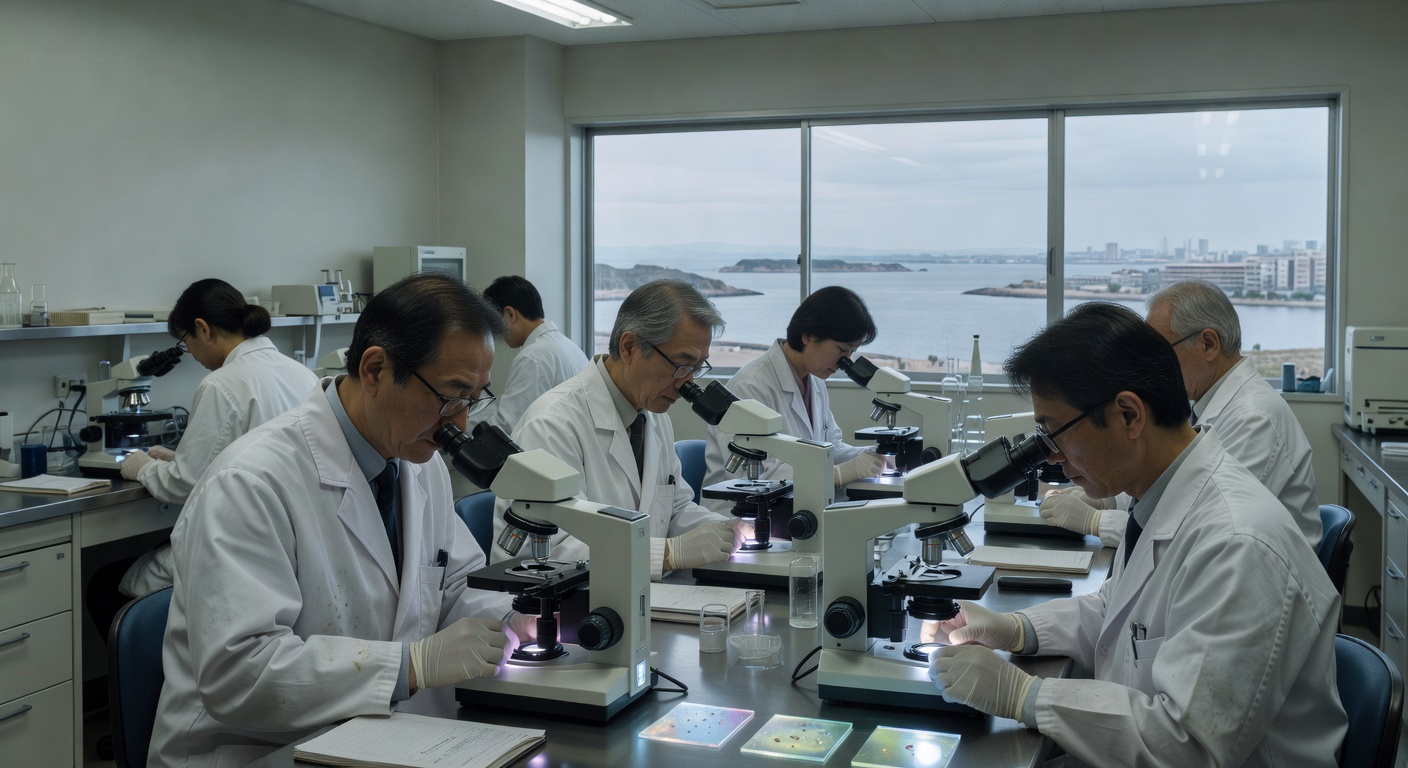
In 2024, Hiroshima City sent a list of remains interred at the Atomic Bomb Memorial to municipalities across the country. This list pertains to 816 individuals whose families have not been identified, including 52 individuals noted as having “hair remains.” The last update of this list occurred approximately 40 years ago—essentially, it was organized at the 40-year mark after the bombing, and then time passed for another 40 years with little change.
The memorial houses the remains of about 70,000 individuals. Most of these have either been returned to their families or remain unclaimed. While the number 816 may seem small in the grand scheme, it is precisely this “smallness” that deserves attention. For 40 years, the list existed. The remains existed. Yet, the system for matching them had not been operational. When we discuss the transmission of memory, we often focus on the issue of “the loss of narrators.” However, the question here is a bit more fundamental—has the very system for delivery itself come to a halt?
The ‘Structure’ of an Average Age of 86.66 for A-Bomb Survivors
According to data from the Ministry of Health, Labour and Welfare for the 2023 fiscal year, the average age of those holding A-bomb survivor health cards is 86.66 years. The number of cardholders is approximately 113,000, which is less than one-third of the peak number (about 370,000 in 1980). Approximately 8,000 survivors die each year, which breaks down to about 22 individuals per day.
This figure does not merely indicate an abstract crisis of “decreasing witnesses.” It reflects a more concrete structural change. The systems designed with the assumption that survivors would still be alive—medical expense subsidies through health cards, various allowances based on the A-bomb Survivors Support Law, and roles as narrators—are beginning to crumble under that very assumption. Those who were foundational to the system are disappearing before the system itself can adapt. This is a problem of “institutional design” before it is a problem of “memory.”
The “A-Bomb Experience Bearer” program initiated by Hiroshima City in 2012 was one response to this structural change. This program involves interviewing survivors, undergoing training, and then narrating their experiences on their behalf. As of 2024, around 200 bearers are said to be active. A lecture held at a “Diverse Learning School” in Miyazaki Prefecture is part of this program, where students with histories of school refusal listened attentively to the bearers’ words.
However, there are structural challenges here as well. Many bearers are second- or third-generation survivors or retirees, and they themselves are already approaching their 60s and 70s. The individuals taking on the role of “substitute narrators” are also aging—this issue repeats itself like a nesting doll. The time margin that seemed sufficient at the point of designing the system is shrinking faster than anticipated.
The Violin from A-Bombed Trees—The Circuit of ‘Sound’
In Hiroshima City, about 160 trees that survived the bombing within a radius of approximately 2 kilometers from the epicenter are registered. One of these, a violin made from the wood of a bombed weeping willow, is being exhibited and performed in various locations.
“It produces a very deep sound”—the words of the musician who performed it left a lasting impression. The cells of the bombed trees bear traces of the heat rays and blast winds they endured. When the instrument carved from that wood vibrates, the sound is both a physical phenomenon and a record of the heat that passed through the fibers 79 years ago.
What is fascinating about this initiative is that it changes the quality of the act of “listening.” When hearing testimonies, listeners often feel the need to “understand.” However, when listening to music, that stance relaxes a bit. Before meaning, the sound reaches the body. In the transmission of memory, having circuits beyond language is not insignificant.
However, the issue of the system remains. There is only one violin. The schedule for exhibitions and performances is limited, and the reach is physically constrained. The bombed trees themselves also face the risk of dying as old trees. While Hiroshima City is promoting the cultivation of successor trees, the number of trees that bear the fact of having been “bombed” will not increase. The circuit of sound is also built on finite materials.
Absence from Russian Ceremonies—What the Diplomatic Break Reflects
Since 2020, Russia has been invited to the ceremonies commemorating the atomic bombings in Hiroshima and Nagasaki for five consecutive years but has not attended. In the context of repeated threats of nuclear weapon use following the invasion of Ukraine, this absence is not merely a matter of diplomatic etiquette.
Here, I want to separate fact from speculation. The decision to attend or not attend the ceremonies is made by each country, and absence itself does not imply acceptance of nuclear weapons. On the other hand, as of 2024, 70 countries have ratified the Treaty on the Prohibition of Nuclear Weapons (TPNW), yet no nuclear-armed state has participated. Japan, despite being the only country to have experienced wartime atomic bombings, has not signed it. This structure—the country with the strongest memory of being bombed not participating in the international framework that institutionalizes that memory—is an unavoidable contradiction when discussing the transmission of memory.
Memory does not hold power simply by being passed down. Only when memory is transformed into policies and treaties does it begin to guide the actions of the next generation. The problem with the absence from the ceremonies is that it signifies the closing of one circuit of that transformation.
Inspecting the ‘Holes’ in the System
Let’s summarize. The current systems for “transmitting memory” can be broadly categorized into three main lines.
First, the physical connection through remains and relics. The update of the list of remains at the Atomic Bomb Memorial falls into this category. While it is a step forward that it has begun to move after a 40-year hiatus, it is still unclear whether a system for continuous matching has been established.
Second, the human connection through testimonies. From the testimonies of survivors to the experience bearers, and eventually beyond. Here, the fate of the “telephone game” looms large. Hiroshima City is also advancing the archiving of testimony videos using AI technology, but it remains uncertain how much “human warmth” can be preserved by technology.
Third, the sensory connection through art and culture. The violin from bombed trees, the A-bomb piano, atomic bomb literature, and films. While they hold the potential to transcend language and generations, many of them tend to remain as one-off projects, and few are designed as sustainable systems.
These three lines touch on memory from different angles. Physical evidence, human voices, appeals to the senses—while the angles differ, the destination is the same: delivering the fact that “there were people there on that day” to someone who has not yet been born.
The issue is that these three lines are operating separately. The update of the list is progressing as an administrative task by the Ministry of Health, Labour and Welfare and Hiroshima City, the training of bearers is running as a project of the Peace Memorial Museum, and the exhibition of the violin is handled by private volunteers. To what extent do each of these stakeholders understand the progress and challenges of the other lines? There are invisible gaps between the systems.
‘Who Does This Serve?’
The phrase “transmission of memory” is often spoken of as “our responsibility.” This is not incorrect. However, I want to raise another question—who does this system serve?
With the arrival of the list of 816 names, families may finally be able to name the loss that has lingered for nearly 80 years. Students who hear the bearers’ lectures may receive the bombing not as a number in a history textbook, but as the pain of an individual. The sound of the violin may give a little contour to the grief that has no words.
The system is not an end in itself. Beyond the system, there are specific individuals. Whether the face of that individual emerges in the spaces between the lines of the list, in a lock of hair, or in the vibration of the strings—this is what I believe it means to “inspect the transmission of memory.”
There is a list that has moved for the first time in 40 years. Each day, 22 narrators are diminishing. Time is always just a little unkind to structures. —Yet, as long as the system is in motion, the possibility of reaching out remains.


 JA
JA EN
EN