



The Era Where ‘Proof of Authenticity’ Comes at a Cost—Anthropic’s Watermark, Spotify’s Exclusion, and Apple’s Authenticity Verification: What Small Businesses Should Do

Related Articles

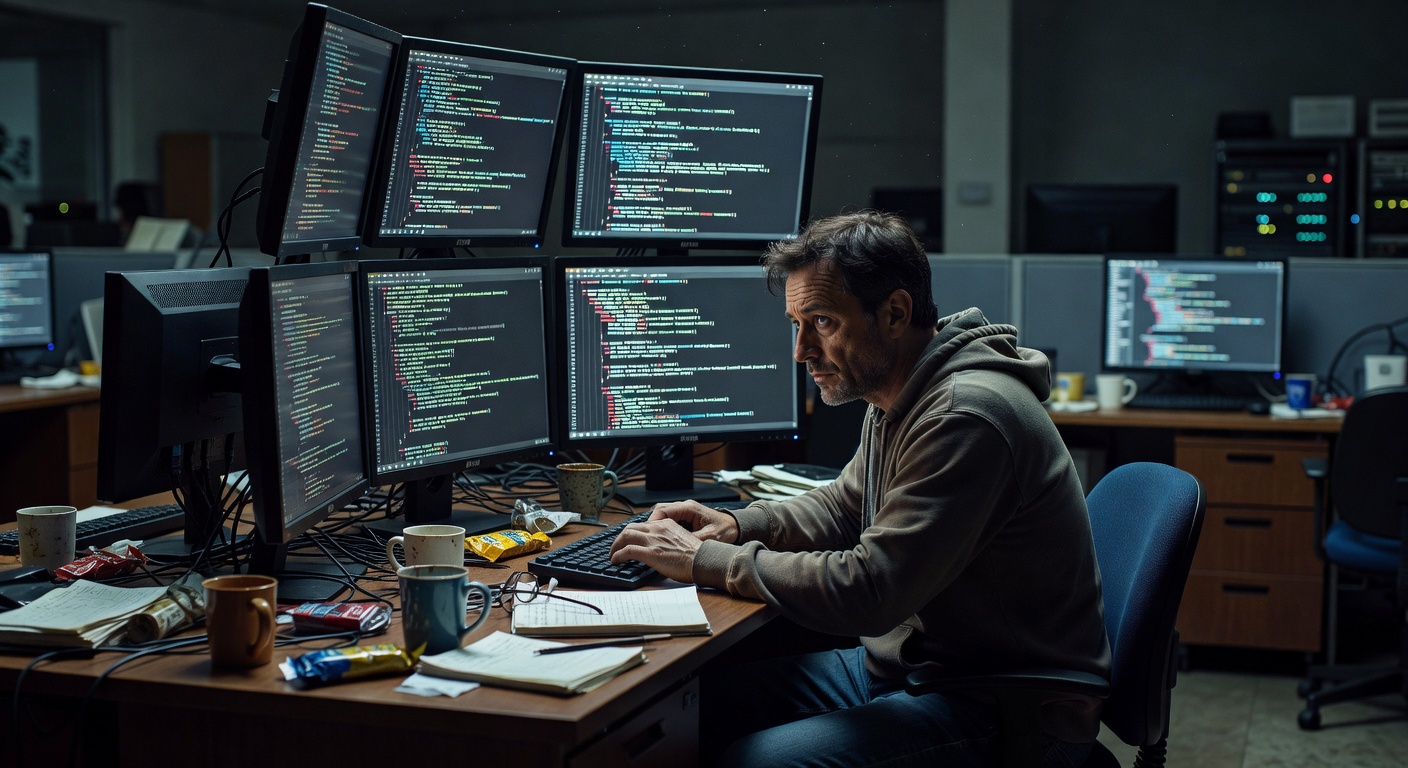
AI has become cheaper, but the cost of ‘proof of authenticity’ is skyrocketing
The cost of generating text with AI has dropped to nearly zero. Image and video generation now operate at less than one-tenth of the cost from a year ago.
However, there is a structural change that is being overlooked here.
As the ‘cost of creation’ has decreased, the ‘cost of proving authenticity’ has surged.
In June 2025, three significant developments occurred in quick succession. Anthropic announced the embedding of invisible watermarks in generated content. Spotify decided to exclude songs from AI-generated artists, referred to as ‘AI personas,’ from its recommendations. Apple is developing a feature to attach ‘proof of authenticity’ to photos taken with iPhones.
While these may seem like separate news items, they are rooted in the same issue. In a world where ‘anything can be created,’ the proof of ‘not having created it’ and ‘being authentic’ becomes invaluable.
The question is, who will bear the cost of this proof? Will it be large corporations, platforms, or small businesses?
To conclude, if nothing is done, small businesses will bear the brunt of this change.
—
Anthropic’s Watermark—An Era Where ‘AI-Written’ Can Be Discovered
Anthropic announced the embedding of invisible watermarks in text and images generated by Claude in response to the EU’s AI regulations (AI Act).
The mechanism is simple. While invisible to the human eye, detection tools can determine, ‘This content was generated by AI.’ In the case of text, statistical biases are embedded in the choice of words. For images, subtle signals are embedded at the pixel level.
What we should consider here is not the presence of the watermark itself.
What happens to content that does not have a watermark?
What if platforms start filtering under the assumption that ‘AI-generated content must have a watermark’? Will content without a watermark be trusted as ‘authentic human-made content’? Or will it be suspected as ‘dubious content that intentionally removed the watermark’?
Let’s consider a scenario that could occur in small businesses.
For instance, a local food manufacturer uses Claude to write product descriptions. The watermark is present. What if an e-commerce site’s review system eventually detects this watermark and automatically labels it as ‘AI-generated’? What would consumers think?
Conversely, there is a risk that a handwritten product description by an in-house craftsman could be suspected as ‘AI-generated’ due to its style.
The ‘effort to prove authenticity’ becomes heavier than the effort to create. This is the essence of the structural change.
—
Spotify’s Exclusion of ‘AI Personas’—Platforms Begin to Distinguish ‘Authenticity’
Spotify has announced a policy to exclude songs from non-existent AI-generated artists—so-called ‘AI personas’—from algorithmic recommendations.
The background to this decision is the explosive increase in AI-generated songs. By 2024, approximately 100,000 songs were uploaded to Spotify daily, a significant portion of which are believed to be AI-generated. If low-cost, mass-produced songs fill playlists, the revenue of genuine artists will be squeezed. For Spotify, a decline in user experience is a critical issue.
What this move signifies is that platforms have begun to judge ‘authenticity.’
This is not just a matter for the music industry.
Amazon reviews, Google Maps reviews, Instagram’s user-generated content (UGC)—the same issue is occurring across all platforms. As AI-generated content can now be produced cheaply and in large quantities, platforms are forced to take on the role of sorting ‘authentic’ from ‘inauthentic.’
The problem for small businesses lies here.
The criteria for sorting will be determined by the platforms, not by the businesses themselves.
For example, suppose a local inn has carefully cultivated its Google Maps reviews. What if one day, Google implements an algorithm that deletes ‘reviews suspected to be AI-generated’? There is a significant possibility that even genuine reviews from real guests could be deleted in the process.
The logic behind platform judgments is a black box. The speed of response to appeals can vary drastically between companies that have dedicated account managers for large corporations and small businesses that only have a contact form.
—
Apple’s ‘Proof of Authenticity’—Hardware Becomes the Source of Trust
The existence of a system called ‘Apple Reference Image’ has been confirmed from the beta code of iOS 27. This system cryptographically links photos taken with an iPhone camera to the device, date, and location, proving that ‘this photo was not AI-generated but was actually taken with this device.’
This is based on the industry standard C2PA (Coalition for Content Provenance and Authenticity). Companies like Adobe, Google, Microsoft, and the BBC are also involved in efforts to establish ‘provenance proof’ for digital content as an infrastructure.
From a cost structure perspective, this movement is intriguing.
By embedding proof functionality into the existing hardware of the iPhone, Apple is eliminating any additional cost for users. Just by taking a photo, proof is attached. This is a strong advantage.
However, this also means that content not taken with an iPhone will not have proof.
What about product photos taken with a DSLR? What about photos taken by outsourced photographers? What about previously stored stock photos? All of these will be ‘without proof.’
Many product photos for small businesses are either outsourced to professional photographers or taken by employees with smartphones. If Apple’s proof of authenticity becomes the industry standard, a reliability gap will emerge between ‘photos taken with an iPhone’ and ‘other photos.’
This is not just a technical issue. It is a power game about ‘who holds the infrastructure of trust.’
—
Three Actions Small Businesses Should Take Now
Let’s summarize the discussion so far.
- An era has arrived where AI-generated content is labeled as ‘AI.’ (Anthropic)
- Platforms have begun to distinguish ‘authenticity.’ (Spotify)
- Proof of authenticity is being implemented at the hardware level. (Apple)
What happens when these three trends converge?
‘Being authentic’ will not be proven by default. Proof comes at a cost. Companies that cannot afford that cost will be unable to compete in the realm of trust.
So, what should small businesses do?
1. Consciously Create ‘Authentic Proof’
There is no need to make all content AI-free. However, in crucial situations, ensure that you can present ‘authentic proof.’
Specifically, record ‘realities that cannot be created by AI,’ such as the manufacturing process of products, the craftsmanship of artisans, and the daily life of the store—using C2PA-compatible devices (which will increase in number). An iPhone is sufficient. The cost is nearly zero.
The important shift in thinking is that ‘recording’ itself becomes an asset.
2. Utilize AI Behind the Scenes
This is not a call to avoid using AI. In fact, it is quite the opposite.
To enhance the ‘authenticity’ of content presented to the public, thoroughly streamline back-office operations using AI. Tasks such as creating estimates, managing inventory, responding to emails, and taking meeting minutes—incorporating AI into these back-office tasks can free up dozens of hours each month. Use the time saved for ‘creating authentic content.’
The cost of utilizing AI ranges from a few thousand to tens of thousands of yen per month. In contrast, hiring a professional photographer can cost between 30,000 and 100,000 yen per shoot. Understanding this difference allows you to design where to use AI and where to use human resources.
3. Reduce Dependence on Platforms
This is the most important point.
As shown by the Spotify example, the moment platforms change the definition of ‘authenticity,’ businesses that depended on them will be thrown into turmoil. Stories of small e-commerce sites losing half their sales due to changes in Google’s search algorithms have been repeated many times.
Cultivate channels that allow you to connect with customers directly, such as your own website, email lists, official LINE accounts, and local community connections—without relying on platforms.
This is not an exaggerated discussion about ‘digital marketing strategies.’ It is a fundamental business matter of ‘how many regular customers you know.’
—
The Era Where ‘Being Authentic’ Becomes the Greatest Competitive Advantage
As the cost of content generation approaches zero due to AI, paradoxically, the value of ‘being authentic’ has risen.
Large corporations respond to this change with technology and money. They implement watermark detection systems, mobilize legal teams, and negotiate directly with platforms.
Small businesses do not have those resources. However, small businesses possess ‘authenticity.’
The processes where artisans finish products by hand in local factories. The fish that the store owner selects every morning at the market. The bread that has been baked with the same recipe for 30 years.
These cannot be generated by AI. They cannot be replicated by deepfakes. And they do not require watermarks or certificates. They are authentic because you can tell just by looking.
However, ‘being recognizable’ only applies to situations where you can meet directly. Online, both authentic and inauthentic items are displayed on the same screen. Therefore, having a system to record and communicate ‘authentic proof’ will become the lifeline for small businesses in the future.
Technology will change. The rules of platforms will change. But the fact that you possess ‘authenticity’ will not change.
The question is how to prove and deliver that authenticity.
Start by taking a photo of your ‘authenticity’ with an iPhone tomorrow. The cost is zero.


 JA
JA EN
EN