



AI Data Centers Start to Consume ‘Local Electricity Costs’ — NY Halts Construction, Australia Fast-Tracks Approvals. Which Will Crush Small and Medium Enterprises?

Related Articles
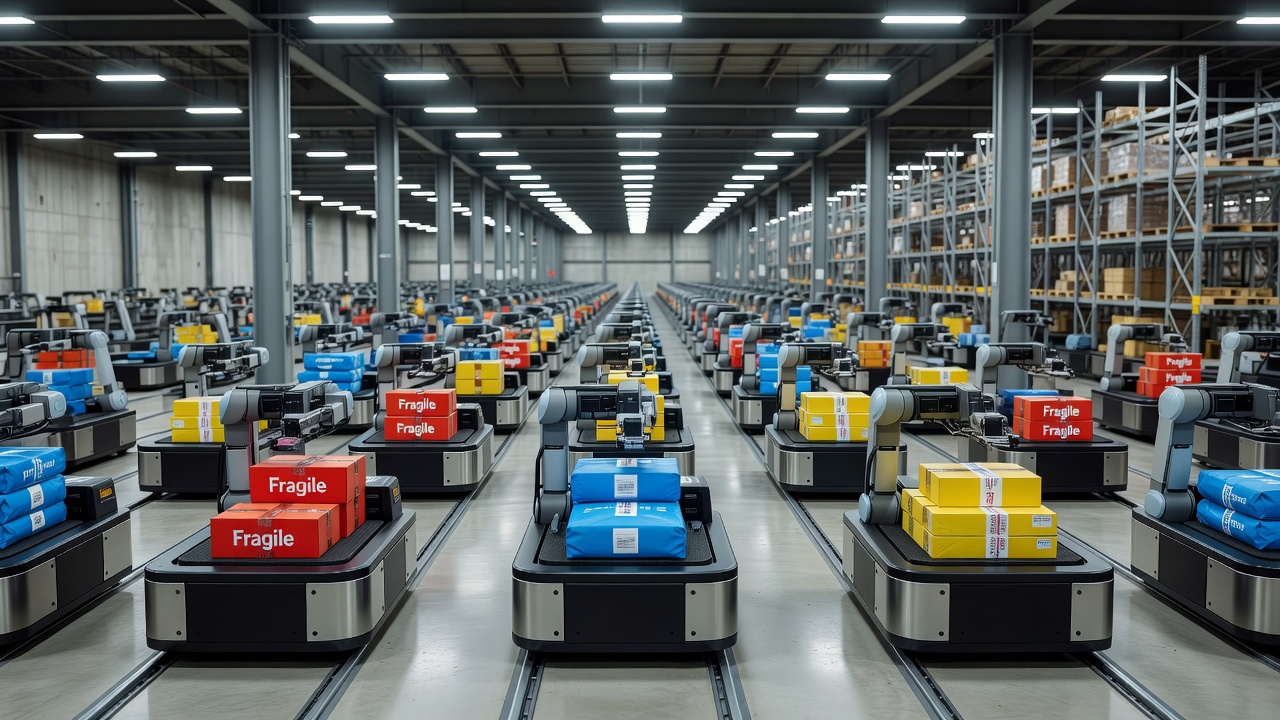

Conclusion First. The Power Struggle for AI is Already Hitting ‘Local Electricity Costs’
New York State has halted new construction of large data centers for one year, effectively imposing a moratorium by freezing environmental permits for facilities exceeding 50 megawatts.
At the same time, Australia announced it would expedite the approval process for AI-related projects, making the opposite decision of “build more and more.”
When these two news items are placed side by side, a simple structure emerges. AI data centers consume electricity. Who will pay for that electricity? New York answers, “We won’t make residents pay,” while Australia responds, “We will recover through economic growth.” It is still unclear which approach is correct. However, one thing is certain: the first to feel the impact of this structural change will be local small and medium enterprises.
Reasons Behind NY’s Halt — A Single Data Center Consumes Power Equivalent to ‘An Entire Town’
The background to Governor Kathy Hochul’s decision for the moratorium in New York State is grounded in specific numbers.
A large AI data center consumes between 50 to 100 megawatts of power, equivalent to the electricity used by approximately 30,000 to 60,000 households. In a small local town, this could represent the entire town’s electricity consumption.
Moreover, GPU servers designed for AI consume 5 to 10 times more power than traditional cloud servers. A single query to generative AI like ChatGPT is said to use about ten times the electricity of a Google search. As the use of AI increases, the power demand from data centers will expand exponentially.
In northern New York State, there have already been reports of rising electricity rates in areas where data center attraction has progressed. Governor Hochul’s decision is a very pragmatic political judgment: “We cannot raise residents’ electricity costs any further.”
Importantly, the power consumed by data centers represents ‘additional demand.’ If it exceeds the capacity of existing power generation and transmission infrastructure, power companies have no choice but to invest in facilities or procure power at market prices. Those costs will be passed on to electricity rates, which will ultimately be borne by local residents and small businesses operating in the area.
Reasons for Australia’s Urgency — ‘If We Don’t Act, Other Countries Will Take It’
On the other hand, in Australia, Prime Minister Anthony Albanese’s aim to expedite approvals for AI infrastructure is clear.
Microsoft has announced an investment of approximately AUD 5 billion (around JPY 480 billion) in data centers in Australia. Google also has similar investment plans. If Australia misses out on investments of this scale, employment, tax revenue, and technological accumulation will all flow to Singapore or India.
The Australian government’s calculations are straightforward. If approvals take two years, investors will not wait. If approvals can be granted in six months, investments will come.
However, there is a catch. If data centers are rapidly established, power demand will also surge. Australia’s electricity market is already tight, with some regions experiencing a 20-30% increase in electricity prices during the energy crisis of 2022. Monthly electricity costs for small and medium enterprises in Australia typically range from AUD 500 to AUD 1,500 (approximately JPY 48,000 to JPY 144,000), but there is a risk of even higher increases in areas where data centers are concentrated.
As a result of attracting investment, local small and medium enterprises face skyrocketing electricity costs. This ironic structure has already become a reality in Ireland. As data centers concentrated around Dublin, they began to account for about 20% of Ireland’s total electricity consumption, leading to rising electricity prices becoming a social issue.
The Real Issue — What a 10% Increase in Electricity Costs Means for Small and Medium Enterprises
For large corporations, a 10% increase in electricity costs is merely a slight increase in one item of their expenses. However, for small and medium enterprises, it carries a different meaning.
Consider a local factory with a monthly electricity bill of JPY 150,000. A 10% increase would mean an additional JPY 15,000 per month, or JPY 180,000 annually. For a company with a profit margin of 5%, it would need to generate JPY 3.6 million in sales to make that additional JPY 180,000 in profit. Just a 10% increase in electricity costs means they must complete an extra JPY 3.6 million worth of work to maintain the same level of profit.
Industries where electricity costs are directly linked to production costs are prevalent in rural areas, such as manufacturing, food processing, cold storage, and greenhouse agriculture. Moreover, these companies are often not in a position to easily raise prices just because electricity costs have increased, especially if they are subcontractors for larger firms.
This is the essence of the “power struggle for AI.” The cost of electricity consumed by GAFAM is indirectly borne by local small and medium enterprises.
What Will Happen in Japan — This is Not a ‘Fire on the Other Side’
We must not conclude the discussions about New York and Australia as merely “overseas issues.”
In Japan, a construction boom for data centers has already begun in regions such as Hokkaido, Chiba, and Osaka. The Ministry of Economy, Trade and Industry has set a goal to triple the domestic data center capacity by 2030. SoftBank plans to build a large-scale AI data center in Tomakomai, Hokkaido, with its power consumption reportedly equivalent to that of a nuclear power plant.
Japan’s electricity situation is already strained. In some regions, electricity rates for businesses are projected to rise by 30-50% compared to 2020. If data center demand is added to this, further upward pressure on prices will occur.
The problem is that small and medium enterprises in regions where data centers are established have no options. Large IT companies can secure fixed prices through long-term power purchase agreements (PPAs) and can procure renewable energy themselves. However, local small and medium enterprises lack such negotiating power. They have no choice but to pay the rates set by the power companies.
What Small and Medium Enterprises Should Do Now — Act on the Premise of Rising Electricity Costs
So, what should local small and medium enterprises do?
1. Immediately Visualize Power Costs
Do you understand your company’s power consumption by time and equipment? If not, start measuring with smart meters or IoT sensors. You can begin with services costing just a few thousand yen per month. You cannot cut costs that are invisible.
2. Review Power Contracts
Consider switching to new power suppliers, demand response contracts, and time-of-use pricing plans. It is not uncommon to achieve reductions of 10-15% with these measures. If your electricity bill is JPY 200,000 per month, that could mean annual savings of JPY 240,000 to JPY 360,000.
3. Consider Self-Consumption Solar Power
If you have a roof, self-consumption solar power generation is becoming a quicker investment recovery option. Installation costs have fallen to less than half of what they were ten years ago, with 10kW systems costing around JPY 2-3 million. Using subsidies can lower this further. The higher electricity costs rise, the shorter the payback period becomes. Ironically, this is a fact.
4. Transition to Being a ‘User’ of AI
Instead of being on the receiving end of electricity consumption, shift to using AI to lower your own costs. Automation of production management, inventory optimization, demand forecasting — systems that previously cost tens of thousands of yen per month can now be utilized for just a few thousand to tens of thousands of yen. The benefits of AI are not just for large corporations.
By Understanding the Structure, Solutions Become Clear
The halt in construction in New York and the expedited approvals in Australia stem from the same root. The electricity required by AI is vast, and its costs will be passed on to local regions.
This trend will not stop. The IEA predicts that global data center electricity consumption will more than double by 2026. Japan is no exception.
For small and medium enterprises, what is important is not whether “electricity costs may rise,” but rather “how to act on the premise that they will rise.”
If the structure of rising costs is visible, proactive measures can be taken. This is the agility of small and medium enterprises, a strength that large corporations lack. Will you panic when the electricity bill arrives, or will you take action now? That difference will determine survival three years from now.


 JA
JA EN
EN