



AI Costs Have Dropped to One-Hundredth: Only Small and Medium Enterprises Can Seize the ‘Reversal Structure’ While Large Corporations Remain Stagnant

Related Articles

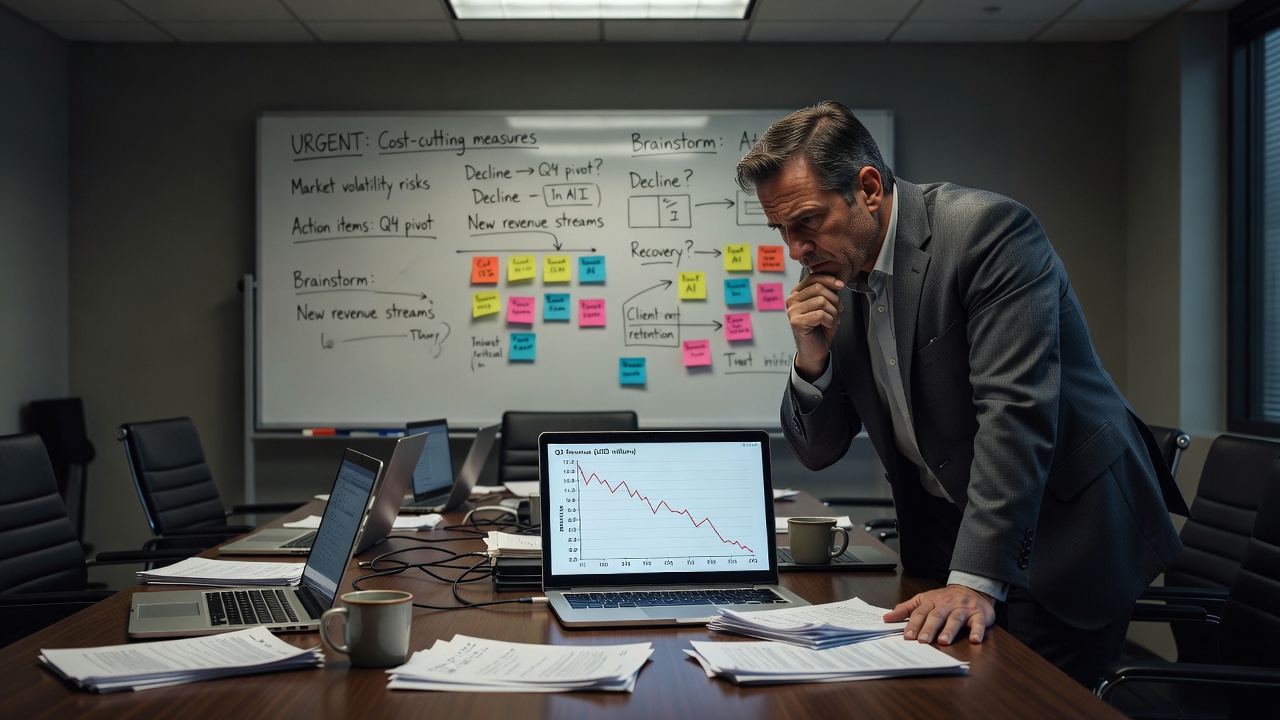
AI Costs Have Dropped to ‘Cent-Level’. So, What Changes?
First, let’s look at the numbers.
In 2023, using AI of the GPT-4 class for business required a budget of several hundred thousand yen per month just for API costs. However, with the advent of DeepSeek, the cost of inference processing for comparable AI has dropped to a few dozen cents per million tokens. In rough terms, this is less than one-hundredth of the traditional costs.
This is not just a story about “AI becoming cheaper.” It’s about a complete reversal of the cost structure itself.
Until now, implementing AI required licensing fees, infrastructure development, and securing specialized personnel, costing at least several million to tens of millions of yen annually. This was a world inaccessible to small and medium enterprises. Now, we have entered a realm where serious AI utilization is possible for less than 10,000 yen per month.
The question is simple: Who will be the first to take advantage of this structural change, large corporations or small and medium enterprises?
The answer may be surprising, but small and medium enterprises have the advantage.
Large Corporations Are Bound by ‘Expensive AI’
Let’s consider Microsoft’s Copilot as an example. The licensing fee for Microsoft 365 Copilot is $30 (about 4,500 yen) per user per month. For a company with 1,000 employees, that amounts to 4.5 million yen per month, or 54 million yen annually.
Here’s an interesting piece of data. According to Microsoft itself, the current utilization rate of Copilot in implementing companies often remains at less than half of active users. In other words, while paying 54 million yen a year, only half are actually using it. This effectively doubles the cost per user.
There’s another problem. Large corporations are already entangled in existing IT infrastructure, security policies, and vendor contracts. It’s not easy to say, “Let’s switch to DeepSeek because it’s cheaper.” They must go through approval processes, security reviews, and renegotiate contracts with existing vendors… While decision-making takes six months, the world advances three generations.
On the other hand, what about small and medium enterprises? If the president says, “Let’s use this,” they can start the next day. There are no legacies of old systems. No vendor lock-in. Their agility itself becomes the greatest weapon at this moment.
What Can Be Done at ‘Cent-Level’?
Let’s look at specific business applications, not just abstract theories.
1. Automation of Customer Support
Traditionally, outsourcing call center costs ranged from 500 to 1,000 yen per inquiry. By automating initial responses with AI chatbots, the cost per inquiry drops to a few yen to a few dozen yen. For a company with 1,000 inquiries a month, costs can plummet from 500,000 to 1,000,000 yen to just a few thousand yen. This is not a minor adjustment; it’s a structural change.
2. Creation of Sales Materials and Proposals
A proposal that a veteran salesperson took three hours to create can now be drafted by AI in 15 minutes. In terms of labor costs, a task that used to cost 10,000 yen per item can now be done for a few hundred yen. Moreover, the variability in quality is eliminated, significantly reducing dependence on individuals.
3. Internal Knowledge Search
This brings us to Glean. Glean is a service that optimizes information search within companies using AI and is rapidly growing, with annual sales exceeding 300 million dollars (about 45 billion yen). Why is it selling? Because the cost of “employees searching for information” is substantial.
Research indicates that knowledge workers spend about 20% of their working hours searching for information. For an employee earning 5 million yen a year, this means that 1 million yen worth of time is lost to “searching for things.” Even in a company with 30 employees, that’s 30 million yen a year. If AI can halve this, it represents a value of 15 million yen annually, with a tool cost of just a few tens of thousands of yen per month.
4. Translation and Multilingual Support
In the past, hiring a specialized translation company would cost 20 to 30 yen per word. For a document of 10,000 words, that would amount to 200,000 to 300,000 yen. Now, practical quality AI translation is available for almost free. This significantly lowers the barrier for local manufacturers to directly market overseas.
What Happens After ‘Costs Decrease’?
Now we get to the main point. The decrease in costs is merely a means. What’s important is what happens after costs go down.
Three structural changes occur simultaneously.
1. The Criteria for ‘To Do or Not to Do’ Changes
Previously, the decision to implement AI was a careful consideration of “whether the investment will yield returns.” Given the investment of several million yen, this was understandable. However, if the cost drops to less than 10,000 yen per month, it becomes “Let’s try it, and if it doesn’t work, we’ll stop.” The cost of decision-making itself disappears.
For small and medium enterprise owners, this is critically important. “Let’s try first” becomes the norm. It’s not PDCA anymore; it’s DCDC: Do → Check → Do → Check. There’s no longer any room for spending time on planning.
2. Options Other Than ‘Increasing Staff’ Become Realistic
The biggest struggle for small and medium enterprises in rural areas is labor shortages. Even when they post job openings, no one applies. Even if they do, they don’t stay. The hiring cost is 500,000 to 1 million yen per person.
Now that AI costs are at cent-level, “Using AI instead of hiring people” has become a realistic option. To clarify, this doesn’t mean cutting staff. It means reallocating the time of existing employees to more valuable tasks.
Instead of having five people handle administrative tasks, three people plus AI can manage it. The two freed-up employees can focus on sales or product development. You can create a structure where labor costs remain unchanged while sales increase.
3. The Information Gap with Large Corporations Disappears
In the past, the greatest weapon held by large corporations was “information asymmetry.” They spent millions on market research, paid hundreds of thousands to consultants, and employed experts in-house. Small and medium enterprises couldn’t afford that.
What about now? By asking AI, market analysis, competitive research, and legal checks can be done in minutes and for just a few yen. While not perfect, you can instantly obtain information that’s 80% accurate. While large corporations take three months to gather 100% accurate information, small and medium enterprises can start running with 80% accuracy and capture the market.
Speed × Low Cost. This is the reversal structure for small and medium enterprises.
So, What Should Be Done?
Just three things.
1. Introduce One AI Tool into Your Operations Today
Anything will do. Whether it’s automatic meeting minutes, drafting emails, or data entry for invoices. There are countless tools that can be started for less than 10,000 yen per month. Engage with it before overthinking.
2. Make ‘Can This Be Done with AI?’ Your Catchphrase
The president should ask this question every day. Companies that receive reports from the field saying, “That task was completed by AI in 10 minutes” will be transformed into different companies in six months.
3. Make It a ‘System’
Don’t let individual ingenuity be the end of it. Successful AI applications should be documented so that everyone can use them. Eliminate dependence on individuals and create a reproducible system. Whether this can be achieved will change the results tenfold.
The Collapse of AI Costs is Just the ‘Beginning’
DeepSeek has reduced costs to one-hundredth. The next model will likely reduce them even further. In six months, the level of AI that is currently considered “amazing” may become as commonplace as a calculator.
At that time, the gap between companies that say, ‘We are still considering it’ and those that say, ‘We are already in the third round of improvements’ will become irreparable.
Large corporations cannot move. Vendor contracts, internal adjustments, security reviews. They are structurally slow.
Small and medium enterprises can move starting today. If the president decides, changes can happen by tomorrow.
Now is the window for reversal while this asymmetry exists. The window will not remain open forever.


 JA
JA EN
EN