



Man With a Knife Arrested at a Disney Hotel: The Shock That Struck the “Dreamland”—and What Lies Beneath

Related Articles
The Night the “Dreamland” Froze: A Few Minutes of Terror at Hotel Miracosta
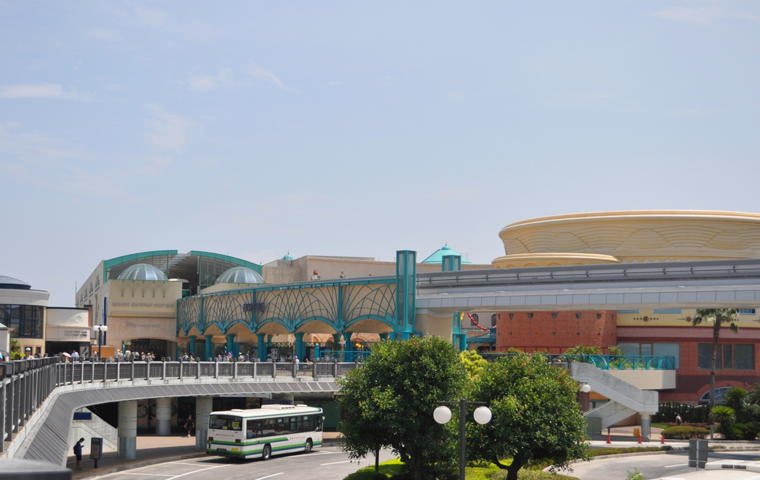
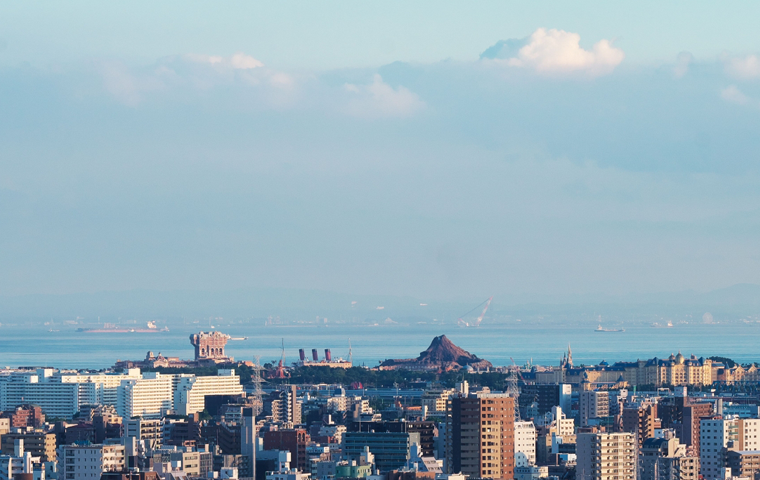
On December 1, 2025, a corner of Tokyo Disney Resort (TDR)—a symbol of happiness and magic for countless people—suddenly transformed into a stage of real-world fear. Shortly after 8:00 p.m., an unprecedented incident occurred when a man carrying a bladed weapon entered a banquet hall at Tokyo DisneySea Hotel Miracosta, a wildly popular hotel located inside the Tokyo DisneySea grounds and celebrated for its immersive integration with the park’s world.
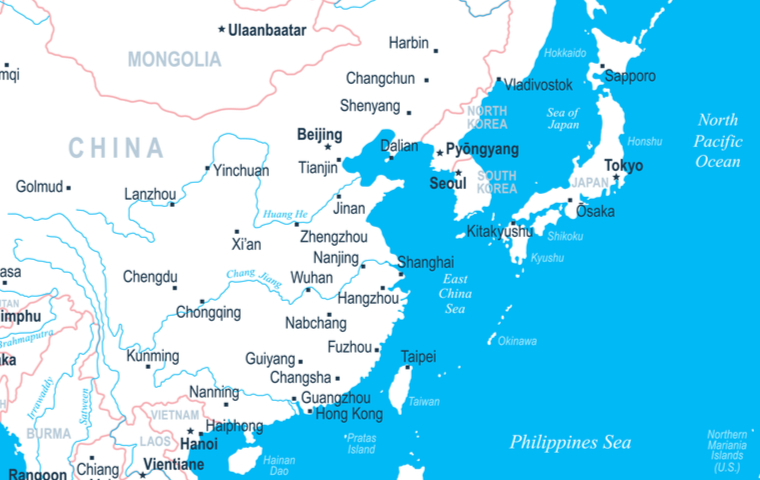
The suspect arrested was Jiang Chunyu, a 34-year-old Chinese national living in Kawasaki City, Kanagawa Prefecture. At the banquet hall, a company social gathering and year-end party was being held, with guests enjoying food and conversation. The suspect appeared with a backpack. According to witnesses, he initially behaved strangely—walking around handing out papers while shouting something in Chinese. But the situation escalated instantly when an event staff member tried to stop him. He pulled out a blade resembling a Chinese cleaver, about 20 centimeters long, and began threatening people around him.
“Come any closer and I’ll kill you,” he reportedly warned, pointing the blade at a man in his 30s and issuing threats in Chinese. Under sparkling chandeliers, the few minutes of terror left attendees with an unbearable trauma: “Never did we imagine we’d be in danger of losing our lives in a place like this.”
Fortunately, the suspect left without physically harming anyone and fled in the direction of JR Maihama Station, so no one was injured. Yet in the brief gap before security personnel and hotel staff arrived and contacted police, the sound of a long-held “myth of safety” cracking was unmistakable. The suspect was arrested the next day, December 2, at his home in Kawasaki on suspicion of violating the Act on Punishment of Acts of Violence. The shock of the incident, however, was far too great to dismiss as fleeting news—it exposed vulnerabilities in both Japan’s tourism industry and society.
The Motive Hidden in a “Protest Letter”: What a Former Employee’s Rampage Suggests About Workplace Distortion and Isolation
In police questioning after his arrest, the suspect reportedly said: “I went into the banquet hall to hand out a protest letter, but they tried to stop me by force, so I took a Chinese cleaver out of my bag.” He partially denied any premeditated intent to kill. Still, the question remains: why choose a Disney hotel—effectively a “sanctuary”—as the scene?
Investigators uncovered a deep personal connection. The suspect was a former employee of the company hosting the banquet, and the man he threatened with the knife was reportedly a former colleague. The “protest letter” he attempted to distribute is believed to have contained complaints or demands directed at the company, written in Chinese. This was not a random, indiscriminate attack—it was closer to a targeted act of “revenge” or “coercion” driven by a specific grievance and a defined target.
In that sense, the incident may be viewed as an extreme and tragic manifestation of conflicts surrounding Japan’s growing foreign workforce. Language barriers, cultural differences, and dissatisfaction with working conditions can accumulate—and if they fail to find a proper legal resolution path, they may explode as bottled-up emotion. A labor dispute that should have been addressed through official channels—such as the Labor Standards Inspection Office or legal counsel—jumped, through broken communication, into violent intimidation with a weapon.
The choice to strike at a company’s highly visible year-end party also suggests a desire to humiliate the organization publicly—an intense resentment mixed with a distorted need for recognition. The fact that he carried a highly lethal weapon in advance implies a readiness akin to “I’ll use it if I’m stopped,” making it impossible to treat the incident as a mere spontaneous disturbance. It also cruelly underscores how unprepared many workplaces can be—especially in risk management involving former employees and in building cross-cultural dispute-resolution processes—in an era of accelerating acceptance of foreign talent.
A Security “Gap” and a Changing Sense of Public Safety: The End of the Safety Myth in 2025
After the incident, social media filled with anxiety about Disney Resort’s security posture: “The park may be safe, but are the hotels vulnerable?” At Tokyo Disneyland and DisneySea entrance gates, strict bag inspections—often comparable to airport screening, including metal detectors and X-ray checks—have become routine, making it effectively impossible to bring weapons into the parks.
But the hotel area involved here is a semi-public space: non-guests can use restaurants and banquet halls. Implementing park-level screening there is operationally extremely difficult. The suspect exploited the security gap between the “hard” perimeter (the parks) and the “soft” perimeter (the hotels), concealing the weapon in a backpack and reaching the banquet hall with relative ease. This is a shared challenge for many hotels and commercial facilities in Japan: the more open and welcoming a space is in the name of hospitality, the more vulnerable it can become to malicious intrusion.
The incident also resonates with shifts in Japan’s crime trends. According to National Police Agency data, the number of recognized Penal Code offenses in 2024 increased for the third consecutive year, trending back toward pre-pandemic levels. Crimes committed by foreign visitors (short-term stayers) also rose by roughly 33.5% year-on-year—mostly theft such as shoplifting—fueling public anxiety and a perception that “safety feels worse,” even if severe violent crimes by long-term foreign residents remain a small portion statistically.
Even so, a knife incident at “Disney,” a symbol of peace and family joy, carried an impact far beyond the raw numbers—reinforcing the impression that “Japan’s public safety has changed.” Combined with the recent social problem of robberies and fraud linked to illicit “dark part-time jobs” recruited through social media, people are increasingly gripped by the vague fear that “it could happen anywhere.”
For businesses and facility operators, this may become a decisive turning point—pushing Japan away from a security model rooted in goodwill and toward investments in “invisible prevention,” such as AI-enabled surveillance, strengthened patrols, and more realistic threat-response protocols.
A New Spark in a Cooling Japan–China Relationship: Headwinds for Tourism—and the Need to “Fear Correctly”
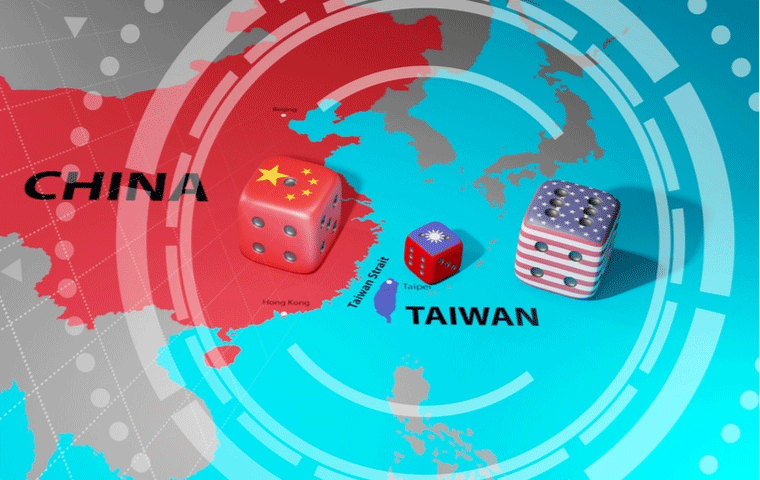
The ripples from this case extend beyond public safety into diplomacy and the economy. In the second half of 2025, Japan–China relations cooled rapidly after Prime Minister Takaichi’s remarks on a Taiwan contingency. China’s government called on citizens to refrain from traveling to Japan as a form of retaliation. As a result, inbound travel from China in November struggled to grow, and cancellations of port calls by Chinese cruise ships accelerated—already sending cold winds through the inbound market.
Against that delicate backdrop, the fact that a Chinese national committed a knife-related intimidation incident at one of Japan’s most symbolic tourist destinations struck at the worst possible timing—hardening public sentiment on both sides. In China’s social media sphere, there is a risk the incident could be consumed as “proof” for narratives such as “You’ll get into trouble if you go to Japan” or “Japan is cold toward Chinese people.” Meanwhile in Japan, there is concern that exclusionary feelings could rise and that foreign tourists and workers as a whole could be unfairly viewed as dangerous.
This is precisely where calm is required. By November 2025, inbound visitors to Japan had surpassed 39 million, reaching record highs. The overwhelming majority of foreign visitors and workers obey Japanese law and coexist as essential partners supporting the economy and society. The suspect’s actions were an exceptional case rooted in a personal grudge and a workplace dispute; framing it too broadly under the banner of “nationality” risks missing the true nature of the problem—and could damage the dignity of the “tourism nation” Japan aims to be.
What is needed is not excessive fear or exclusion, but stronger safety nets to prevent labor disputes from escalating into violence, and realistic, effective security measures for hotels and banquet venues. This nightmare in the “dreamland” is a forceful call to update risk management in a diversifying society—and to move beyond complacency without surrendering to panic.


 JA
JA EN
EN