



Aomori Offshore Earthquake: The First-Ever “Advisory Information” and Japan’s New Test

Related Articles


A Jolt That Broke 57 Years of Silence: The “Upper 6” Shock That Struck Northern Japan in Deep Winter—and Its Physical Scars
At 11:15 p.m. on December 8, 2025, a violent tremor suddenly tore through the freezing night of northern Japan. A magnitude (Mw) 7.4 earthquake occurred off the eastern coast of Aomori Prefecture, registering a maximum intensity of Upper 6 (Shindo 6-strong) in Hachinohe City, Aomori, and severe shaking ranging from Lower 6 to Upper 6 across a wide area from Hokkaido down through Iwate Prefecture.
The source area lay along the plate boundary of the Japan Trench—often called an “earthquake nest”—and was extremely close to the epicentral region of the 1968 Tokachi-Oki earthquake (M7.9). It was the first M7-class event of this scale in 57 years in the same general zone. According to the Japan Meteorological Agency’s analysis, the quake was a reverse-fault type event caused by pressure as the Pacific Plate subducts beneath the land-side plate, with an estimated focal depth of about 54 km.
That depth and mechanism made the shaking prone to spreading over a broad area. Long-period ground motions were observed even in the Kanto region, resulting in a powerful jolt that shook much of the eastern half of the Japanese archipelago.
Fortunately—thanks in part to Japan’s strict seismic standards—no fatalities from building collapse were confirmed. Yet the late-night timing was terrifying enough to revive memories of the 2011 Great East Japan Earthquake for many residents. Injuries totaled 46, including severe cases caused by falls and falling objects, and many people were forced to spend an anxious night in evacuation shelters.
Tsunami warnings and advisories were temporarily issued for coastal areas. Tsunami waves were actually observed, including 70 cm at Kuji Port in Iwate Prefecture and 40 cm at Hachinohe Port. While the tsunami was not catastrophic in scale, nighttime evacuation in bitter cold carries dangerous secondary risks such as hypothermia—especially in northern regions.
The blow to infrastructure, particularly around Hachinohe, was serious. Burst water pipes triggered outages affecting more than 1,360 households, cutting off access to daily water supply. Damage also spread across hotels and public facilities in the city, with cracks in walls and falling ceiling materials reported in succession. Beyond the visible destruction, the quake exposed the fragility of maintaining basic social functions.
This earthquake delivered a stark reminder—through both physical damage and hard data—that megaquakes are not merely “history,” but a present and ongoing threat.
A Historic First: The “Hokkaido–Sanriku Offshore Subsequent Earthquake Advisory” and the 1% Risk That Shook Society
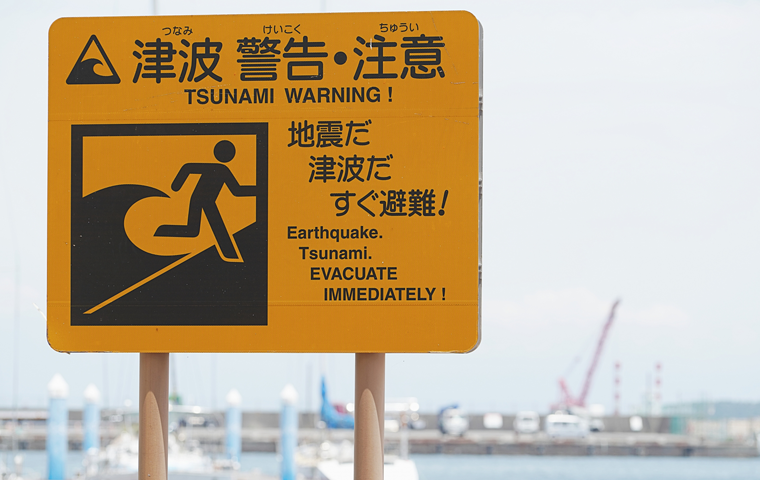
In this disaster, what drew attention—among Japanese society and disaster experts worldwide—even more than the shaking itself was the first-ever activation of the “Hokkaido–Sanriku Offshore Subsequent Earthquake Advisory.” This relatively new information framework warns that when an earthquake of M7.0 or larger occurs along the Japan Trench or the Kuril Trench, the statistical likelihood increases that an M8-class or larger megaquake could follow within roughly one week.
Since the Cabinet Office and the Japan Meteorological Agency began operating this system in 2022, it had never once been triggered—until 2:00 a.m. on December 9, when it was issued for the first time amid the confusion of the early hours.
Behind this advisory lies hard-earned, tragic precedent: two days before the 2011 Tohoku earthquake (M9.0), an M7.3 earthquake occurred. And in the 1963 southeast-off-Etorofu Island event, a massive M8.5 quake struck just 18 hours after an M7.0 shock.
Scientifically, the probability of an M8-class or larger earthquake following an M7-class event is estimated at around 1 in 100 (about 1%). Compared with the normal baseline probability of roughly 0.1%, the risk jumps by nearly 100 times. Yet the reverse is also true: it is information in an extraordinarily difficult gray zone—there is a 99% chance that nothing happens.
Based on this advisory, the government did not call for “preemptive evacuation,” but urged residents for one week to take “special preparedness” measures: confirming evacuation routes, preparing supplies, and even thinking about what to wear to bed so they could flee quickly if necessary.
Even so, social confusion in the initial phase was unavoidable. Surveys suggested that around 40% of residents in the covered areas did not realize their region was included, highlighting challenges in both information reach and comprehension. Some residents and tourists mistakenly treated the advisory as a definitive prediction that “another quake will definitely come,” revealing the deep gap between scientific probability and the human desire for certainty and safety.
That one-week period became a large-scale social experiment: how governments, media, and citizens should interpret and act upon “uncertain foresight” provided by modern science and technology. Ultimately, no megaquake occurred, and the advisory was lifted on December 16—but the experience became an important case study for pushing Japan’s disaster literacy to the next stage.
Exposed Vulnerabilities in Japan’s Energy Lifeline: The Hokuto–Honshu Interconnection Fire and Wintertime Power Risk
The quake’s impact did not stop at direct damage in the disaster area—it also exposed the structural fragility of Japan’s energy security. The most notable example was damage to the Hokuto–Honshu interconnection, a critical power artery that links Hokkaido and Honshu and allows electricity to be shared between the two systems.
Immediately after the quake, two of the three submarine cable circuits were shut down as an emergency measure. On one of them—equivalent to 300,000 kW of capacity—a transformer fire broke out at a converter station, creating a serious situation. One circuit was later restored, but the line that experienced the fire suffered heavy equipment damage, and restoration remains uncertain.
This was not merely a blackout issue; it symbolized the risks inherent in Hokkaido’s relatively isolated power grid. Hokkaido has strong renewable energy potential, and the government has planned to expand interconnection capacity as a pillar of “Green Transformation (GX),” eventually sending wind power and other resources to the Tokyo metropolitan area. The earthquake, however, demonstrated that the submarine cable lifeline is physically vulnerable to natural disasters.
In midwinter Hokkaido, reduced power transfer capacity from Honshu directly raises the risk of tight reserve margins during peak heating demand. In fact, immediately after the quake, tensions rose around maintaining supply–demand balance in the Hokkaido–Tohoku area. Because repairs require advanced technology and significant time, the impact on longer-term power supply planning cannot be ignored.
Water infrastructure damage also demanded attention. In Hachinohe, the combination of aging pipes and strong shaking caused road collapses and widespread water outages. Aging infrastructure built during Japan’s high-growth era is a nationwide challenge, and this quake showed that even M7-class shaking can paralyze urban functions.
Energy and water—lifelines essential to survival—may look robust on the surface, yet are maintained on an alarmingly fine balance. The incident involving the Hokuto–Honshu interconnection revealed a part of the “invisible time bomb” that disaster-prone Japan continues to carry.
Economic Aftershocks and Building a Culture of “Fearing Correctly”: Lessons from a Week of Tension
During the one week the subsequent-earthquake advisory remained in effect, “economic aftershocks” emerged in the covered regions in addition to physical aftershocks. The impact on tourism was particularly pronounced. In Aomori and Iwate, cancellations surged at lodging facilities—even where building safety had been confirmed and normal operations were possible.
The instinctive consumer response—“I don’t want to go somewhere that might face a megaquake”—is understandable. But for tourist destinations approaching the year-end peak season, it became a matter of survival. Some hotels found that even after issuing safety assurances, customer demand did not return, casting a heavy shadow over local economies. This highlighted a difficult dilemma: the more powerful the disaster information, the greater its potential side effect of shrinking economic activity.
The advisory also tested the practicality of BCPs (Business Continuity Plans). December 9 fell on a Monday, and while many companies maintained normal operations, decisions varied on how to implement the government’s request: “continue social and economic activity while remaining ready to evacuate.” Some firms minimized inventory or reduced business travel, but excessive self-restraint can stall the economy. This experience effectively demanded a new skill—flexible “scaled-down operations” tailored to risk levels, rather than extreme all-or-nothing responses.
Although the advisory was lifted on December 16, the Japan Meteorological Agency repeatedly emphasized that “the risk has not become zero.” Strain along the Japan Trench was not fully released by this quake, and the potential for a megaquake still remains.
Still, the advisory—though it ended without a subsequent disaster—was far from meaningless. It should be understood as an unprecedented, society-wide evacuation drill. The culture of “fearing correctly”—neither panicking nor becoming complacent, but calmly managing risk in the face of uncertainty—may become Japan’s strongest disaster-prevention “technology” that it can share with the world, alongside hardware improvements.
The Aomori offshore earthquake continues to ring an alarm bell—named “a grace period”—as Japan prepares for the truly massive earthquake that may come one day.


 JA
JA EN
EN